Wood apple
Also called Monkey fruit · Curd fruit · Indian woodappleLimonia acidissima · Rutaceae family
A hard shell conceals a strongly flavored pulp used in drinks, sweets and condiments.
Find it near DetroitGet to know it
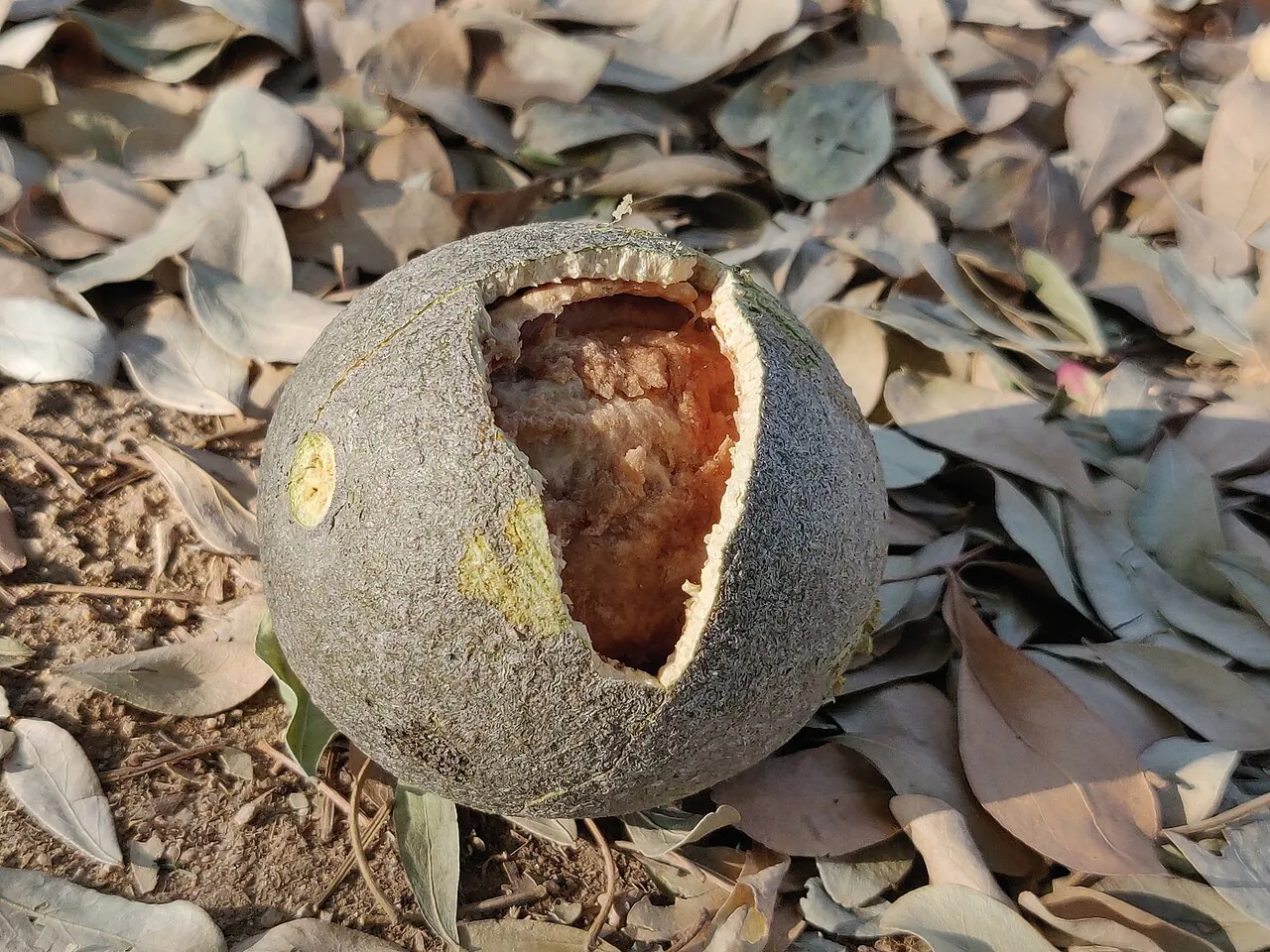
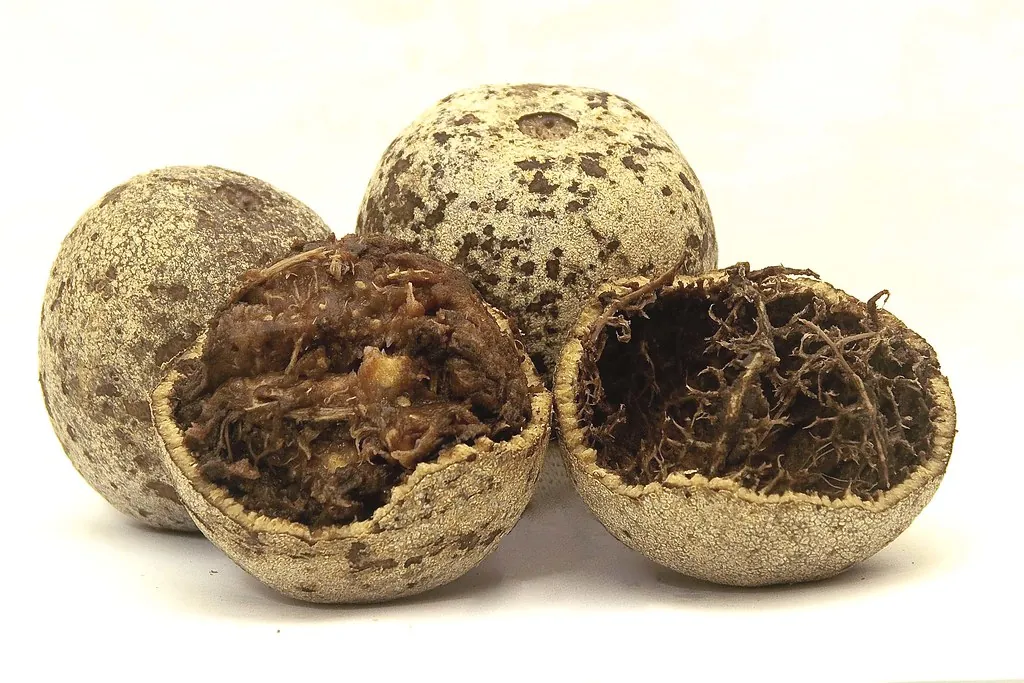
Wood apple has a woody shell so hard it is cracked open with a hammer, hiding sticky brown pulp that tastes sour to sweetish, with a resin-like aroma. In India, that pulp becomes sweetened sharbat or a jaggery-and-chilli chutney. In Sri Lanka, it is made into wood-apple cream.
What it is
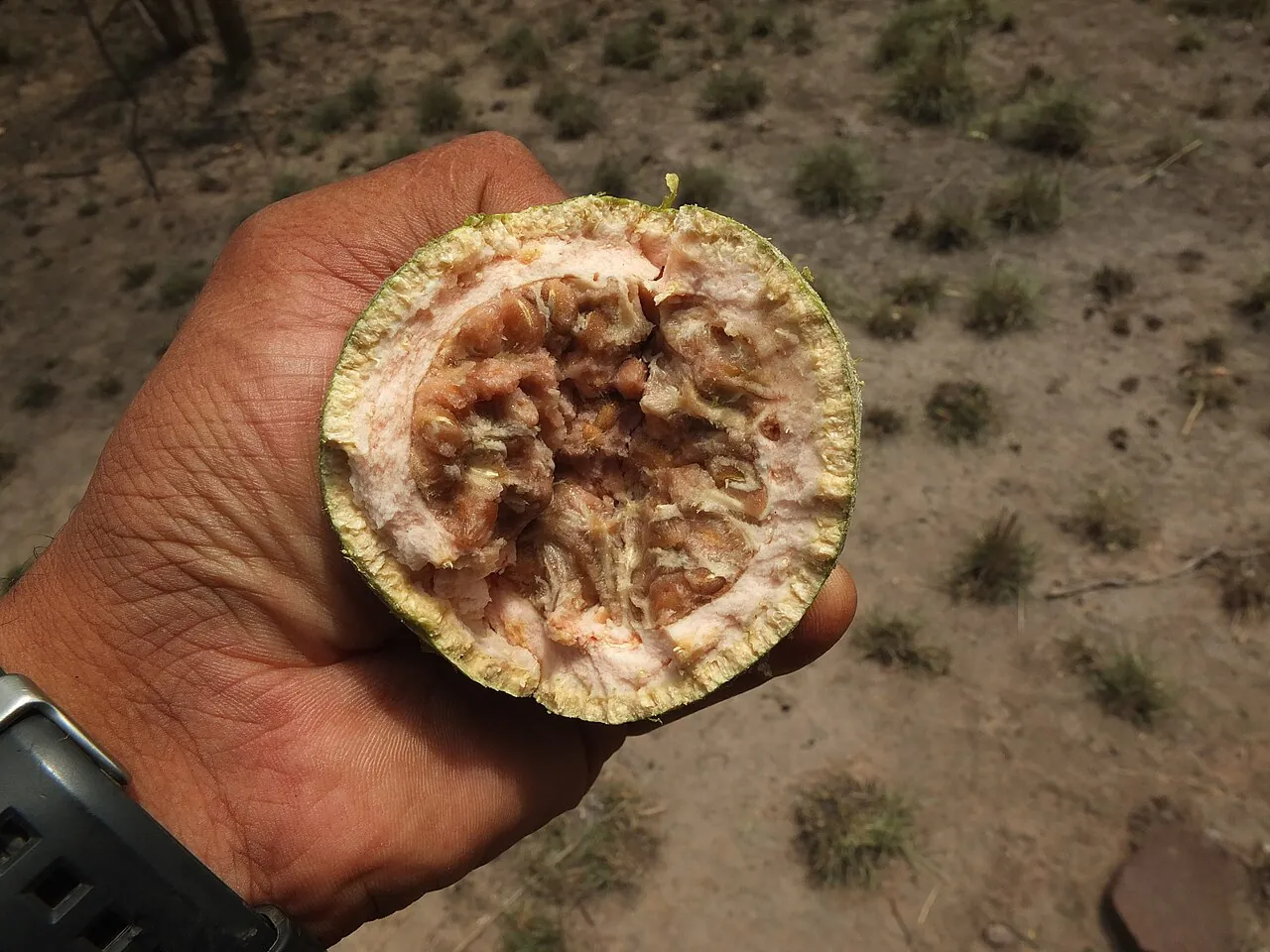
Wood apple is Limonia acidissima, a member of the citrus family with a woody shell. It is a different fruit from bael. Round to oval and about 5–12.5 cm (2–5 in) across, it holds brown, mealy pulp dotted with small white seeds.
The pulp is sticky, and the flavour runs from sour to sweetish, with a drying edge and a resin-like smell. It is scooped out of the cracked shell; for a drink, the seeds and coarse fibres are strained away.
Where it comes from
Wood apple grows naturally in the drier parts of India, Sri Lanka, Myanmar and Indochina. It is planted around villages and in parks across that range, and in Malaysia and Indonesia. In Sri Lanka, it is common in the dry and intermediate zones.
How it's eaten where it grows
In India, wood-apple sharbat begins with pulp scooped from the cracked shell, soaked in cold water, mashed and strained. Jaggery or sugar balances its sharpness, and roasted cumin, cardamom and black salt season it.
For wood-apple chutney, the pulp is pounded with salt, cumin seeds and red chilli powder, then with jaggery and a little water. Sri Lankan wood-apple cream is another preparation of the pulp. The pulp is also eaten raw, with or without sugar, blended with coconut milk and palm-sugar syrup for a drink, or frozen as ice cream.
How it's grown
Wood apple is a thorny tree that sheds its leaves and thrives in a monsoon or seasonally dry tropical climate. In Sri Lanka, a seed-grown tree takes about 10–15 years to give a harvest, and a grafted tree about five years.
There, ripe fruits are mostly gathered after they fall naturally from the tree.
When and where you'll find it
In India, wood apples usually ripen from early October through March. In Peninsular Malaysia, the usual window is October and November.
Besides the whole fruit, the pulp is made into jelly, jam and chutney, and into a bottled nectar: the pulp is diluted, passed through a pulper to remove seeds and fibre, strained and pasteurized. The jelly is purple, much like blackcurrant jelly.
Get it near Detroit
What it tastes like
Sweeter than a grapefruit, as soft as a pear≈
More about the taste
The pulp is brown and mealy, with a resinous aroma and acidity or astringency; larger fruit tend to be sweeter, smaller ones more acidic. The hard shell conceals a sticky pulp, a very different experience from a crisp apple.
The aroma is resinous, with acidity and astringency; larger fruit tend to be sweeter, smaller ones more acidic.
As the fruit develops, its sugar content rises; acidity increases up to maturity, then declines.
How to buy it
1EatPulp · not hard shell
Eat
PulpNot eaten
Hard shellCrack open the hard shell to reach the pulp; for juice, strain out the seeds and fibrous material.
Detroit, Michigan
When it’s good hereUsual monthsJust arrivedAt their bestLast chanceAll yearWhere it is in its usual monthsToday, Oct 22Grown hereIn season in your stateShips fromIn season where it grows
2 growing areas, 2 countriesUsual monthsToday, Oct 22

- India
- Peninsular Malaysia
- You
2 of 2 areas · October
Growing areas by country
- India1
- Malaysia1
The pulp is sweetened and made into drinks with coconut milk or palm sugar, ice cream, chutneys, jams and jellies. In India, it's also made into a drink called sarbat.
40 names in 17 languages
- 象橘Chinese
Cook it
Strange but trueHistoryNatureWhere the name came fromCustoms and cultureFood and drink
If you like Wood apple
Tastes alike
Used the same way
Sources
Sources
Wood apple · Fruitopia · checked Oct 2, 2026