Tamarind
Tamarindus indica · Fabaceae family
The same brown pulp can be a snack, the backbone of a chutney, or a tart Mexican refresher.
Find it near DetroitGet to know it
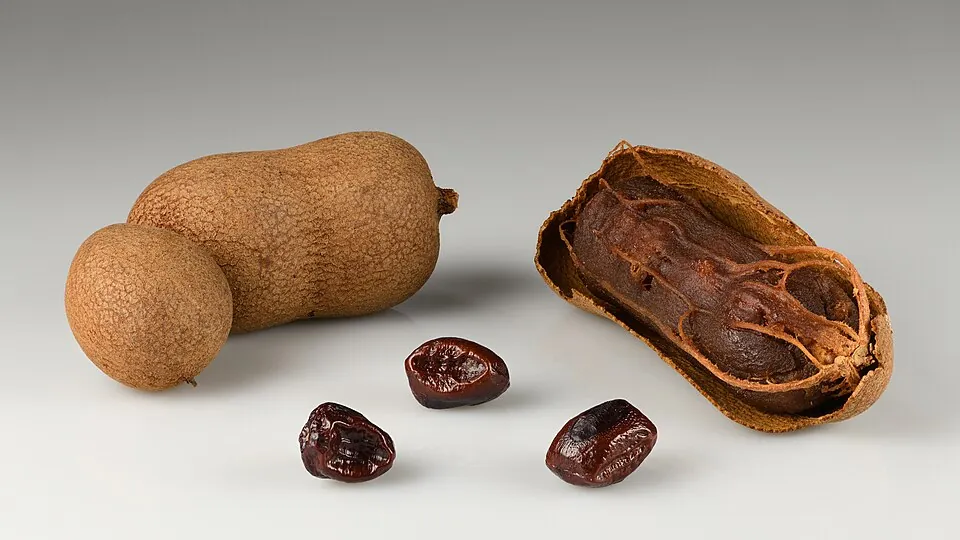
Crack a tamarind pod and the brittle shell gives way to sticky brown pulp, sweet and sharply sour at once. Sweet varieties make a chewy snack; sour ones give chutneys and drinks their tang. The same fruit makes the chutney served with samosas and fills a glass of Mexican agua de tamarindo.
What it is
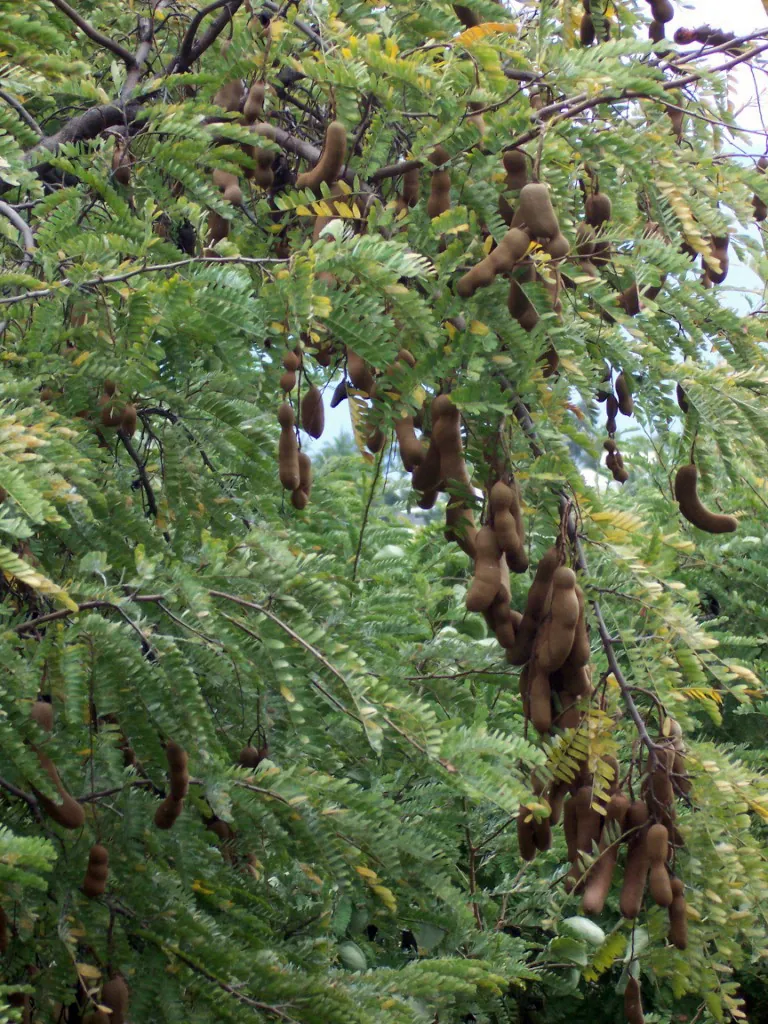
Tamarind, Tamarindus indica, is a tree in the bean family. Its curved pods are about 5–18 cm (2–7 in) long. Under the shell, coarse strings run along the pulp, which wraps around hard, glossy brown seeds.
Its sourness comes from tartaric acid. That acid stays as the fruit ripens and gains sugar. Sweet and sour varieties also differ from one another: a sweet snacking pod and a sour cooking tamarind are not simply different stages of ripeness.
Where it comes from
Tamarind comes from tropical Africa and has grown in India for centuries. It is now a fruit and shade tree across the tropics, including Mexico and South Florida. In Tamil Nadu, Dindigul, Theni and Madurai grow it; PKM 1 and Urigam are the favoured varieties there.
How it's eaten where it grows
In India, imli chutney cooks tamarind with jaggery and spices, sometimes adding dates. The sweet-sour sauce goes with samosas and pakoras and into chaat snacks such as bhel puri.
Mexico’s agua de tamarindo mixes the pulp with water and sugar and serves it over ice. The pods are shelled, softened in hot water and freed of seeds and strings; the pulp is then blended and strained.
How it's grown
Tamarind grows into a broad shade tree with fine, feathery leaves. It needs a long, well-marked dry season to fruit. In Tamil Nadu, planted trees begin bearing from about their fourth year. For whole pods sold as fruit, harvesters clip the stalks to keep the brittle shells intact.
When and where you'll find it
Tamil Nadu’s harvest usually falls in March and April. Around Darwin in Australia, it usually runs from June through August. In the US, Mexican groceries carry whole pods, often beside the spices or dried chillies. Asian groceries are a route to tamarind paste and frozen concentrate for cooking.
Sources · 9
- Isabel Eatsisabeleats.com
- Morton, Fruits of Warm Climates (1987)hort.purdue.edu
- National Tropical Botanical Gardenntbg.org
- Northern Territory Governmentnt.gov.au
- Swasthi’s Recipesindianhealthyrecipes.com
- Tamil Nadu Agricultural Universityagritech.tnau.ac.in
- University of Florida IFASask.ifas.ufl.edu
- University of Florida IFAS Gardening Solutionsgardeningsolutions.ifas.ufl.edu
- World Agroforestry, Agroforestree Databaseapps.worldagroforestry.org
Get it near Detroit
What it tastes like
As tart as a grapefruit, as sweet as an apple≈
More about the taste
Tamarind keeps its acidity even as its sugar increases. Sweet types are commonly eaten fresh; sour types are used in drinks, sauces and sweets, so the label matters for choosing the right one for a recipe.
Sweeter types are commonly eaten fresh; sour types go into juice, jam, syrup and candy. The sweet-acid balance is partly a difference between varieties, not just how ripe the pod is.
Choose, store, eat
1ChooseBrittle shell
Look for
- Brittle shell
- Brown, sticky pulp
For ripe pods, look for a brittle shell and brown, sticky pulp. Green, immature pulp is a different, much more sour cooking ingredient.
2StoreFridge, cooked chutney
- FridgeCooked chutneyClean jar
For a cooked chutney, keep it in a clean jar in the refrigerator.
3EatPulp · not shell, coarse fibers, seeds
Eat
PulpNot eaten
ShellCoarse fibersSeedsFor agua de tamarindo, remove the shell and coarse fibers, separate the seeds from the softened pulp, then blend and strain. The drink uses the pulp, not the hard seeds.
Detroit, Michigan
When it’s good hereUsual monthsJust arrivedAt their bestLast chanceAll yearWhere it is in its usual monthsToday, Oct 22Grown hereIn season in your stateShips fromIn season where it growsOrderableListed by a seller we checkedThe day a seller was checked
4 growing areas, 3 countriesUsual monthsOur estimated monthsToday, Oct 22

- Lambayeque
- Northern Territory
- Pernambuco
- Piura
- You
1 of 2 areas · October
Growing areas by country
- Peru2
- Australia1
- Brazil1
Tamarind appears in Indian curries and chutneys, Caribbean confections, tropical drinks and processed sauces, spanning sweet snacking and savory cooking.
19 varieties
- No variety photo yet红鳅甜角
- Flavour
- 味甜 CN-53
- No variety photo yetThar Rashmi
- Tartness
- high India
- No variety photo yet翠玉甜角
- Flavour
- 味甜 CN-53
- No variety photo yet金月甜角
- Flavour
- 味甜 CN-53
- No variety photo yetGoma Prateek
- Shape
- elongated India
- No variety photo yetPratisthan
- Taste
- high
68 names in 24 languages
Cook it
1 Tamarind festivalUsual monthToday, Oct 22
Strange but trueHistoryA myth, and the truthScienceNatureWhere the name came fromCustoms and cultureFood and drink
If you like Tamarind
Tastes alike
Same plant family
Used the same way
Nutrition, sources
Nutrition
Tamarinds, raw · per 100 g
- Carbohydrate
- 63 g
- Fiber
- 5.1 g
- Sugars
- 39 g
- Protein
- 2.8 g
- Fat
- 0.6 g
- Vitamin C
- 3.5 mg
- Potassium
- 628 mg

Sources
Tamarind · Fruitopia · checked Sep 21, 2026