Black velvet tamarind
Also called Velvet tamarindDialium guineense · Fabaceae family
A brittle dark shell surrounds a small amount of dry, sweet–sour pulp—a different fruit experience from a juicy tamarind-like beverage alone.
Find it near DetroitGet to know it
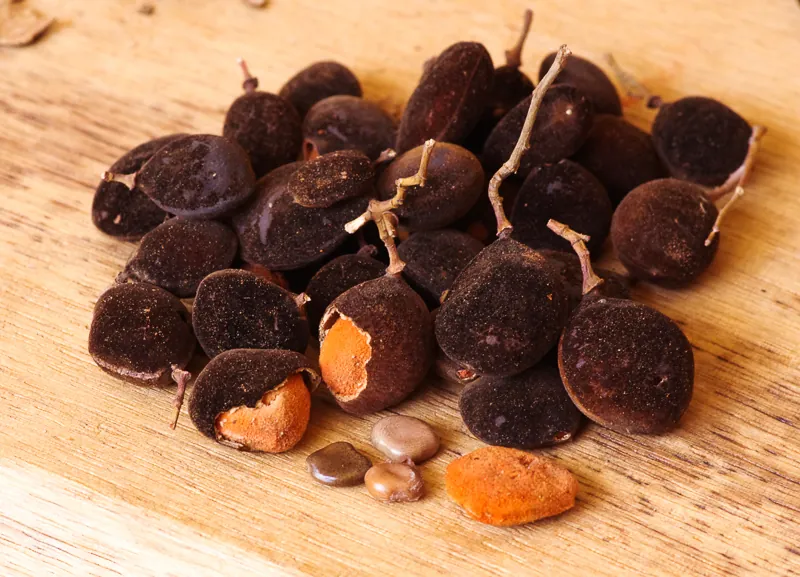
Black velvet tamarind cracks open like a tiny shell snack. Inside its dark, velvety coat sits orange-brown, powdery pulp with a sweet-sour bite. A squeeze between your fingers breaks the brittle shell and releases the fruit around its hard seed.
What it is
This African fruit is Dialium guineense, a member of the bean family. Its round or flattened fruits grow to about 2.5 cm (1 in) across. Each shell usually holds one seed, occasionally two. The pulp is dry rather than juicy, with sweetness, acidity and a slight mouth-drying edge.
Where it comes from
Black velvet tamarind is native to West and Central Africa, including Senegal, Ghana, Nigeria and Cameroon. In Ghana it grows at forest edges and along the Volta near Ada.
Names change across the region: Yoruba speakers call it awin and Igbo speakers icheku. In Ghana it is known as yooyi.
How it's eaten where it grows
In Nigeria, awin is eaten straight from its shell or made into a drink. For one version, hot water loosens the pulp, then a sieve catches the seeds. Lemon juice and jaggery, an unrefined cane sugar, go into the strained drink, which can be served over ice.
Food writer Funke Koleosho turns awin into frozen yogurt. She boils the shelled fruit with water and sugar, sieves out the seeds, then mixes the compote with Greek-style yogurt and condensed milk before freezing.
How it's grown
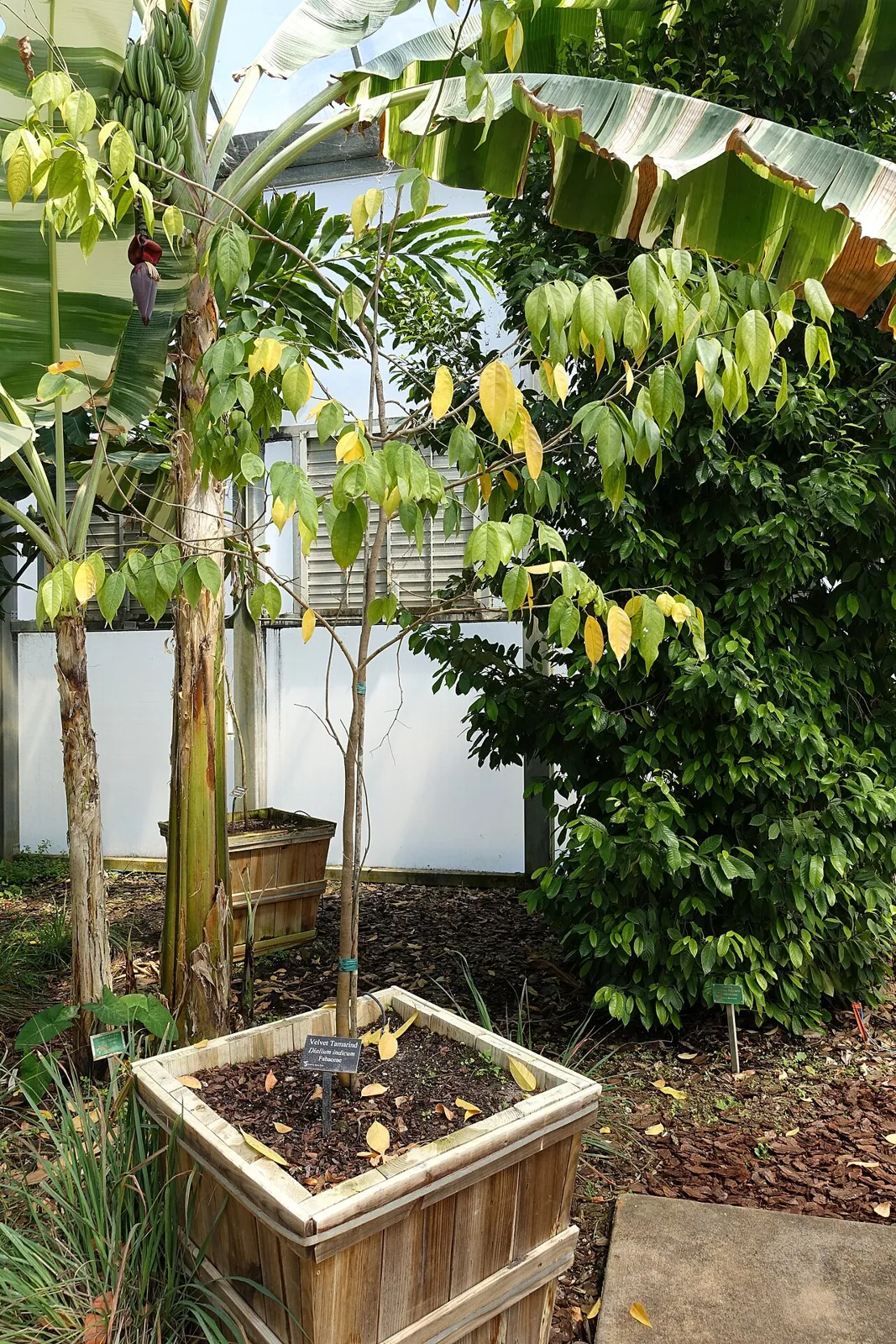
The plant can become a tree up to 30 m (98 ft) tall with a dense leafy crown, though it often stays shrubby. It grows in savanna forests and shaded canyons, on moist ground that can be slightly salty. In Ghana, clusters of small white flowers usually appear from September to November.
When and where you'll find it
In Nigeria, the tree usually fruits from October to January. In Ghana, fruit usually ripens from March to May. In Lagos, the online grocer 24 Hours Market sells fresh awin in 200 g packs. The edible pulp stays inside its brittle shell until cracked out for a snack or soaked for a drink.
Get it near Detroit
What it tastes like
As sweet as a banana, as soft as a blueberry≈
More about the taste
The pulp is sweet-acid and somewhat astringent, dry and powdery in texture, inside a brittle shell.
The pulp balances sweetness and acidity with some astringency, and is often described as sweeter than baobab.
The pulp is dry, not juicy, inside a brittle shell — closer to a dried fruit than to a peach or grape.
How to buy it
1EatPulp · not shell, seeds
Eat
PulpNot eaten
ShellSeedsCrack away the shell and sieve out the seeds to get the pulp, which can be cooked with water and sugar into a compote.
Detroit, Michigan
When it’s good hereUsual monthsJust arrivedAt their bestLast chanceAll yearWhere it is in its usual monthsToday, Oct 22Grown hereIn season in your stateShips fromIn season where it grows
1 growing area, 1 countryUsual monthsToday, Oct 22

- Ghana
- You
0 of 1 areas · October
The tree grows in West African forest and savanna-transition zones. Fruiting timing differs between Nigeria and Ghana.
11 names in 7 languages
- awinYoruba
- kositoroot
- 羅望子李Chinese
Cook it
Strange but trueScience
If you like Black velvet tamarind
Tastes alike
Same plant family
Used the same way
Sources
Sources
Black velvet tamarind · Fruitopia · checked Sep 22, 2026