Santol
Sandoricum koetjape · Meliaceae family
A fruit with two culinary personalities: juicy pulp around the seeds, and a thicker outer flesh that becomes the star of cooked dishes.
Find it near DetroitGet to know it
Santol is a round, softly hairy Southeast Asian fruit with two parts to eat: the rind and the white, juicy pulp around the seeds, which runs from sour to sweet. In the Philippines, the peeled, seeded fruit is chopped and cooked with coconut cream and chillies into sinantolan, a savoury dish.
What it is
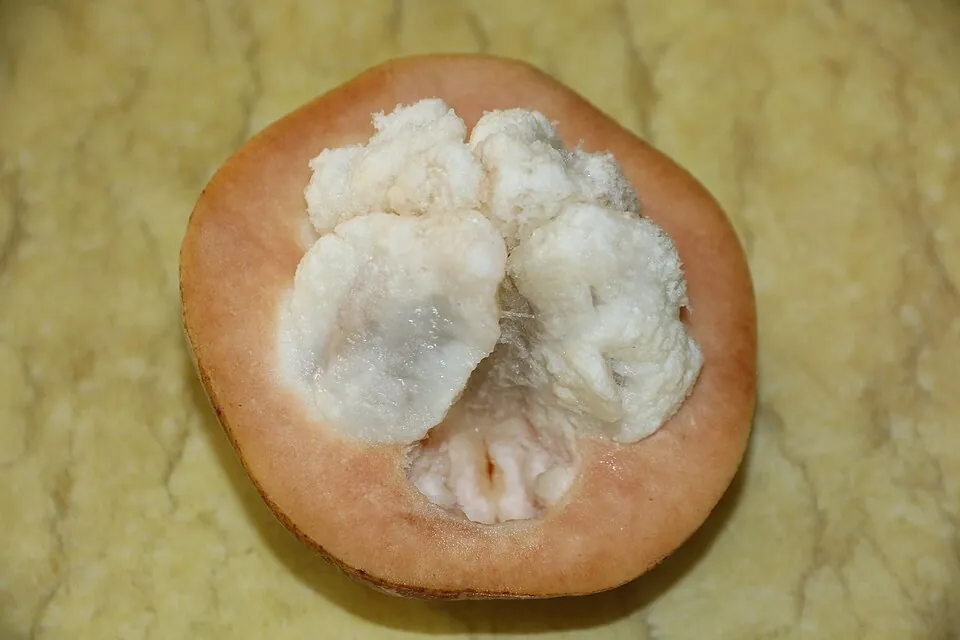
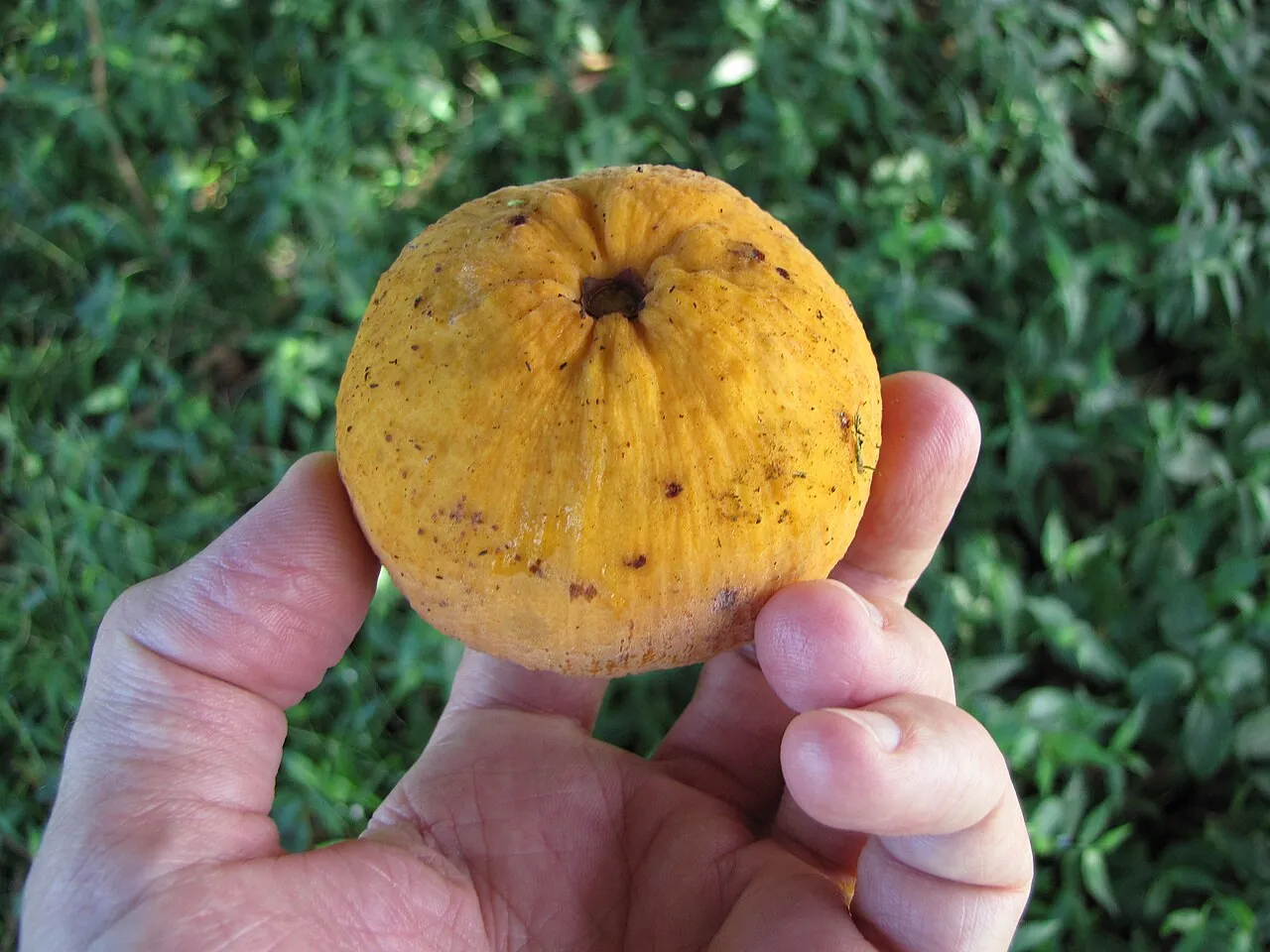
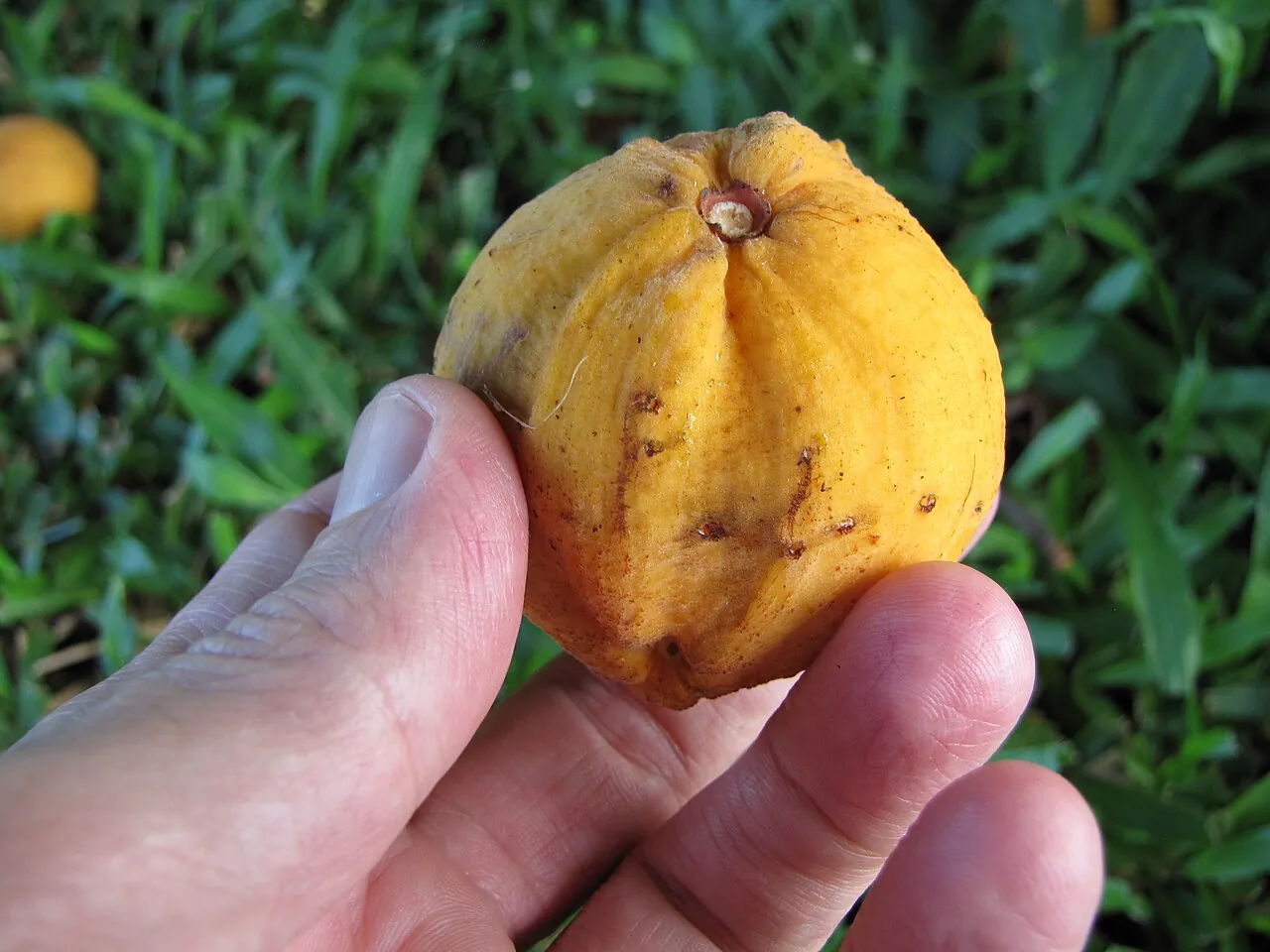
A santol is round or slightly flattened, yellow to brownish, and about 5–8 cm (2–3 in) across. Its softly hairy rind holds a milky juice and encloses white pulp that usually clings to three to five brown seeds. The pulp and rind are edible; the hard seeds are not.
Santol belongs to the mahogany family. Fruits vary a lot: in some the rind is the more substantial, better-tasting part, in others the pulp.
Where it comes from
Santol comes from Southeast Asia and grows across Indonesia, Malaysia, the Philippines, Thailand and Vietnam. It was introduced long ago to India, the Andaman Islands and Mauritius. In the Philippines it is a common backyard tree, and small orchards grow it in some parts of the country.
How it's eaten where it grows
In the Philippines, sinantolan starts with peeled, seeded santol, chopped and drained of its juice. Chef Heny Sison’s version adds ground chicken, coconut cream, shrimp paste and small hot chillies. It cooks over low heat for about an hour, until oil comes out of the coconut cream and the mixture is almost dry.
In India, santol is eaten with spices. Malaysian cooks turn young fruits into candy by peeling and seeding them, boiling them in water, then boiling them again with sugar.
How it's grown
The fast-growing tropical tree does well in fertile, freely draining soil. Seedling trees may take five to seven years to flower; budded or grafted trees can flower three to four years after planting, and budding and grafting are how commercial trees are propagated. Harvesters pick golden-yellow fruit by climbing the tree or reaching with a net on a long bamboo pole.
When and where you'll find it
In the Philippines, santol usually ripens from July through October; Florida-grown fruit usually ripens in August and September. It also travels in jars: Philippine santol is preserved in syrup and exported to the United States and Saudi Arabia, and Philippine santol marmalade has gone to Asian food dealers in the US. Thailand’s Tamarind House makes a spicy, soft and chewy santol snack.
Get it near Detroit
What it tastes like
As sweet as a banana, softer than a pear≈
More about the taste
Santol's white pulp around the seeds can be sour or sweet and juicy; that soft interior is different from the thicker rind used in cooked dishes.
The white pulp ranges from sour to sweet and clings closely to the seeds; the named selection and the portion tasted both matter.
Choose, ripen, eat
1ChooseMature yellow fruit
Look for
- Mature yellow fruit
For pie, start with a mature yellow fruit.
2RipenBuy fruit suited to the dish you plan to make
Buy fruit suited to the dish you plan to make; there's no reliable countertop ripening schedule.
3EatRind, Pulp · not seeds
Eat
RindPulpNot eaten
SeedsThe rind and pulp are edible; the seeds are not. Remove the hard seeds — the soft pulp around them and the thicker rind are different parts of the fruit.
Detroit, Michigan
When it’s good hereUsual monthsJust arrivedAt their bestLast chanceAll yearWhere it is in its usual monthsToday, Oct 22Grown hereIn season in your stateShips fromIn season where it grows
3 growing areas, 2 countriesUsual monthsToday, Oct 22

- New South Wales
- Penang
- Queensland
- You
0 of 3 areas · October
Growing areas by country
- Australia2
- Malaysia1
Santol is eaten with spices in India, candied young in Malaysia, and preserved in syrup in the Philippines, alongside marmalade and candy. These preparations use acidity and texture differently, so it's worth noting which one you're trying.
20 names in 12 languages
- Sentulroot
Cook it
1 Santol festivalUsual monthToday, Oct 22
Strange but trueScienceWhere the name came fromFood and drink
If you like Santol
Tastes alike
Same plant family
Used the same way
Sources
Photos · 3
Sources
Santol · Fruitopia · checked Oct 2, 2026