Carob
Also called Locust bean · St John's-bread · St. John's BreadCeratonia siliqua · Fabaceae family
A pod can supply both a sweet powder and an almost flavorless thickening ingredient.
Find it near DetroitGet to know it
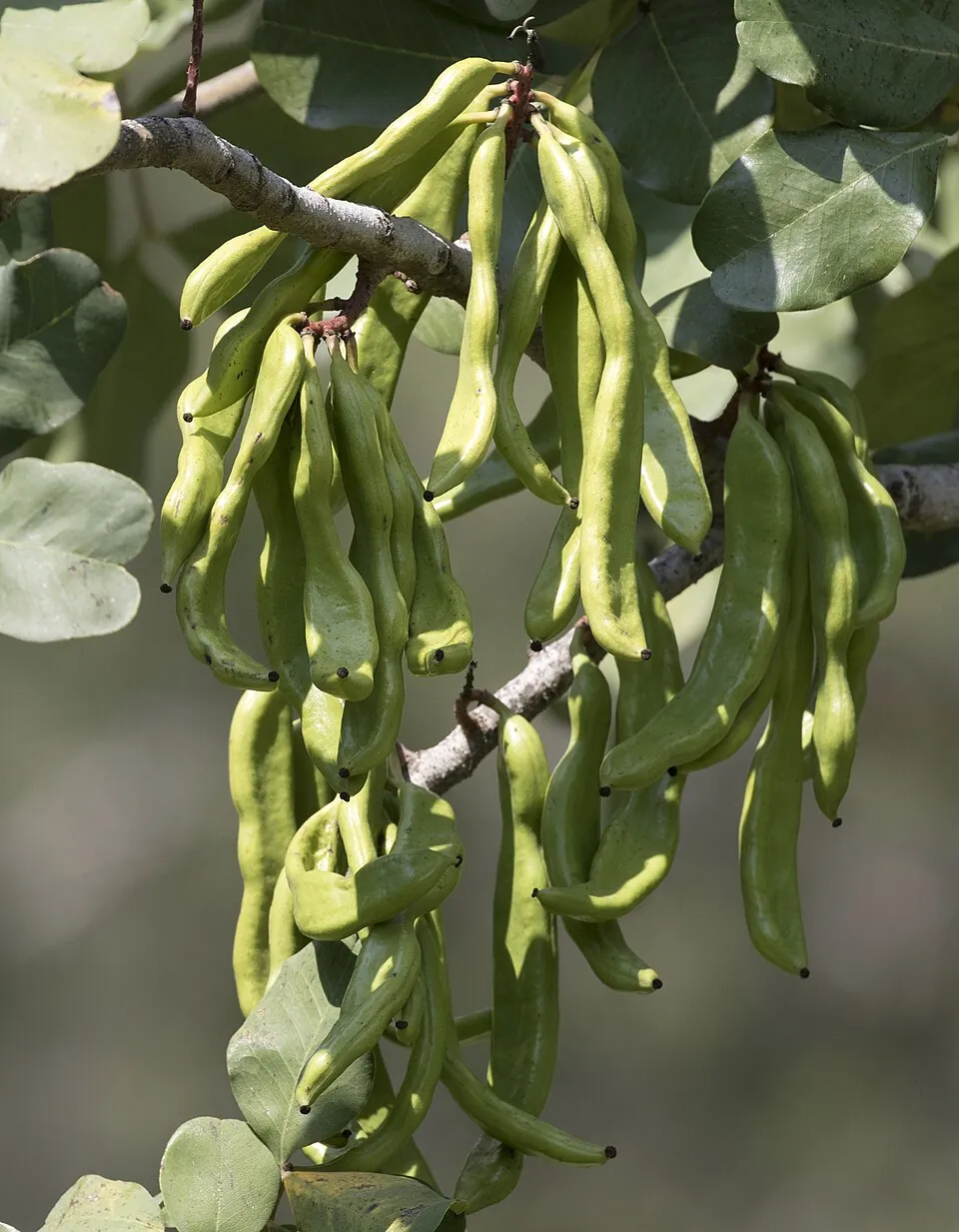
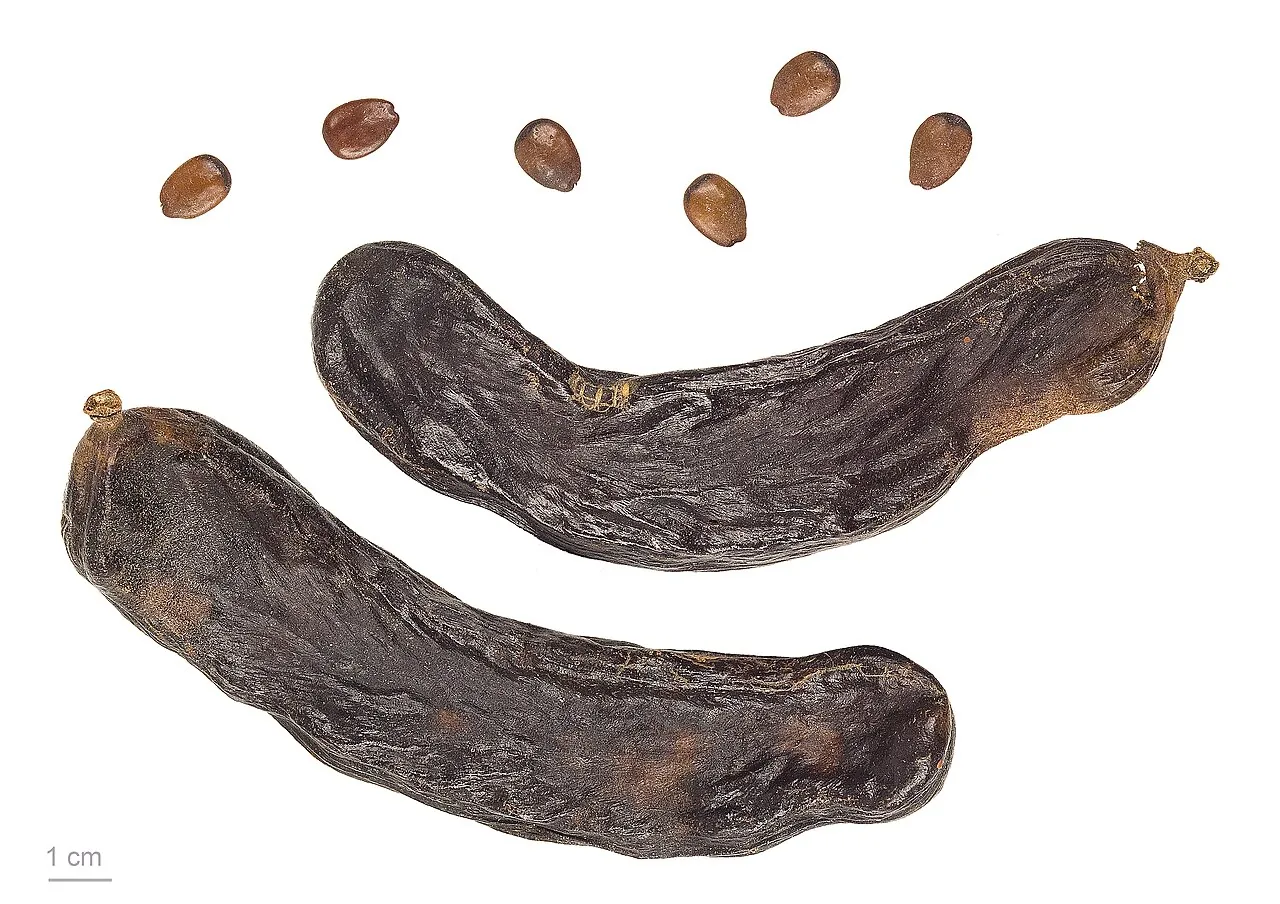
Carob is a long brown pod with sweet pulp around seeds too hard to chew. Ground into powder, the pulp stands in for cocoa; in Cyprus its sweet juice is also boiled down into a thick syrup known as carob honey.
What it is
A carob pod measures 10–30 cm (4–12 in) long, flattened and straight or gently curved. The outside is brown and leathery. When the pod is fully ripe and dry, its loose seeds rattle inside.
The sweet part is the pulp around those seeds. It can be chewed straight from the ripe pod, leaving the hard seeds behind.
Where it comes from
Carob is native to the Mediterranean region and Iran, where it grows on rocky ground near the sea. It has also spread to India, Central and South America, and parts of Africa. The same tree is planted for shade as well as for its crop.
How it's eaten where it grows
In Anogyra, Cyprus, carob becomes pastelli: toffee made by repeatedly stretching and pulling thickened carob syrup. Another Cypriot preparation mixes carob honey with olive oil to eat with warm bread.
In Greece, sourdough carob rusks combine wheat flour, carob flour and carob syrup. The rusks are baked twice. Carob powder gives baking a cocoa-like ingredient made from the sweet pulp of the pod.
How it's grown
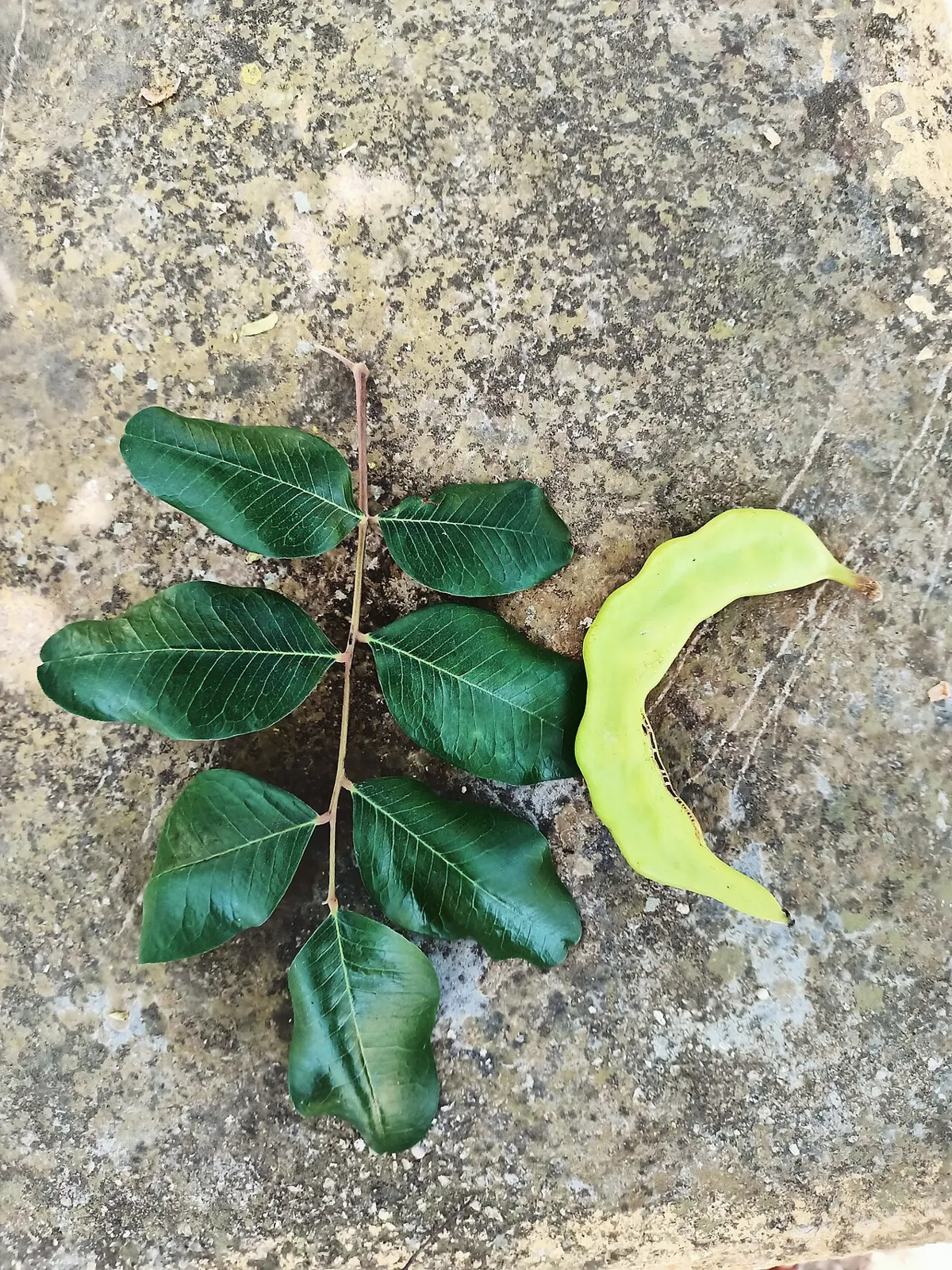
Carob is an evergreen tree in the bean family, suited to cool winters and hot, dry summers. Trees grown by grafting a bud onto a rootstock can begin bearing five or six years after planting.
In Mediterranean groves, workers knock ripe pods down with long bamboo poles or wooden sticks. Nets spread beneath the trees catch the falling crop.
When and where you'll find it
Carob is usually harvested at the end of summer or the start of autumn. In California, the Sfax variety ripens in August at Indio and September at Vista. It also comes as roasted carob powder, such as organic powder from Spain.
Two ingredients come from different parts of the pod. Carob flour supplies the sweet pulp for baking; locust bean gum comes from the seeds and thickens foods such as ice cream and sauces.
Sources · 8
- Batlle and Tous, Carob Tree (IPGRI, 1997)growables.org
- Country Life Natural Foodscountrylifefoods.com
- Cyprus Department of Agriculture, Gastronomy in Cyprus (2022)publications.gov.cy
- Cyprus Deputy Ministry of Tourismvisitcyprus.com
- Gastronomos — Elisavet Koulourigastronomos.gr
- Morton, Fruits of Warm Climates (1987)hort.purdue.edu
- NC State Extension Gardener Plant Toolboxplants.ces.ncsu.edu
- World Agroforestry, Agroforestree Databaseapps.worldagroforestry.org
Get it near Detroit
What it tastes like
As sweet as a banana, as mild as a peach≈
More about the taste
Green carob pods are moist and highly astringent. Ripe pods are sweet when the pulp is chewed, avoiding the hard seeds, and have a distinctive odor when broken.
Green carob pods are moist and highly astringent. Ripe pods are sweet when the pulp is chewed, avoiding the hard seeds, and have a distinctive odor when broken.
Choose, ripen, store, eat
1ChooseMature, dry pods
Look for
- Mature, dry pods
- Brown, tough outside
- Loose seeds that rattle
Choose mature, dry pods: brown, tough on the outside, with loose seeds that rattle inside. Powders and syrups are judged by what's added to them.
2RipenDoesn’t ripen after picking
Doesn’t ripen after pickingPods are harvested and dried; there's no way to ripen a green pod after picking.
3StoreWet, sugar-rich mature pods ferment readily, so keep them dry
Wet, sugar-rich mature pods ferment readily, so keep them dry.
4EatPod pulp
Eat
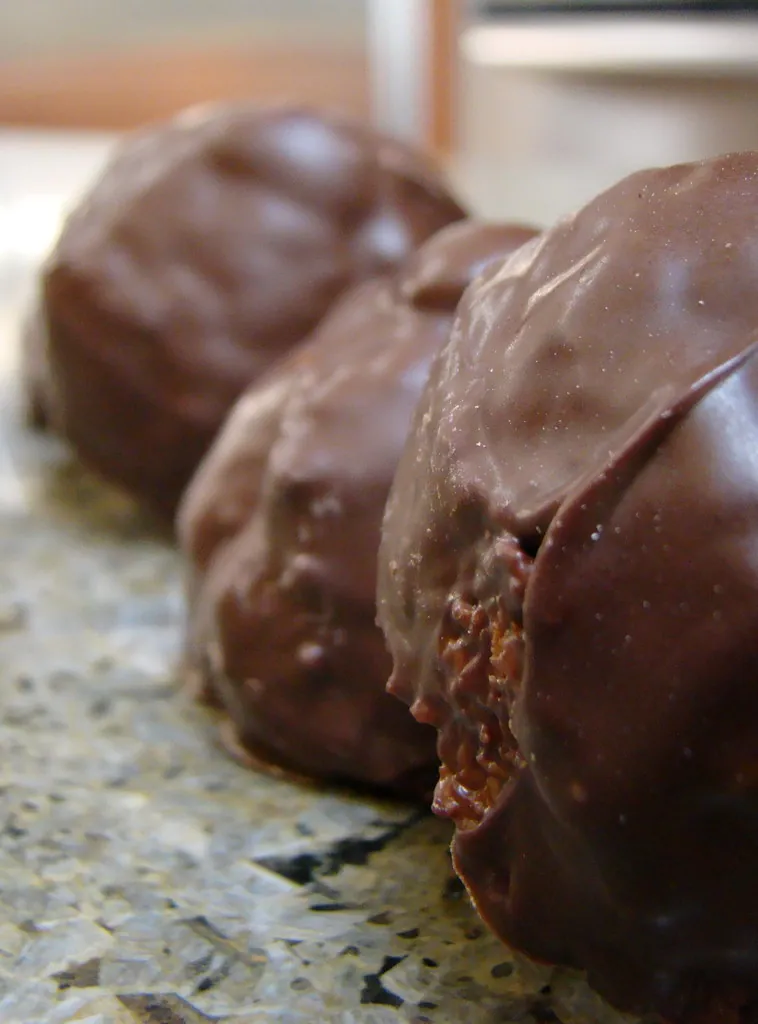
Pod pulpThe pod pulp is processed into powder, syrup and molasses-like products. Locust bean gum, made from the seeds, thickens and stabilizes other foods — a different preparation from a carob confection made with pulp.
Detroit, Michigan
When it’s good hereUsual monthsJust arrivedAt their bestLast chanceAll yearWhere it is in its usual monthsToday, Oct 22Grown hereIn season in your stateShips fromIn season where it grows
3 growing areas, 3 countriesUsual monthsOur estimated monthsToday, Oct 22

- Algarve
- Antalya
- Valencia
- You
0 of 1 areas · October
Growing areas by country
- Spain1
- Portugal1
- Türkiye1
Carob is grown in Mediterranean mixed farming systems alongside olives and almonds. Harvesting the pods by hand is a major cost of production.
97 names in 15 languages
- 케럽Korean
- Minh quyếtVietnamese
Cook it
1 Carob festivalUsual monthToday, Oct 22
Strange but trueHistoryA myth, and the truthScienceNatureCustoms and cultureFood and drinkA record
If you like Carob
Tastes alike
Same plant family
Used the same way
Sources
Photos · 4
Sources
Carob · Fruitopia · checked Oct 2, 2026