Mamey sapote
Also called Mammee sapotePouteria sapota · Sapotaceae family
A dense orange-red fruit that can fill a milkshake or become the base of a spiced savory glaze.
Find it near DetroitGet to know it
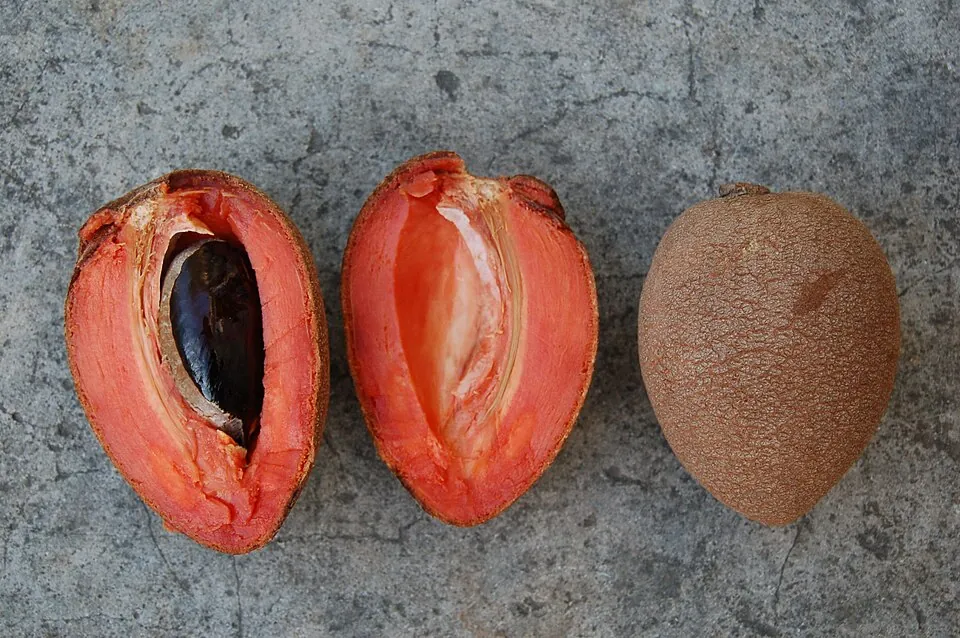
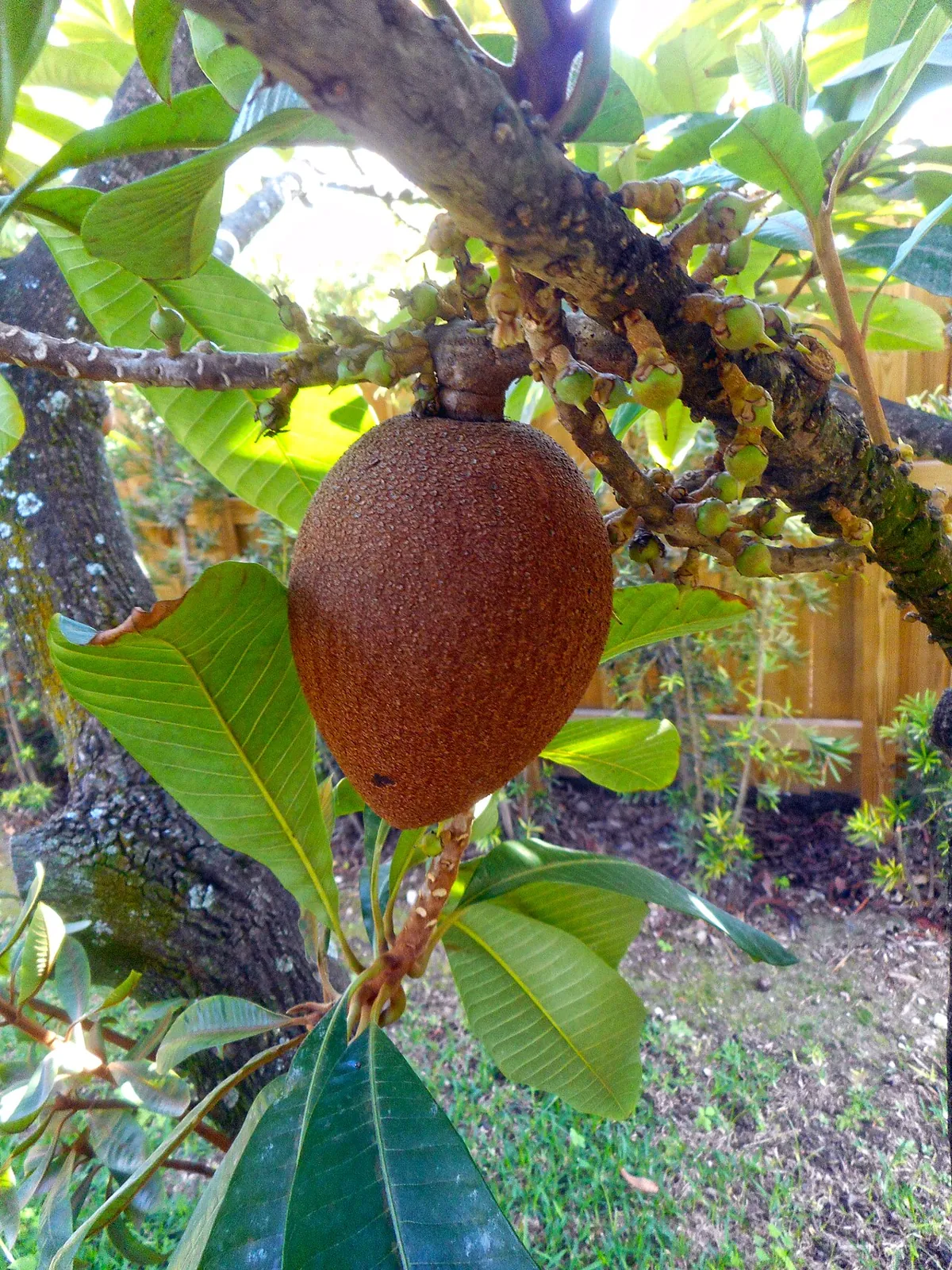
Mamey sapote hides soft, sweet flesh under a rough brown skin. Its creamy texture and flavour of candied yams, almond and caramel make it a fruit you can eat with a spoon or blend into a thick shake.
What it is
This is Pouteria sapota, a tropical fruit usually 7.6–20.3 cm (3–8 in) long. Two familiar Florida varieties look different: Magaña is larger and pointed like a football, with dark salmon-coloured flesh; Pantin is smaller and rounder, with orange flesh.
The ripe flesh is soft and sweet. Cut lengthwise around the large seed, separate the halves, and lift the seed out. The pulp can be sliced or scooped straight from the skin.
Where it comes from
Mamey comes from lowland Central America, especially southern Mexico and Guatemala. Early Spanish settlers took it to the Philippines, and from there it reached southern Vietnam.
It was already growing in Florida by 1887. Much later, Cubans settling in Dade County, around Miami, brought a demand for the fruit and the trees that led to commercial orchards. A fruit loved in the kitchens of Mexico, Central America and the West Indies found another home in South Florida.
How it's eaten where it grows
A Dominican mamey shake blends the pulp with milk, sugar, vanilla, cinnamon and ice, and is drunk as an afternoon snack.
In South Florida, mamey also goes into savoury cooking. A mamey-glazed chicken recipe combines the pulp with white wine, Pernod, cinnamon, cloves and nutmeg. The chicken finishes cooking in the sauce, which is spooned over it to serve.
How it's grown
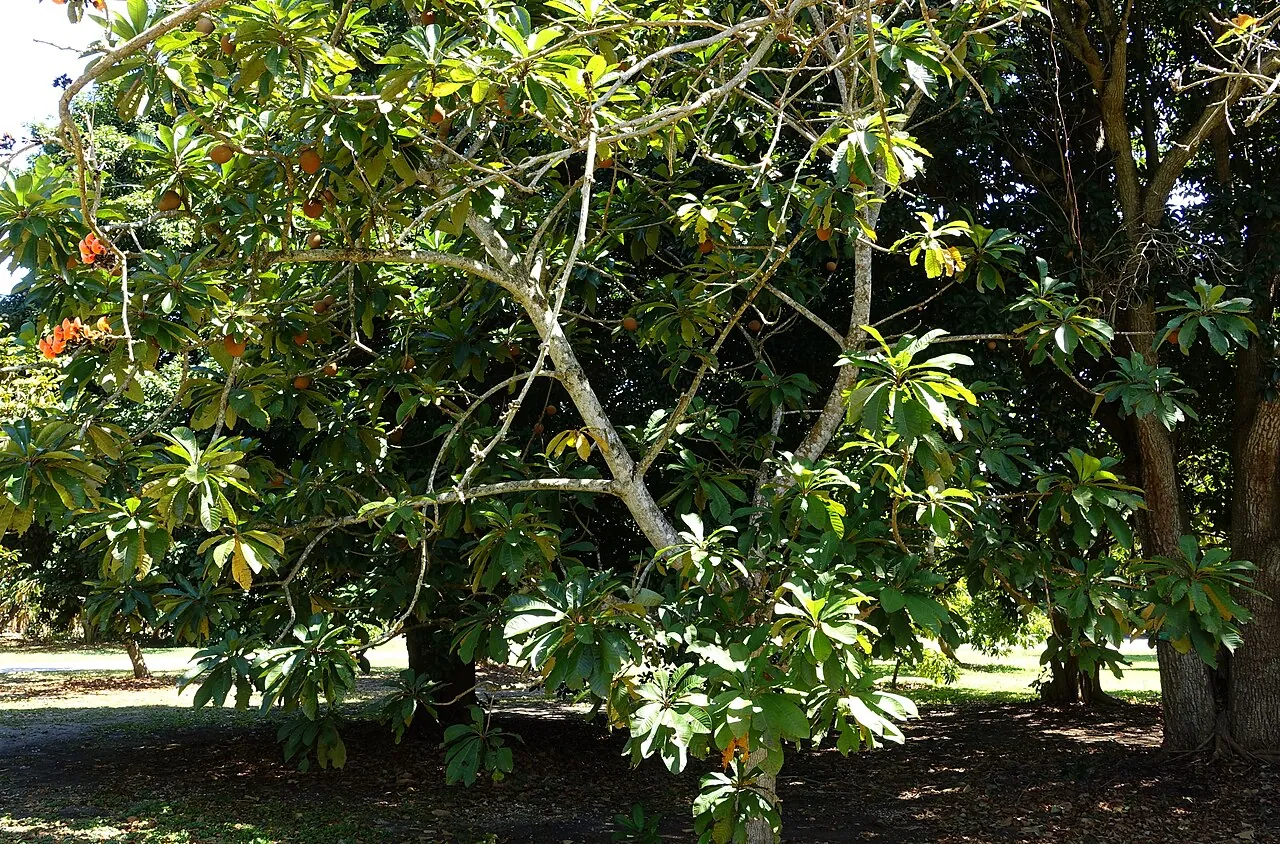
The tree needs warmth, full sun and soil that drains well. Freezing weather can injure it. Grafted trees usually start bearing in three to five years; trees grown from seed take seven years or longer.
Growers judge harvest maturity from the orange or red colour just beneath the skin. A mature fruit can still be hard when picked, then soften over a few days. Fruit picked too young may never soften.
When and where you'll find it
In Florida, Pantin usually ripens in July and August. Magaña brings a spring crop, heaviest in April and May.
Frozen mamey is sold in the Hispanic frozen-food section of supermarkets. It goes into the same shakes as the fresh fruit, so the freezer is another place to find it.
Sources · 6
- Morton, Fruits of Warm Climates (1987)hort.purdue.edu
- My Dominican Kitchen — Vanessa Motamydominicankitchen.com
- National Tropical Botanical Gardenntbg.org
- Tropical Fruit Growers of South Floridatropicalfruitgrowers.com
- University of Florida IFAS — Mamey Sapote from Floridaask.ifas.ufl.edu
- University of Florida IFAS — Mamey Sapote Growing in the Florida Home Landscapeedis.ifas.ufl.edu
Get it near Detroit
What it tastes like
As sweet as a banana, as mild as a peach≈
More about the taste
Mamey sapote has a sweet, almond-like flavor and soft flesh that can be smooth or finely granular. Flesh color ranges from salmon and orange to deeper red-brown.
The flesh is sweet, aromatic and soft, with color and fiber varying by variety; its flavor is often compared to candied yams.
A tasting invitation
Notice the contrast between the exterior and the flesh before evaluating flavor. Describe density, creaminess and sweetness separately.
Choose, ripen, store, eat
1ChooseOrange or red flesh under skin
Look for
- Orange or red flesh under skin
Ignore
- Exterior alone
Ask the seller whether the fruit was picked mature. Growers judge by the color just beneath the skin, which a hard brown exterior doesn't show.
2RipenOn the counter
Ripens after pickingCounterProperly mature fruit usually softens in a few days to a week. Fruit picked too immature can fail to soften and darken inside.
3StoreFreezer, pulp
- FreezerPulp
Plan to use the fruit once it softens, or use frozen pulp instead. It keeps best somewhat warmer than a typical refrigerator.
4EatPulp · not skin, large seed
Eat
PulpNot eaten
SkinLarge seedCut the ripe fruit and use the pulp, leaving the skin and large seed aside.
More tips
A useful detail Cut the fruit lengthwise, remove the large seed, and use the flesh — in fresh slices, milkshakes or ice cream.
Detroit, Michigan
When it’s good hereUsual monthsJust arrivedAt their bestLast chanceAll yearWhere it is in its usual monthsToday, Oct 22Grown hereIn season in your stateShips fromIn season where it growsOrderableListed by a seller we checkedThe day a seller was checked
5 growing areas, 3 countriesUsual monthsToday, Oct 22

- Florida
- New South Wales
- Northern Territory +1
- Penang
- You
3 of 5 areas · October
Growing areas by country
- Australia3
- Malaysia1
- United States1
The tree's native range is lowland Central America, especially southern Mexico and Guatemala; it is also grown in Florida and the Caribbean.
4 varieties
14 names in 9 languages
- 馬米果Chinese
Cook it
How to serve it first
Taste a slice plain before blending the rest. For a simple shake, use minimal added sweetener at first, then adjust after tasting.
Strange but trueHistoryScienceNatureWhere the name came fromFood and drinkA record
If you like Mamey sapote
Tastes alike
Close relatives
Same plant family
Nutrition, sources
Nutrition
Sapote, mamey, raw · per 100 g
- Carbohydrate
- 32 g
- Fiber
- 5.4 g
- Sugars
- 20 g
- Protein
- 1.5 g
- Fat
- 0.5 g
- Vitamin C
- 23 mg
- Potassium
- 454 mg
Sources
Mamey sapote · Fruitopia · checked Sep 21, 2026