Sapodilla
Also called Naseberry · Sapota · SapoteManilkara zapota · Sapotaceae family
Chikoo rewards patience: wait for soft ripe flesh, then explore it frozen or in a warm halwa.
Find it near DetroitGet to know it
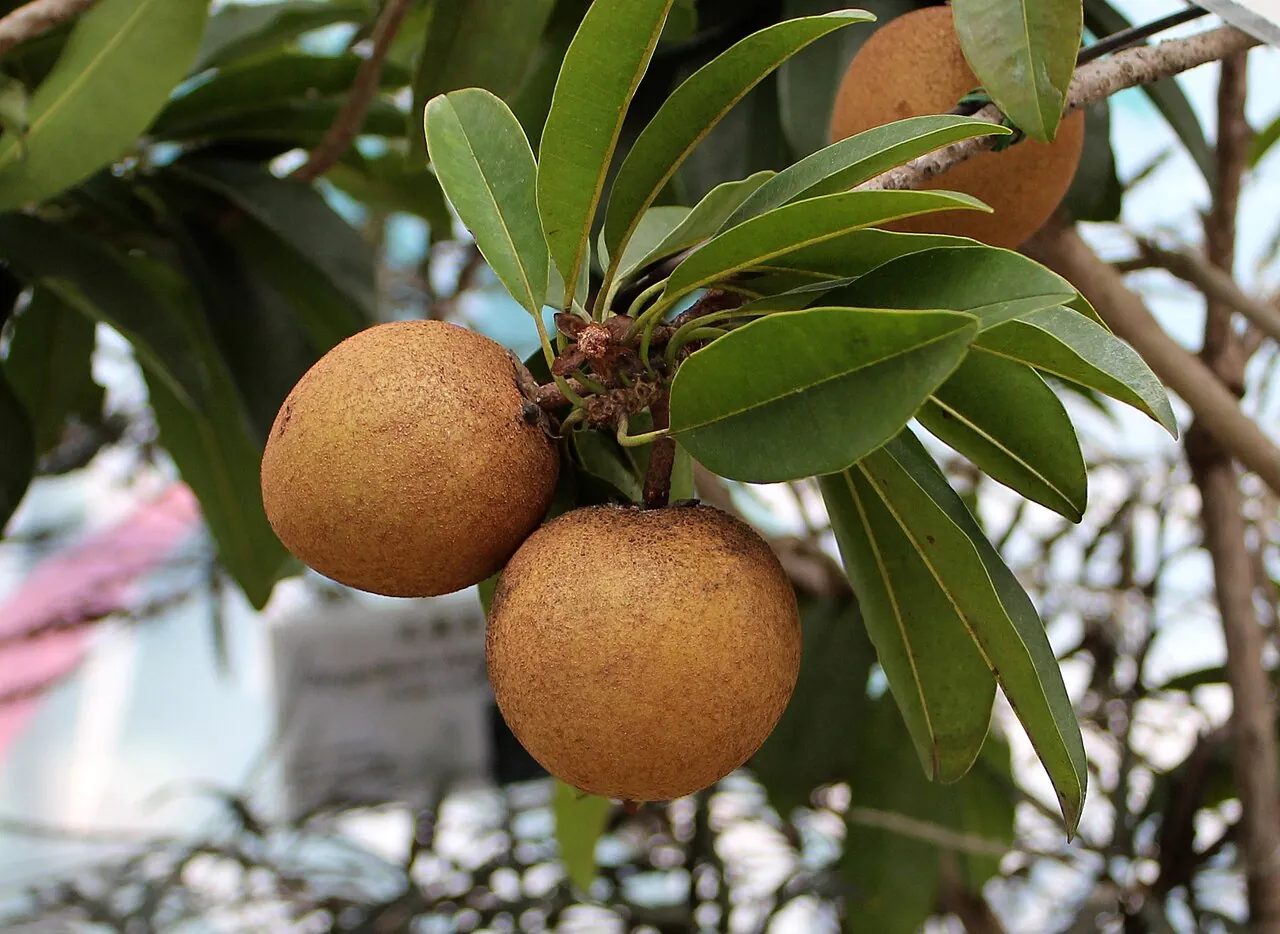
Sapodilla is a brown tropical fruit with very sweet flesh that tastes like brown sugar. Also called chikoo or naseberry, it comes with its own dessert bowl: cut a ripe fruit in half and eat the flesh with a spoon.
What it is
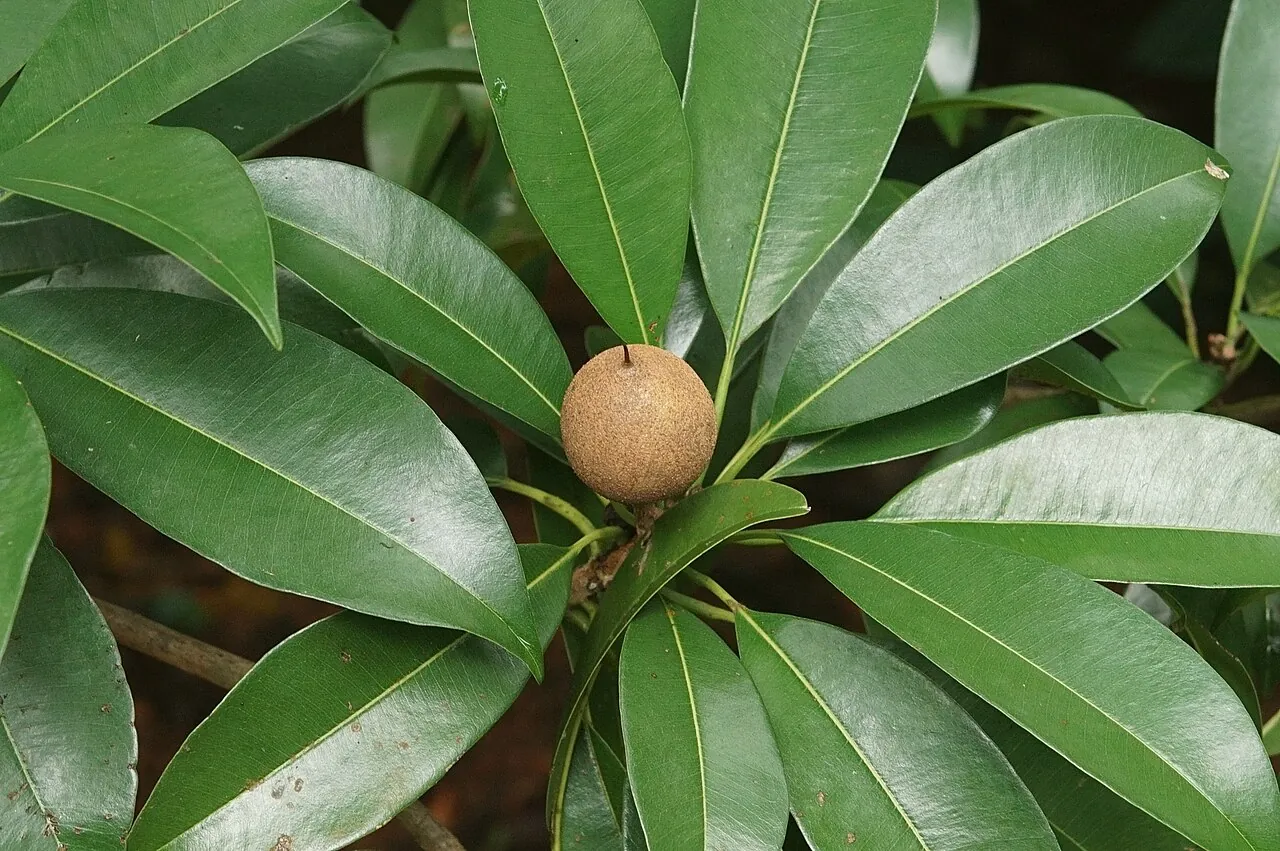
Sapodilla, Manilkara zapota, belongs to the same family as mamey sapote and abiu. Its round, oval or cone-shaped fruit measures 5–10 cm (2–4 in) across beneath a brown skin.
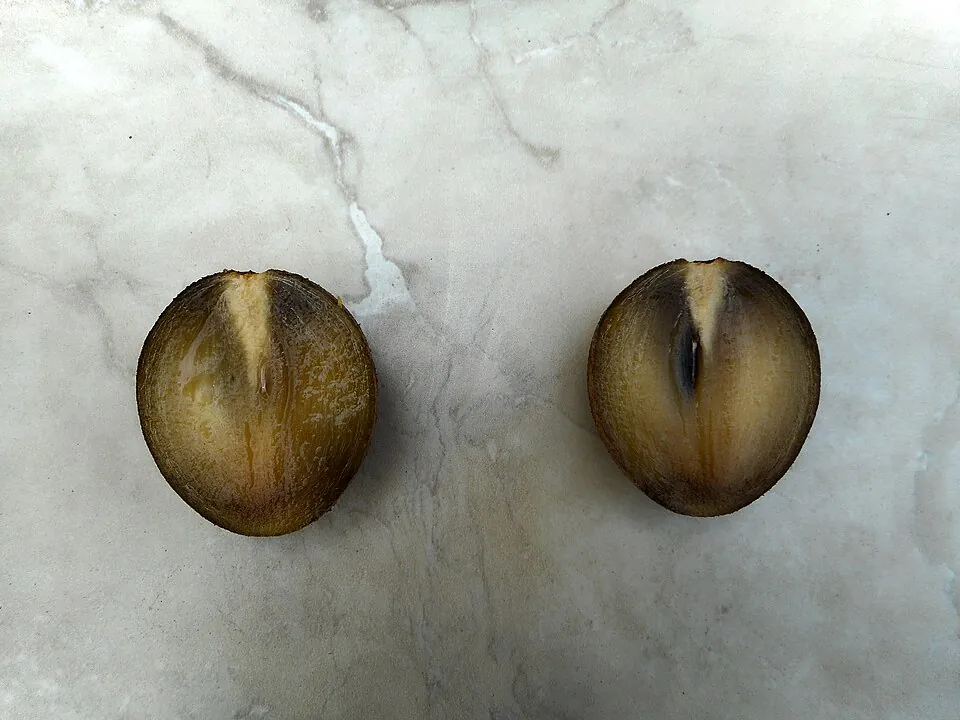
Texture depends on the variety. Brown Sugar has brown, slightly grainy flesh; Gonzalez is smooth, with light-brown to brown flesh. Inside are shiny, flattened seeds, dark brown to black. Remove these before serving.
Where it comes from
Sapodilla comes from Mexico's Yucatán Peninsula and Central America. It travelled to the Philippines early in colonial times, then spread through the Old World tropics, reaching Sri Lanka in 1802.
It is widely grown and eaten in Mexico, Central America, the Caribbean and India. In India it is mostly grown in Gujarat, Maharashtra, Karnataka, Tamil Nadu, Andhra Pradesh and Kerala.
How it's eaten where it grows
In India, chikoo goes into milkshakes and chikoo ka halwa. For the halwa, pureed fruit cooks with ghee, sugar, cardamom and khoya, also called mawa. Stirred until thick and finished with almonds and pistachios, it is served warm.
Chikoo ice cream takes the fruit in the other direction. One Indian version blends frozen slices with condensed milk, then folds them into whipped cream and milk powder before freezing. It needs no ice-cream machine.
How it's grown
Sapodilla grows on a slow-growing evergreen tree in tropical and warm subtropical climates. Growers graft shoots of a chosen variety onto seedling roots. Grafted trees can start bearing in two to four years; trees grown from seed usually take six to seven years or more.
Fruit can be picked mature and ripened off the tree. Picking too early can leave it poorly sweetened, with pockets of sticky latex in the flesh.
When and where you'll find it
In Florida, the main season usually runs May to September; around Miami it starts as early as December and runs to June. In the United States, Indian grocery stores sell frozen chikoo slices, which work well in ice cream.
Fresh fruit picked at the right maturity usually takes four to ten days to ripen. Once ripe, it can go in the refrigerator; the flesh is ready for a spoon.
Sources · 7
- Hina Gujral, Fun FOOD Frolicfunfoodfrolic.com
- Manali Singh, Cook With Manalicookwithmanali.com
- Morton, Fruits of Warm Climates (1987)hort.purdue.edu
- National Horticulture Board, Indianhb.gov.in
- National Parks Board, Singaporegardeningsg.nparks.gov.sg
- University of Florida IFASask.ifas.ufl.edu
- University of Florida IFAS, Miami-Dade Countyblogs.ifas.ufl.edu
Get it near Detroit
What it tastes like
Sweeter than a banana, as mild as a peach≈
More about the taste
Ripe sapodilla is sweet to very sweet. Depending on variety, its flesh can be smooth or gently granular rather than uniformly silky.
Variety shapes the texture: Gonzalez is smooth, Brown Sugar is slightly granular, and Russell is granular, with pulp ranging from pale tan through reddish-brown; ripeness also plays a part.
A tasting invitation
Describe the sweetness and any graininess without assuming that all sapodillas share one texture — varieties run from smoother to more granular. Brown sugar or pear can be useful tasting prompts, but record what this particular fruit actually suggests.
Choose, ripen, store, eat
1ChooseSlightly wrinkled skin
Look for
- Slightly wrinkled skin
- Softened, not mushy
Ignore
- Brown skin alone
Look for slightly wrinkled skin and fruit that has softened without becoming mushy.
2RipenRipens after picking4–10 days
Ripens after picking4–10 daysProperly mature sapodillas can finish ripening after picking, usually within four to ten days. Fruit picked too immature may stay unpleasant, fail to sweeten properly or contain latex pockets.
3StoreFridge, ripe
- FridgeRipe
Refrigerate once ripe, and use softened fruit promptly.
4EatFlesh · not seeds
Eat
FleshNot eaten
SeedsUse the soft flesh and remove the seeds before serving; don't eat the seeds.
More tips
A useful detail Sapodilla has a history beyond its fruit: chicle, a latex from the tree's bark, was once a principal ingredient in chewing gum. That doesn't make the latex in an immature fruit a desirable tasting feature.
Worth knowing
- Softening time alone won't reliably rescue an early-picked sapodilla — maturity at picking matters for eventual eating quality.
- Sapodilla varieties differ in graininess and aroma.
Detroit, Michigan
When it’s good hereUsual monthsJust arrivedAt their bestLast chanceAll yearWhere it is in its usual monthsToday, Oct 22Grown hereIn season in your stateShips fromIn season where it grows
20 growing areas, 7 countriesUsual monthsOur estimated monthsToday, Oct 22

- Andhra Pradesh
- Balochistan
- East Java
- Florida
- Himachal Pradesh
- Johor
- New South Wales
- Northern Territory +1
- Pahang
- Pará
- Penang
- Pernambuco
- South Florida
- You
4 of 8 areas · October
Growing areas by country
- India6
- Australia3
- Malaysia3
- Brazil2
- Indonesia2
- Pakistan2
- United States2
and 2 more countries
In Singapore, chiku is a familiar edible-garden tree; its bark sap was once harvested for chewing gum, called chicle, before synthetic substitutes took over — a different plant product from the sweet pulp.
25 varieties
- No variety photo yetProlific
- Taste
- high
- Texture
- creamy US-FL
- Shape
- conical · round · oval US-FL
- No variety photo yetBrown Sugar
- Taste
- very high
- Juice
- juicy
- Shape
- round · oval US-FL
- No variety photo yetMakok
- Texture
- creamy US-FL
- Tikal
- Scent
- fragrant US-FL
- Texture
- creamy US-FL
- Shape
- conical · oval US-FL
- No variety photo yetBRS-227Also Sapoti Ipacuru
- No variety photo yetBRS-228Also Sapota Tropical
54 names in 23 languages
- 人心果root
Cook it
How to serve it first
Open a washed, ripe fruit and separate its flesh from the seeds before eating or blending. Begin with a spoonful plain, then try prepared pulp in a small milkshake or frozen dessert. Keep the first version simple enough to recognize the fruit itself.
1 Sapodilla festivalUsual monthToday, Oct 22
Strange but trueHistoryScienceWhere the name came fromCustoms and cultureFood and drink
If you like Sapodilla
Tastes alike
Same plant family
Used the same way
Nutrition, sources
Nutrition
Sapodilla, raw · per 100 g
- Carbohydrate
- 20 g
- Fiber
- 5.3 g
- Protein
- 0.4 g
- Fat
- 1.1 g
- Vitamin C
- 15 mg
- Potassium
- 193 mg
Sources
Sapodilla · Fruitopia · checked Sep 21, 2026