Date
Also called Date palmPhoenix dactylifera · Arecaceae family
Explore dates as a progression from crisp fresh fruit to soft and chewy mature fruit, then try both sweet and savory uses.
Find it near DetroitGet to know it
Dates are palm fruits with sweet flesh wrapped around one long, hard pit. A Medjool tastes of caramel and feels creamy and chewy; a yellow Barhi can still be crisp. The familiar brown date is one stage in a fruit’s journey from firm and juicy to soft or dry.
What it is
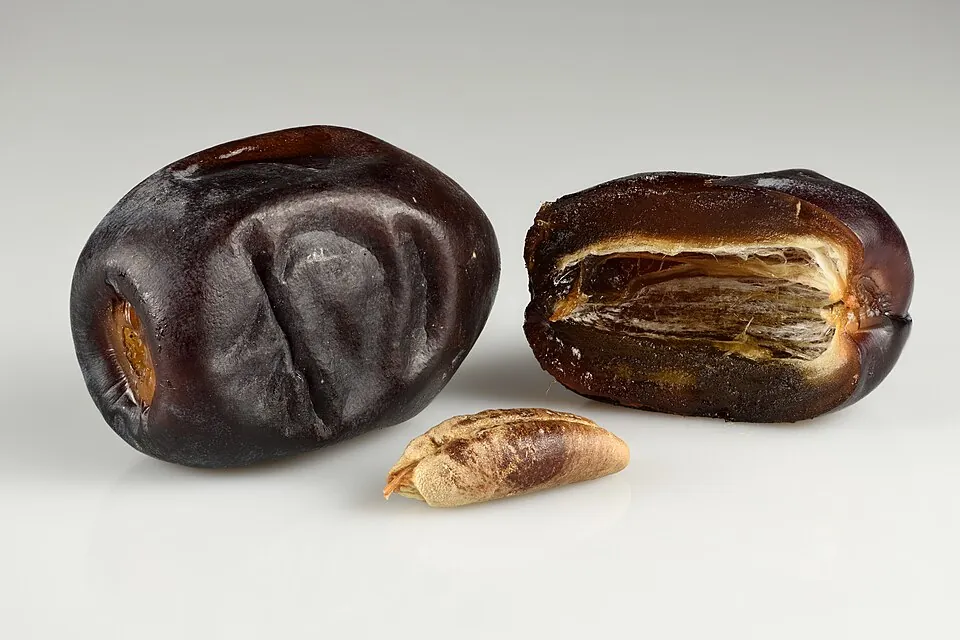
The date palm is Phoenix dactylifera. Its oblong fruits measure about 2.5–7.5 cm (1–3 in) long. Inside is one narrow stone with a groove down its side.
Dates reach shops at three stages. Khalal is full-sized and crisp, with yellow or red skin. Rutab begins to brown and soften. Tamr, also spelled tamar, has lost more water and can be pliable, firm or hard. Variety changes the bite too: Medjool is creamy and rich, while Deglet Noor is firmer, drier and more delicately sweet.
Where it comes from
People cultivated dates in eastern Arabia by 4000 BC. Today Egypt is the largest grower, producing more than 1.8 million tonnes a year in places including the Nile Valley and the oases of the Western Desert.
In the United States, California’s Coachella Valley grows Medjool, Deglet Noor and other varieties. India grows dates in Gujarat’s Kutch region and around Barmer in western Rajasthan. Hot, dry growing regions connect these otherwise distant places.
How it's eaten where it grows
In Lebanon, dates become the filling of maamoul, patterned semolina cookies baked in large batches for Easter and Christmas. Butter enriches the dough; rose water and orange-blossom water scent it. The filling sits inside, and a mould presses a pattern onto the outside.
In California’s Coachella Valley, dates go into date shakes. Shields Date Garden pairs its shake counter with tastings of the varieties grown in its own grove. A crisp yellow Barhi offers another way to eat a date fresh, before it turns into the familiar soft brown fruit.
How it's grown
Date palms need hot, dry air above ground and plenty of water below it. Male and female flowers grow on separate palms, so growers collect male pollen and carry it to the female flowers.
New palms grow from offshoots, shoots taken from the parent palm, or from tissue culture. Offshoots keep the parent’s variety. A planted offshoot can fruit in about four years, with a substantial crop in its fifth or sixth year.
When and where you'll find it
California’s Coachella Valley usually harvests dates from September through December. Across the equator, Desert Fruit Company in Central Australia usually picks from mid-February to early May.
In US supermarkets, fresh California dates sit in the produce aisle, while dates dried further after harvest often sit with baking ingredients. Yellow khalal dates offer crunch; the brown stages offer a softer or drier chew.
Sources · 9
- Arava Institutearava.org
- California Date Commissioncaliforniadates.comOther pages23
- Desert Fruit Companydesertfruitcompany.com.au
- FAO, Date Palm Cultivationfao.orgOther pages2
- FAO, One Country One Priority Productfao.org
- Indian Council of Agricultural Researchicar.org.in
- Julie Ann Sageer, Julie Taboulie’s Lebanese Kitchenjulietaboulie.com
- Morton, Fruits of Warm Climates (1987)hort.purdue.edu
- Shields Date Gardenshieldsdategarden.com
Get it near Detroit
What it tastes like
Sweeter than a banana, as mild as a peach≈
More about the taste
Dates are not all uniformly sticky. At khalal, some varieties are crisp; rutab fruit softens and browns, while tamar-stage fruit has less moisture and can range from pliable to firm.
Khalal-stage dates are sweet and juicy while still firm. Rutab dates soften, often starting at the tip; tamr dates have lost more water and are drier and chewier.
Varieties including Amri and Zahidi can turn dry and hard when they ripen in hot, low-humidity conditions.
A tasting invitation
Note chewiness, moisture and sweetness separately. Comparing two named varieties is most revealing when both are served at the same temperature, and a crisp fresh-stage date shouldn't be judged by soft dried-date expectations.
Choose, ripen, store, eat
1ChooseVariety and stage
Look for
- Variety and stage
Ask for both the variety and the stage. Barhee is one variety sold for eating firm, at the khalal stage — not every firm, unripe date is good to eat that way.
2RipenDate stages (khalal, rutab, tamar) mark real changes in moisture and texture, but hard dates don't all soften the same way — choose the stage you want rather than waiting for one to change
Date stages (khalal, rutab, tamar) mark real changes in moisture and texture, but hard dates don't all soften the same way — choose the stage you want rather than waiting for one to change.
3StoreTreat fresh khalal and soft rutab dates as perishable
Treat fresh khalal and soft rutab dates as perishable. Drier tamar dates keep longer — follow the package's storage guidance rather than treating fresh dates like dried ones.
4EatFlesh · not pit
Eat
FleshNot eaten
PitEat the flesh after removing the pit. Pitted dates work as a filling or as pieces in a savory dish.
More tips
A useful detail Soft and semi-soft varieties differ in texture and storage behavior, so Medjool and Deglet Noor aren't interchangeable. Sugar can migrate to the surface and look unusual; inspect before assuming it's harmless.
Worth knowing
- Ask for both variety and stage when buying fresh dates: some are eaten firm, others brown and soft.
- Soft and dry describe a date's texture, not its sweetness, nutrition or ripeness.
Detroit, Michigan
When it’s good hereUsual monthsJust arrivedAt their bestLast chanceAll yearWhere it is in its usual monthsToday, Oct 22Grown hereIn season in your stateShips fromIn season where it grows
15 growing areas, 8 countriesUsual monthsOur estimated monthsToday, Oct 22

- Al Wadi al Jadid
- Balochistan
- California
- Florida
- Hawaii
- Kebili
- Murcia
- Northern Cape
- Northern Territory
- Sindh
- Tozeur
- Valencia
- You
0 of 1 areas · October
Growing areas by country
- United States4
- Pakistan3
- Spain2
- Tunisia2
- Australia1
- Egypt1
- Iran1
- South Africa1
and 3 more countries
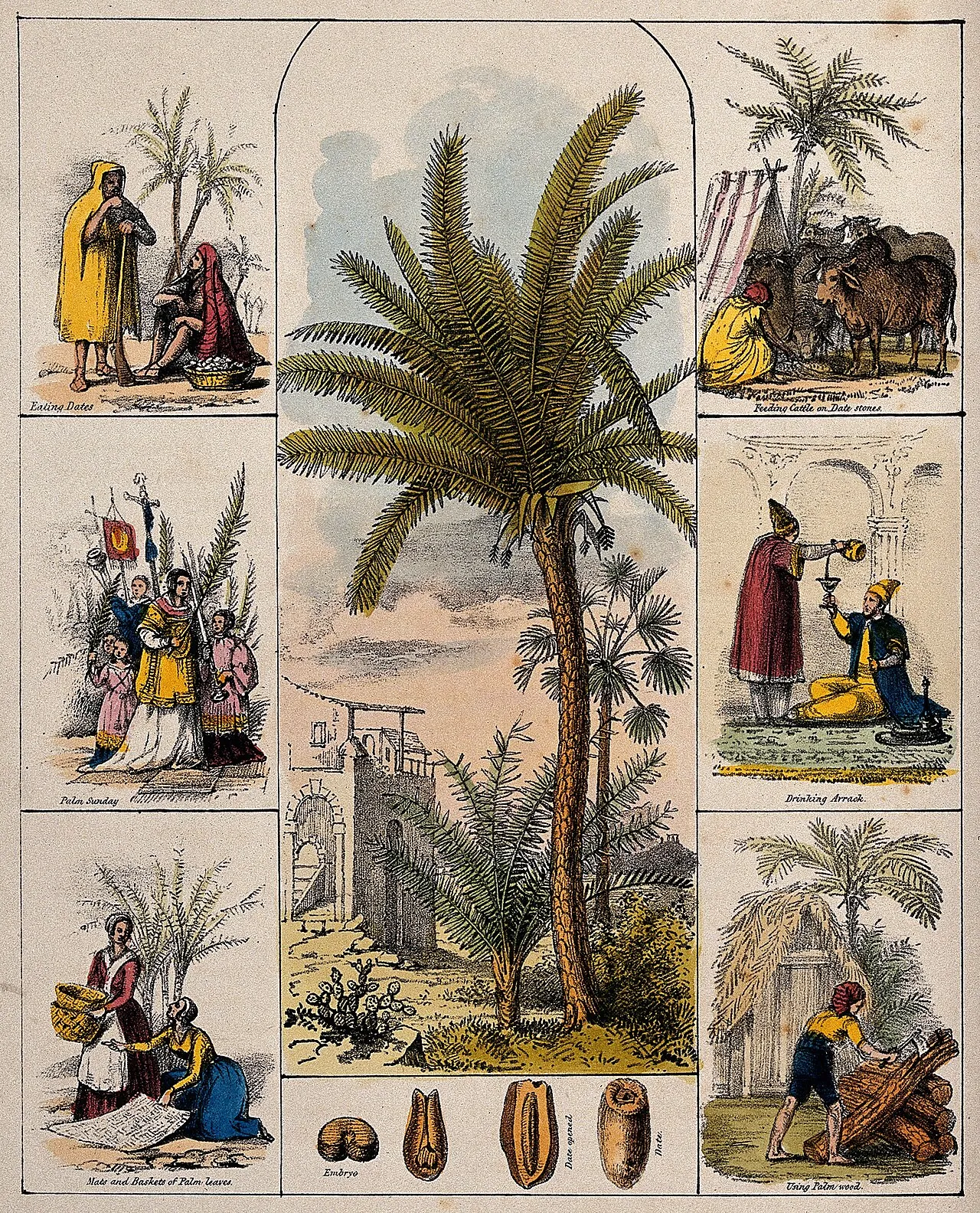
Date-palm knowledge and practices across the Arab region include cultivation, crafts made from palm parts, social rituals, poetry and songs.
41 varieties
- Ajwa
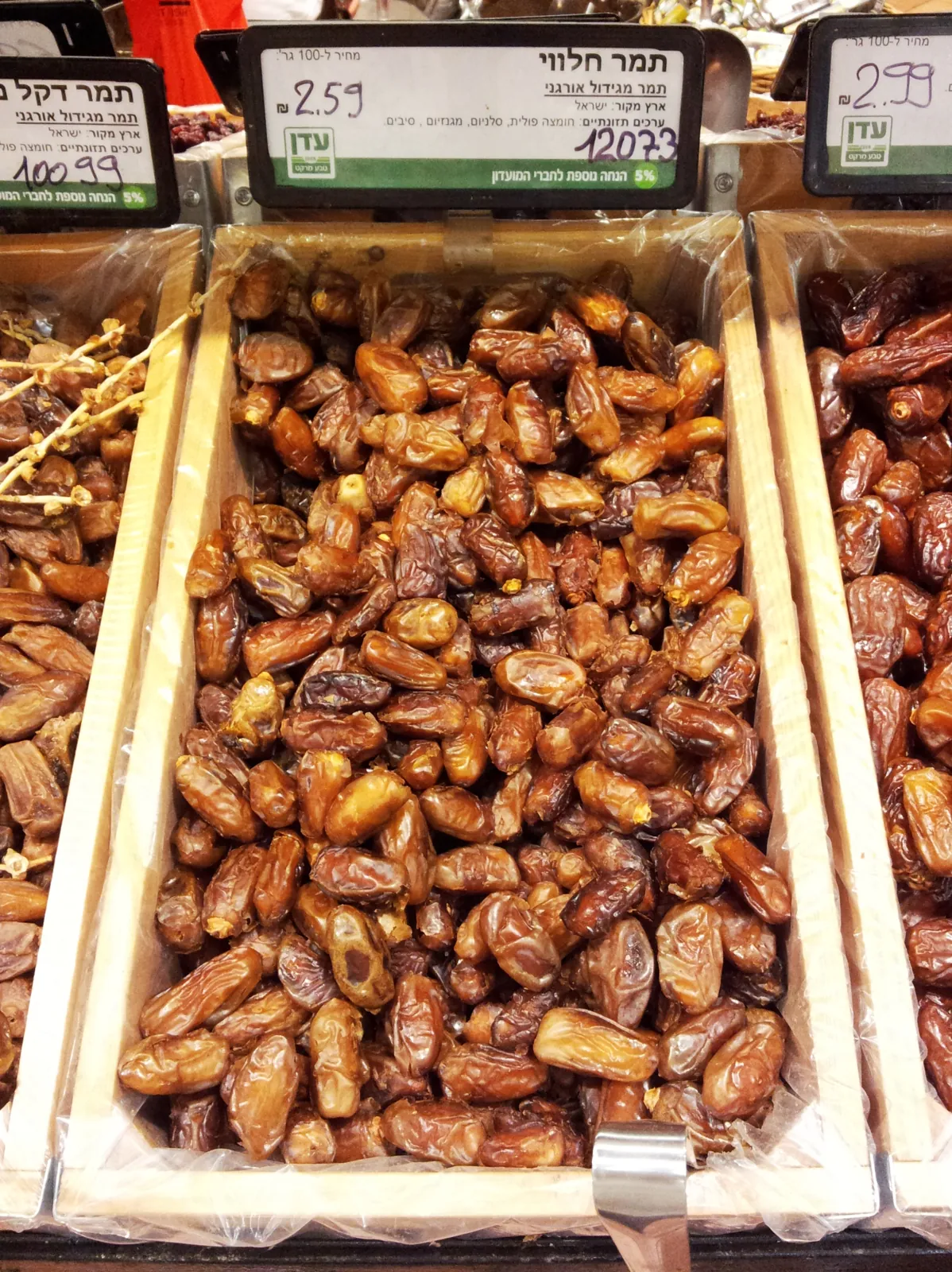 Halawy
- Flavour
- rich-flavored
- Feel
- soft
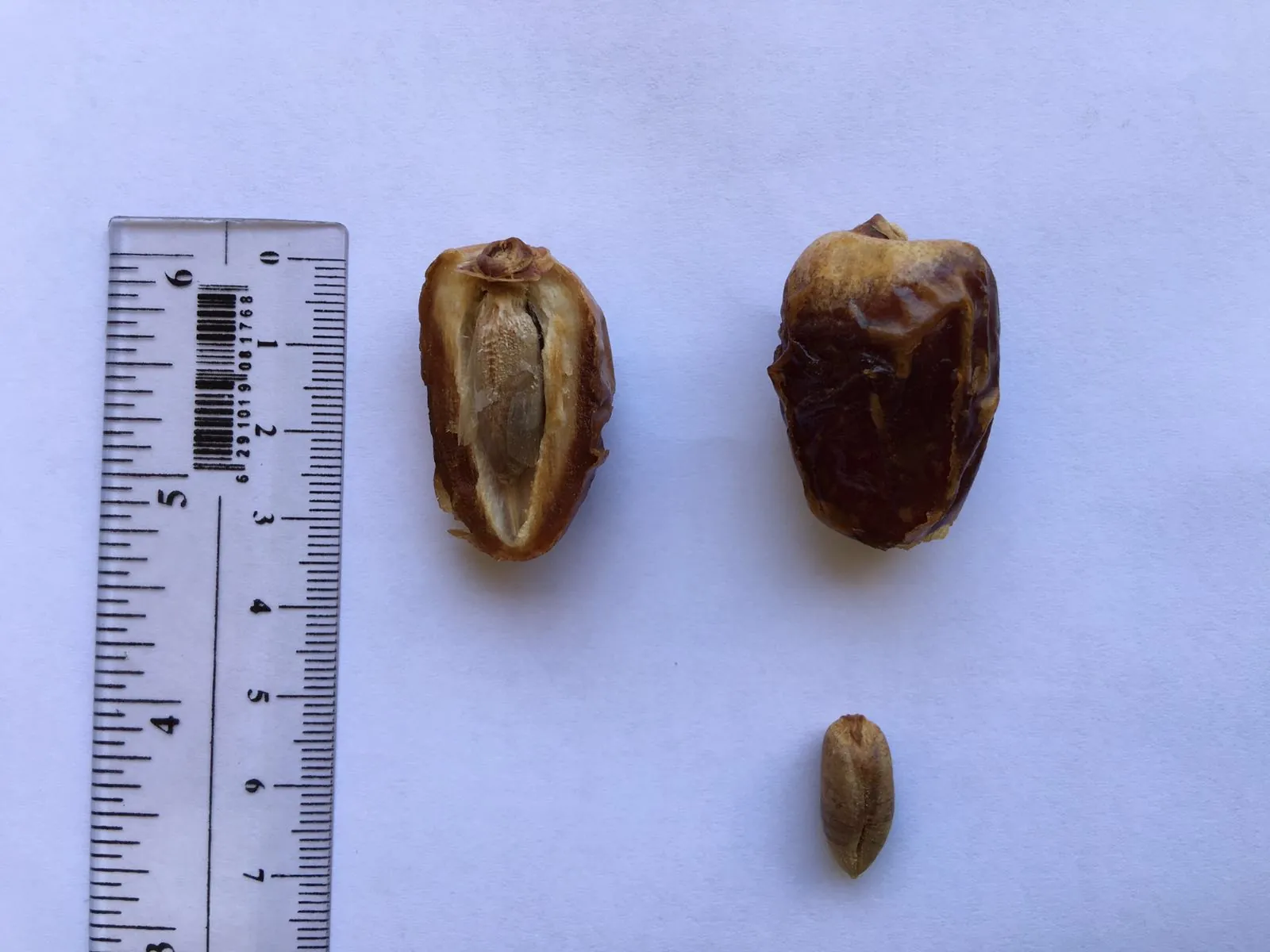 AshrasiAlso Ascherasi, AsharasiPhoto: Ahmed1251985 · CC BY-SA 4.0
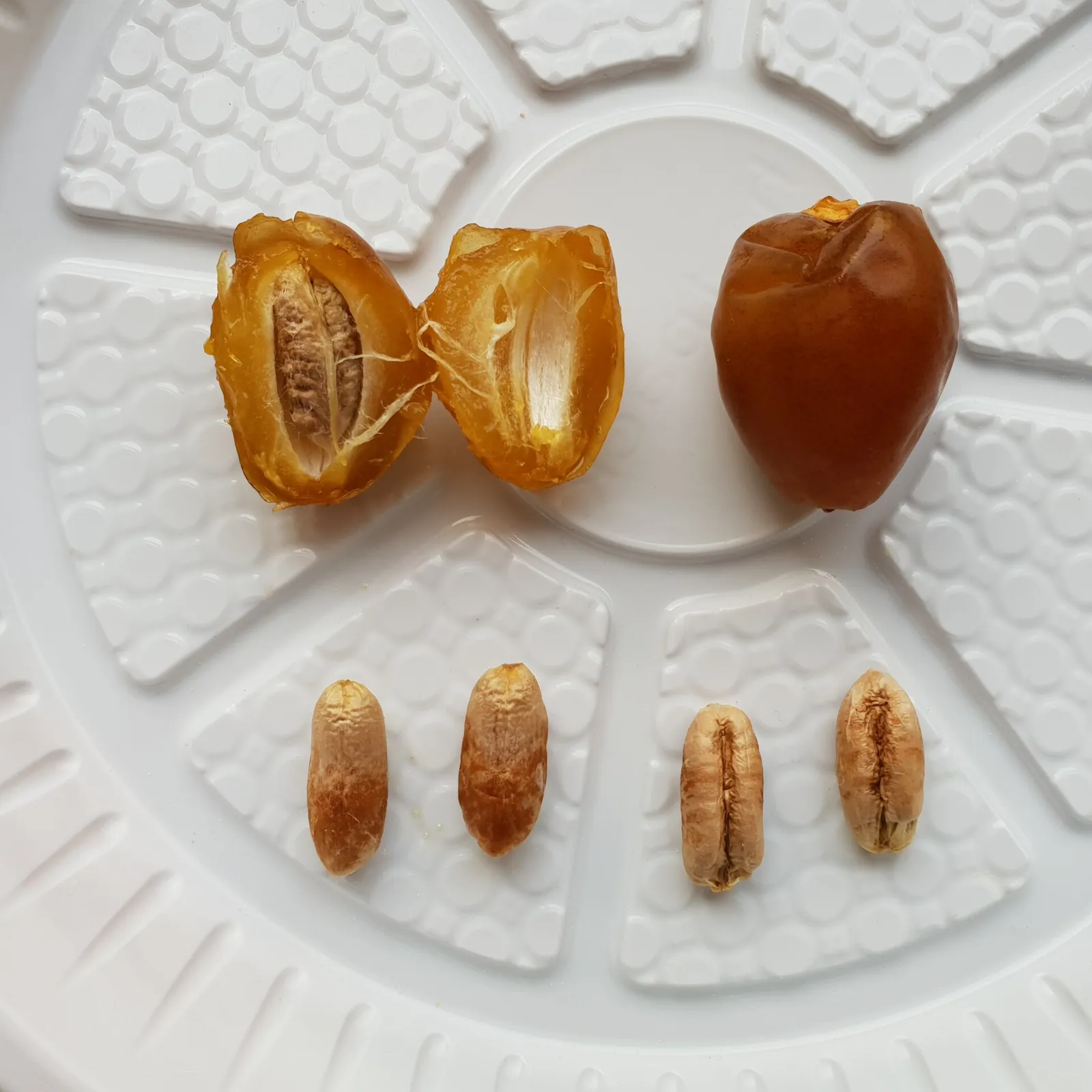 BarhiAlso برحی, Berhi · +1Photo: Ahmed1251985 · CC BY-SA 4.0
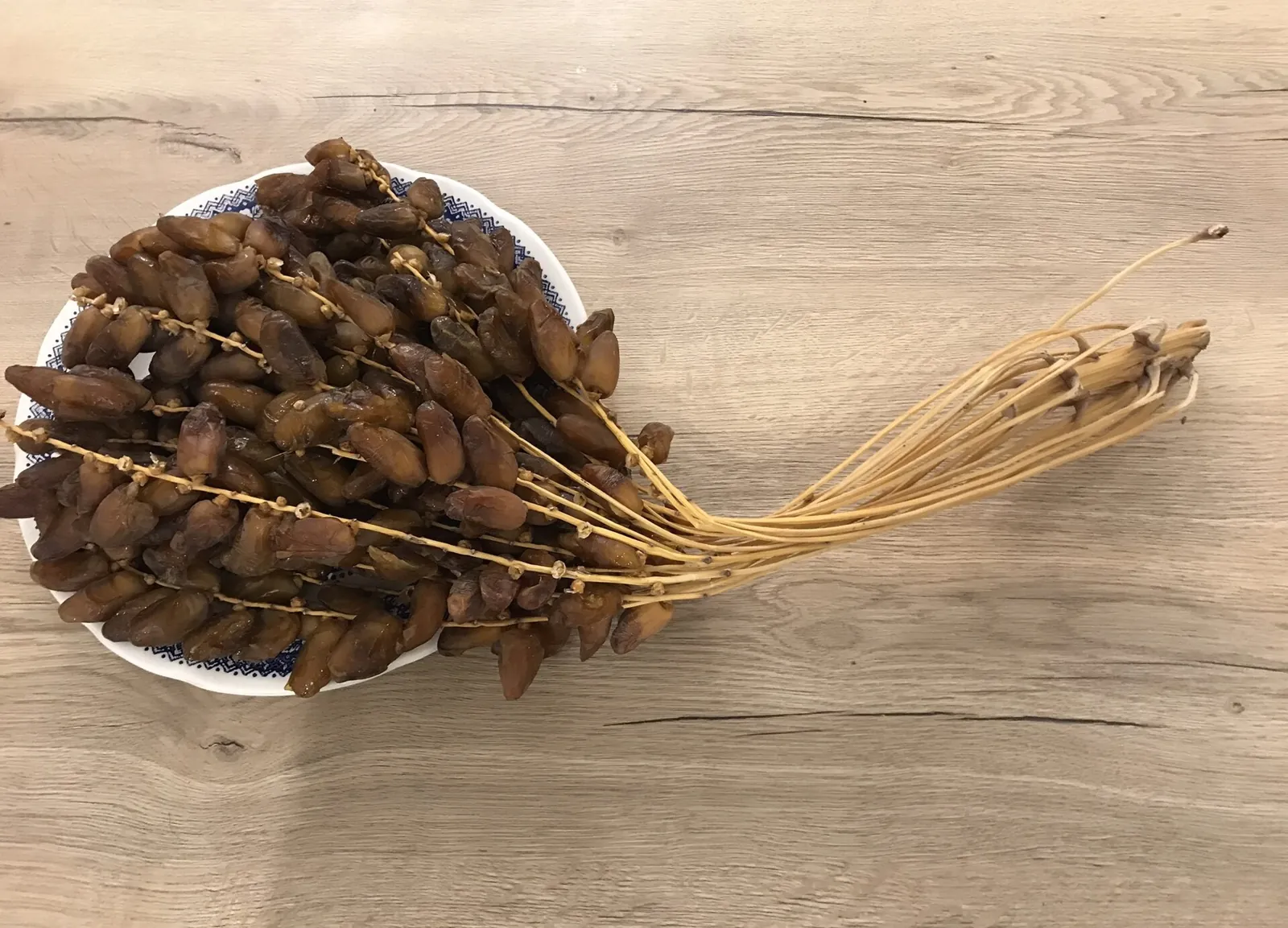 Deglet NoorAlso Deglet Nour, Deglet NurPhoto: Mouh2jijel · CC BY-SA 3.0
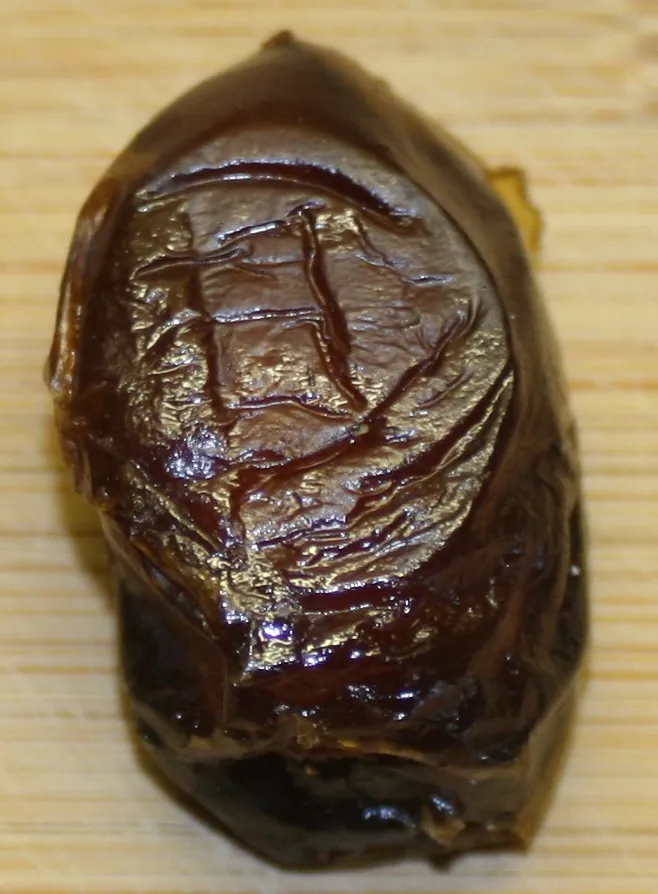 KhadrawyAlso Khadhrawi, Khadrawi · +1Photo: J.P.Lon · CC BY-SA 3.0
92 names in 23 languages
- khalalroot
Cook it
How to serve it first
Open each date and remove its pit before chopping, stuffing or blending. Try a small piece plain first, then pair a pitted date with a nut or a spoonful of yogurt. Match the preparation to the fruit's softness rather than forcing every type into one role.
3 date festivalsUsual monthToday, Oct 22
Strange but trueHistoryA myth, and the truthScienceNatureWhere the name came fromCustoms and cultureFood and drinkPeople
If you like Date
Tastes alike
Close relatives
Same plant family
Used the same way
Nutrition, sources
Nutrition
Dates, medjool · per 100 g
- Carbohydrate
- 75 g
- Fiber
- 6.7 g
- Sugars
- 66 g
- Protein
- 1.8 g
- Fat
- 0.2 g
- Vitamin C
- 0 mg
- Potassium
- 696 mg
Sources
Date · Fruitopia · checked Sep 21, 2026
What we don't know yet
Retail labels don't always say which stage a date is at, though that matters more than a generic shelf-life number.