Jackalberry
Also called Jackal Berries · Ebony diospyrosDiospyros mespiliformis · Ebenaceae family
An African persimmon relative with food, woodland and timber stories.
Find it near DetroitGet to know it
Jackalberry is a small African relative of the persimmon, with soft, sweet flesh inside yellow to orange-yellow skin. In Namibia, its sweetness carries into oshihenyandi: dried fruit pounded into a warm millet porridge.
What it is
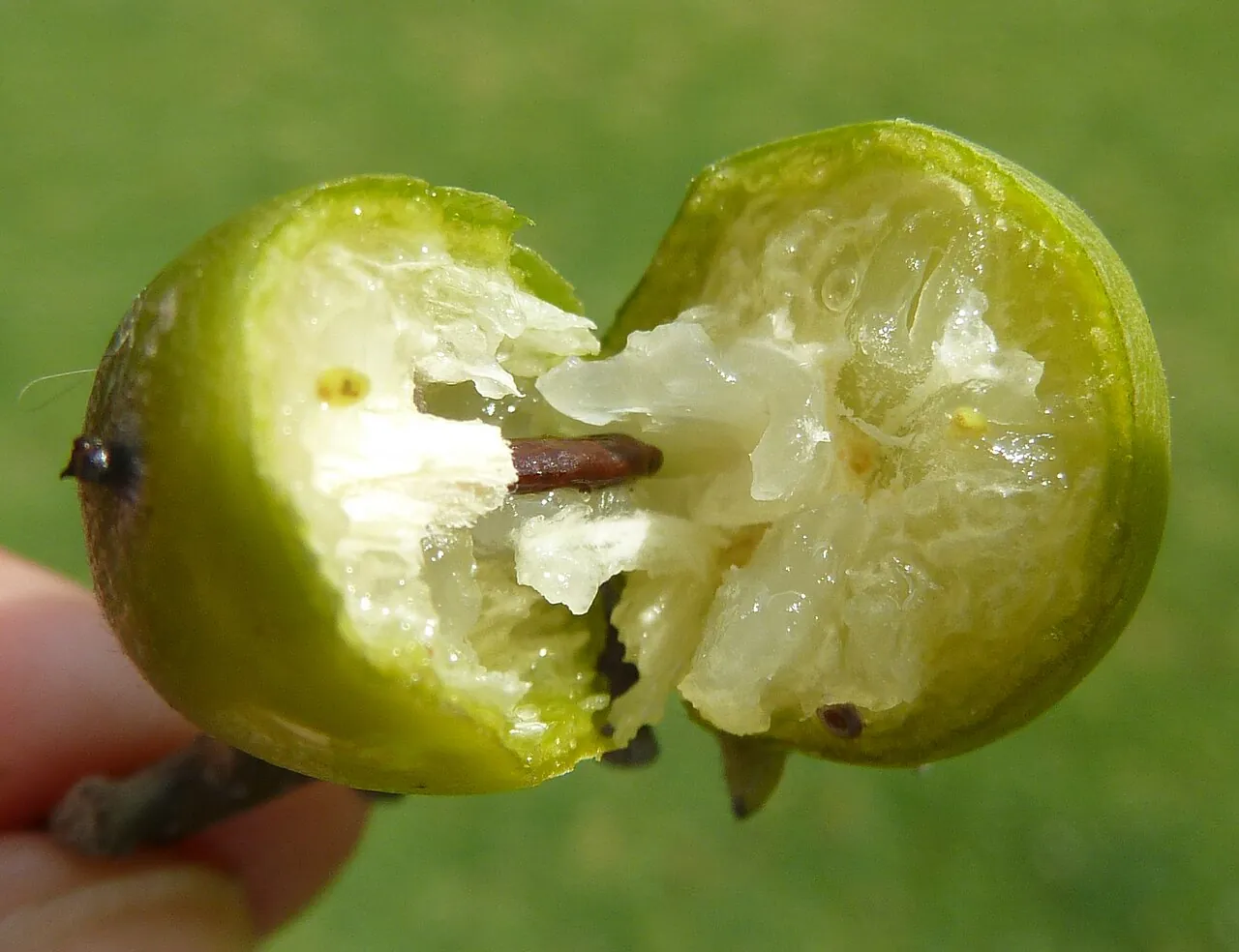
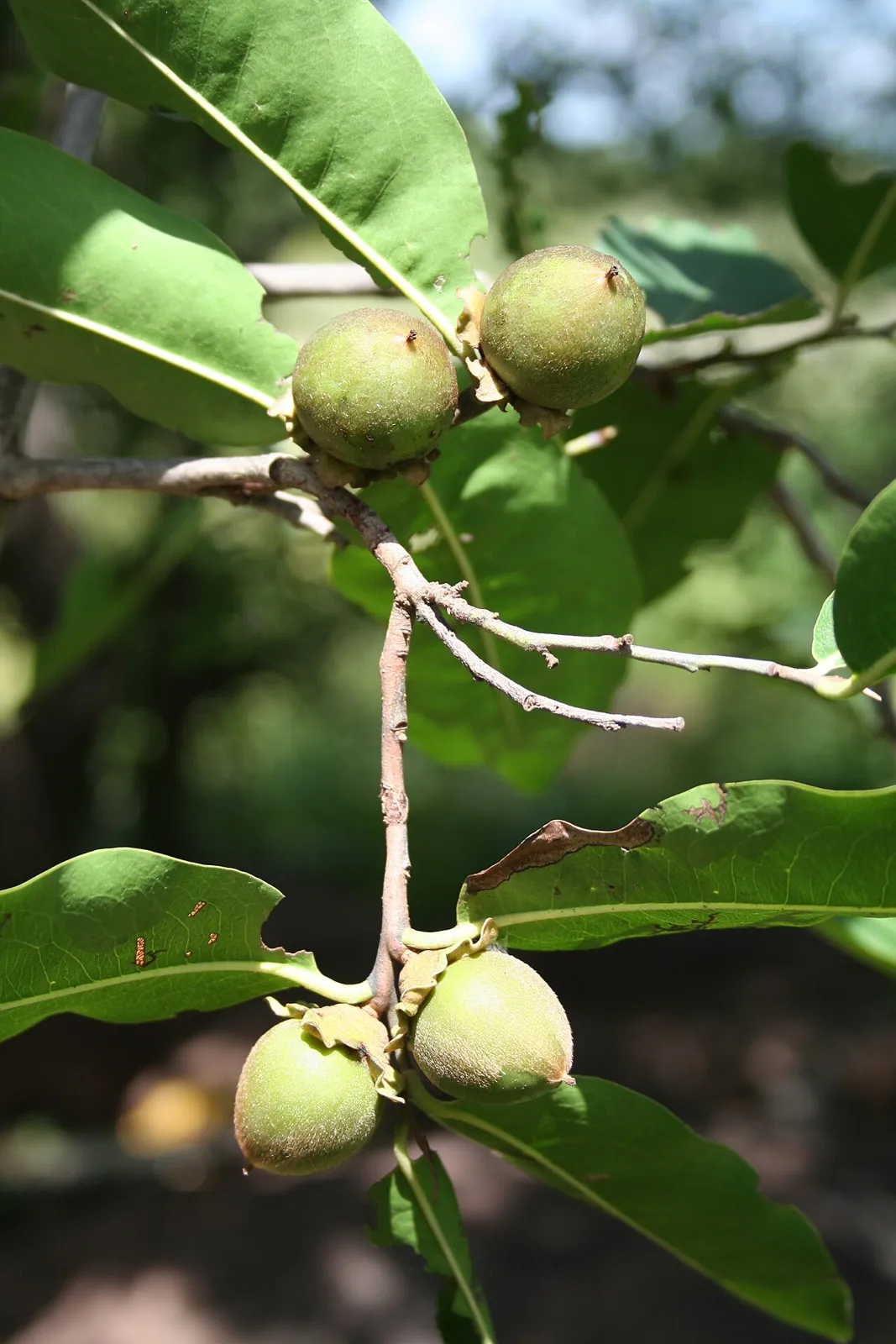
A jackalberry is a rounded fruit up to 3 cm (1¼ in) across. Its green, slightly hairy skin becomes smooth and yellow to orange-yellow as it ripens. Inside are several dark-brown, bean-shaped seeds. The old flower cup stays attached around the base.
The tree's scientific name is Diospyros mespiliformis. In Namibia it is also called African ebony or omwandi.
Where it comes from
Jackalberry grows across a broad sweep of Africa, from Guinea and Nigeria through Ethiopia to Namibia and South Africa; its native range also reaches Yemen. It belongs to woodlands, savannas and riverbanks, and often grows on termite mounds.
In northern Namibia, wild trees stretch from Kunene east to the Caprivi region. There, the fruit is both a fresh snack and a food to dry for later.
How it's eaten where it grows
In Namibia, dried jackalberries are pounded and mixed with boiling water and millet meal to make oshihenyandi, a sweet porridge eaten during the dry period. The fruit can also be mixed with maize meal.
The sweetest fresh berries are eaten straight away, while some of the harvest is dried. Jackalberries also go into ombike, a strong Namibian drink made from fermented fruit.
How it's grown
In Namibia, the tree can reach 25 m (82 ft). Male and female flowers grow on separate trees, with bees carrying pollen between them. The fruit takes six to eight months to ripen after pollination, so the harvest falls in the dry season.
The tree grows faster without frost and favours the heavy soils beside rivers. It prefers places with permanent water.
When and where you'll find it
In southern Africa, jackalberries usually ripen from April to September, following flowering in October and November. In northern Namibia, winter is the usual gathering season. Fresh berries are eaten locally, and drying keeps part of the crop for later meals and snacks.
Get it near Detroit
What it tastes like
As sweet as a banana, as mild as a peach≈
More about the taste
Ripe jackalberry pulp is soft and notably sweet; in Namibia, dried fruit is also used in millet porridge.
How to buy it
1EatPulp · not seeds
Eat
PulpNot eaten
SeedsFor juice, seeds are removed before blending; pulp-only and pulp-and-peel versions are both made.
Detroit, Michigan
When it’s good hereUsual monthsJust arrivedAt their bestLast chanceAll yearWhere it is in its usual monthsToday, Oct 22Grown hereIn season in your stateShips fromIn season where it grows
9 names in 6 languages
- Igi dúdúYoruba
- ظلامةArabic
- 胡狼柿Chinese
- ジャッカルベリーJapanese
Cook it
Strange but trueNatureCustoms and cultureFood and drink
If you like Jackalberry
Tastes alike
Close relatives
Used the same way
Sources
Photos · 2
Sources
Jackalberry · Fruitopia · checked Sep 22, 2026