Evergreen huckleberry
Also called California huckleberry · Winter huckleberryVaccinium ovatum · Ericaceae family
A Pacific coastal huckleberry whose food history includes fresh berries and preserved berry cakes.
Find it near DetroitGet to know it
Evergreen huckleberry is a tiny, dark Pacific Coast berry with a sweet-tart bite. It grows beneath redwoods and on coastal bluffs, on a shrub that keeps its glossy leaves through winter. The berries fill tarts and keep for later, frozen or canned.
What it is
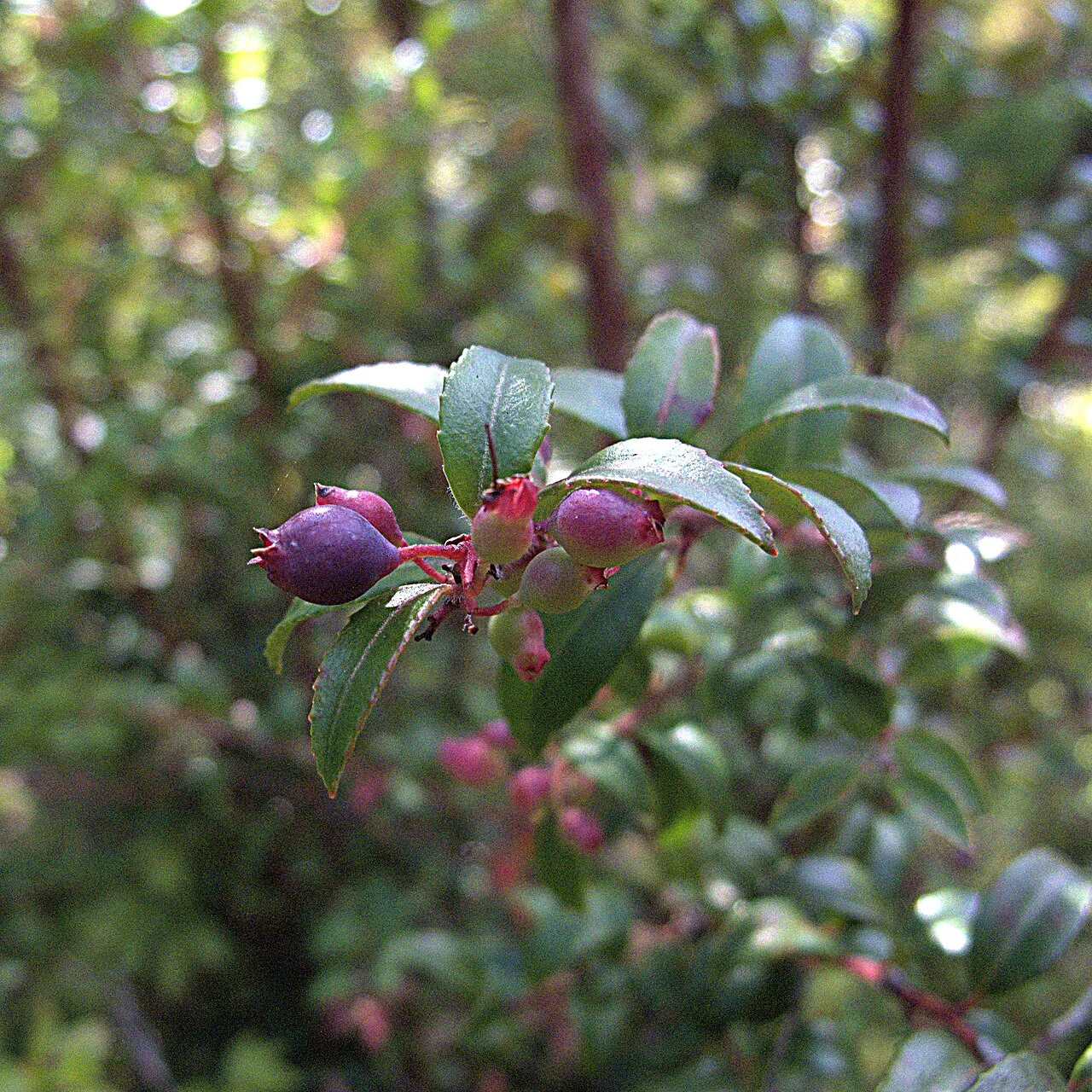
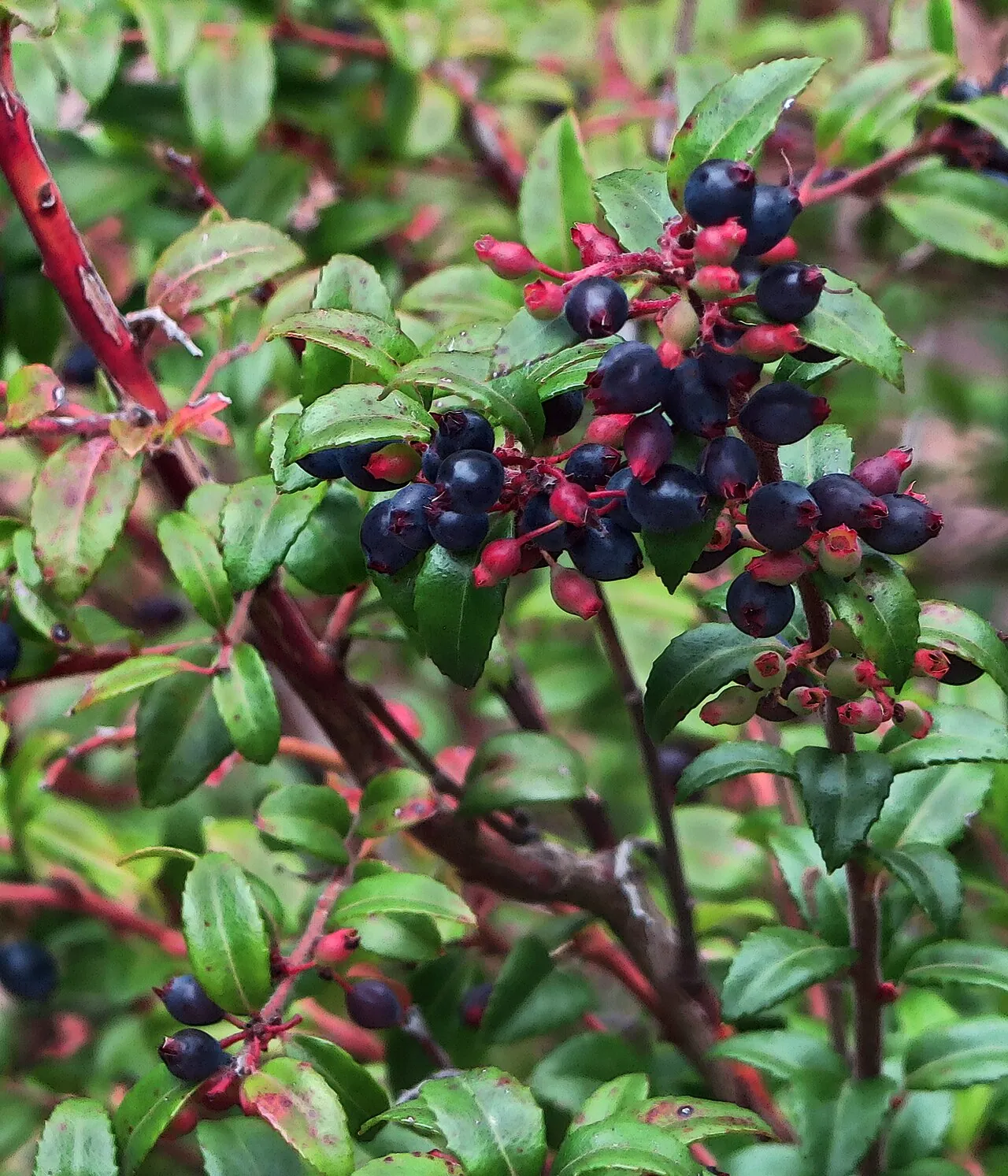
Evergreen huckleberry, Vaccinium ovatum, belongs to the same plant group as blueberries and cranberries. Each berry is just 0.6–0.9 cm (about ¼–⅜ in) across, with many tiny seeds inside. Berries grow in clusters close to the branches, changing from red to blue-black as they ripen. The shrub has small, leathery leaves with toothed edges.
Where it comes from
This is a fruit of North America’s Pacific coast, from British Columbia through Washington and Oregon to California. It grows beneath coastal conifers and in Northern California’s redwood forests.
David Douglas introduced the shrub into cultivation in 1826. It is still grown in gardens as well as gathered in the wild, and native plant nurseries offer it for planting within its home range.
How it's eaten where it grows
Coastal peoples including the Sechelt and Nuu-chah-nulth in British Columbia and the Quinault in Washington have long eaten these berries. Traditional preparations include fresh berries with oil and berries dried in sun or smoke, partly mashed into cakes and wrapped in leaves or bark.
In West Marin, California, Grandma Norma’s Wild Huckleberry Tart puts the local harvest in a butter crust with sugar and cinnamon. Fresh berries go on top just after baking; the heat below partly cooks them, leaving two textures in one tart.
How it's grown
Evergreen huckleberry likes acidic soil that drains well. It grows in shade or partial sun, with brighter sites producing more flowers and berries. The small pink-to-white bells attract long-tongued bees, including bumblebees, which carry the pollen.
Plants are raised from seed or cuttings. Cascade Jewel is an upright garden variety about 1.1 m (3½ ft) tall, with large hanging bunches of berries.
When and where you'll find it
In Humboldt and Del Norte coastal gardens, berries usually ripen from July through October, with picking sometimes continuing into late fall. Fresh wild huckleberries occasionally appear at local farmers’ markets in Northern California.
Home cooks preserve evergreen huckleberries by freezing or canning them. Commercial processors also use the fruit in pie filling, carrying the harvest beyond its fresh season.
Sources · 6
- Elizabeth Hill, Edible Marin & Wine Countryediblemarinandwinecountry.ediblecommunities.com
- Karen Pavone, Edible Marin & Wine Countryediblemarinandwinecountry.ediblecommunities.com
- Oregon State Universitylandscapeplants.oregonstate.edu
- University of California Agriculture and Natural Resourcesucanr.edu
- USDA Forest Service, Fire Effects Information Systemfs.usda.govOther pages23
- USDA Natural Resources Conservation Serviceplants.sc.egov.usda.gov
Get it near Detroit
What it tastes like
As sweet as a banana, as mild as a peach≈
More about the taste
In Humboldt and Del Norte coastal gardens, evergreen huckleberries taste both sweet and tart.
Some communities traditionally prefer the berries after freezing.
Choose, eat
1ChooseDeep purple-black
Look for
- Deep purple-black
Ripe evergreen huckleberries are deep purple-black; reddish fruit is not yet ripe. Remove stems, leaves and needles before baking with them.
2EatBerries · not stems, leaves, needles
Eat
BerriesNot eaten
StemsLeavesNeedlesThe berries are eaten fresh and used in cooked foods and jam.
Detroit, Michigan
When it’s good hereUsual monthsJust arrivedAt their bestLast chanceAll yearWhere it is in its usual monthsToday, Oct 22Grown hereIn season in your stateShips fromIn season where it grows
1 growing area, 1 countryUsual monthsToday, Oct 22

- California
- You
1 of 1 areas · October
In British Columbia and western Washington, communities have traditionally eaten fresh berries with oil, and dried or partly mashed them into cakes.
4 varieties
Cook it
Strange but trueHistoryNatureCustoms and cultureFood and drink
If you like Evergreen huckleberry
Tastes alike
Sources
Photos · 2
Sources
Evergreen huckleberry · Fruitopia · checked Sep 22, 2026