Jackfruit
Artocarpus heterophyllus · Moraceae family
The ripe sweet pods and the young savory cooking fruit deserve separate introductions.
Find it near DetroitGet to know it
Ripe jackfruit hides sweet bulbs that smell of pineapple and banana inside a rough green or yellow shell. Picked young, the same fruit is cooked as a vegetable in soups and stews. A whole jackfruit can weigh 4.5–27 kg (10–60 lb), and Indian groceries often sell it cut into sections.
What it is
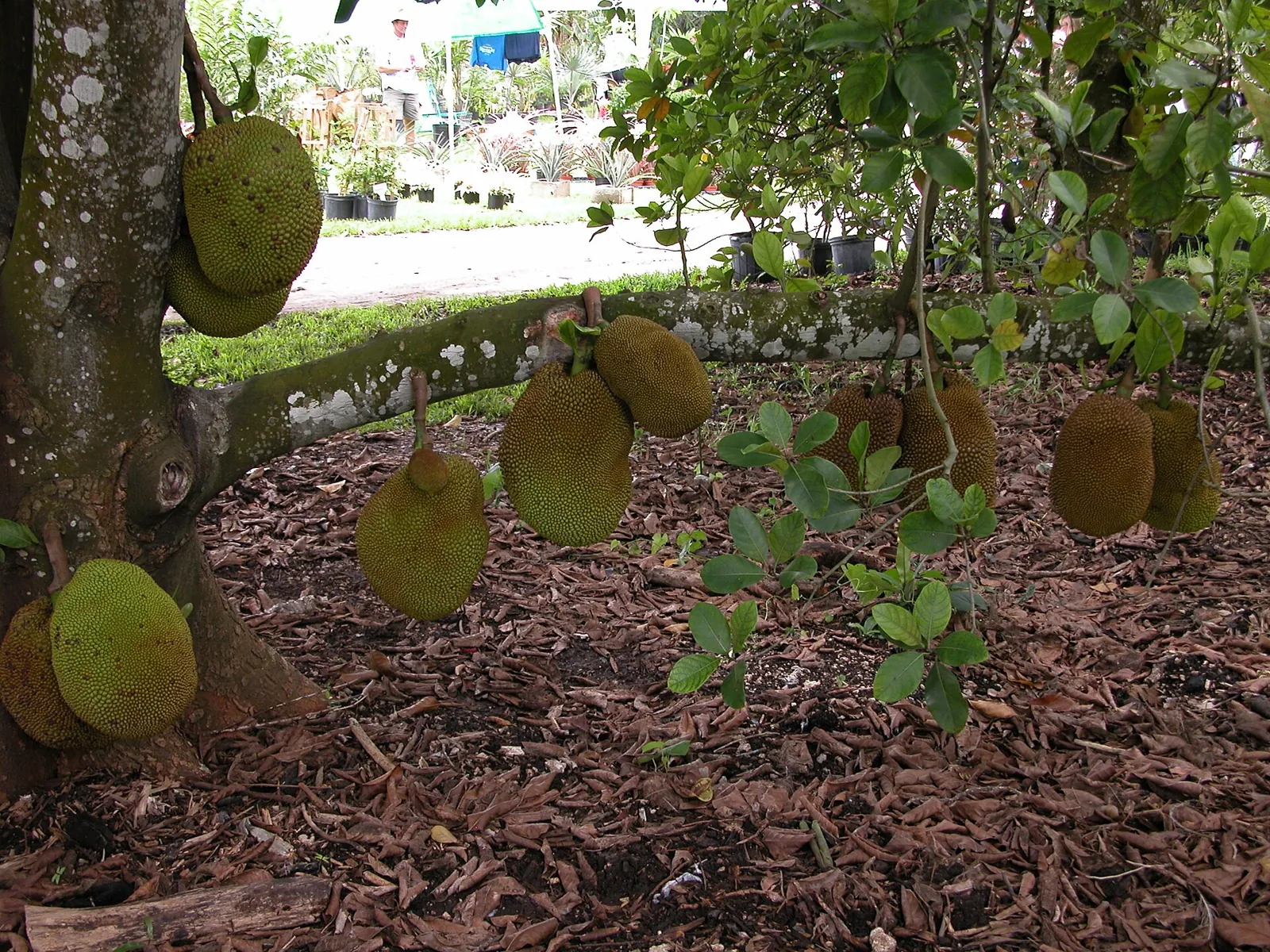
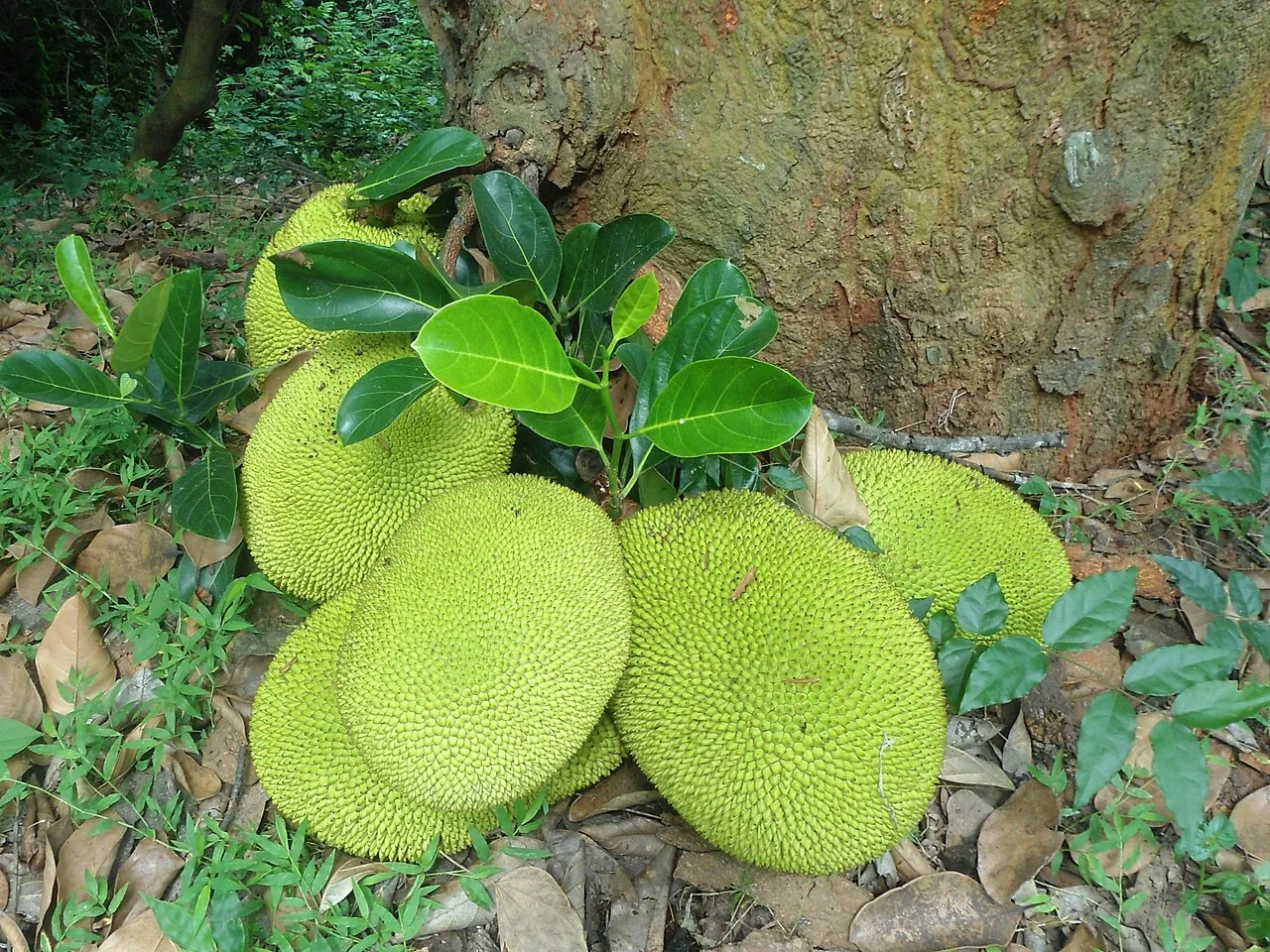
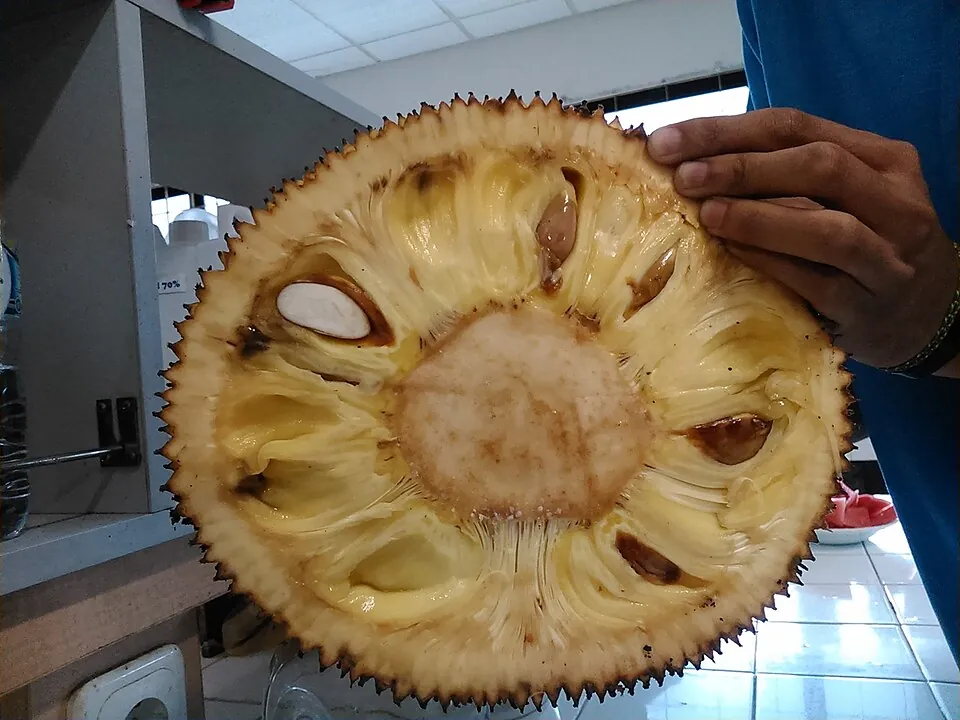
A whole jackfruit can be 20–90 cm (8–35 in) long. Its rough skin is covered in hard, cone-like points over a thick, rubbery wall. Inside are fleshy bulbs, each around a seed, with stringy fibres and a core between them.
The ripe flesh ranges from amber to yellow or orange, and from crisp to soft or melting. In South India, people sort jackfruit into two types: soft, very sweet koozha and crisp varikka. Young jackfruit is a separate cooking ingredient, used in savoury dishes. The seeds are another food, eaten boiled or roasted.
Where it comes from
Jackfruit probably comes from southwest India and spread through Southeast Asia in ancient times. It matters most in India and in Sri Lanka, southern China, Malaysia and Myanmar. It also grows in the Philippines, Australia, East Africa, Mexico, the Caribbean, and Central and South America.
In the United States, it is not widely grown, but trees grow in South Florida and Hawaiʻi.
How it's eaten where it grows
In Kerala, ripe jackfruit becomes chakka pradhaman, a payasam, or sweet pudding, made with jaggery and coconut milk. It is one of the desserts of the Onam sadya feast, and is usually made from chakka varatti, a jackfruit jam.
In Yogyakarta, Indonesia, shredded young jackfruit becomes gudeg. It simmers for several hours with palm sugar and coconut milk, then is served with rice, often alongside chicken curry and seasoned boiled eggs. The fruit’s stage at harvest makes these dishes quite different: sweet ripe fruit for the pudding, young flesh for the stew.
How it's grown
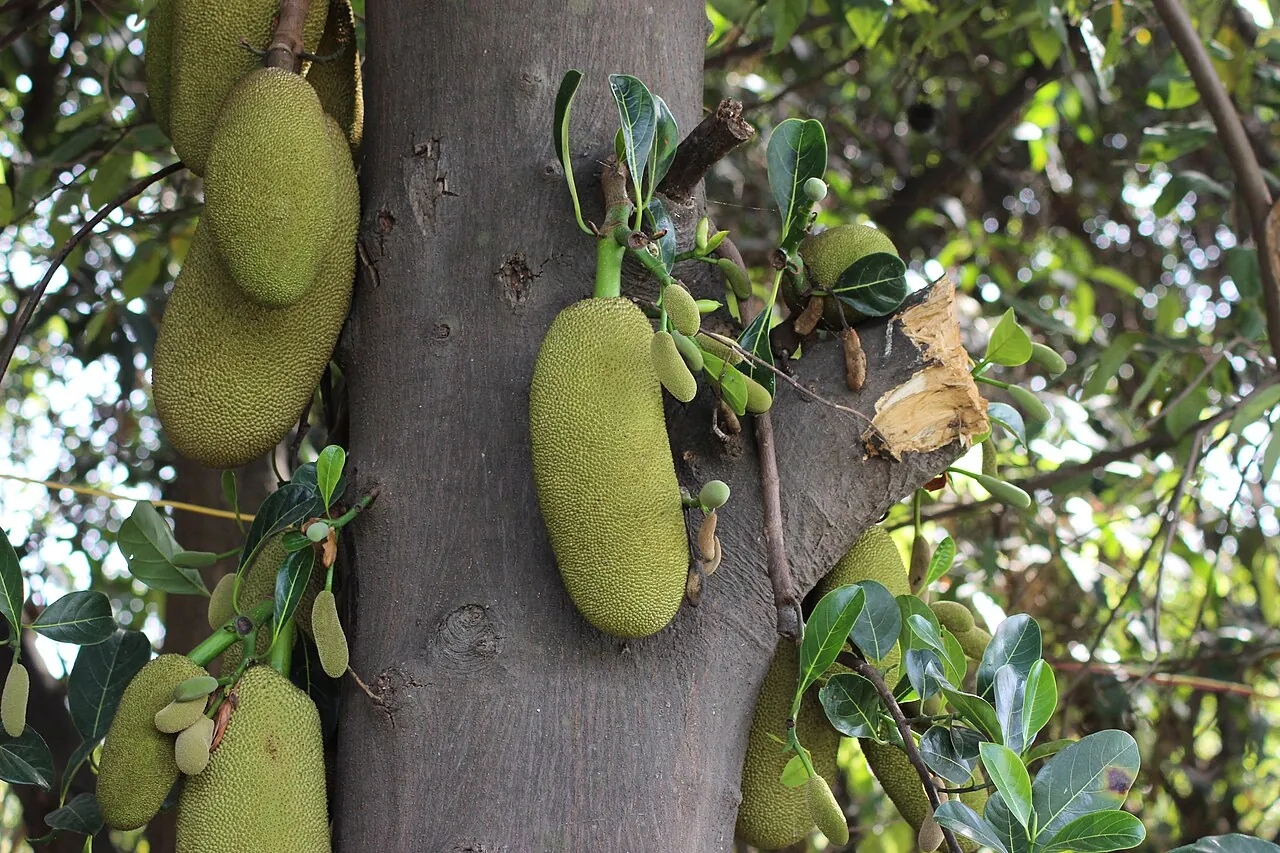
Jackfruit grows on an evergreen tree that can reach 9–21 m (30–70 ft). Flowers emerge straight from the trunk and big branches. Many flowers join together to make each fruit.
The tree suits warm, humid places without frost and needs soil that drains well. In Hawaiʻi, trees generally begin fruiting within three to four years. Cutting open a jackfruit releases sticky latex; oil on the knife and hands helps keep it from clinging.
When and where you'll find it
In Tamil Nadu, the usual harvest runs from March to July. South Florida’s main season is usually summer and fall. Indian grocery stores often sell half-ripe jackfruit cut in sections, which keeps longer, alongside whole fruit in many sizes. Jackfruit also comes frozen and canned.
The packing liquid tells the canned forms apart: young green jackfruit comes in water or brine for savoury cooking such as pulled jackfruit, while ripe jackfruit comes canned in syrup, or dried. Fresh ripe bulbs can be eaten raw or in salads; take the seeds out first.
Sources · 8
- Indonesia Ministry of Tourismindonesia.travel
- Michigan State University Extensionmsu-prod.dotcmscloud.com
- Morton, Fruits of Warm Climates (1987)hort.purdue.edu
- National Tropical Botanical Gardenntbg.org
- Sharmilee J, Sharmis Passionssharmispassions.com
- Tamil Nadu Agricultural Universityagritech.tnau.ac.in
- University of Florida IFASask.ifas.ufl.edu
- University of Hawaiʻi at Mānoa, CTAHRctahr.hawaii.edu
Get it near Detroit
What it tastes like
Sweeter than a banana, as mild as a peach≈
More about the taste
Ripe jackfruit is sweet and aromatic, but its flesh may be crisp, soft or melting depending on variety. Green immature fruit has a different role as a cooked vegetable.
Jackfruit types range from soft to firm, with flesh from pale to deep orange.
A tasting invitation
Compare firmness as well as aroma: jackfruit varieties differ in flesh texture. Trying a savory young-fruit dish beside ripe segments shows how harvest stage changes the ingredient.
Choose, ripen, store, eat
1ChooseYellowish-brown skin
Look for
- Yellowish-brown skin
- Stronger aroma
- Flatter, wider spines
Match the label to the recipe: young green jackfruit for savory dishes, ripe flesh for sweet ones. In whole fruit, aroma, flattening spines and color change are maturity clues that vary by variety. For canned savory dishes, look for 'young' or 'green' jackfruit packed in water or brine; syrup-packed jackfruit is for sweet uses.
2RipenRipens after picking3–10 days
Ripens after picking3–10 daysMature whole fruit ripens after harvest, usually in three to ten days at 24–27°C. Green jackfruit bought as a vegetable is a different product from mature fruit meant to ripen.
3StoreFridge, separated pulp
- FridgeSeparated pulp
- FreezerFully ripe segments
Keep separated pulp refrigerated, or freeze fully ripe segments for later use.
4EatFleshy pods · not rind, core, fibrous rag, raw seeds
Eat
Fleshy podsNot eaten
RindCoreFibrous ragRaw seedsFor fresh eating, separate the fleshy pods from the rind, core and fibrous rag, and remove the seeds; seeds are cooked separately, not eaten raw.
More tips
A useful detail Opening jackfruit can release sticky latex that stains clothing. Separate the edible flesh from the central core, fibrous rag and seeds. Seeds have their own cooked uses, including boiling or roasting; they are not the same ready-to-eat component as ripe pulp.
Worth knowing
- In ripe jackfruit, a crisp or drier bulb is a good quality, not a flaw; named varieties differ in texture.
Detroit, Michigan
When it’s good hereUsual monthsJust arrivedAt their bestLast chanceAll yearWhere it is in its usual monthsToday, Oct 22Grown hereIn season in your stateShips fromIn season where it growsOrderableListed by a seller we checkedThe day a seller was checked
9 growing areas, 5 countriesUsual monthsOur estimated monthsToday, Oct 22

- Analanjirofo
- Florida
- Johor
- New South Wales
- Pahang
- Penang
- Pernambuco
- You
2 of 4 areas · October
Growing areas by country
- Australia3
- Malaysia3
- Brazil1
- Madagascar1
- United States1
Jackfruit is grown around rural homes in Hawaiʻi and in farming systems across India and Southeast Asia.
38 varieties
- No variety photo yetJ30
- Scent
- aroma sederhana
- Flavour
- Sweet rich flavor and aroma US-FL
- Feel
- firm US-FL
- No variety photo yetN.S. 1
- Scent
- Sangat kuat Malaysia
- Bite
- crisp
- Skin
- green · yellow Malaysia
 Cheena
- Flavour
- Excellent, very aromatic US-FL
- Feel
- soft US-FL
- Flesh type
- melting US-FL
- Flesh
- orange US-FL
- No variety photo yetHoney Gold
- Taste
- high US-FL
- Flavour
- Sweet, rich flavor and aroma US-FL
- Feel
- firm US-FL
- Flesh
- yellow · orange US-FL
- No variety photo yetLemon Gold
- Taste
- high US-FL
- Flavour
- Sweet and aromatic flavor US-FL
- Feel
- firm US-FL
- Flesh
- yellow US-FL
- No variety photo yetTabouey
- Flavour
- Mild, pleasant flavor, very little aroma US-FL
- Feel
- firm US-FL
- Flesh
- yellow US-FL
- Shape
- elongated US-FL
87 names in 23 languages
Cook it
How to serve it first
Choose prepared ripe segments for a simple first encounter, or cook young jackfruit in a recipe that specifically calls for it. A small tasting plate of plain ripe pieces can precede a fruit salad, letting you adjust the other ingredients to its flavor.
2 jackfruit festivalsUsual monthToday, Oct 22
Strange but trueHistoryA myth, and the truthScienceNatureWhere the name came fromCustoms and cultureFood and drinkPeopleA record
If you like Jackfruit
Tastes alike
Close relatives
Nutrition, sources
Nutrition
Jackfruit, raw · per 100 g
- Carbohydrate
- 23 g
- Fiber
- 1.5 g
- Sugars
- 19 g
- Protein
- 1.7 g
- Fat
- 0.6 g
- Vitamin C
- 14 mg
- Potassium
- 448 mg
Sources
Jackfruit · Fruitopia · checked Sep 23, 2026