Marang
Also called Madang · Timadang · TerapArtocarpus odoratissimus · Moraceae family
A strongly scented Artocarpus whose delicate edible segments make transport difficult.
Find it near DetroitGet to know it
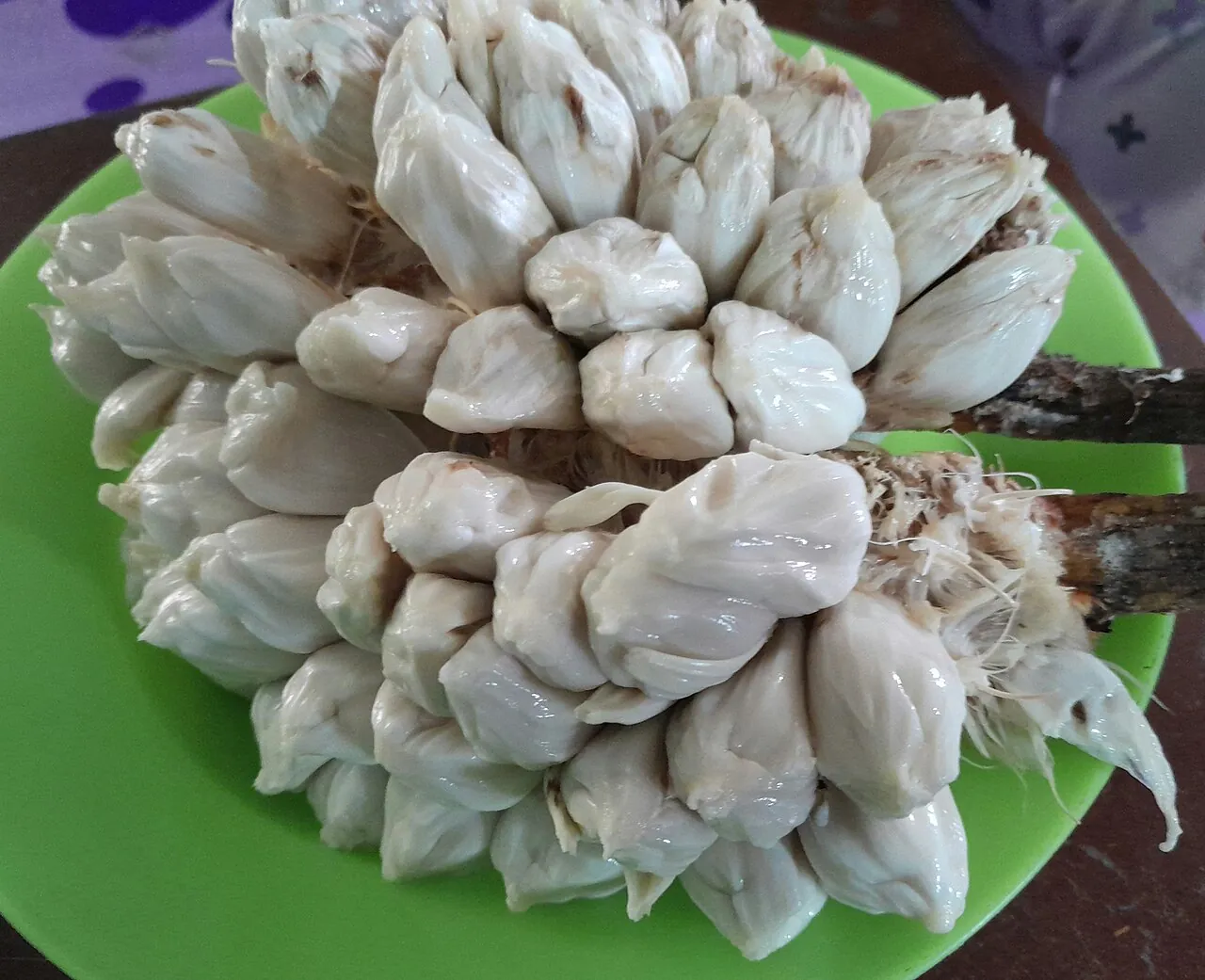
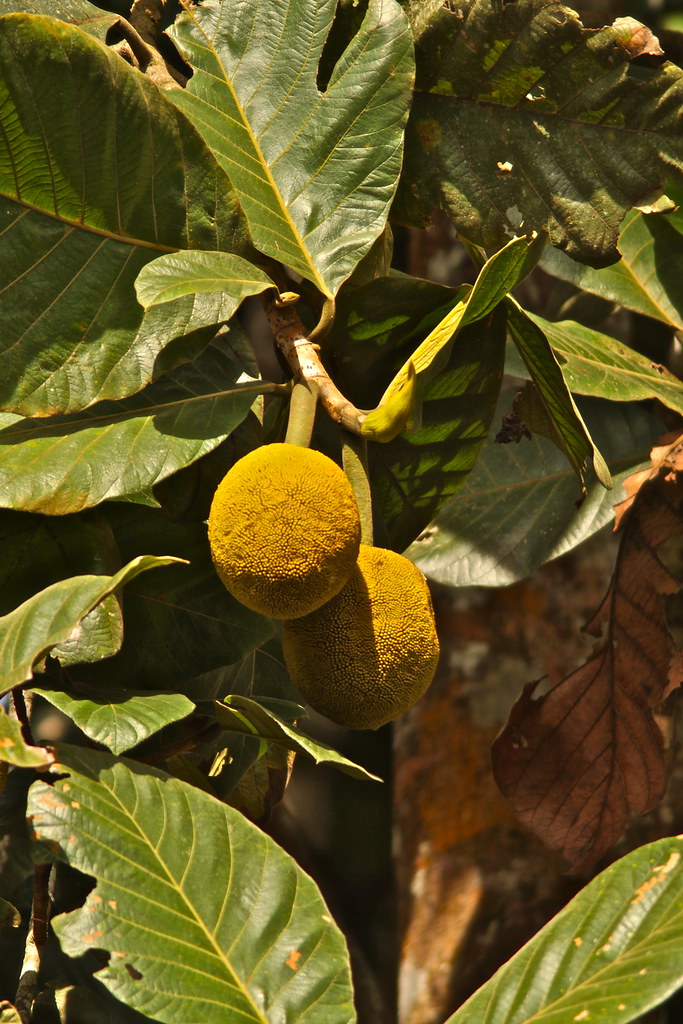
Marang is a jackfruit relative with a strong fruity smell and soft white segments wrapped around seeds. The flesh is sweet, juicy and fragrant. Under its green-yellow, bristly rind, each little mouthful clings to a central core.
What it is
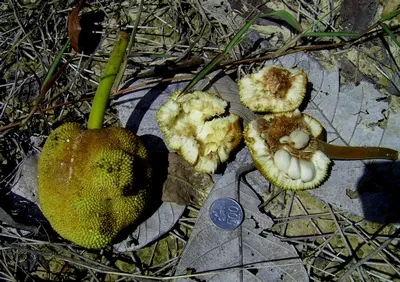
A marang is nearly round and reaches about 16 cm long by 13 cm across (6 by 5 in). Its rind is thick, with short bristles covering the surface. Inside, the white flesh separates into individual seed-filled segments, rather than a single solid piece. The sweet coating around each seed is the part eaten fresh.
Where it comes from
Marang probably travelled from Borneo to the Philippines, where it grows on Mindoro, Mindanao, Basilan and the Sulu islands. Borneo has both wild and cultivated trees. In Sarawak, it grows in forests that have returned after earlier clearing; the cultivated fruit is much larger than its wild counterpart.
How it's eaten where it grows
In Brunei, marang is called tarap. One Bruneian home recipe turns its white flesh into a brown-sugar gratin, layering it with sour cream, sugar and almonds. More simply, the ripe segments are eaten fresh or added to cakes.
Young fruit takes a savoury route: cooked in coconut milk as a vegetable curry. The seeds become a separate snack after roasting or boiling in salted water.
How it's grown
Marang grows on an evergreen tree that can reach 25 m (82 ft). It likes plentiful rain spread through the year and soil that drains well. Growers sow freshly cleaned seeds straight away, and trees begin bearing at about four to six years.
Harvesting is awkward: heavy, fragile fruits hang at the ends of flexible branches. Pickers reach them with a curved knife fixed to a long bamboo pole.
When and where you'll find it
In the Philippines, marang usually fruits from May to July in Luzon and August to December in Mindanao. Northern Queensland’s crop usually peaks in February. Ripe fruit keeps poorly, so harvests go quickly to market in baskets or sacks.
For US shoppers, frozen fruit is another route: online specialist Miami Fruit lists marang in 300 g packets.
Get it near Detroit
What it tastes like
As soft as a banana, as sweet as a peach≈
More about the taste
Ripe marang has a strong fruity odor and sweet, juicy flesh around the seeds; flavor varies between cultivated and wild trees.
Ripe marang has a strong fruity odor and sweet, juicy flesh around the seeds; flavor varies between cultivated and wild trees.
Choose, store, eat
1ChooseMature fruit is heavy and delicate, borne near the ends of flexible branches, and easily damaged if it falls — check the physical condition, not just the scent
Mature fruit is heavy and delicate, borne near the ends of flexible branches, and easily damaged if it falls — check the physical condition, not just the scent.
2StoreRipe fruit has a very short shelf life and is usually moved to market promptly
Ripe fruit has a very short shelf life and is usually moved to market promptly; there's no set refrigerator duration to rely on.
3EatFleshy segments
Eat
Fleshy segmentsThe fleshy segments are eaten fresh and used in cakes. Young fruit can be cooked, and the seeds can be boiled or roasted — but they aren't eaten raw.
Detroit, Michigan
When it’s good hereUsual monthsJust arrivedAt their bestLast chanceAll yearWhere it is in its usual monthsToday, Oct 22Grown hereIn season in your stateShips fromIn season where it grows
1 growing area, 1 countryUsual monthsToday, Oct 22

- Queensland
- You
0 of 1 areas · October
In Sarawak, cultivated trees produce substantially larger fruit than wild ones. Growers have selected for shorter, more branched trees that are easier to harvest.
18 names in 8 languages
- pinganroot
- มารังThai
Cook it
1 Marang festivalUsual monthToday, Oct 22
Strange but trueScience
If you like Marang
Tastes alike
Close relatives
Sources
Sources
Marang · Fruitopia · checked Sep 22, 2026