Ilama
Annona diversifolia · Annonaceae family
Ilama shows how fruit diversity is maintained by people's choices. In southern Mexico, preferences for white or vividly colored pulp can differ between neighboring communities and between home eating and selling.
Find it near DetroitGet to know it
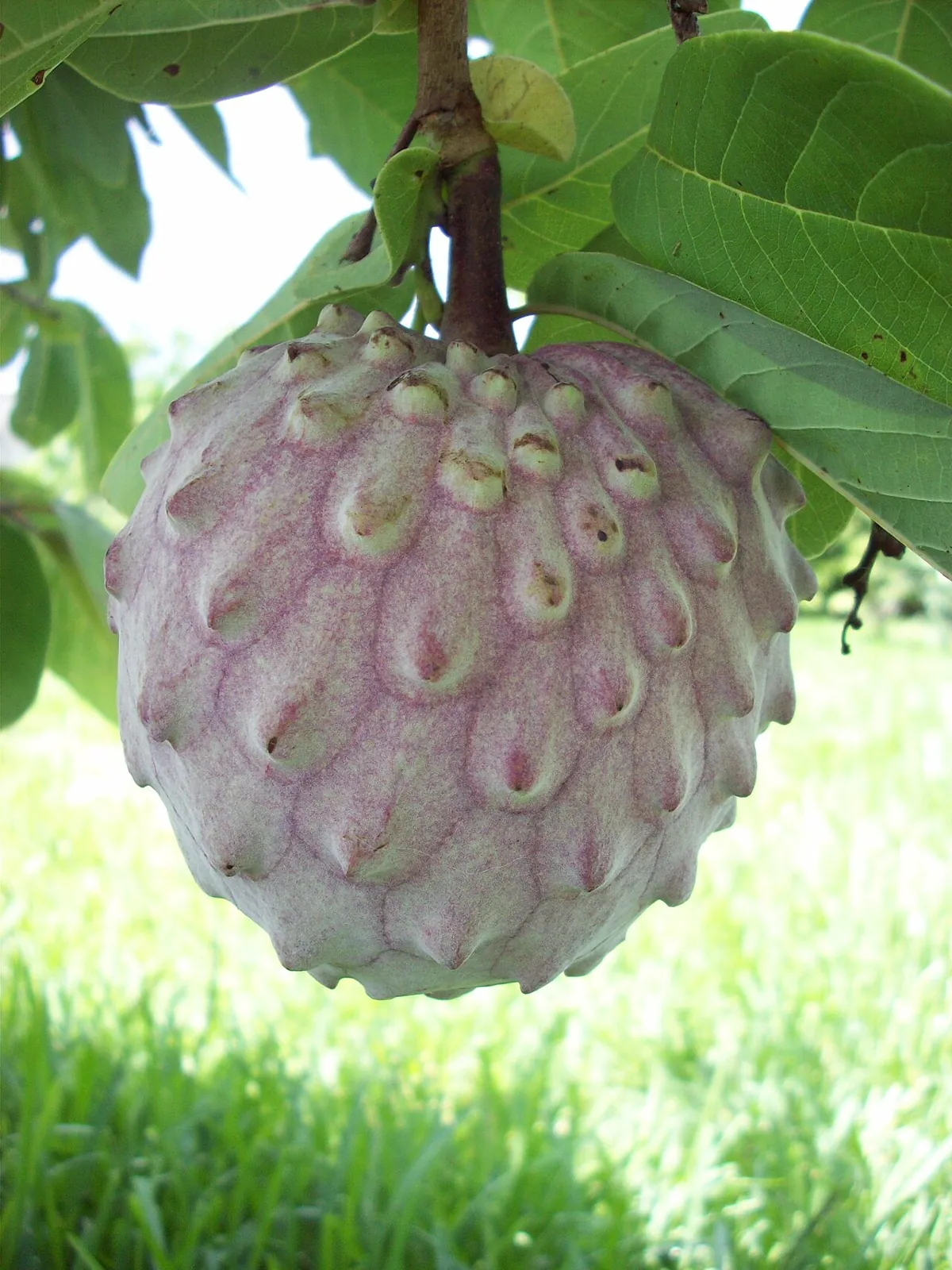
Ilama is a bumpy fruit from Mexico and Central America with soft, custard-like flesh inside a leathery rind. Cut one open and the pulp may be white, pink, red or purple. In southern Mexico, neighbours can have quite different ideas about which colour makes the best fruit.
What it is
An ilama can be heart-shaped or rounded, about 15 cm (6 in) long. Its rind ranges from pale green to pink or purple, with a grey-white coating and raised bumps. The flesh surrounds hard brown seeds and varies from fairly dry to juicy, with a smooth, custardy texture near the rind. Tierra Caliente also has locally named blue-pulp types.
Where it comes from
Ilama, Annona diversifolia, is native to southern Mexico, Guatemala and El Salvador. In Mexico’s Tierra Caliente, it grows among homes and fields as well as in mountain plots. San Antonio de las Huertas has trees in backyards and along the edges of maize fields, keeping the fruit close to everyday farming.
How it's eaten where it grows
In Sinaloa, ilama is eaten straight from the fruit or made into aguas, fruit drinks, and nieve, a frozen dessert. Scooped flesh also makes a simple chilled bowl with cream and sugar, or a squeeze of lime or lemon. The pulp is the part eaten; the hard seeds come out.
Colour matters locally. El Ocotillo favours white flesh, while San Antonio de las Huertas and Tejupilco keep a wider range of colours. Those choices help decide which trees people grow for the next crop.
How it's grown
The small tree usually grows to about 7.6 m (25 ft) and grows best with a dry season followed by heavy rain. Growers save seeds from fruit they value; grafting also carries a preferred variety onto another tree’s roots. Traditionally, fruit stays on the tree until the rind starts to crack. Fruit picked too early does not ripen.
When and where you'll find it
Near San Martín de las Flores, in Atoyac, Guerrero, gathering usually begins in the last week of August and peaks around mid-September. In Sinaloa, fruit from Jesús María reaches sellers outside Mercado Garmendia. Ilama keeps for only days after picking and travels poorly, making markets near its growing areas the natural place to meet it fresh.
Get it near Detroit
What it tastes like
As soft as a banana, as sweet as a peach≈
More about the taste
Ilama pulp is soft and creamy, ranging from relatively dry to juicy.
The succulent pulp is eaten fresh or made into chilled drinks and sherbets.
Growers select ilama for sweetness, juiciness, size and fleshiness, as well as pulp color.
Choose, store, eat
1ChooseIlamas can split open as they mature
Ilamas can split open as they mature; check exposed pulp carefully, since it can spoil faster.
2StoreAt room temperature (around 21°C), cracked ilamas lose about 3.5% of their weight over three days
At room temperature (around 21°C), cracked ilamas lose about 3.5% of their weight over three days.
3EatPulp · not seeds
Eat
PulpNot eaten
SeedsThe pulp is eaten fresh or used in drinks and frozen desserts; the seeds are not eaten.
More tips
Worth knowing
- Ask about maturity and handling when buying ilama; how well it keeps depends heavily on storage conditions.
- When buying ilama, ask when it was picked and how it was kept; flavor depends on both, as well as on pulp color.
Detroit, Michigan
When it’s good hereUsual monthsJust arrivedAt their bestLast chanceAll yearWhere it is in its usual monthsToday, Oct 22Grown hereIn season in your stateShips fromIn season where it grows
Strange but trueHistoryWhere the name came fromFood and drink
If you like Ilama
Tastes alike
Close relatives
Sources
Sources
Ilama · Fruitopia · checked Sep 23, 2026