Soursop
Also called Graviola · Guyabano · Brazilian pawpawAnnona muricata · Annonaceae family
Learn its fibrous, aromatic pulp in a simple juice before taking on a fruit-filled celebration cake.
Find it near DetroitGet to know it
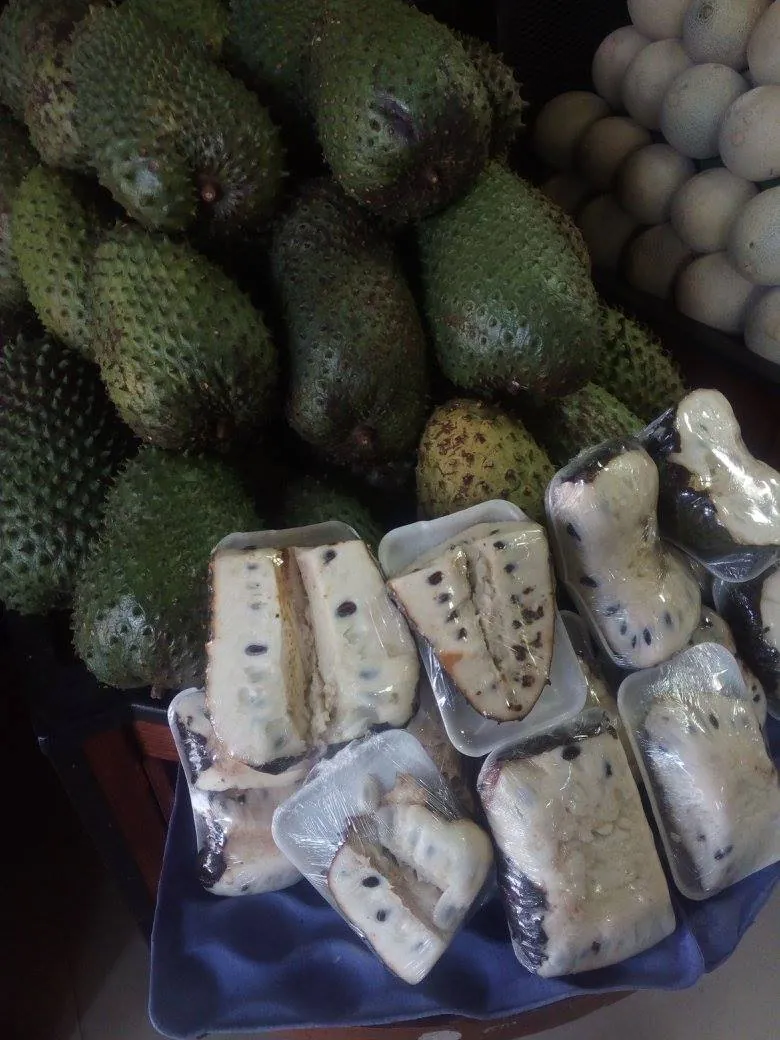
Soursop is a big green fruit with soft spines and juicy white flesh that smells a little like pineapple. Its tart, musky pulp pulls apart into fibrous segments. Blended and strained, it becomes the creamy drink called champola de guanábana in the Dominican Republic.
What it is
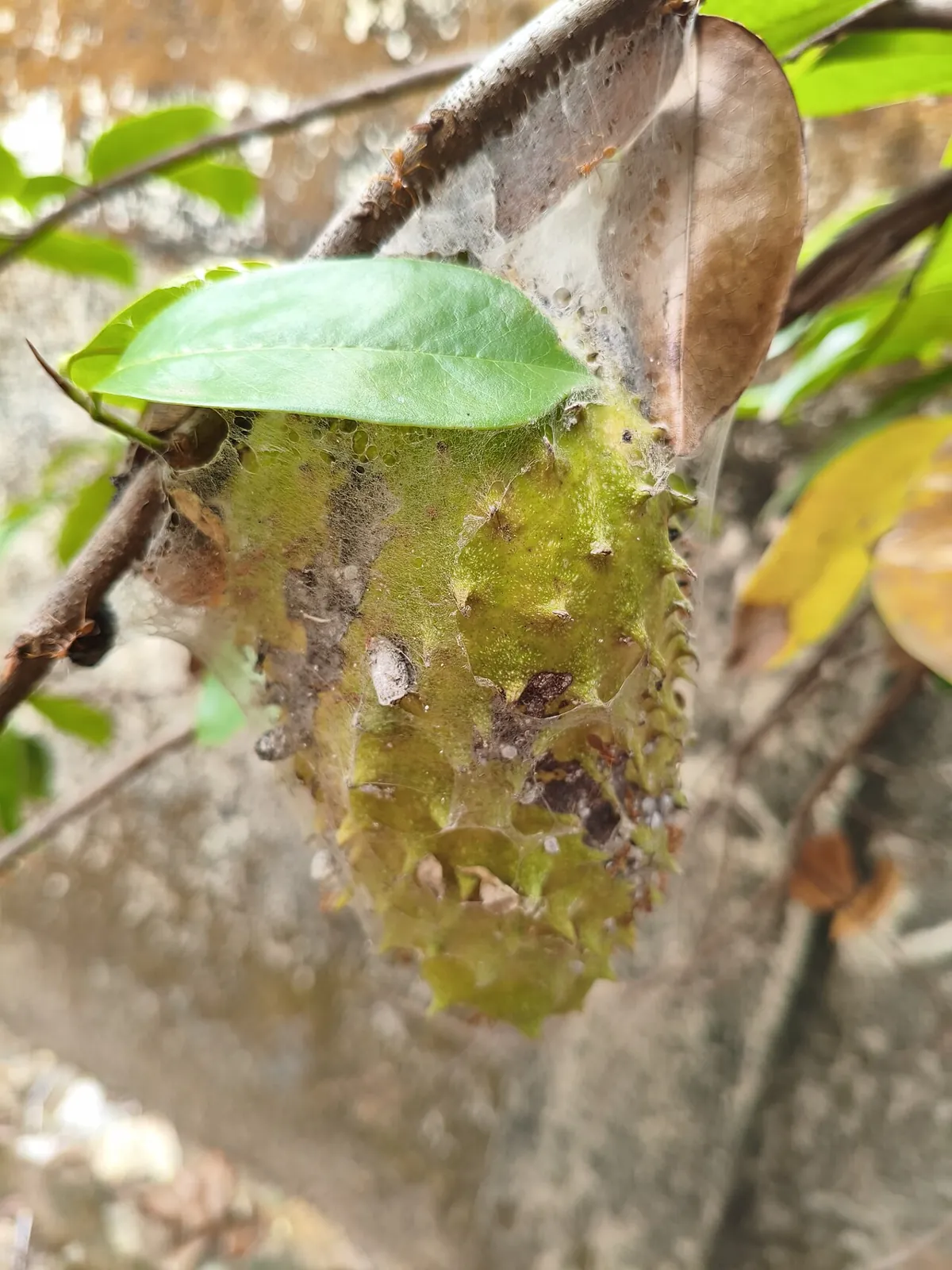
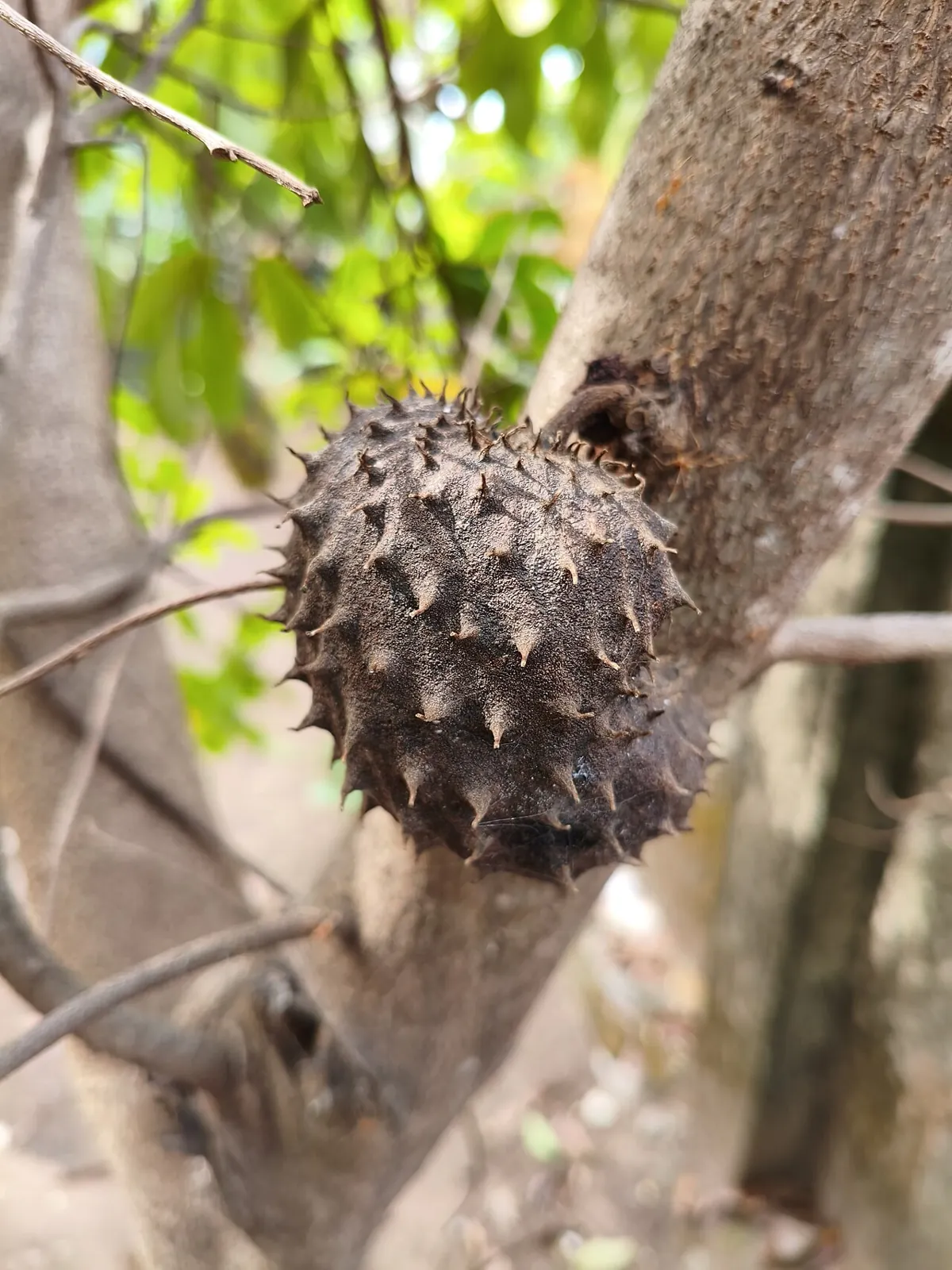
A soursop can reach 30 cm (12 in) long. Under its green skin, the white flesh surrounds a soft central core and holds large black seeds. The spines are soft, and the inside is juicy and fibrous.
Some fruit is less sour and less fibrous, good for eating with a spoon. Morada is a named Brazilian variety; Cuban Fibreless is grown in Australia. Low-fibre flesh is especially valued. Graviola and guanábana are other names for the same fruit.
Where it comes from
Soursop is native to Central America and tropical South America. It is grown commercially across the American tropics. Farther from that home, small family orchards raise it in India, the Philippines, other parts of Southeast Asia, Hawaiʻi and other Pacific islands.
How it's eaten where it grows
In the Dominican Republic, champola de guanábana blends peeled, seeded soursop with water and sugar. A strainer takes out the solids, and ice makes it a sweet, creamy, cold drink.
In Venezuela, torta de guanábana is a cake usually made at home for special occasions, especially birthdays. Layers of sponge hold a filling of soursop jam and condensed milk, topped with Italian meringue.
How it's grown
Soursop grows on an evergreen tropical tree that can reach 10 m (33 ft). It needs a frost-free site sheltered from cold winds and usually starts bearing after three to five years. Growers pick the full-grown fruit while it is still firm. A few days at room temperature soften it until it yields to gentle thumb pressure.
When and where you'll find it
Around Darwin, in Australia’s Northern Territory, the usual commercial harvest runs from September through December. Fresh fruit ripens after picking; a soft fruit that yields to gentle pressure is ready to eat.
The grocery freezer offers another form: fruit pulp for shakes, smoothies and frozen desserts. GOYA's frozen soursop pulp comes in 14-ounce (397 g) packs with only the fruit pulp inside. Frozen pulp also works in Venezuelan soursop cake.
Sources · 8
- Dominican Cooking, Clara Gonzalezdominicancooking.com
- GOYA Foodsgoya.com
- Laylita’s Recipes, Jani Díazlaylita.com
- Missouri Botanical Gardenmissouribotanicalgarden.org
- Morton, Fruits of Warm Climates (1987)hort.purdue.edu
- Northern Territory Governmentnt.gov.au
- Singapore National Parks Boardnparks.gov.sg
- University of Hawaiʻi CTAHR, Ken Love and Robert E. Paullctahr.hawaii.edu
Get it near Detroit
What it tastes like
As soft as a banana, as tart as a kiwifruit≈
More about the taste
Soursop has juicy white flesh in fibrous segments, with a pineapple-like aroma and a musky flavor ranging from subacid to acid; sweet and sour selections aren't all alike.
The pulp is fibrous and juicy, with a pineapple-like aroma and a distinctive musky, acid to subacid flavor.
Choose, ripen, store, eat
1ChooseFull grown, still firm
Look for
- Full grown, still firm
- Slightly yellow-green
A mature fruit is full grown, still firm, and slightly yellow-green. Handle it gently: soursop bruises and punctures easily.
2RipenOn the counter
Ripens after pickingCounterKeep mature, firm fruit at room temperature for a few days until it yields to gentle thumb pressure — that softness is the eating-ripe stage.
3StoreFridge, eating-ripe3 days
- FridgeEating-ripeUp to 3 days
Once eating-ripe, soursop keeps only two or three more days in the refrigerator — plan the recipe before it turns soft.
4EatFlesh · not peel, seeds
Eat
FleshNot eaten
PeelSeedsPeel the fruit and remove the seeds before blending.
Detroit, Michigan
When it’s good hereUsual monthsJust arrivedAt their bestLast chanceAll yearWhere it is in its usual monthsToday, Oct 22Grown hereIn season in your stateShips fromIn season where it growsOrderableListed by a seller we checkedThe day a seller was checked
11 growing areas, 5 countriesUsual monthsOur estimated monthsToday, Oct 22

- East Java
- Ica
- La Libertad
- Lambayeque
- New South Wales
- Northern Territory +1
- Pahang
- Penang
- Pernambuco
- Yogyakarta
- You
2 of 5 areas · October
Growing areas by country
- Australia3
- Peru3
- Indonesia2
- Malaysia2
- Brazil1
Soursop is made into drinks called champola in Brazil and carato in Puerto Rico, plus ice cream, nectars, tarts and jelly; sweeter, less fibrous fruit is often eaten with a spoon, while more acidic fruit goes into beverages.
4 varieties
- No variety photo yetElita
- Taste
- high
- Scent
- aromática
- Feel
- firm
- Juice
- juicy
- No variety photo yetAgrosavia Fecunda
- Flesh
- cream · white Colombia
- Use
- fresh Colombia
- No variety photo yetAgrosavia Tesoro
- Flesh
- white · cream Colombia
- Use
- fresh Colombia
- No variety photo yetDurian Belanda Manis Rompin
- Taste
- very high
- Flesh
- white
- Shape
- oval
49 names in 23 languages
- Graviolaroot
Cook it
Strange but trueHistoryNatureWhere the name came fromCustoms and cultureFood and drinkA record
If you like Soursop
Tastes alike
Close relatives
Nutrition, sources
Nutrition
Soursop, raw · per 100 g
- Carbohydrate
- 17 g
- Fiber
- 3.3 g
- Sugars
- 14 g
- Protein
- 1 g
- Fat
- 0.3 g
- Vitamin C
- 21 mg
- Potassium
- 278 mg
Sources
Soursop · Fruitopia · checked Sep 21, 2026