Biriba
Annona mucosa · Annonaceae family
A fragile custard fruit whose darkening surface and soft pulp require separate judgments.
Find it near DetroitGet to know it
Biriba, also called rollinia, is a yellow custard-apple relative filled with soft white pulp. Its flavour is often compared to caramel or lemon custard pudding, and the soft points on a ripe fruit darken wherever it is handled.
What it is
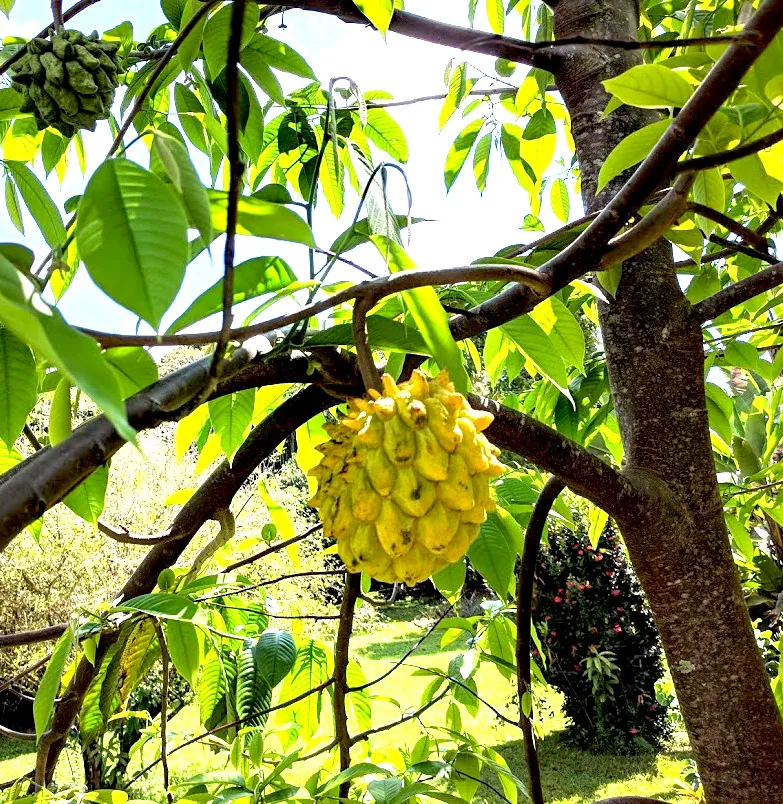
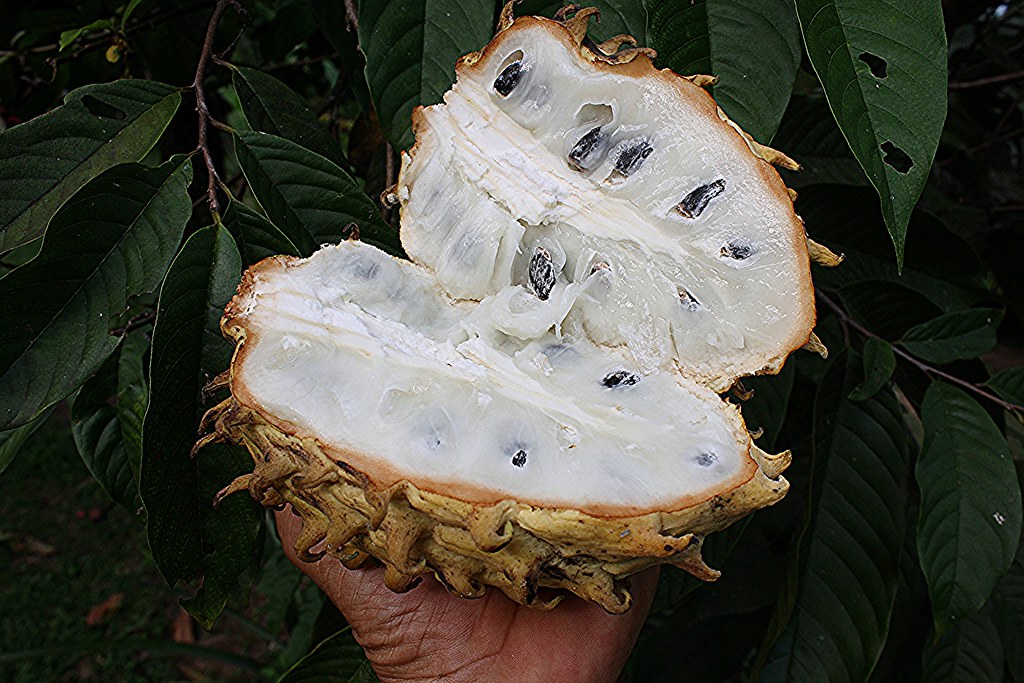
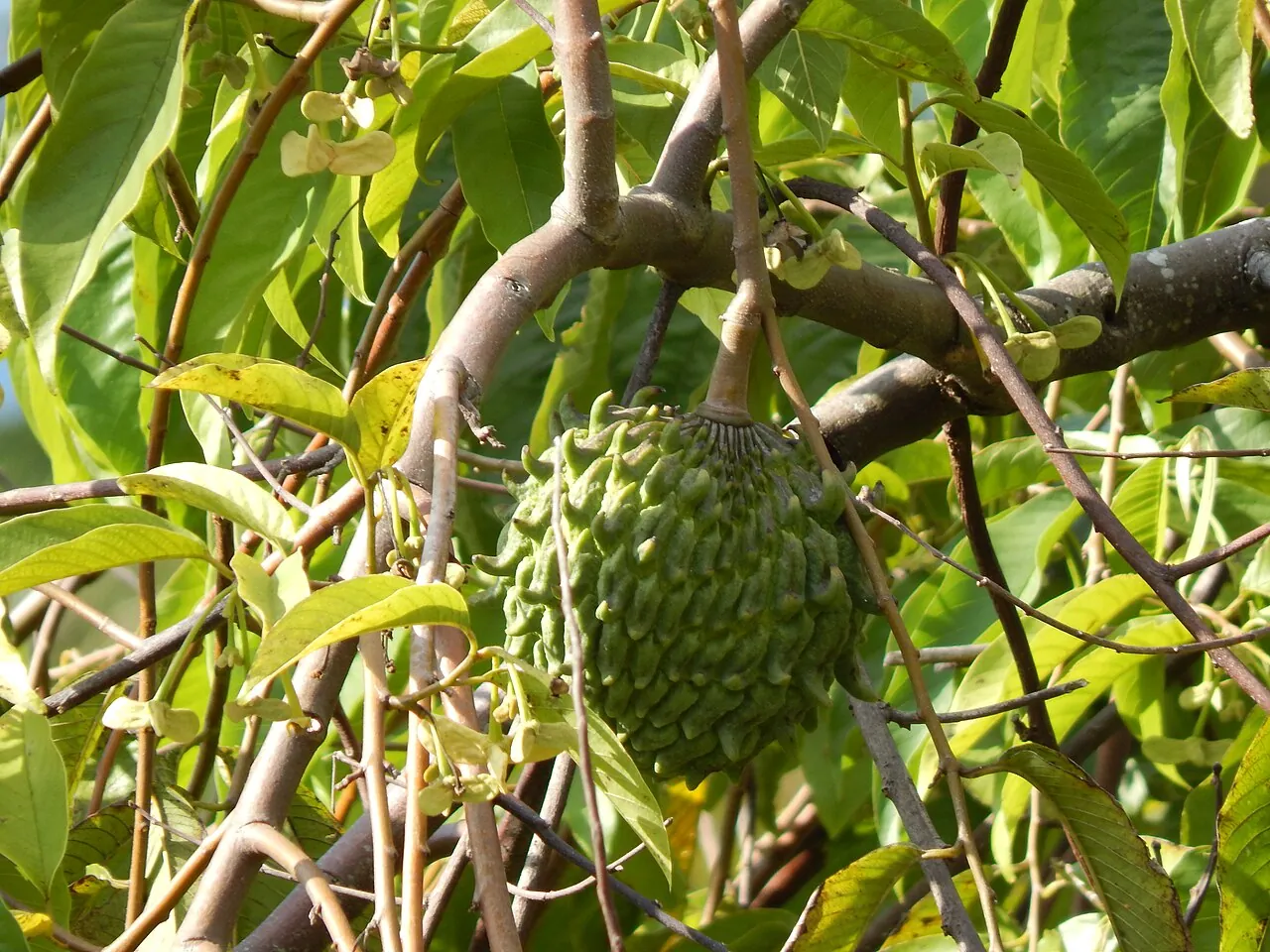
A biriba usually measures 9–15 cm (3.5–6 in) across. It can be round, heart-shaped or irregular, with a smooth surface or rows of soft points. It turns yellow as it matures. Inside, the white pulp is soft, sweet and aromatic, like custard, and holds about 20–50 seeds.
Those soft points bruise easily: handling a fully ripe fruit can turn them brown or nearly black.
Where it comes from
Biriba is native to humid tropical America, from southern Mexico through the Amazon Basin to southern Brazil. In Amazonia, people gather it from wild and semi-wild trees and grow it in backyards and small orchards. Seeds from Pará, Brazil, reached the United States in 1908; today the fruit also has a small local market in Hawaiʻi.
How it's eaten where it grows
Biriba is usually eaten fresh, out of hand. In Brazil it is often juiced, sometimes blended with milk for a drink, and it has also been made into wine. One Hawaiʻi recipe for rollinia soufflé combines the purée with coconut extract and cream, then folds in beaten egg whites before baking.
An Australian rollinia mousse takes another route to an airy dessert: melted marshmallows help set the purée, and whipped cream is folded through the mixture.
How it's grown
The tree grows fast in warm, humid conditions with moist, well-drained soil. Seed-grown trees generally begin fruiting in three to four years. Growers prune orchard trees to roughly 4–8 m (13–26 ft) for easier picking. Each flower opens in a female phase before becoming male, which favours pollen from other flowers and trees.
When and where you'll find it
In Amazonia, fruit is usually most abundant from January to June; around Rio de Janeiro, it usually ripens in February and March. In Hawaiʻi, farm stands, farmers’ markets and health food stores are local routes to the whole fruit. Its fragile skin and rapid softening limit long-distance trade. The pulp also becomes juices, nectars, smoothies and frozen desserts.
Get it near Detroit
What it tastes like
As soft as a banana, sweeter than a peach≈
More about the taste
Biriba's flavor is often compared to caramel or lemon custard pudding; it's eaten fresh and used in juice.
The pulp is sweet, aromatic and whitish, with a custard-like consistency, sometimes compared to caramel or lemon custard.
Choose, ripen, store, eat
1ChooseYellow, sometimes with green
Look for
- Yellow, sometimes with green
Ripening fruit turns yellow, sometimes with green still showing. The surface projections bruise easily and darken quickly after handling, so check the fruit's condition as well as its color.
2RipenOn the counter
Ripens after pickingCounterMature fruit softens at room temperature after harvest.
3StoreThe fruit is delicate and deteriorates rapidly after softening
The fruit is delicate and deteriorates rapidly after softening; protect the surface from pressure.
4EatSoft pulp
Eat
Soft pulpThe soft pulp surrounding numerous dark seeds is the edible part, used in juices, nectars, smoothies and frozen desserts.
More tips
Worth knowing
- When choosing rollinia, weigh maturity and handling together: a darkened skin can be bruising.
Detroit, Michigan
When it’s good hereUsual monthsJust arrivedAt their bestLast chanceAll yearWhere it is in its usual monthsToday, Oct 22Grown hereIn season in your stateShips fromIn season where it grows
3 growing areas, 1 countryUsual monthsToday, Oct 22

- New South Wales
- Northern Territory +1
- You
2 of 3 areas · October
In Hawaiʻi, biriba has been sold at farm stands and specialty stores, and used by chefs.
7 names in 5 languages
- 瓣立樓林果Chinese
Cook it
Strange but trueFood and drinkA record
If you like Biriba
Tastes alike
Close relatives
Sources
Sources
Biriba · Fruitopia · checked Sep 22, 2026