Atemoya
Also called Custard appleAnnona × atemoya · Annonaceae family
A custardy hybrid whose maturity and seed handling matter as much as its unusual appearance.
Find it near DetroitGet to know it
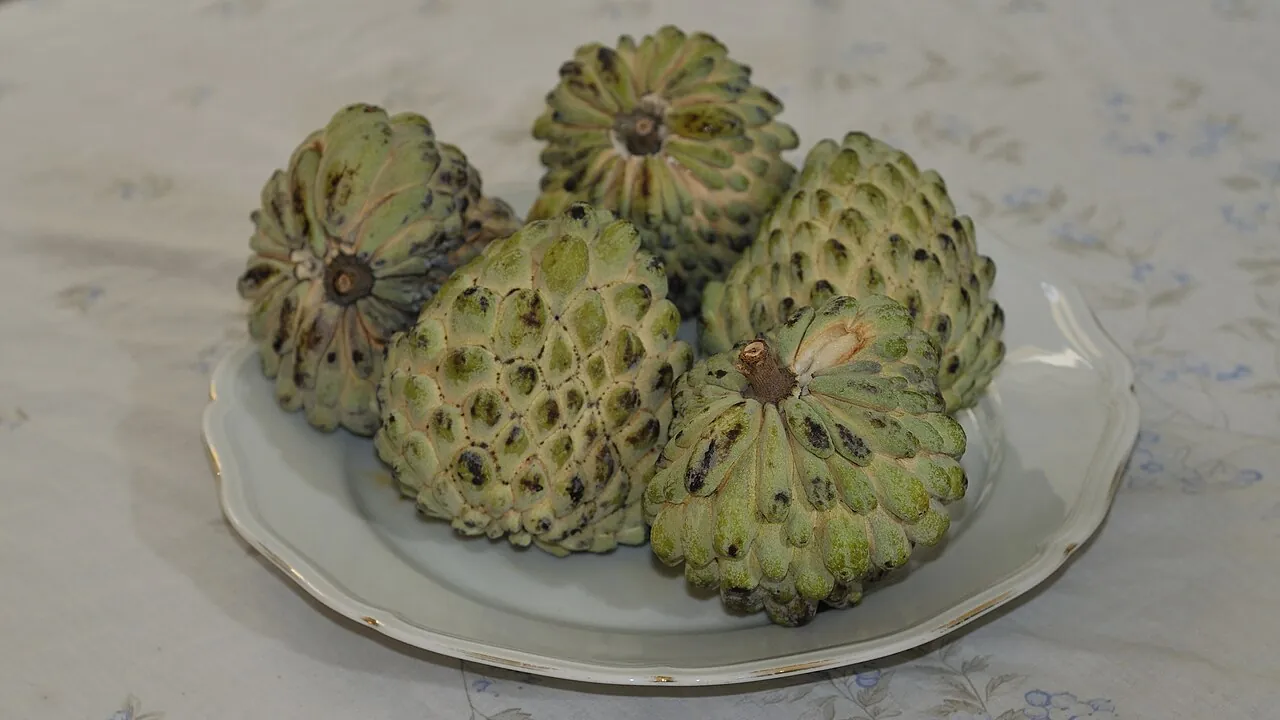
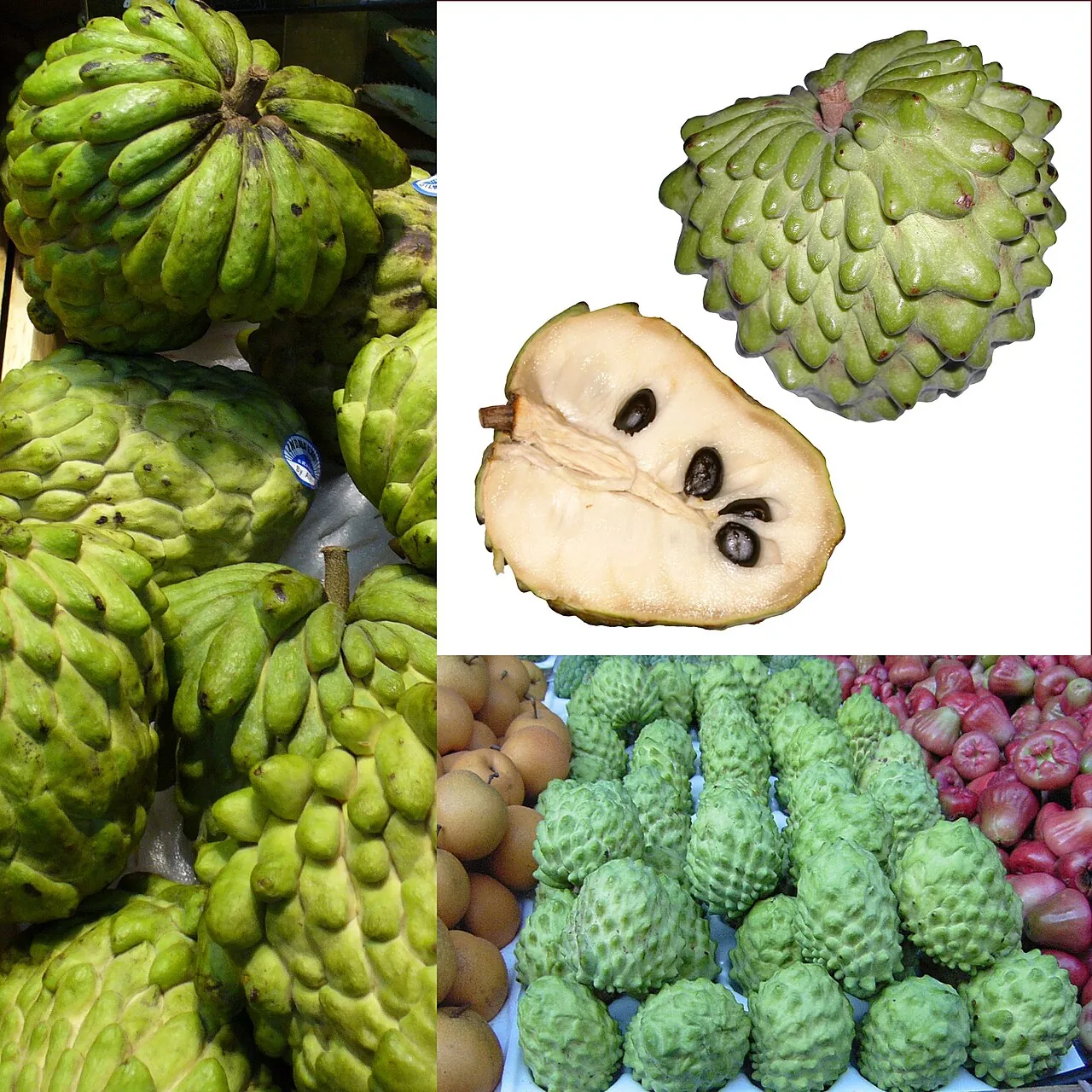
Atemoya hides sweet, white, custard-soft flesh beneath green skin that can be smooth or knobbly. It is a cross between sugar apple and cherimoya. A ripe fruit needs little preparation: cut it in half and eat the flesh from the skin with a spoon.
What it is
The fruit is cone-shaped to egg-shaped, usually 7.6–12.7 cm (3–5 in) across. As it matures, the skin becomes yellowish green and the spaces between its bumps widen. Inside, the flesh forms a more continuous mass than a sugar apple’s separate segments, with sweetness and a little tartness.
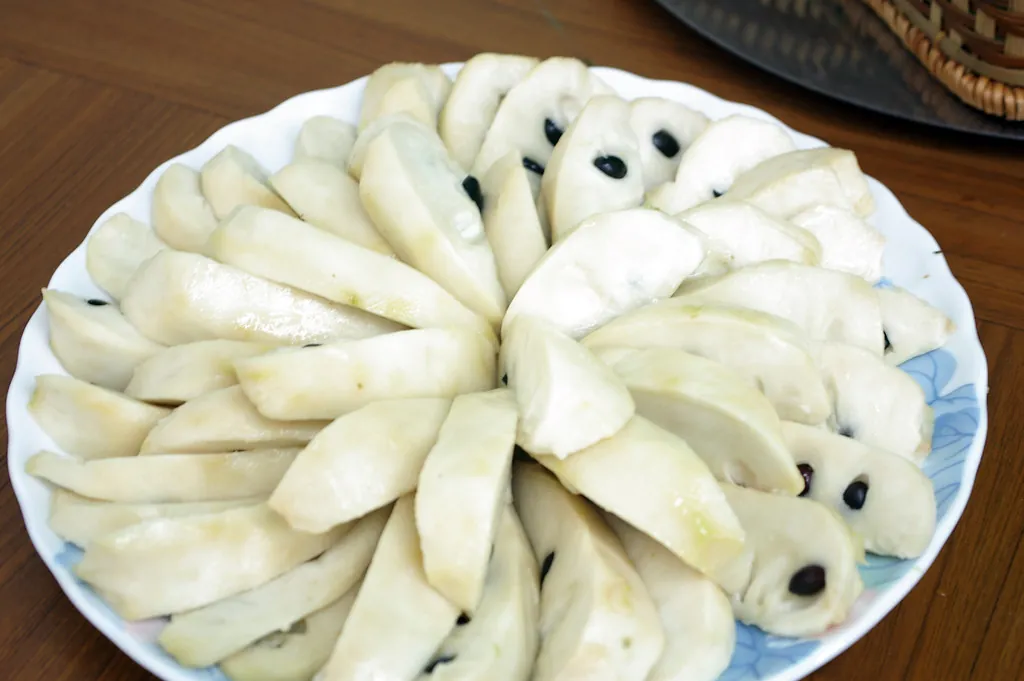
Hard, smooth seeds look black but are dark brown. They are not eaten and must be removed before the pulp goes into a blender.
Where it comes from
Atemoya’s first deliberate cross was made by P. J. Wester in Miami in 1908. He took seeds to the Philippines, where the young hybrids fruited in 1914. The name joins “ate”, an old Mexican name for sugar apple, to the end of “cherimoya”.
It now grows across the tropics and subtropics. African Pride, one of its named varieties, came from South Africa and reached commercial growers in Queensland, Australia, in 1961. Southern Florida’s warm coastal areas also grow the fruit.
How it's eaten where it grows
In Florida, atemoya is eaten fresh for dessert or blended into ice cream and milkshakes. Its soft flesh can be scooped directly from the skin.
In Americana, in Brazil’s São Paulo state, Ubiratan Vieira makes pudim de atemoia for his family’s year-end celebrations. The pudding combines seed-free pulp, condensed milk, cream and gelatin, then sets in the fridge. Fruit in cinnamon and limão-cravo citrus syrup surrounds it, with chopped Brazil nuts on top.
How it's grown
Atemoya grows into a spreading tree about 10 m (30 ft) tall, happiest in sun and well-drained soil. In Florida and India, growers commonly graft it onto sugar apple or custard apple roots. Trees grafted onto seedling atemoya can begin fruiting in 2–4 years.
Sap beetles carry pollen between flowers. In Florida, the Gefner variety can produce good fruit without hand pollination.
When and where you'll find it
Florida’s main harvest usually runs from August through October. A second crop can follow in December and January where frost stays away and the trees retain their leaves.
Mature fruit softens at room temperature before it goes into the fridge. Once ripe, it keeps for only 2–4 days.
Get it near Detroit
What it tastes like
As soft as a banana, as sweet as a peach≈
More about the taste
Atemoya is sweet and soft, with smoother, more continuous pulp than sugar apple.
Ripe flesh is white to creamy, sweet, with a custard-like consistency.
Choose, ripen, store, eat
1ChooseMature-picked fruit
Look for
- Mature-picked fruit
Choose mature-picked fruit — an immature atemoya may not ripen properly.
2RipenOn the counter
Ripens after pickingCounterLet mature fruit soften at room temperature before eating.
3StoreFridge, ripe
- FridgeRipe
Refrigerate after ripening — don't chill unripe fruit.
4EatPulp · not seeds
Eat
PulpNot eaten
SeedsScoop out the pulp and remove the seeds; the seeds aren't eaten.
More tips
Worth knowing
- Choose mature fruit and let it soften before chilling — simply leaving an immature, hard atemoya on the counter won't rescue its eating quality.
Detroit, Michigan
When it’s good hereUsual monthsJust arrivedAt their bestLast chanceAll yearWhere it is in its usual monthsToday, Oct 22Grown hereIn season in your stateShips fromIn season where it growsOrderableListed by a seller we checkedThe day a seller was checked
2 growing areas, 2 countriesUsual monthsToday, Oct 22

- Florida
- Jeju
- You
2 of 2 areas · October
Growing areas by country
- South Korea1
- United States1
Deliberate hybrid work on atemoya traces back to P. J. Wester at a USDA laboratory in Miami in 1908.
3 varieties
21 names in 10 languages
Cook it
Strange but trueHistoryA myth, and the truthScienceNatureWhere the name came fromFood and drink
If you like Atemoya
Tastes alike
Close relatives
Sources
Photos · 3
Sources
Atemoya · Fruitopia · checked Oct 2, 2026