Banana
Also called Edible bananaMusa acuminata · Musaceae family
Start with a familiar dessert banana, then explore an assortment whose varieties may look and ripen differently.
Find it near DetroitGet to know it
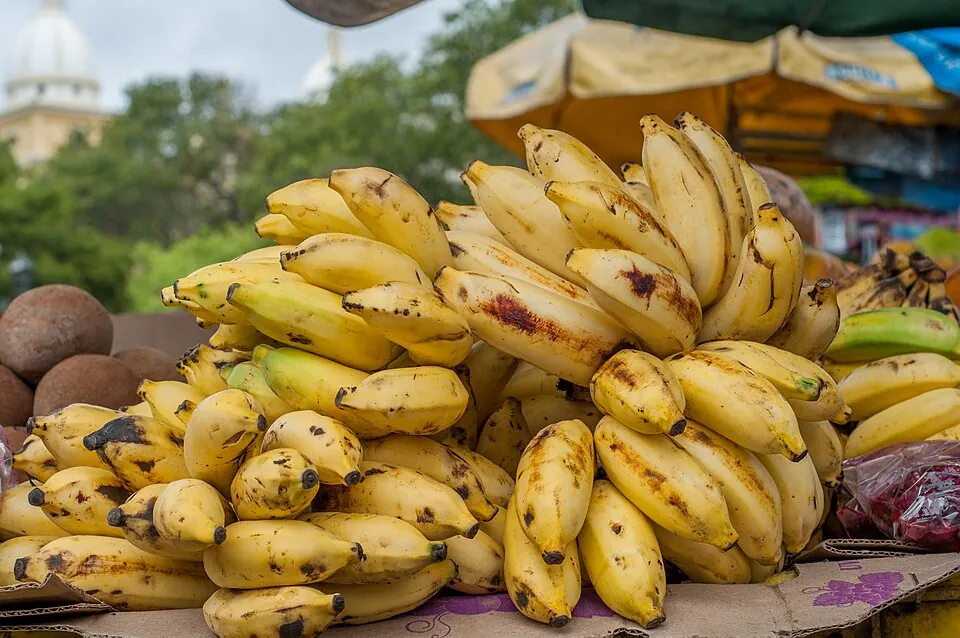
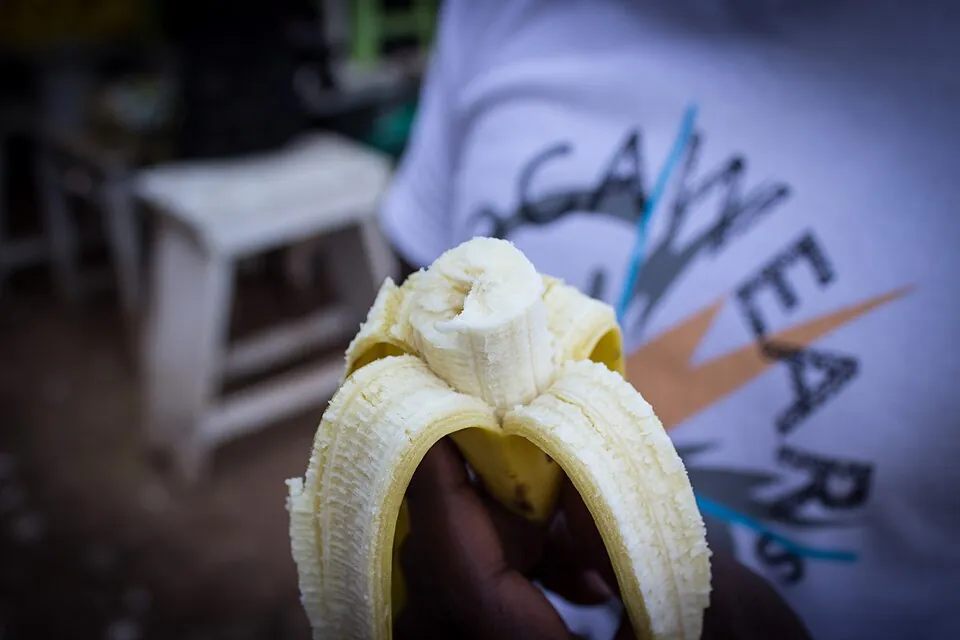
A ripe dessert banana has sweet, creamy flesh inside a peel that opens by hand. The yellow Cavendish in the supermarket is one of more than 1,000 banana varieties, from sweet dessert types to cooking types such as plantains.
What it is
Bananas range from about 6.4 to 30 cm (2½–12 in) long. Beneath the peel, the flesh can be ivory-white, yellow or salmon-yellow. Many edible varieties descend from two wild banana species, Musa acuminata and Musa balbisiana.
The familiar Cavendish turns from green and starchy to yellow and sweet as it ripens. Florida’s Apple banana, also called Manzano, has a little tartness as well as sweetness. In Hawaiʻi, “Apple banana” usually means a Brazilian or Dwarf Brazilian type: the same name belongs to different fruits.
Where it comes from
Edible bananas come from the Indo-Malaysian region of tropical Asia, reaching to northern Australia. People have grown them in Southeast Asia for thousands of years. Today, India and China grow the largest crops for their home markets.
The international trade follows a different map: more than 90% of export bananas come from Central and South America and the Philippines. A familiar supermarket fruit is also a local crop eaten close to where it grows.
How it's eaten where it grows
In Kerala, India, ripe bananas become pazham pori: coated in a batter of rice flour and sugar, then deep-fried. In the Philippines, Saba bananas and strips of jackfruit go into turon, sweet fried spring rolls.
Another Filipino preparation, minatamis na saging, cooks sliced Saba bananas in sugar syrup.
How it's grown
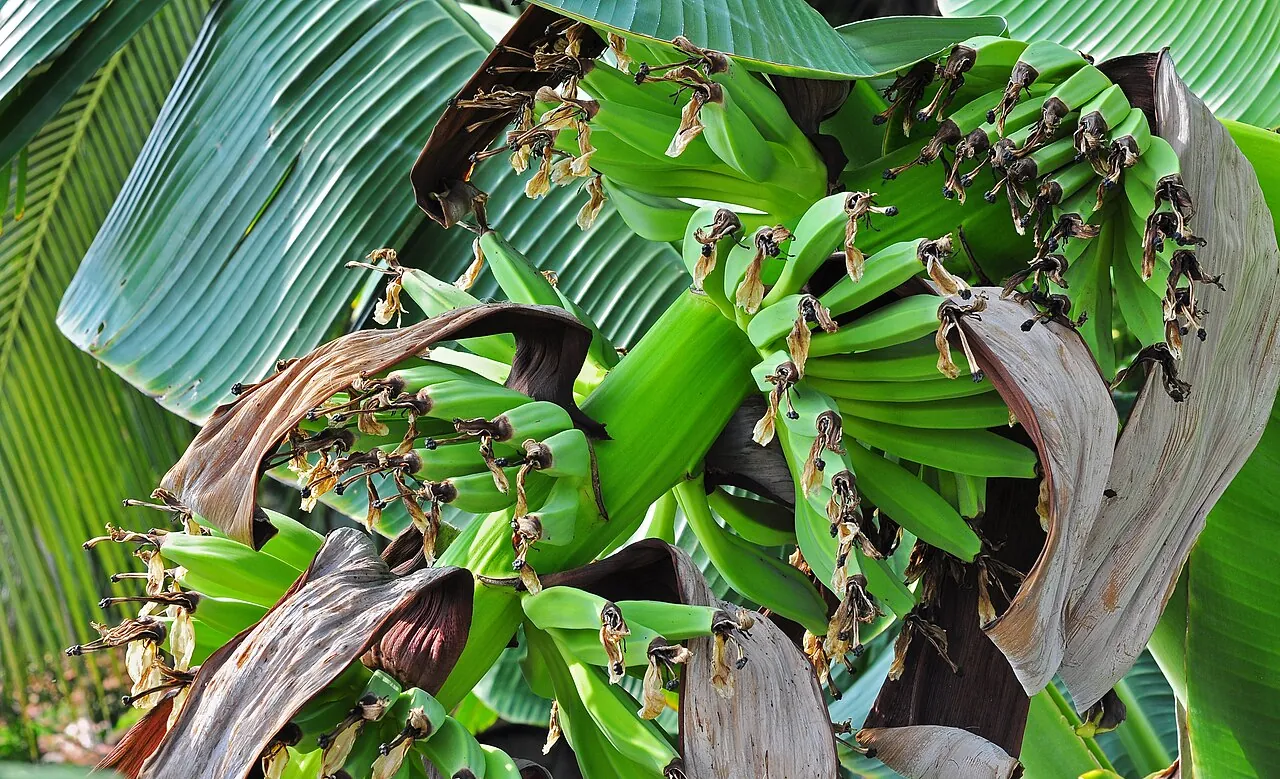
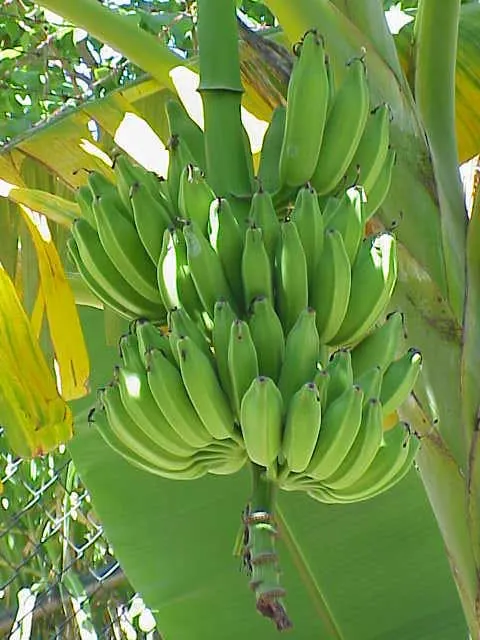
The banana’s trunk is made from tightly overlapping leaf bases. The plant grows best with steady warmth and soil that drains well. In Australian plantations, it usually takes about 12 months to produce the first bunch.
That bunch is much larger than a supermarket cluster: it averages 150–200 bananas. Workers harvest it while the fruit is green; packers then cut the hands into clusters of 3 to 9 bananas, the size you see in shops.
When and where you'll find it
Bananas reach US supermarkets throughout the year, with Cavendish the familiar yellow type. Australian plantations also harvest year-round. In South Florida, Miami Fruit grows small amounts of many varieties throughout the year.
The fruit keeps ripening after harvest. At home, green bananas ripen at room temperature; once ripe, they keep 2–3 days in the refrigerator. The peel can turn brown in the fridge while the flesh inside stays pale.
Sources · 11
- Dominica — Banana (Protection and Quality Control) Regulationsfaolex.fao.org
- FAOfao.org
- Golden Saba — Sagrex Foodsgoldensaba.ph
- Hort Innovation — Australian Bananasaustralianbananas.com.au
- Kerala Tourismkeralatourism.org
- Miami Fruitmiamifruit.org
- Mississippi State University Extensionextension.msstate.edu
- Morton, Fruits of Warm Climates (1987)hort.purdue.edu
- NC State Extension Gardener Plant Toolboxplants.ces.ncsu.edu
- University of Florida IFASedis.ifas.ufl.edu
- University of Hawaiʻi CTAHRctahr.hawaii.edu
Get it near Detroit
What it tastes like
As mild as a watermelon, softer than a grapefruit≈
More about the taste
A ripe dessert banana has tender, sweet pulp. Green tips signal a less-developed flavor; fuller yellow color and brown flecks mean fuller ripeness.
Dessert bananas have tender pulp; green-tipped fruit hasn't reached full flavor yet.
A tasting invitation
Set aside portions from different ripeness stages and notice the shift from firm and starchy toward soft and aromatic. Try describing texture before flavor: resistant, creamy, slippery or melting may be more informative than simply calling one 'sweeter.'
Choose, ripen, store, eat
1ChooseYellow fruit to eat soon
Look for
- Yellow fruit to eat soon
- Greener fruit to ripen
Ignore
- Peel color
For yellow dessert bananas, choose yellow fruit to eat soon or greener fruit to let ripen; brown-spotted fruit still works for baking. East African highland bananas include cooking and beer types, so ask for the local name and intended use rather than judging by peel color.
2RipenOn the counter
Ripens after pickingCounterLet unripe bananas ripen at room temperature; don't refrigerate green fruit.
3StoreFridge, ripe3 days
- FridgeRipeUp to 3 days
- FreezerPeeled, sliced
Once ripe, refrigerate for another two or three days; the peel will brown while the flesh stays pale. Peeled, sliced banana can also be frozen for later use.
4EatFlesh · not peel
Eat
FleshNot eaten
PeelPeel the fruit and use the flesh.
More tips
A useful detail A peel darkened by refrigeration doesn't reflect the condition of the flesh inside.
Worth knowing
- Banana varieties ripen at different rates, so days since purchase don't tell you ripeness, especially after travel or commercial ripening.
- Banana varieties that look equally ripe can differ in sugar balance.
- Judge ripeness from the whole fruit, not one yellow or spotted patch.
Detroit, Michigan
When it’s good hereUsual monthsJust arrivedAt their bestLast chanceAll yearWhere it is in its usual monthsToday, Oct 22Grown hereIn season in your stateShips fromIn season where it growsOrderableListed by a seller we checkedThe day a seller was checked
59 growing areas, 23 countriesUsual monthsOur estimated monthsToday, Oct 22

- Analanjirofo
- Andhra Pradesh +2
- Antalya
- Antioquia
- Bahia
- Bihar
- California
- Chiapas
- East Java
- El Oro
- Espírito Santo
- Florida
- Fujian
- Georgia
- Guangdong
- Hawaii
- Ica
- Isingiro
- Jeju
- Kilimanjaro
- Madeira
- Mersin
- Mpumalanga
- New South Wales
- Piura
- Rio Grande do Sul
- Sindh
- South Africa
- You
11 of 12 areas · October
Growing areas by country
- India8
- Brazil7
- United States5
- Australia4
- Peru4
- China3
- Ecuador3
- Malaysia3
and 18 more countriesand 15 more countries
In Hawaiʻi, the local "Apple banana" usually refers to Brazilian-related selections, distinct from the Apple or Manzano banana sold elsewhere under the same name.
82 varieties
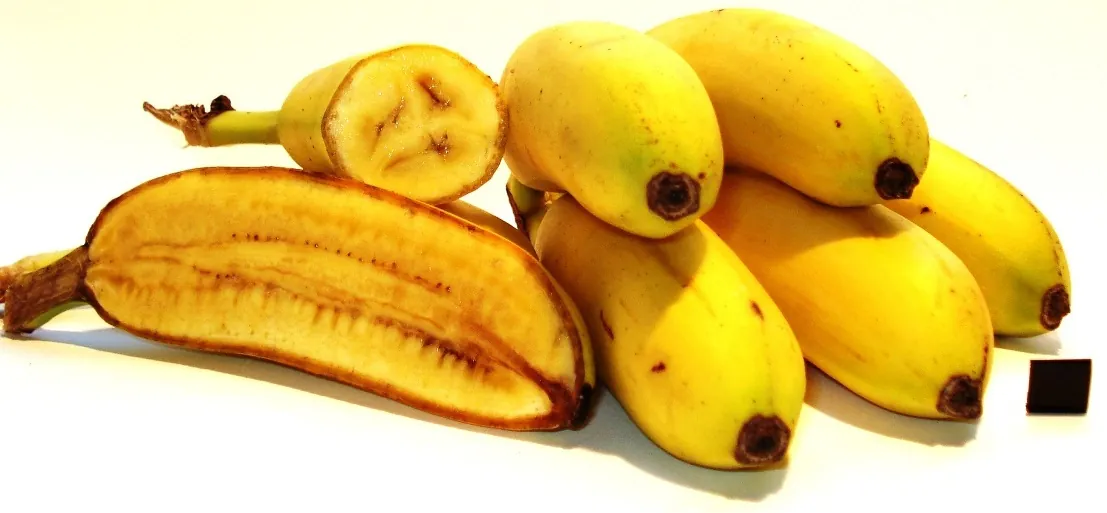 Pisang MasPhoto: Genet · CC BY-SA 3.0
- No variety photo yetPisang Raja
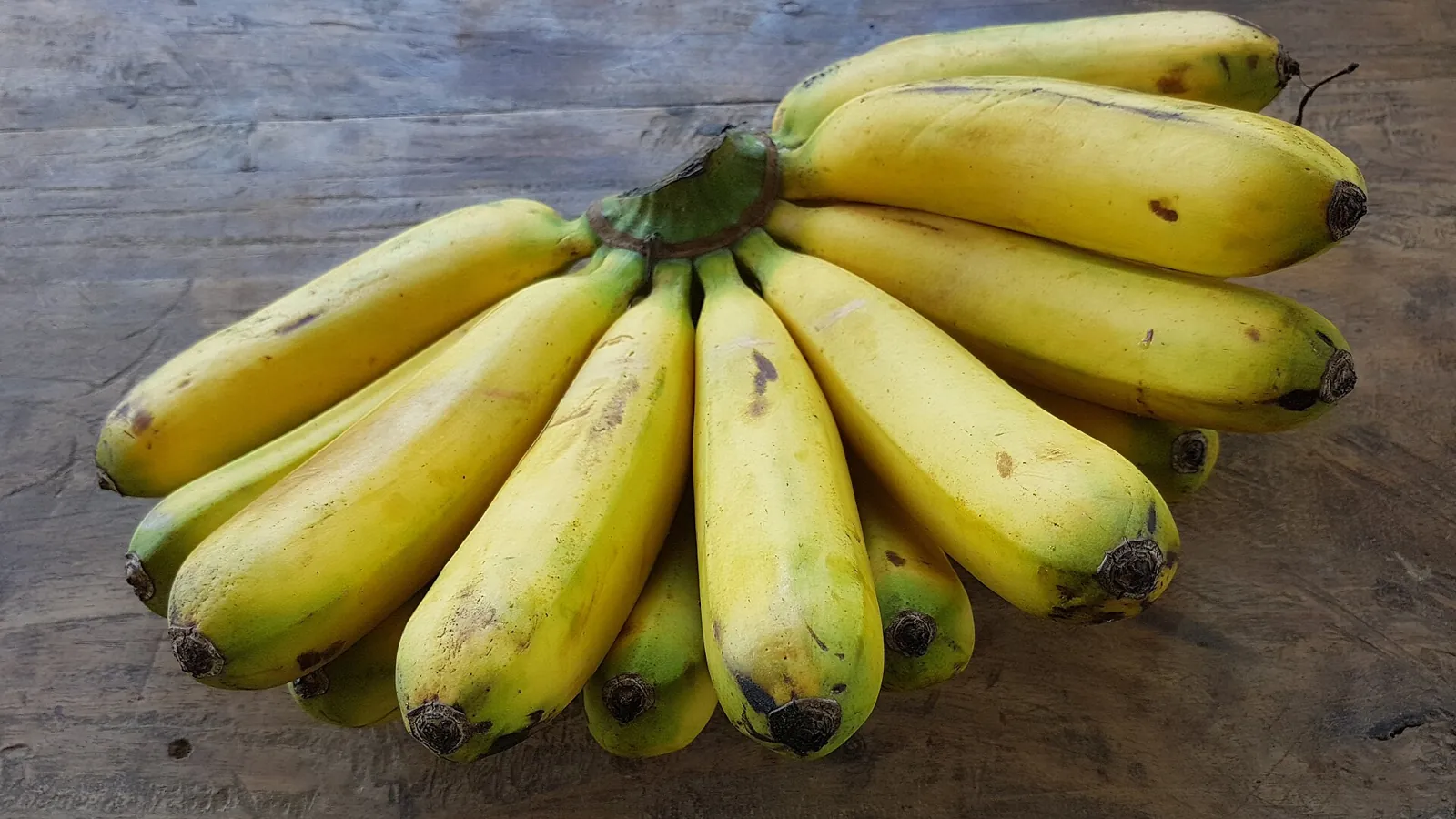 Lakatan
- Use
- Dessert
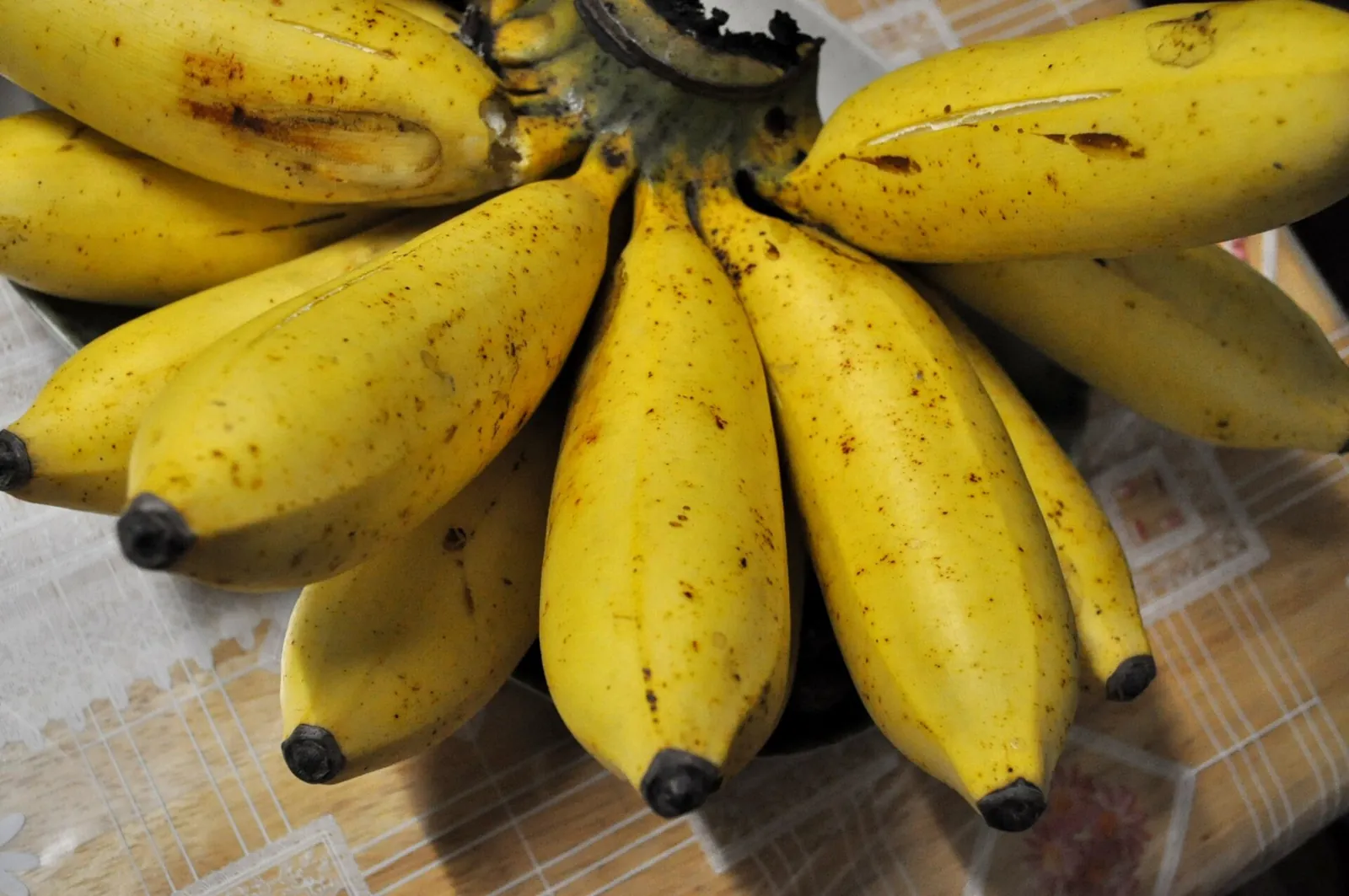 Latundan
- Use
- dessert
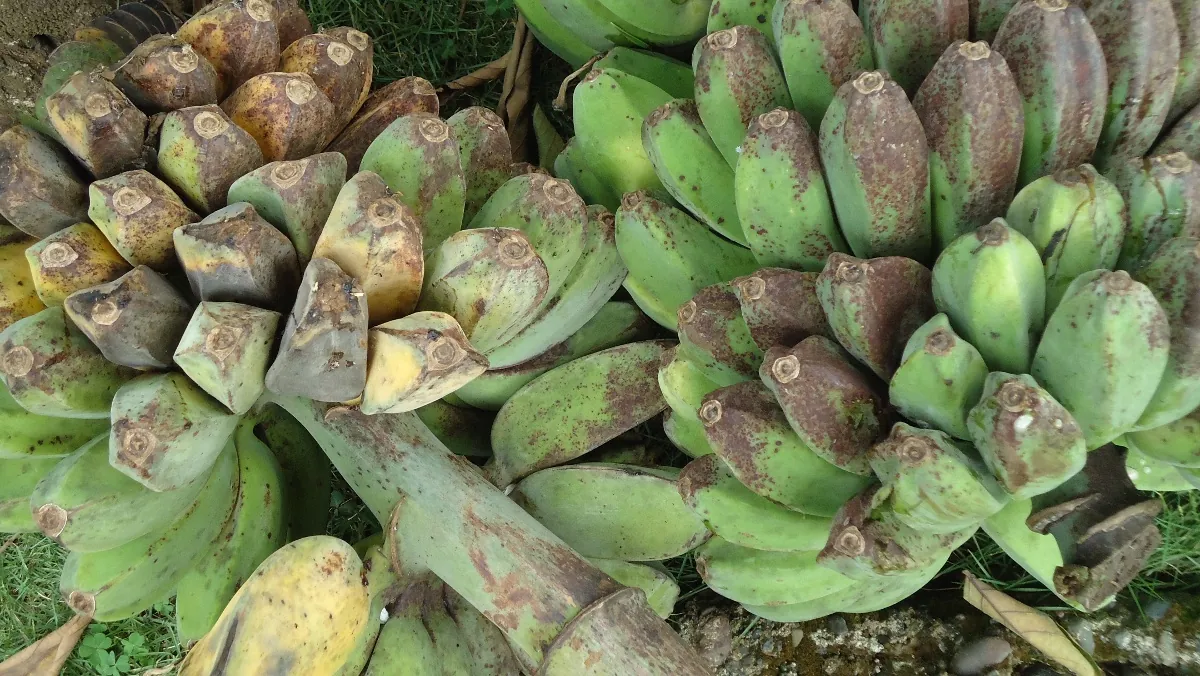 SabaAlso சாபாPhoto: Obsidian Soul · CC0 1.0 Universal Public Domain Dedication
- No variety photo yetDwarf Cavendish
- Use
- dessert
33 names in 16 languages
- pisangroot
- maiʻaHawaiian
Cook it
How to serve it first
Slice a just-ripe banana over oats when you want distinct pieces. Use a softer banana where you want it to blend into batter or a frozen drink. Taste before adding sweetener, since ripeness changes what the banana contributes.
4 banana festivalsUsual monthToday, Oct 22
Strange but trueHistoryA myth, and the truthScienceNatureWhere the name came fromCustoms and cultureFood and drinkPeopleA record
If you like Banana
Tastes alike
Close relatives
Used the same way
Nutrition, sources
Nutrition
Bananas, raw · per 100 g
- Carbohydrate
- 23 g
- Fiber
- 2.6 g
- Sugars
- 12 g
- Protein
- 1.1 g
- Fat
- 0.3 g
- Vitamin C
- 8.7 mg
- Potassium
- 358 mg
Sources
Banana · Fruitopia · checked Sep 23, 2026