Apple
Malus domestica · Rosaceae family
Start with two named varieties and discover how different a familiar fruit can be.
Find it near DetroitGet to know it
The apple is the crisp fruit of a tree in the rose family, and it comes in more than 7,500 varieties. Bite a Honeycrisp and it crunches, sweet and tart at once. For 2025/26, the world apple crop was forecast at around 82 million tonnes, including 47 million in China.
What it is
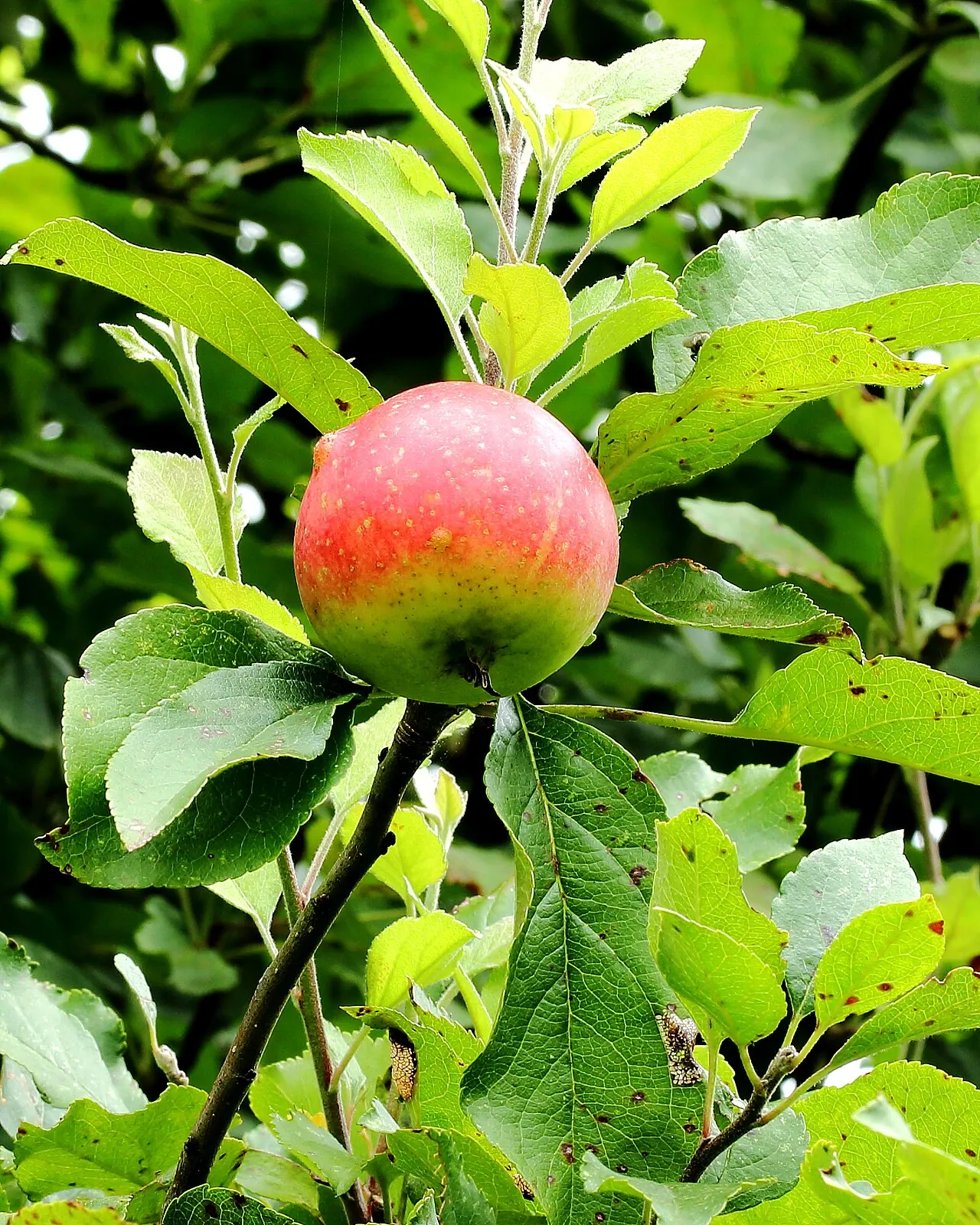
Botanists call the apple a pome, and it ripens in late summer or autumn. Depending on the variety it measures 2.5 to 12 cm (1 to 5 in) across, and its skin is green, yellow or red, plain, striped or blushed.
The varieties taste very different. Gala is crisp, sweet and fragrant. Fuji is intensely sweet with a dense, crisp bite. Cortland has white flesh and a hint of tartness that makes it a good baking apple. Honeycrisp is known for its crunch and its balance of sweet and tart.
Where it comes from
Apples come from Central Asia. They began in Kazakhstan and spread west along the Silk Road thousands of years ago. Today's apple is mostly a cross between its wild Central Asian ancestor, Malus sieversii, and Europe's wild crab apple, Malus sylvestris.
The 2025/26 world crop was forecast at 81.7 million tonnes, including 47.0 million in China and about 5 million in the United States, with Washington its top exporter and Michigan its second-biggest grower. In Japan, Aomori grows about 60% of the country's apples.
How it's eaten where it grows
In Lamotte-Beuvron, a little town in France, the tarte Tatin already had a following when the Tatin sisters opened their hotel in 1894, and it became the house speciality. The tarte Tatin bakes caramelised apples under a lid of pastry, then is flipped out onto a plate. Austria's apfelstrudel wraps apples and raisins in dough stretched paper-thin; the oldest known strudel recipe, handwritten in 1697, is kept at the city's Wienbibliothek im Rathaus.
In Normandy and the West of England, apples are pressed for cider, and Normandy distills its cider into Calvados, an apple brandy. The first record of distilling in Normandy dates from 1553. In the US a whole apple dipped in hot caramel and left to set is a caramel apple; in Britain it's a toffee apple.
How it's grown
Apples grow on deciduous trees that reach up to 30 feet (9 m) from seed. A seed doesn't grow the same variety, so every Gala or Honeycrisp orchard is an orchard of clones: buds from a good tree are grafted onto roots. On a dwarfing rootstock, a tree stays 8 to 10 feet (2.4 to 3 m) tall and fruits 2 to 3 years after planting; a standard tree can take up to 8 years.
Varieties need different amounts of winter cold. Most fruit only with pollen from another variety, carried by bees and flies. Apples are picked with the stem on, so they keep longer.
When and where you'll find it
US supermarkets sell apples all year. Most US apples come from Washington, New York and Michigan, picked in the fall; in Michigan the harvest usually runs from mid-to-late August through October. Rooms kept cold, with oxygen cut from 21% of the air to 1 to 3%, hold apples for months, so an apple bought in March was likely picked months before.
From the Southern Hemisphere, New Zealand's harvest usually runs from January to June, peaking from March to May, and its apples ship to Asia, the US and the UK. In the Tsugaru region of Aomori, Japan, many orchards let visitors pick their own.
Sources · 16
- BBC Foodbbc.co.uk
- Clemson Cooperative Extensionhgic.clemson.edu
- Flora of North Americafloranorthamerica.org
- Friends of the Tarte Tatintartetatin.org
- Kodawari Timeskodawari-times.net
- Michigan Apple Committeemichiganapples.comOther pages23
- My Jewish Learning (The Nosher)myjewishlearning.com
- NC State Extension Gardener Plant Toolboxplants.ces.ncsu.edu
- NPRnpr.org
- Sciencesciencemag.org
- The Conversationtheconversation.com
- University of Maryland Extensionextension.umd.edu
- University of Minnesota Extensionextension.umn.edu
- USDA Agricultural Research Servicears.usda.gov
- USDA Foreign Agricultural Serviceapps.fas.usda.govOther pages2
- Wikipediaen.wikipedia.orgOther pages23
Get it near Detroit
What it tastes like
Crisper than a grape, as sweet as a plum≈
More about the taste
Apple texture and sweetness depend on the variety: Honeycrisp is sweet and crisp, Granny Smith is tart and hard, and Cortland is tart and spicy.
Honeycrisp is sweet and crisp, Granny Smith is tart and hard, and Cortland is tart and spicy.
A tasting invitation
Taste a piece with its skin, then a peeled piece. Describe the snap, juiciness and finish before reaching for a familiar flavor comparison. Repeat with another variety — the interesting discovery is often texture rather than sweetness alone.
Choose, ripen, store, eat
1ChooseFirm
Look for
- Firm
- No bruising or soft patches
Choose firm fruit without bruising, soft patches or mealiness, then match the variety to how you want to eat or cook it.
2RipenRipens after picking
Ripens after pickingFor eating now, buy apples with the flavor and texture you want. Mature, hard apples can improve in storage, but immature fruit can stay sour, tough and poorly flavored.
3StoreFridge, apples
- FridgeApplesPerforated bag in the fruit drawer
Keep apples in the refrigerator's fruit drawer in a perforated bag. Check for deterioration and rinse just before eating.
4EatSkin, Flesh · not core
Eat
SkinFleshNot eaten
CoreEat the washed skin and flesh, or peel for a smoother cooked texture. For the selected bakes, remove the core as the recipes direct.
More tips
A useful detail The same apple isn't best for every purpose — some varieties suit eating fresh, others suit sauce, so it helps to shop by variety rather than by one universal ranking.
Worth knowing
- Honeycrisp flavor varies from one orchard lot to the next.
- Ask about picking maturity as well as picking date; the first available batch isn't automatically the best tasting.
- Ask the seller whether a lot was picked for eating now or for storage, not just when.
Detroit, Michigan
When it’s good hereUsual monthsJust arrivedAt their bestLast chanceAll yearWhere it is in its usual monthsToday, Oct 22Grown hereIn season in your stateShips fromIn season where it grows
90 growing areas, 25 countriesUsual monthsOur estimated monthsToday, Oct 22

- Antalya
- Aomori +1
- Araucanía
- Aydın
- Baden-Württemberg +6
- Balochistan
- Cáceres
- California
- Chihuahua
- East Java
- Eastern Cape
- Espírito Santo
- Florida
- Fujian
- Gelderland
- Granada
- Hawaii
- Herefordshire
- Ica
- La Libertad
- Málaga
- Mendoza +1
- New South Wales
- Otago
- Pernambuco
- Shaanxi
- South Africa
- South Australia
- Washington +1
- Yunnan
- You
28 of 40 areas · October
Growing areas by country
- United States14
- Spain9
- Australia6
- New Zealand6
- Brazil5
- China5
- South Africa5
- Argentina4
and 20 more countriesand 17 more countries
2,358 varieties
- Gala
- Tartness
- subacid
- Scent
- Aromatic. United Kingdom
- Flavour
- sweet, slightly subacid
- Feel
- firm United Kingdom
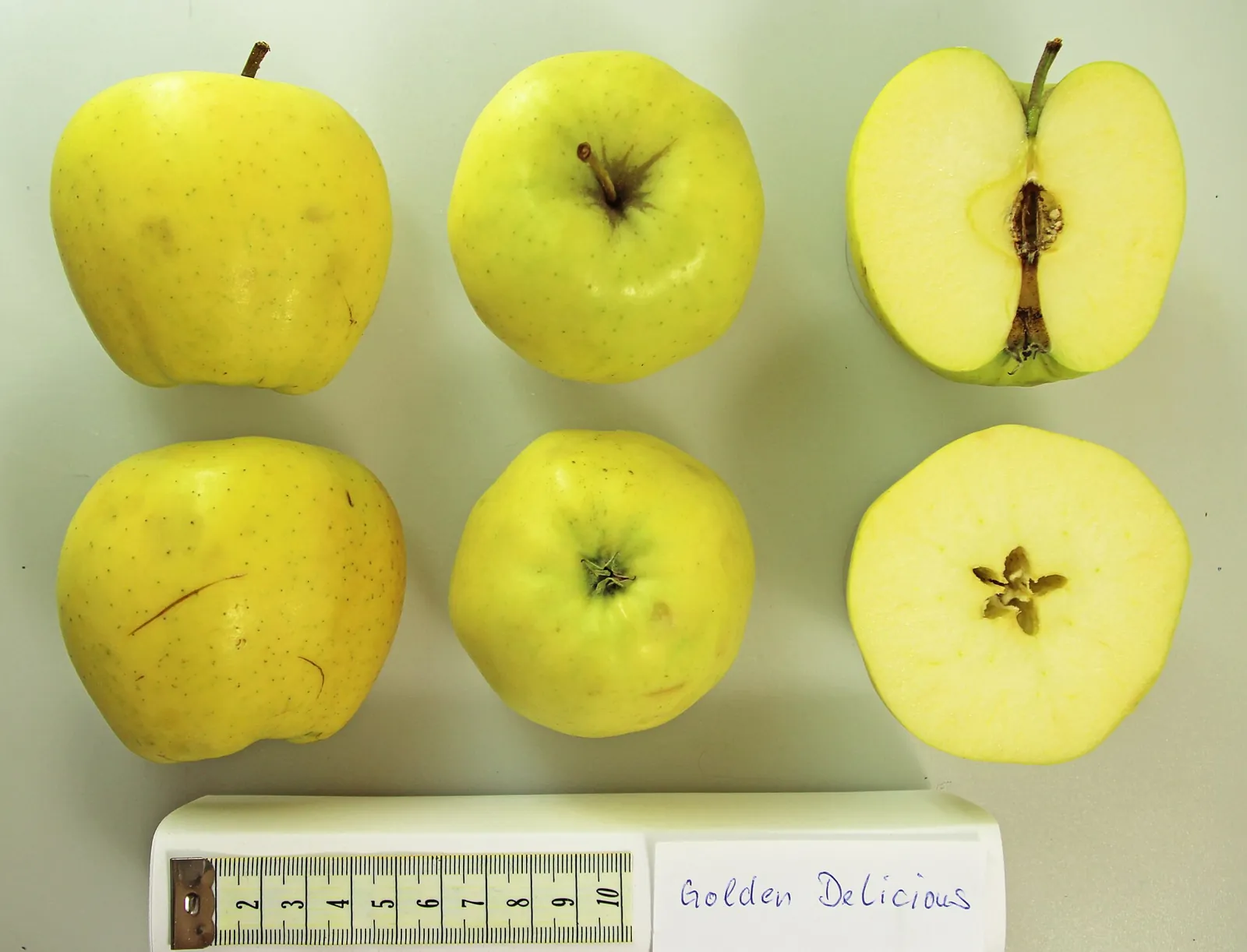 Golden Delicious
- Taste
- high United Kingdom
- Scent
- Aromatic. United Kingdom
- Juice
- juicy United Kingdom
- Use
- Dessert apple
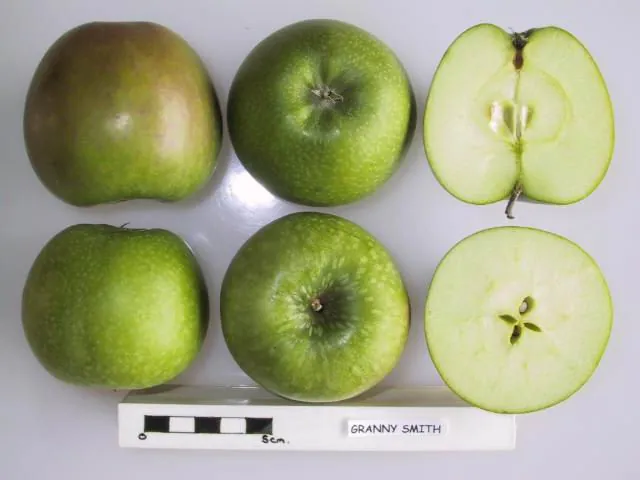 Granny Smith
- Taste
- low US-WA
- Tartness
- subacid
- Flavour
- subacid, moderately sweet
- Bite
- crisp United Kingdom
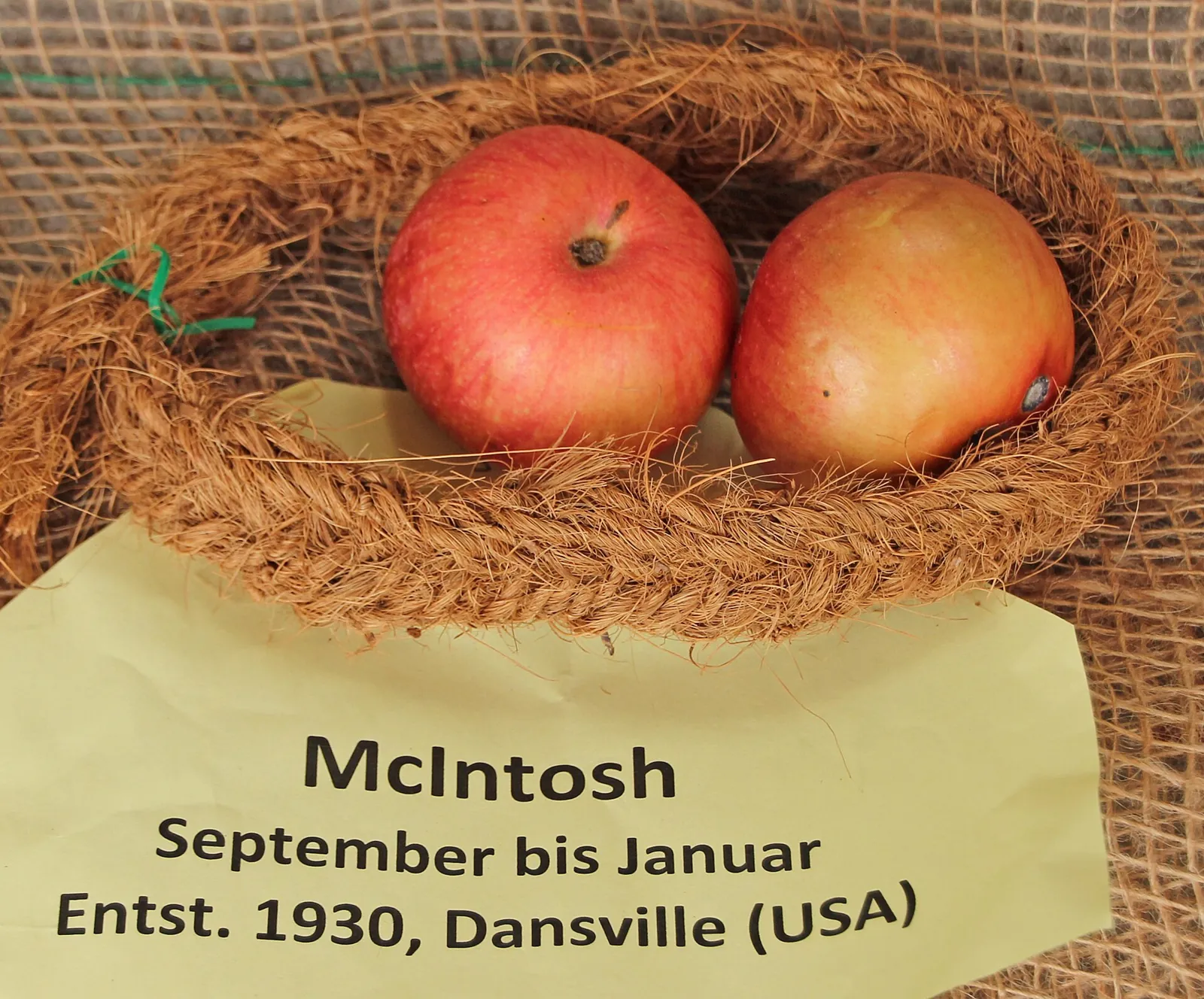 McIntosh
- Taste
- high United Kingdom
- Tartness
- subacid
- Scent
- aromatic
- Flavour
- subacid to sweet, aromatic
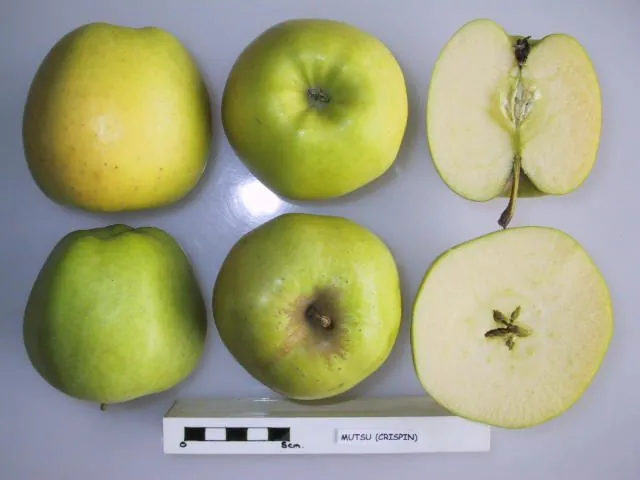 Mutsu
- Taste
- sweet
- Tartness
- acid
- Flavour
- Light sweetness with some acidity. United Kingdom
- Bite
- crisp
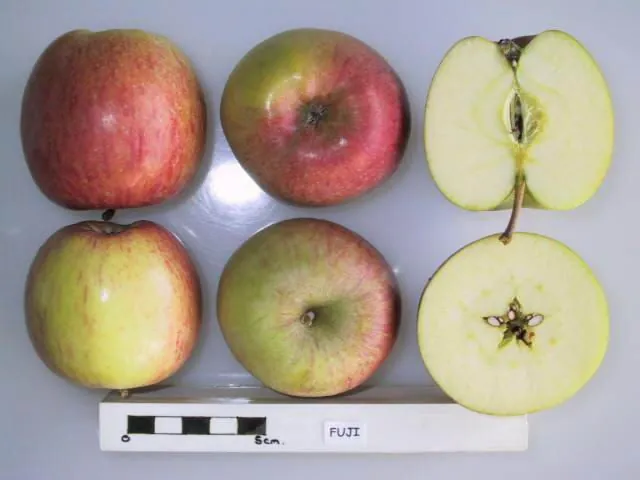 Fuji
- Taste
- high US-WA
- Tartness
- subacid
- Use
- Dessert apple
21 names in 12 languages
Cook it
How to serve it first
For an easy first comparison, cut two named varieties into wedges and serve alongside plain yogurt or a little sharp cheese. Keep the pieces separate so each fruit's sweetness, acidity and crunch remain easy to notice.
15 apple festivalsUsual monthToday, Oct 22
Strange but trueHistoryA myth, and the truthScienceNatureWhere the name came fromCustoms and cultureFood and drinkPeopleA record
If you like Apple
Tastes alike
Close relatives
Nutrition, sources
Nutrition
Apples, raw, without skin · per 100 g
- Carbohydrate
- 13 g
- Fiber
- 1.3 g
- Sugars
- 10 g
- Protein
- 0.3 g
- Fat
- 0.1 g
- Vitamin C
- 4 mg
- Potassium
- 90 mg
Photos · 2
Sources
Apple · Fruitopia · checked Sep 21, 2026