Jujube
Also called Chinese jujube · Common jujuba · Chinese datesZiziphus jujuba · Rhamnaceae family
A fruit enjoyed crisp and fresh or wrinkled and dried, with variety choice shaping the experience.
Find it near DetroitGet to know it
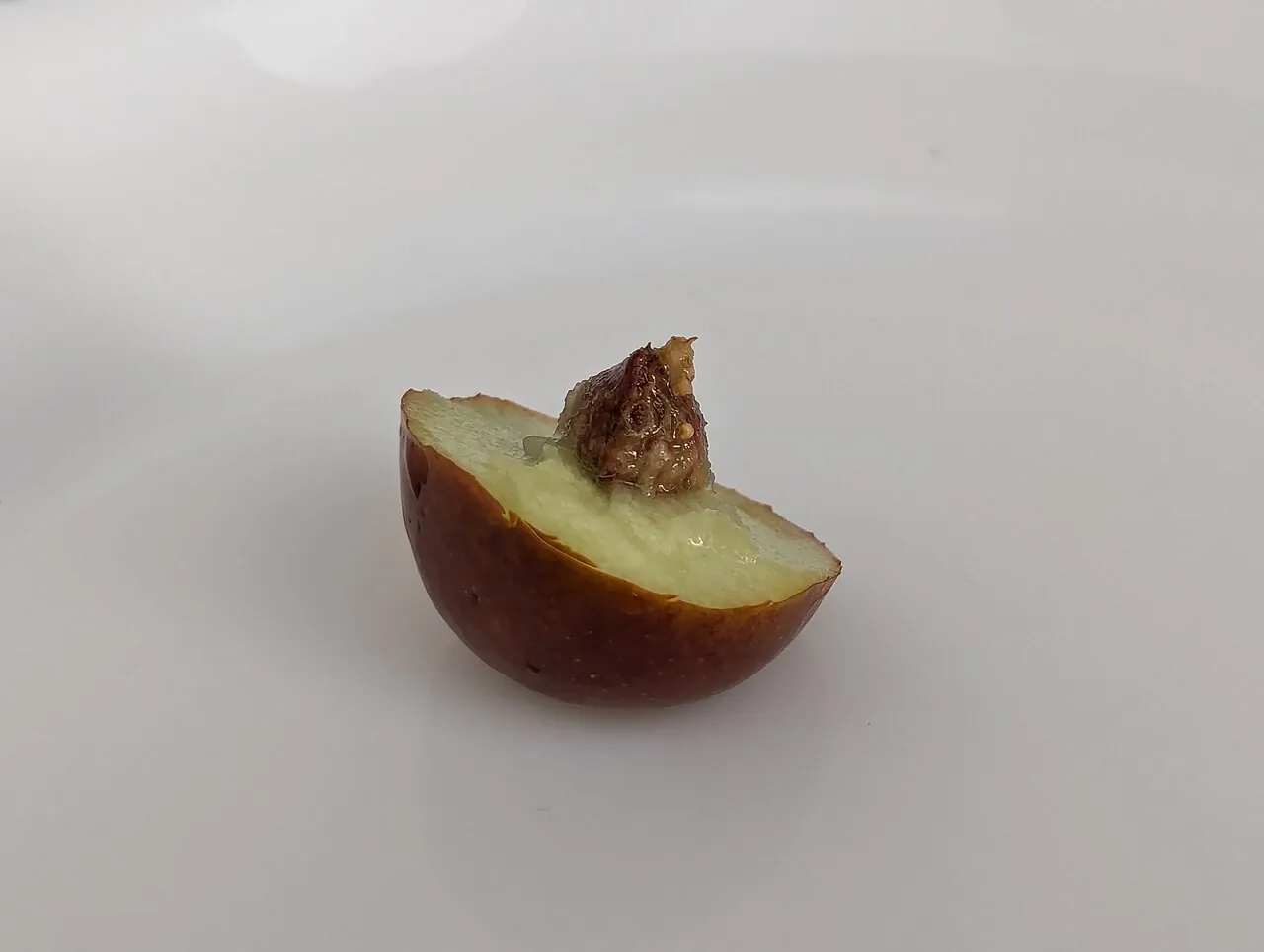
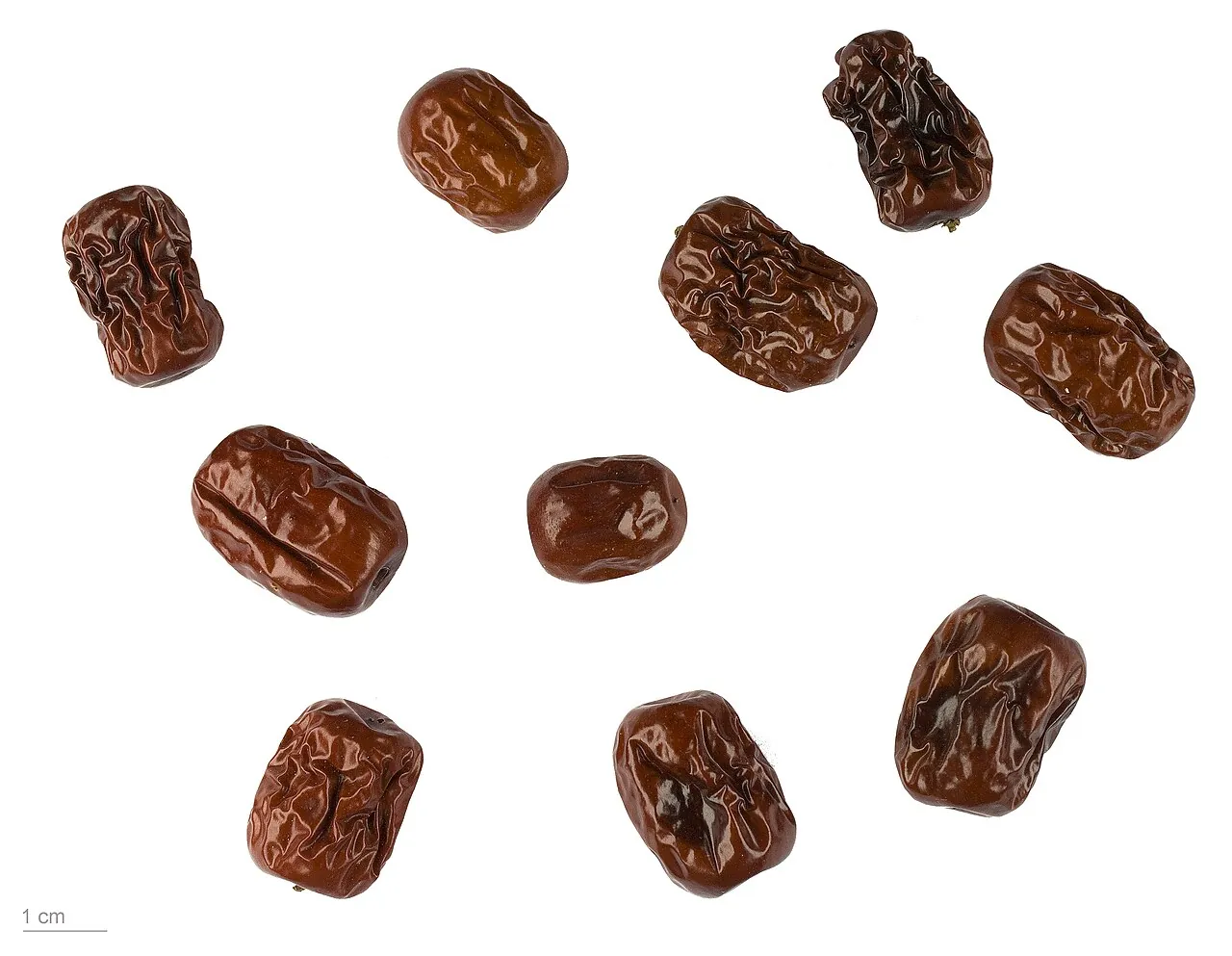
A fresh jujube has the crisp bite of a small apple; dried, it becomes a wrinkled red fruit with a chewy texture and caramel-like sweetness. These are the red dates used in Chinese cooking, grown on a leafy tree rather than a date palm.
What it is
Jujube is Ziziphus jujuba, a member of the buckthorn family. Its oval or round fruit is often about 1.7–3.2 cm (⅔–1¼ in), with a pointed stone inside. It is a different species from the tropical Indian jujube.
Variety matters. In New Mexico, Li tastes good from the half-red stage through full red. Dongzao can already be sweet and crisp while its skin is still creamy-coloured.
Where it comes from
Jujubes come from the middle and lower reaches of China’s Yellow River, where people have grown them for more than 4,000 years. The first US introduction came from Europe in 1837, to Beaufort, North Carolina.
In 1908, plant explorer Frank Meyer brought Chinese commercial varieties to Chico, California. They later spread to planting stations in Texas, New Mexico and other states. Most US jujubes still grow in home gardens, alongside small commercial plantings in California.
How it's eaten where it grows
Shanghai’s xin tai ruan is a dessert of red dates split open and filled with sticky rice dough. The stuffed fruit is steamed, then coated in syrup scented with osmanthus flowers.
In Korea, jujubes become daechu cha, a fruity tea served hot or cold. One version grinds softened dried fruit with ginger and cinnamon, then mixes in sugar to make a paste. A spoonful stirred into water makes a cup.
How it's grown
Jujube trees lose their leaves in winter and reach about 4.5–9 m (15–30 ft). Their branches zigzag, and young trees carry paired thorns. Most commercial trees are grafted onto sour jujube roots.
Most varieties give a little fruit in their second year and a more substantial crop after four or five years. They tolerate drought, but in New Mexico’s dry climate growers irrigate them for good crops.
When and where you'll find it
New Mexico’s early varieties bring fresh jujubes in late summer. Fucuimi usually matures in mid-to-late August at Las Cruces. Alcalde #1 reaches its half-red stage in early September at Los Lunas and mid-September farther north at Alcalde.
Dried red dates belong to the dried-goods shelves of Chinese and Asian groceries, either with their stones or already pitted. Korean groceries also carry the sweet jujube paste used for tea.
Sources · 7
- iCook — 煩躁散仙媽icook.tw
- NC State Extension Gardener Plant Toolboxplants.ces.ncsu.edu
- New Mexico State University — Jujube Varieties in New Mexicopubs.nmsu.edu
- New Mexico State University — Jujube: Chinese Date in New Mexicopubs.nmsu.edu
- Texas A&M AgriLife Extensionmytexas.ag.tamu.edu
- The Subversive Table — Lis Lamthesubversivetable.com
- The Woks of Lifethewoksoflife.com
Get it near Detroit
What it tastes like
Sweeter than a banana, softer than an apple≈
More about the taste
In Texas, the Li variety is crisp like an apple. Green-stage jujubes are generally crunchier, and many varieties taste better once the skin turns reddish-maroon, though some are sweet while still green.
In Texas, the Li variety is crisp like an apple. Green-stage jujubes are generally crunchier, and many varieties taste better once the skin turns reddish-maroon, though some are sweet while still green.
Choose, ripen, store, eat
1ChooseLi: half-red to full red
Look for
- Li: half-red to full red
- Dongzao: creamy stage
Ignore
- One skin-color rule
Ask for the variety and its intended use. In New Mexico, Li jujubes have good flavor from half-red/half-creamy to full red, but can be flavorless if picked too early; Dongzao can already be eaten at the creamy stage. One skin-color rule doesn't fit every variety.
2RipenJujubes left on the tree dry naturally
Jujubes left on the tree dry naturally. Treat fresh and dried jujubes as different foods, not two stages of the same one.
3StoreJujubes are dried, candied, pickled, and canned as ways to keep them beyond fresh eating
Jujubes are dried, candied, pickled, and canned as ways to keep them beyond fresh eating.
4EatFruit · not pit
Eat
FruitNot eaten
PitJujubes have a pointed pit at the center. Remove it before adding the fruit to a dish.
Detroit, Michigan
When it’s good hereUsual monthsJust arrivedAt their bestLast chanceAll yearWhere it is in its usual monthsToday, Oct 22Grown hereIn season in your stateShips fromIn season where it grows
7 growing areas, 3 countriesUsual monthsOur estimated monthsToday, Oct 22

- California
- Granada
- Málaga
- Murcia
- New Mexico
- Valencia
- Xinjiang
- You
0 of 1 areas · October
Growing areas by country
- Spain4
- United States2
- China1
Improved Chinese jujube varieties came to the United States through USDA plant explorer Frank Meyer's introductions in 1908, long after the species had already been cultivated in China for centuries.
49 varieties
- No variety photo yet월출
- Feel
- soft
- Shape
- oval
- Use
- fresh · drying
- No variety photo yet금성
- Shape
- oval
- Use
- fresh · drying
- No variety photo yet무등
- Feel
- soft
- Shape
- oval
- No variety photo yet태복
- Taste
- high KR-43
- Feel
- firm KR-43
- No variety photo yet금명조
- Flavour
- 새콤달콤한 맛 KR-43
- No variety photo yet태후
- Bite
- crisp KR-43
- Juice
- juicy KR-43
- Shape
- oval KR-43
43 names in 18 languages
Cook it
4 jujube festivalsUsual monthToday, Oct 22
Strange but trueHistoryA myth, and the truthScienceWhere the name came fromCustoms and cultureFood and drinkA record
If you like Jujube
Tastes alike
Close relatives
Same plant family
Nutrition, sources
Nutrition
Jujube, raw · per 100 g
- Carbohydrate
- 20 g
- Protein
- 1.2 g
- Fat
- 0.2 g
- Vitamin C
- 69 mg
- Potassium
- 250 mg
Sources
Jujube · Fruitopia · checked Sep 22, 2026