Watermelon
Citrullus lanatus · Cucurbitaceae family
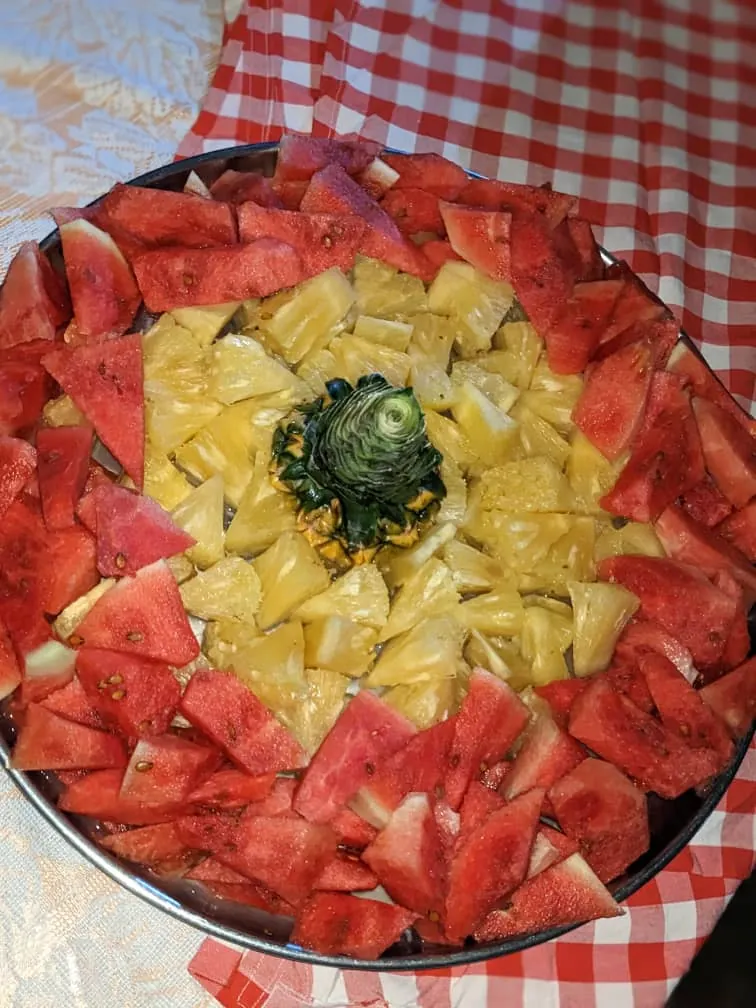
Move beyond a wedge: pair watermelon with grilled cheese, or turn its pulp into a chilled mousse.
Find it near DetroitGet to know it
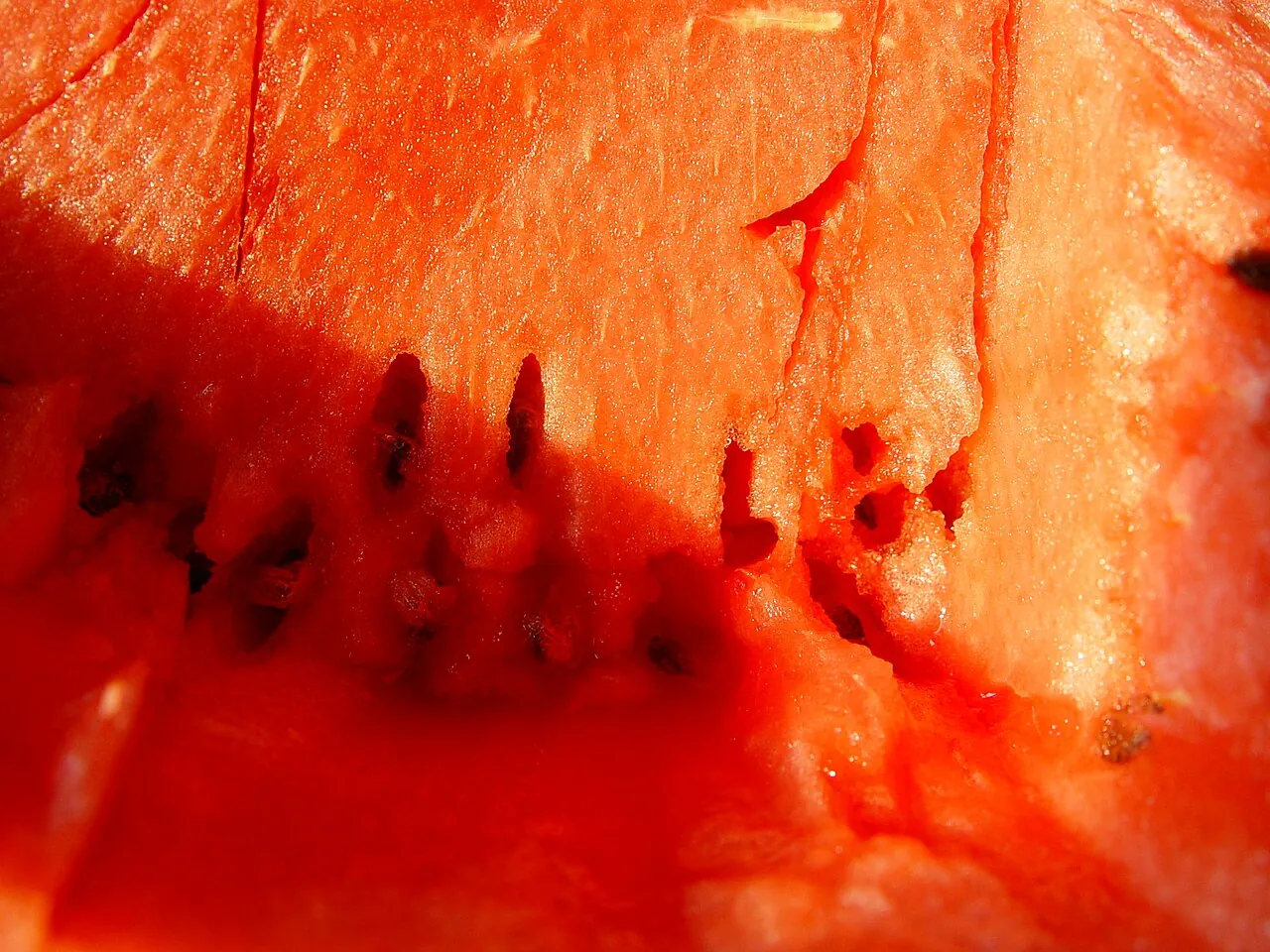
Watermelon is a sweet, juicy fruit from a sprawling vine in the cucumber family. Its flesh is more than 90% water, so each bite releases a mouthful of juice. Beneath the green rind, the flesh can be red, pink or yellow.
What it is
Watermelons range from round to long and oval, with plain or striped rinds. Sugar Baby is a compact, round variety about 15–20 cm (6–8 in) across. Red flesh is familiar, but yellow and pink varieties belong to the same fruit.
Seeded and seedless types both exist. The little white flecks in a seedless melon are soft, undeveloped seed coats; they can be eaten along with the flesh.
Where it comes from
Watermelon’s roots are African. Its closest relative is the Kordofan melon of Sudan, with whitish flesh that is not bitter. Watermelons were being grown in India by the seventh century and had reached China by the tenth.
In 2024 the world grew about 105 million tonnes of watermelon, with China producing 60% of the crop. India, Turkey, Algeria and Brazil are other major growers.
How it's eaten where it grows
In Rajasthan, India, matira curry turns watermelon into a savoury dish: cubes cook briefly in their own juice with cumin, dried chillies and ginger, then lime adds a sharp finish.
In Sicily, strained watermelon juice becomes gelu i muluni, a cool, spoonable pudding thickened with starch and scented with jasmine and cinnamon. Dark chocolate goes on top. In Palermo, where it is called gelo di mellone, the dessert is part of the July feast of the city’s patron saint, Rosalia.
How it's grown
Watermelon vines need a long, warm growing season. Even fields of seedless melons need pollen: growers plant a seeded pollinator variety among them. The fruit is picked by hand when fully ripe.
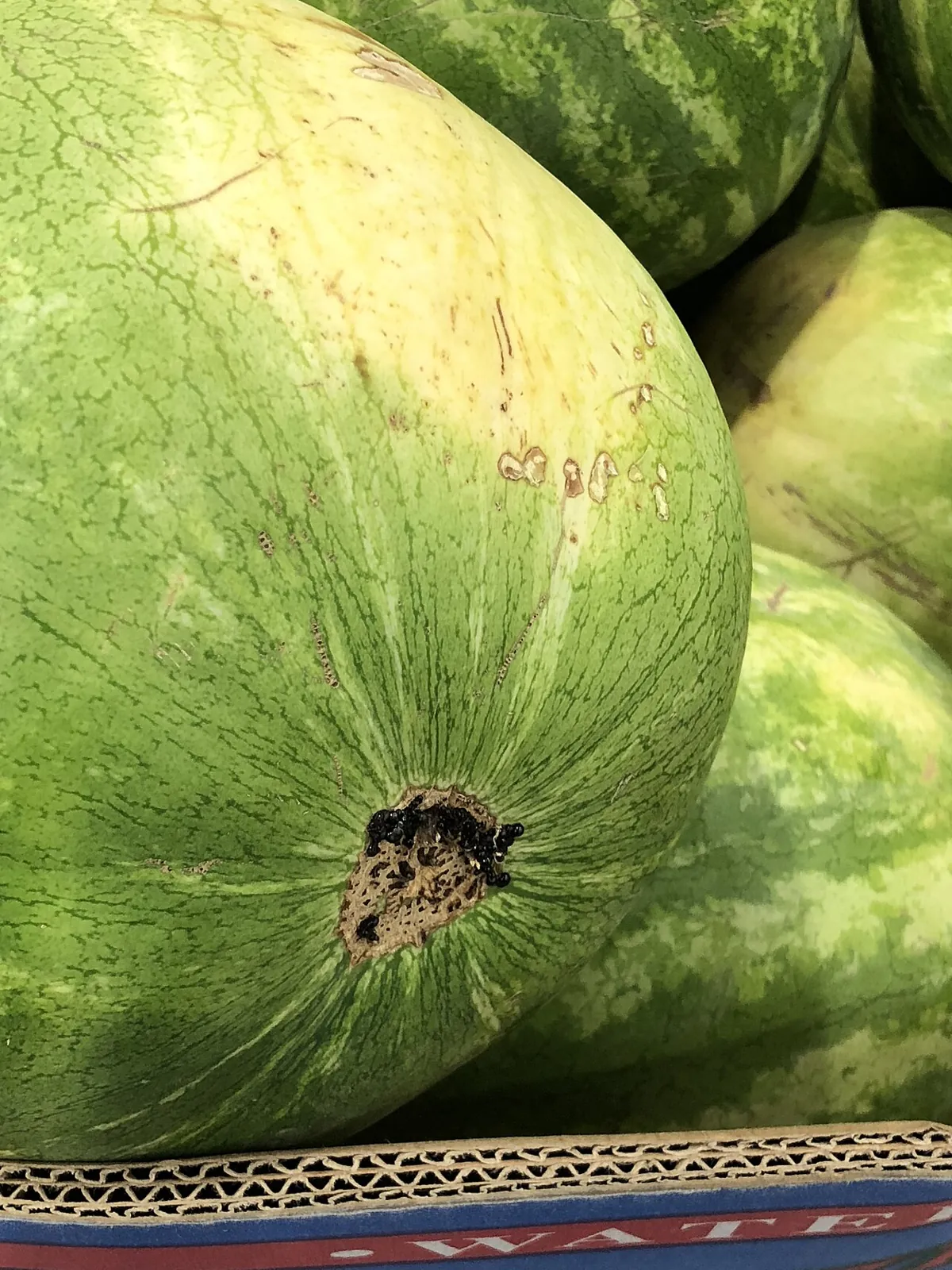
The patch that rests on the ground turns from white towards yellow, and the nearby tendril dries and browns. A watermelon stops ripening once it's picked, so one cut too early won't catch up on the kitchen counter.
When and where you'll find it
In the US, Florida’s main harvest usually runs from May through July. Farther north, Pennsylvania’s local crop usually runs from late July to late September. Whole melons and pre-cut pieces turn up in grocery stores, and in season at farmers’ markets and roadside stands.
Sources · 11
- Asma Khan, BBC Foodbbc.co.uk
- en.wikipedia.org
- Mississippi State University Extensionextension.msstate.edu
- NC State Extension Gardener Plant Toolboxplants.ces.ncsu.edu
- Penn State Extensionextension.psu.edu
- Renner et al., PNAS (2021)pmc.ncbi.nlm.nih.gov
- Tenute Nicosia, Sicilytenutenicosia.it
- University of Florida IFASask.ifas.ufl.edu
- University of Illinois Extensionextension.illinois.edu
- University of Maryland Extensionextension.umd.edu
- Visit Sicily, regional tourism departmentvisitsicily.info
Get it near Detroit
What it tastes like
As mild as a banana, as sweet as a pear≈
More about the taste
Watermelon is sweet and very watery. Its firm rind encloses the flesh; seedless watermelon is a triploid type bred to be seedless, distinct from ordinary seeded varieties.
The flesh is juicy; named varieties include red-fleshed Mini Love and yellow-fleshed Sunshine.
Sugar content is highest when the melon develops fully on the vine; waiting after purchase doesn't make up for early harvest.
A tasting invitation
Compare flesh near the center with flesh closer to the rind for texture and sweetness, and taste different flesh colors rather than judging by appearance.
Choose, ripen, store, eat
1ChooseYellowing ground spot
Look for
- Yellowing ground spot
- Duller rind
- Darkened, dried tendril
- Heavy for its size
- Intact rind
Ignore
- Tapping the rind
In the garden, look for a yellowing ground spot, a duller rind and a darkened, dried tendril nearby, the signs of maturity. A seedless label means fewer hard seeds to remove; flesh color and flavor vary between seedless melons.
2RipenDoesn’t ripen after picking
Doesn’t ripen after pickingWatermelon develops its sweetness on the vine. An immature melon won't get sweeter on the counter.
3StoreCounter, whole, freshly harvested
- CounterWhole, freshly harvested
- FridgeCut piecesCovered container
A freshly harvested whole watermelon keeps about a week at room temperature; that clock started at harvest, not at purchase.
4EatFlesh · not rind, leaves
Eat
FleshNot eaten
RindLeavesThe flesh is the food, not the rind, leaves or watermelon radish (a different vegetable). Even seedless watermelon can have small white seed coats; these are soft and edible.
More tips
A useful detail The ground spot marks where the melon rested on the soil. As it ripens, this spot turns from pale toward yellow — one maturity clue among several, not a measure of sugar content.
Worth knowing
- A few days on the counter won't rescue an immature watermelon. Harvest timing matters before it ever reaches the shop.
- Watermelon flesh color doesn't tell you how sweet it is, though it can sway how sweet it seems.
Detroit, Michigan
When it’s good hereUsual monthsJust arrivedAt their bestLast chanceAll yearWhere it is in its usual monthsToday, Oct 22Grown hereIn season in your stateShips fromIn season where it grows
62 growing areas, 17 countriesUsual monthsOur estimated monthsToday, Oct 22

- Antalya
- Aomori
- Aydın
- Bahia
- Cáceres
- California
- Castellón
- East Java
- Espírito Santo
- Florida
- Georgia
- Greater Accra
- Hawaii
- Ica
- Johor
- La Libertad
- Mendoza
- Nagano
- New South Wales
- Northern Territory
- Okinawa
- Ontario
- Pahang
- Pará
- Rio Grande do Sul
- Santa Cruz de Tenerife
- South Africa
- South Australia
- Washington
- Yogyakarta
- You
6 of 22 areas · October
Growing areas by country
- United States13
- Spain9
- Brazil7
- Australia6
- France4
- Peru4
- Türkiye4
- Japan3
and 12 more countriesand 9 more countries
28 varieties
- No variety photo yetTat Karpuzu
- Use
- fresh TR-63
- No variety photo yetKARİPCİN
- Flesh
- pink · red
- Shape
- round
- Use
- fresh
- No variety photo yet강타
- Flesh
- red
- Shape
- round
- No variety photo yet한빛
- Flesh
- red
- Shape
- round
- No variety photo yetAKER
- Flesh
- red Türkiye
- Shape
- oval Türkiye
- No variety photo yetAZ 97 KANTAR
- Flesh
- pink · red Türkiye
- Shape
- oval Türkiye
45 names in 25 languages
Cook it
How to serve it first
Cut a small tasting wedge before preparing the whole melon. Serve cubes simply with mint, or blend some into a chilled drink. Add lime or other flavors gradually — a good melon needs very little help.
8 watermelon festivalsUsual monthToday, Oct 22
Strange but trueHistoryA myth, and the truthScienceNatureWhere the name came fromCustoms and cultureA record
If you like Watermelon
Tastes alike
Same plant family
Nutrition, sources
Nutrition
Watermelon, raw · per 100 g
- Carbohydrate
- 7.6 g
- Fiber
- 0.4 g
- Sugars
- 6.2 g
- Protein
- 0.6 g
- Fat
- 0.2 g
- Vitamin C
- 8.1 mg
- Potassium
- 112 mg
Sources
Watermelon · Fruitopia · checked Sep 23, 2026
- arcticfarms.com
- extension.k-state.edu
- extension.psu.edu
- extension.umd.edu
- fieldreport.caes.uga.edu
- nt.gov.au
- plants.ces.ncsu.edu
- receiteria.com.br
- watermelon.org
What we don't know yet
The one-week whole-melon storage guidance doesn't apply to cut watermelon, which won't keep nearly as long.