Nectarine
Also called PeachtreePrunus persica · Rosaceae family
A red nectarine can still be too firm to enjoy. Its best eating moment depends on maturity, variety and what happened during storage, not just a bright surface color.
Find it near DetroitGet to know it
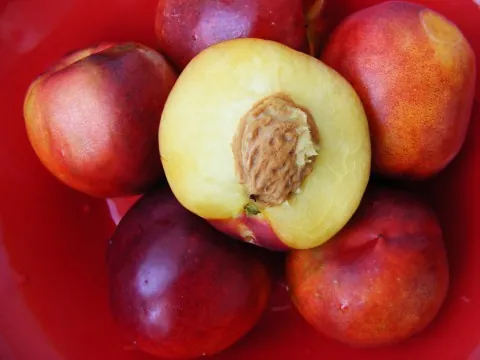
A nectarine is a peach with smooth, glossy skin instead of fuzz: golden, blushed ruby and crimson, around juicy yellow or white flesh that tastes sweet and a little tangy. When it's ripe it smells of honey. In the United States, about 95% of nectarines grow in California.
What it is
A nectarine is about 5 to 7 cm (2 to 2 3/4 in) across and weighs around 150 g (5 oz), with a seam running from stem to tip. Its delicate skin bruises easily. Look at the background colour under the blush: golden yellow means it was picked ripe enough, while a green tinge means it was picked too early.
Nectarines and peaches are the same species, and on average nectarines are a little smaller and sweeter. Some are freestone, with a stone that falls away from the flesh, and some are clingstone. In France the clingstone kind has its own name, brugnon, and only the freestone kind is called nectarine.
Where it comes from
The peach tree is native to Asia and was first grown in China. Nectarines have been described for almost as long as peaches, and because they may have first sprung from peach seeds, most peach-growing places grow nectarines too. They spread from China through the Middle East to Greece and Rome, and reached England in the late 1500s or early 1600s.
The world's 2026/27 crop of peaches and nectarines is forecast at about 25 million tonnes, 17.3 million of them in China. The European Union, led by Spain and Greece, is forecast at 3.5 million tonnes, Turkey at a record 1.2 million and the United States at 660,000. California raises more than 130 varieties of nectarine commercially.
How it's eaten where it grows
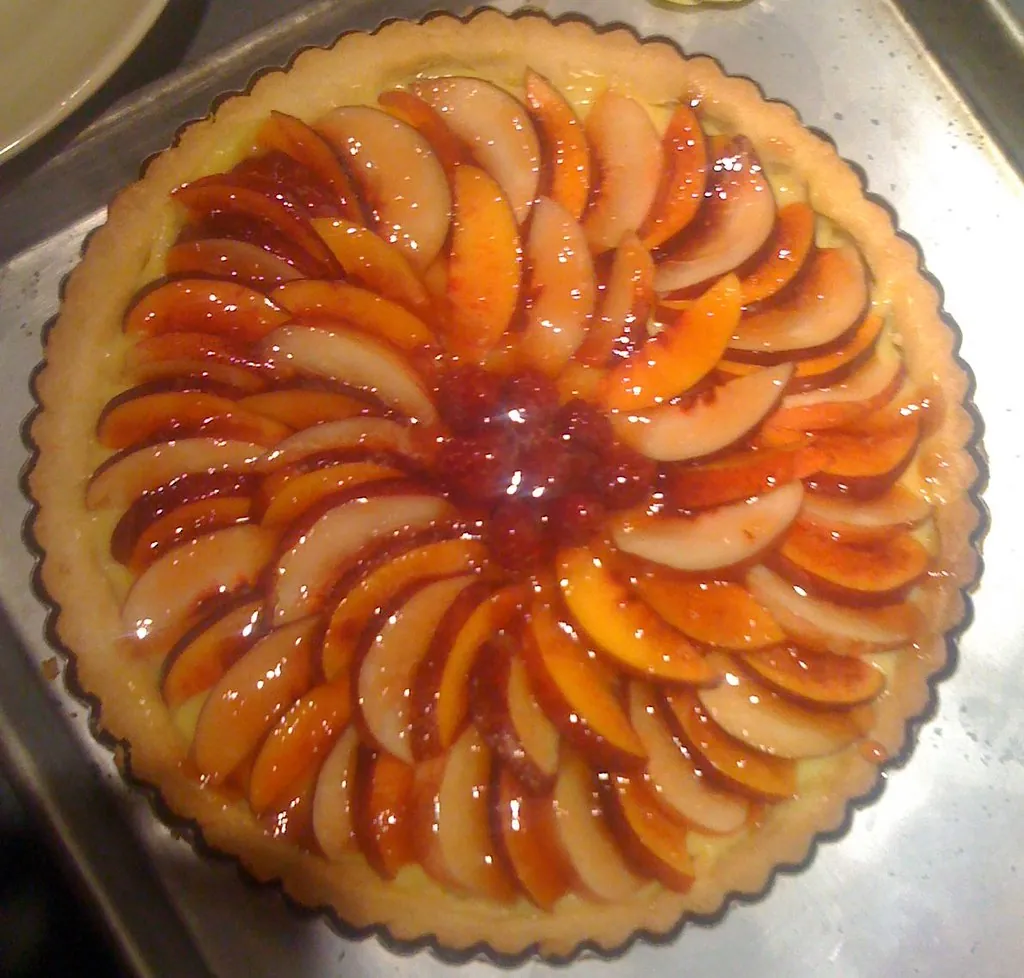
In California, where most American nectarines grow, Alice Waters of Chez Panisse in Berkeley bakes nectarines into an open galette: big wedges of peak-season fruit on a single crust, laid over ground almonds and crushed amaretti biscuits. Nectarines also hold their shape when cooked, so they go into pies, cobblers and tarts.
They are eaten out of hand with the skin on, or sliced with sugar or cream. They are grilled, poached and roasted, and paired with goat cheese, gorgonzola or mozzarella, basil and mint.
How it's grown
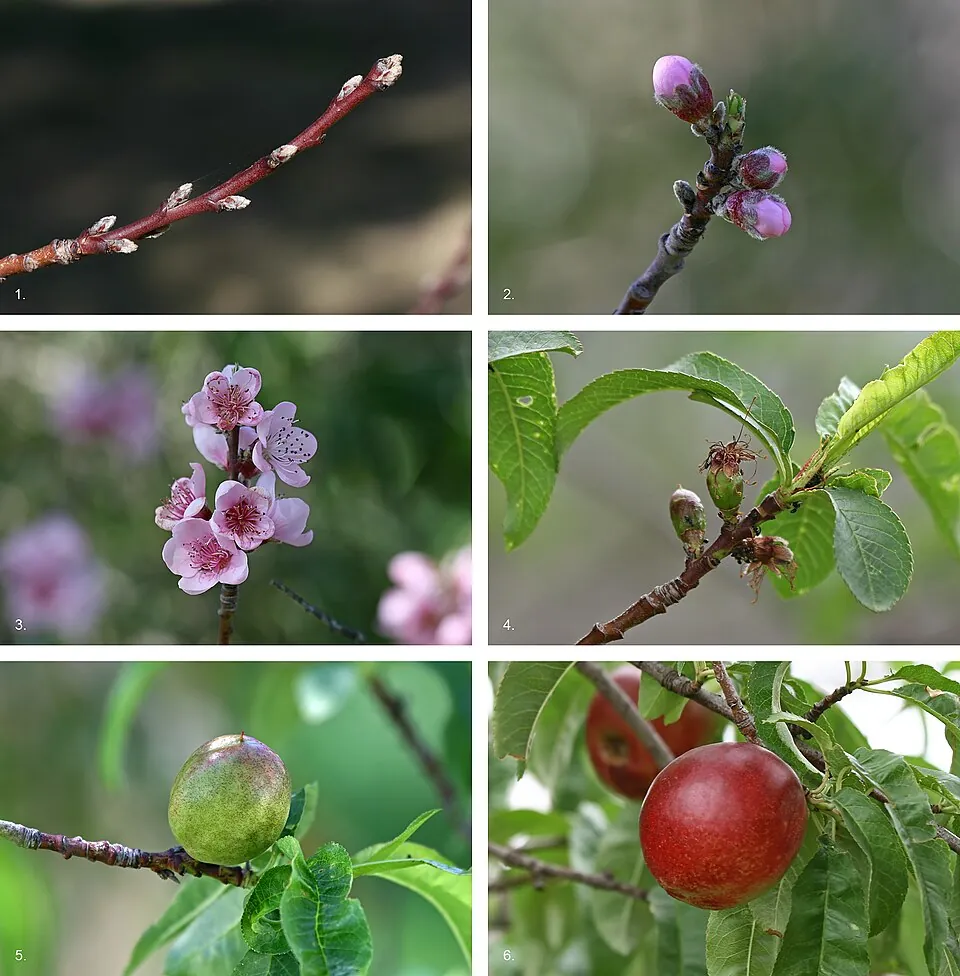
Nectarines grow on the peach tree, which reaches 15 to 25 feet (4.5 to 7.5 m) with a rounded crown. It needs full sun, well-drained soil and a set number of cold days below 45 °F (7 °C) each winter. A tree usually starts bearing in its third year.
The tree fruits only on new wood. At Tougas Family Farm in Massachusetts, pruning comes in winter or early spring and blossom thinning in spring. In California, growers judge when to pick by the skin's background colour turning from green to yellow. Nectarines are picked by hand into bags, baskets or totes, then cooled as soon as possible.
When and where you'll find it
In the United States, fresh nectarines usually come from early summer into fall, peaking in midsummer. In California's San Joaquin Valley, early varieties are usually picked from mid-May and the last ones by mid-September. At Tougas Family Farm in central Massachusetts, pick-your-own nectarines usually run from the second week of August into early September. Chile's exports keep growing as its growers plant more nectarines and fewer peaches.
Supermarkets usually label them just "nectarines"; named varieties such as Arctic Jay, Fantasia and Snow Queen turn up through specialty distributors and at farmers' markets. A firm one softens at room temperature in 1 to 3 days.
Sources · 8
- NC State Extension Gardener Plant Toolboxplants.ces.ncsu.edu
- Smitten Kitchensmittenkitchen.com
- Specialty Producespecialtyproduce.com
- Tougas Family Farmtougasfamilyfarm.com
- USDA Agricultural Research Servicears.usda.gov
- USDA Foreign Agricultural Serviceapps.fas.usda.gov
- Wikipediaen.wikipedia.orgOther pages2
- Wikipédia (French)fr.wikipedia.org
Get it near Detroit
What it tastes like
As soft as a blueberry, as sweet as a grape≈
More about the taste
Nectarine eating quality comes from sweetness, acidity and their balance. Fruit held too long in cold storage can turn mealy or leathery instead of staying juicy, even as it softens.
Sugar content, acidity and their balance shape how much people enjoy a nectarine.
Internal breakdown can produce mealiness or leatheriness, browning and flavor loss after cold storage. A fruit can therefore soften without developing the texture a buyer hoped for.
Choose, ripen, store, eat
1ChooseRedness
Ignore
- Redness
A red blush can develop before the fruit is mature and hide the background color, so ask about the variety. Varieties also differ in how easily they bruise.
2RipenRipens after picking
Ripens after pickingNectarines picked mature enough will generally ripen on their own without added ethylene. A fruit picked too immature won't develop the flavor of one picked well-matured.
3StoreCommercial storage relies on precise temperature control, and varieties differ in susceptibility to chilling injury: some break down more when held around 2–8°C than near 0°C (32°F)
Commercial storage relies on precise temperature control, and varieties differ in susceptibility to chilling injury: some break down more when held around 2–8°C than near 0°C (32°F).
4EatFleshy fruit · not kernel
Eat
Fleshy fruitNot eaten
KernelEat the fleshy fruit; the kernel inside the pit is not a food.
More tips
Worth knowing
- Aroma and acid balance count as much as sweetness when comparing peach and nectarine varieties.
- A sweeter peach doesn't always beat one with better aroma or acid balance.
Detroit, Michigan
When it’s good hereUsual monthsJust arrivedAt their bestLast chanceAll yearWhere it is in its usual monthsToday, Oct 22Grown hereIn season in your stateShips fromIn season where it grows
45 growing areas, 11 countriesUsual monthsOur estimated monthsToday, Oct 22

- British Columbia
- Cáceres
- California
- Castellón
- Coquimbo
- Drôme
- Espírito Santo
- Florida
- Granada
- Hawaii
- Hawke's Bay
- Kerman
- Maule
- Mendoza
- Ontario
- South Africa +1
- South Australia
- You
4 of 19 areas · October
Growing areas by country
- United States13
- Spain9
- France5
- Argentina4
- Chile4
- Australia2
- Canada2
- New Zealand2
and 6 more countriesand 3 more countries
Fruit packed at a central packinghouse is often picked firmer than fruit packed near the orchard as partially ripe or ripe — handling choices affect how soft fruit is when it leaves the grower.
216 varieties
- No variety photo yetBowden
- Taste
- sweet
- Feel
- firm
- Flesh type
- Softens gradually; stays firmer
- No variety photo yetEffie
- Taste
- sweet
- Scent
- aromatic
- Bite
- crisp
- Feel
- firm
- No variety photo yetCakelam
- Scent
- aromatic
- Bite
- crunchy
- Feel
- firm
- Juice
- juicy
- No variety photo yetCakemoon
- Scent
- aromatic
- Bite
- crunchy
- Feel
- firm
- Juice
- juicy
- No variety photo yetCakestar
- Scent
- aromatic
- Bite
- crunchy
- Feel
- firm
- Juice
- juicy
- No variety photo yetNsred15268
- Scent
- aromatic
- Bite
- crunchy
- Feel
- firm
- Juice
- juicy
41 names in 22 languages
- PicMalay
Cook it
Strange but trueHistoryA myth, and the truthScienceWhere the name came fromPeople
If you like Nectarine
Tastes alike
Close relatives
Nutrition, sources
Nutrition
Nectarines, raw · per 100 g
- Carbohydrate
- 11 g
- Fiber
- 1.7 g
- Sugars
- 7.9 g
- Protein
- 1.1 g
- Fat
- 0.3 g
- Vitamin C
- 5.4 mg
- Potassium
- 201 mg
Sources
Nectarine · Fruitopia · checked Sep 22, 2026