Melon
Also called Muskmelon · True melon · Musk melonCucumis melo · Cucurbitaceae family
Treat melon as a family of eating experiences, from soft aromatic muskmelon to firmer crisp types.
Find it near DetroitGet to know it
Melon comes from a vine in the cucumber family, but its sweet flesh can feel soft and juicy or firm and crisp. A netted muskmelon, a smooth honeydew and a small French Charentais are all forms of the same fruit, Cucumis melo.
What it is
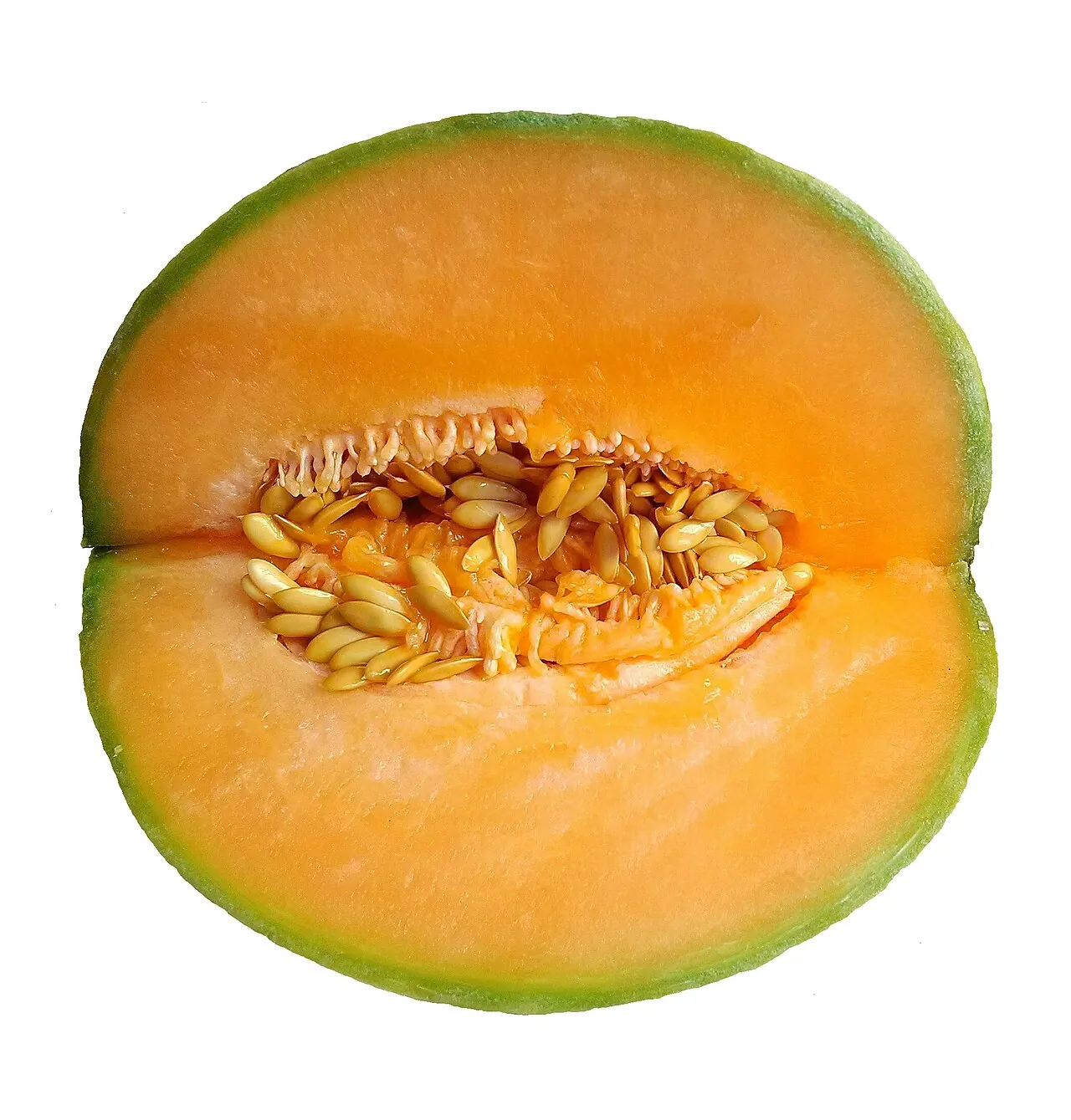
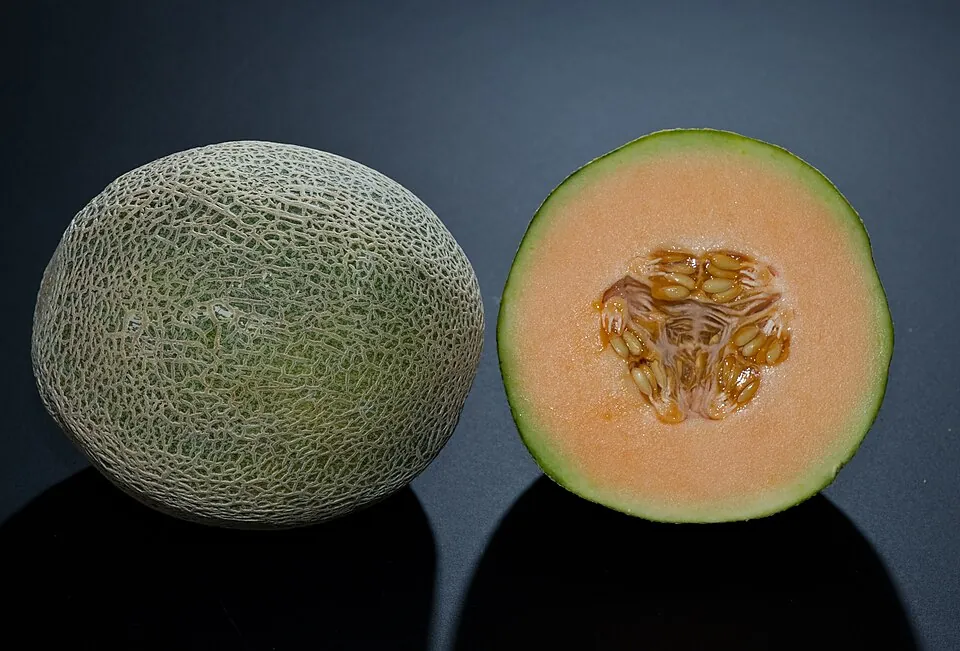
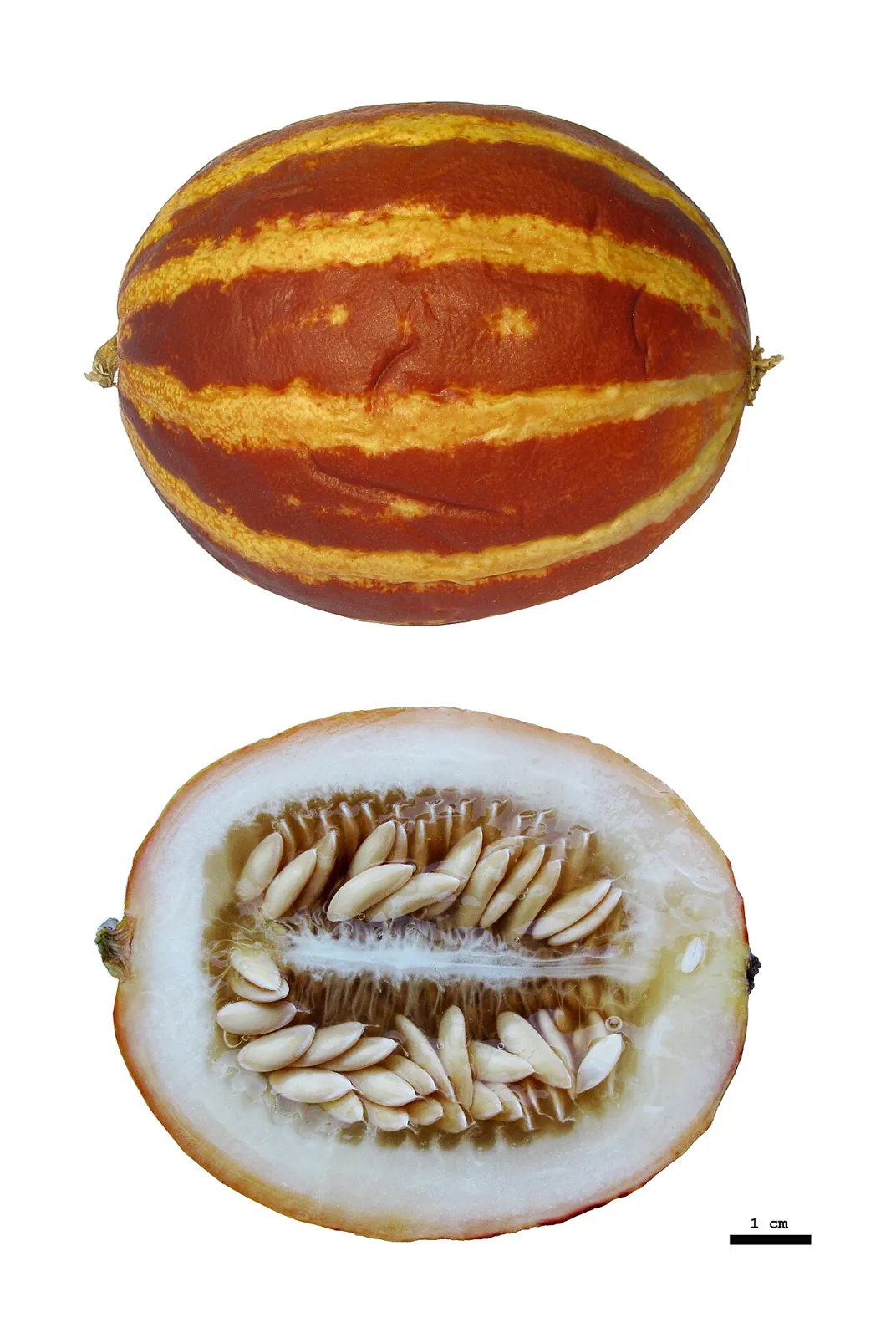
The rind can be green, yellow, tan, beige or white. Inside, the differences are just as clear. A typical US muskmelon weighs 1.8–3.6 kg (4–8 lb), with netted skin and usually orange flesh. Traditional eastern types have a strong perfume and a soft bite.
Honeydew has smooth skin and usually cream-to-green flesh. Charentais, a French melon, is smaller at 0.9–1.4 kg (2–3 lb), with deep orange flesh behind a blue-green to yellowish rind. Many Asian melons have a firmer, crisper bite.
Where it comes from
Melon’s native range stretches from Africa and the Arabian Peninsula through India to New Guinea and Australia. People have grown melons in Africa and Asia since the 3rd–2nd millennia BCE, and India and Africa each gave rise to their own distinct lines. Today melons grow around the world.
California is the largest US source from May through October, when it grows about three quarters of the cantaloupes Americans eat.
How it's eaten where it grows
In the Philippines, melon chiller turns cantaloupe into a drink with strands of fruit to chew. Shredded flesh goes into water with condensed milk and ice; street sellers serve it in plastic bags with straws, alongside sago’t gulaman and buko juice.
Prosciutto di Parma and melon are a traditional pairing. One version puts cantaloupe and honeydew on skewers with the ham, small mozzarella balls and basil.
How it's grown
Melon vines grow from seed, either sown straight into warm soil after frost or started indoors about three weeks before transplanting. They need full sun, warmth and soil that drains well, and take about 80–100 days to ripen. Bees carry pollen between the flowers.
Muskmelons are at their best picked at full slip, when the stem separates easily from the fruit. Honeydews are cut from the vine once they turn fully yellow.
When and where you'll find it
In the US, fresh cantaloupe is sold all year. In California’s San Joaquin Valley, the harvest usually runs from June through October. The rest of the year it comes from Central America, especially Guatemala and Honduras, and from Brazil, Peru and Mexico.
Before cutting, the rind is washed under running water and scrubbed. Once sliced, melon belongs in a covered container in the refrigerator.
Sources · 9
- California Cantaloupe Advisory Boardcaliforniacantaloupes.com
- Consorzio del Prosciutto di Parmaparmacrown.com
- Lalaine Manalo, Kawaling Pinoykawalingpinoy.com
- NC State Extension Gardener Plant Toolboxplants.ces.ncsu.edu
- Ohio State University Extensionohioline.osu.edu
- South Dakota State University Extensionextension.sdstate.edu
- Tanaka and colleagues, Breeding Science (2025)pmc.ncbi.nlm.nih.gov
- University of Maryland Extensionextension.umd.edu
- University of Minnesota Extensionextension.umn.edu
Get it near Detroit
What it tastes like
As sweet as a banana, as mild as a peach≈
More about the taste
Melon texture is not uniform: aromatic, soft-fleshed muskmelons contrast with firmer Asian types, while Canary melons can suggest pear in both flavor and texture.
Asian types tend to have crisp flesh; Charentais and Crenshaw types are strongly aromatic; some Canary melons have a pear-like flavor or texture.
A tasting invitation
Smell a freshly cut piece before tasting it, then notice the contrast between aroma and sweetness. Compare the flesh close to the seed cavity with a firmer outer piece.
Choose, ripen, store, eat
1ChooseCantaloupe: well-netted rind
Look for
- Cantaloupe: well-netted rind
- Cantaloupe: smooth stem scar
- Cantaloupe: fragrance
- Cantaloupe: slight give
- Honeydew: creamy background color
- Honeydew: springy blossom end
For cantaloupe, aroma and a little softness at the blossom end can help; on the plant, many mature types slip easily from the stem. Honeydew does not use the same easy-slip rule.
2RipenGood sweetness is developed on the vine
Good sweetness is developed on the vine. Some types change aroma and softness after harvest, but a single “leave it on the counter” rule does not fit all melons.
3StoreFridge, cut
- FridgeCutCovered container
- FridgeWhole cantaloupe
Refrigerate cut melon. For whole fruit, it depends on type: some melons are prone to chilling injury, while cantaloupe can be refrigerated whole.
4EatFlesh · not peel, seeds
Eat
FleshNot eaten
PeelSeedsThe selected recipes use peeled, seeded melon flesh. In the Filipino-style drink, the flesh is shredded rather than completely puréed.
More tips
A useful detail Cantaloupe and honeydew need different buying checklists: cantaloupe has prominent netting and a musky aroma, while honeydew relies on different rind and texture signals.
Worth knowing
- For homegrown slipping cantaloupes, use several cues together. Ask a seller about harvest maturity when the stem and vine are no longer there to inspect.
- Ripe honeydews don't slip from the stem, so an attached stem isn't a bad sign.
- A variety's sweetness shifts with weather and growing conditions from year to year.
Detroit, Michigan
When it’s good hereUsual monthsJust arrivedAt their bestLast chanceAll yearWhere it is in its usual monthsToday, Oct 22Grown hereIn season in your stateShips fromIn season where it grows
63 growing areas, 18 countriesUsual monthsOur estimated monthsToday, Oct 22

- Aomori
- Bahia
- Bay of Plenty
- British Columbia
- Cáceres
- California
- Castellón
- East Java
- Espírito Santo
- Ferrara
- Florida
- Hainan
- Hawaii
- Ica
- Johor
- Kerman
- La Libertad
- Lot-et-Garonne
- Makueni
- Mendoza
- Northern Territory
- Ontario
- Pahang
- Pará
- Penang
- Rio Grande do Sul
- Santa Cruz de Tenerife
- You
6 of 25 areas · October
Growing areas by country
- United States13
- Spain9
- Brazil7
- Australia6
- Canada4
- France4
- Peru4
- Malaysia3
and 13 more countriesand 10 more countries
51 varieties
- No variety photo yet원예2602
- Scent
- 과실향기(0~1) 있다
- Feel
- soft
- Flesh
- green
- Shape
- round
- No variety photo yetUrfa Kavunu
- Flesh
- orange TR-63
- Shape
- oval TR-63
- Use
- fresh TR-63
- No variety photo yet온누리3호
- Flesh
- yellow · green
- Shape
- round
- No variety photo yetALBAN
- Flesh
- green · white Türkiye
- Shape
- oval Türkiye
- No variety photo yetARWEN
- Flesh
- green · white Türkiye
- Shape
- oval Türkiye
- No variety photo yetAVCI
- Flesh
- green · white Türkiye
- Shape
- oval Türkiye
148 names in 20 languages
Cook it
How to serve it first
Make a two-melon plate with small, separately arranged pieces before adding any dressing. If serving it as a salad, combine the fruit with a restrained amount of herbs and something lightly salty so each melon's flavor remains identifiable.
2 melon festivalsUsual monthToday, Oct 22
Strange but trueHistoryScienceWhere the name came fromCustoms and culturePeopleA record
If you like Melon
Tastes alike
Same plant family
Nutrition, sources
Nutrition
Melons, casaba, raw · per 100 g
- Carbohydrate
- 6.6 g
- Fiber
- 0.9 g
- Sugars
- 5.7 g
- Protein
- 1.1 g
- Fat
- 0.1 g
- Vitamin C
- 22 mg
- Potassium
- 182 mg
Sources
Melon · Fruitopia · checked Sep 21, 2026
What we don't know yet
Melon spans several culinary groups — match storage and ripening cues to the named type, not to melon in general.