Pear
Also called Butter fruit · European pear · Common pearPyrus communis · Rosaceae family
Learn the small stem-end test that separates a firm pear from one ready for a soft, aromatic bite.
Find it near DetroitGet to know it
The pear is a teardrop-shaped fruit of the rose family that does its ripening after it's picked. Bought firm, it's crisp and a little tart; a few days on the counter make it sweeter and much juicier, the soft texture that once earned pears the name butter fruit. In the United States, Washington and Oregon grow about 88% of the fresh pears.
What it is
The pear in most shops is the European pear, a tree fruit of the rose family. Its flesh is soft when ripe, and it's picked before ripening on purpose: left to ripen on the tree, the flesh turns gritty with woody specks. There are thousands of varieties, but only about ten are grown for shops.
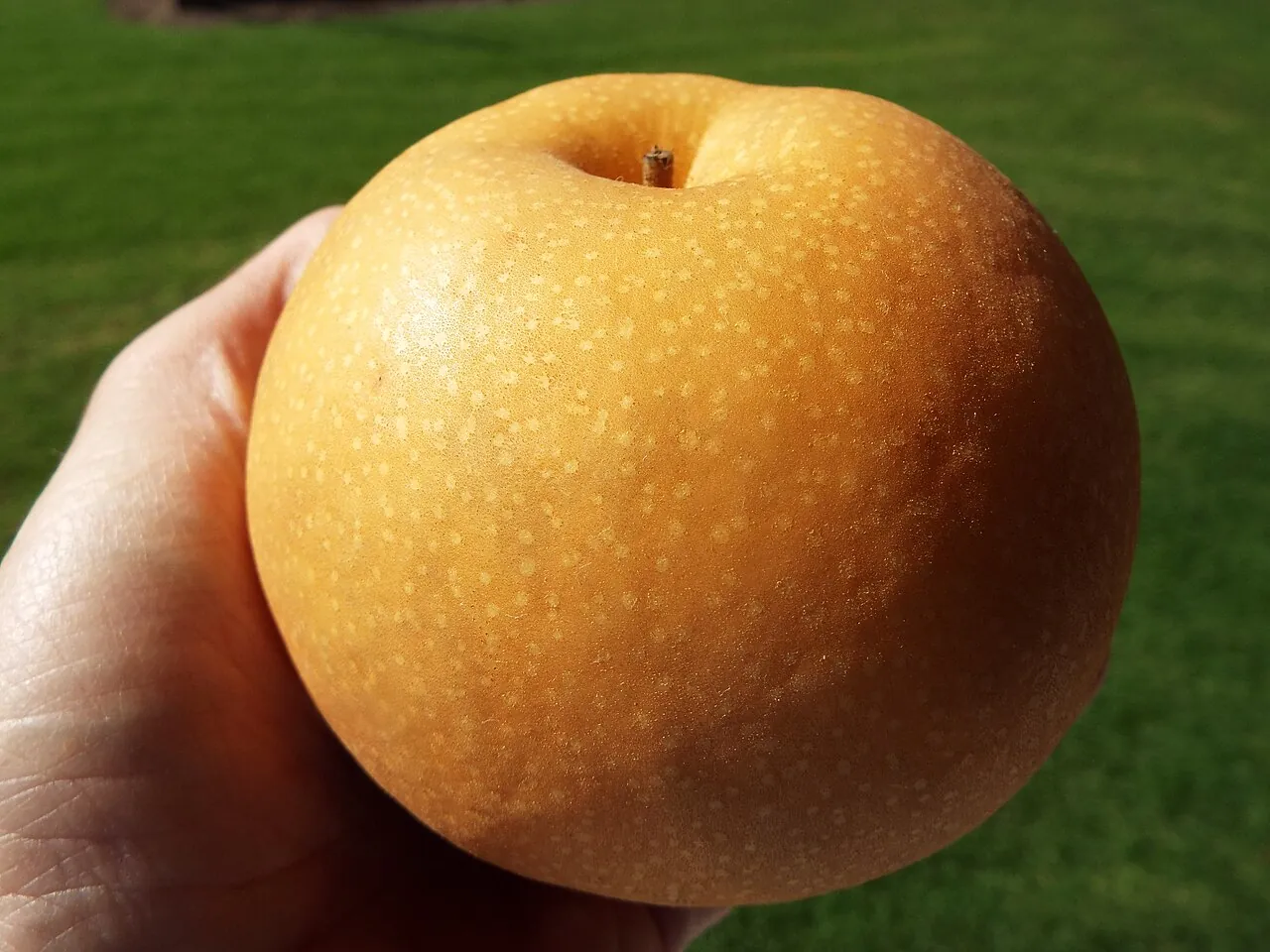
Each has its own shape, colour and flavour. Bartlett, the most popular in the United States, turns from green to yellow as it ripens, while Bosc and Concorde keep their colour, so you judge them by a gentle press near the stem. A red-skinned pear tastes no different for its colour. Asian pears are a different fruit.
Where it comes from
Pears as a group most likely began in the foothills of the Tian Shan, the mountains of western China. The European pear is native from Europe to northern Iraq, and the pear’s history goes back to about 1000 BC. They reached North America in the 1600s and were first planted in Massachusetts.
The world's 2025/26 pear crop, counting every kind, is forecast at 26.1 million tonnes, and 20.5 million of that grows in China. The United States grows about 565,000 tonnes, most of it in Washington and Oregon, which also grow more than 96% of its winter pears, such as Bosc and Anjou.
How it's eaten where it grows
In France, poire belle Hélène sets pears poached in sugar syrup beside vanilla ice cream and chocolate sauce; the dessert is credited to Auguste Escoffier around 1864. In Switzerland, Birnbrot is a bread wrapped around a filling of dried pears, popular at Christmas and New Year.
In the west of England, most perry pear varieties come from Gloucestershire, Herefordshire and Worcestershire. Their juice is fermented into perry, a drink lighter and more floral than cider, and the National Perry Pear collection at Hartpury, Gloucestershire, keeps at least two trees of most known perry pears. Portugal's Rocha pear, 5.5 to 7.5 cm (2 to 3 in), has been protected as Pera Rocha do Oeste since 2003 and ships to more than 50 countries.
How it's grown
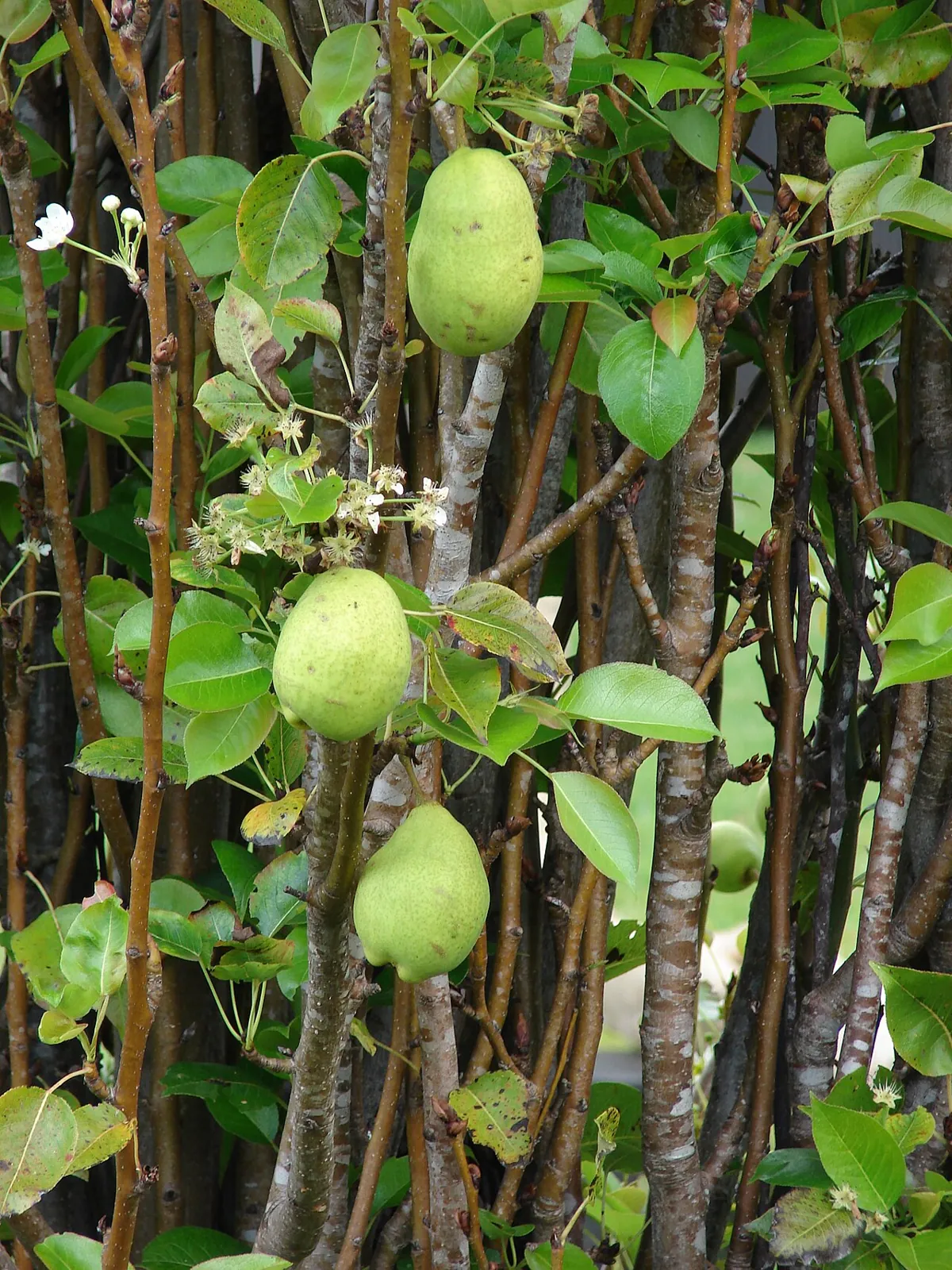
Pears grow on trees that reach 12 m (40 ft) and live for 75 years, though most are grafted onto dwarfing roots to keep them small. A tree takes 3 to 10 years to begin fruiting, and fruits best with a second variety nearby to share pollen.
Pickers harvest every pear by hand once it's fully mature but not yet ripe, and lay it in orchard bins. A pear left too long on the tree goes coarse and grainy, very soft, and often rotten inside.
When and where you'll find it
In the Pacific Northwest the harvest starts in August with Bartletts and runs through September and October with winter varieties; packers cool the fruit and hold it in storage rooms until it's sold, and about 35% of the crop goes abroad. In Connecticut, local pears are usually around from August to mid-September.
Argentina ships more pears than any country except China. Pears reach shops firm, so pick one that's firm but not rock-hard.
Sources · 11
- National Association of Cider Makerscideruk.com
- National Perry Pear Centrenationalperrypearcentre.org.uk
- NC State Extension Gardener Plant Toolboxplants.ces.ncsu.edu
- Ohio State University Extensionohioline.osu.edu
- Oregon State University Extensionextension.oregonstate.edu
- Pera Rocha do Oesteperarocha.pt
- UConn Extensionputlocalonyourtray.uconn.edu
- University of Minnesota Extensionextension.umn.edu
- USA Pears (Pear Bureau Northwest)usapears.orgOther pages23
- USDA Foreign Agricultural Serviceapps.fas.usda.gov
- Wikipediaen.wikipedia.orgOther pages2345
Get it near Detroit
What it tastes like
Tarter than a banana, as sweet as a strawberry≈
More about the taste
European dessert pears can become soft and butter-like when ripe. Varieties have individual flavors, and overmature fruit can turn coarse, grainy or mealy.
Shape and flavor vary by variety. A pear picked too late can turn grainy or break down inside even as it softens.
A tasting invitation
Try a crisp piece and a softer piece from the same variety on successive days; the texture can turn buttery, grainy or juicy.
Choose, ripen, store, eat
1ChooseRipe flesh yields near stem
Look for
- Ripe flesh yields near stem
- Pear aroma
- Neck gives a little
For eating now, press gently near the stem: ripe flesh yields and gives a pear aroma. Firm fruit is useful if you want it to finish ripening at home.
2RipenOn the counter
Ripens after pickingCounterPaper bagRipen mature picked European pears in a cool room and check daily. Some winter varieties need prior chilling; commercially packed pears should already be prepared to ripen.
3StoreFridge, ripe
- FridgeRipe
Once ripe, eat promptly or refrigerate. For preserving, choose pears firmer than you'd want for fresh eating.
4EatFlesh · not core
Eat
FleshNot eaten
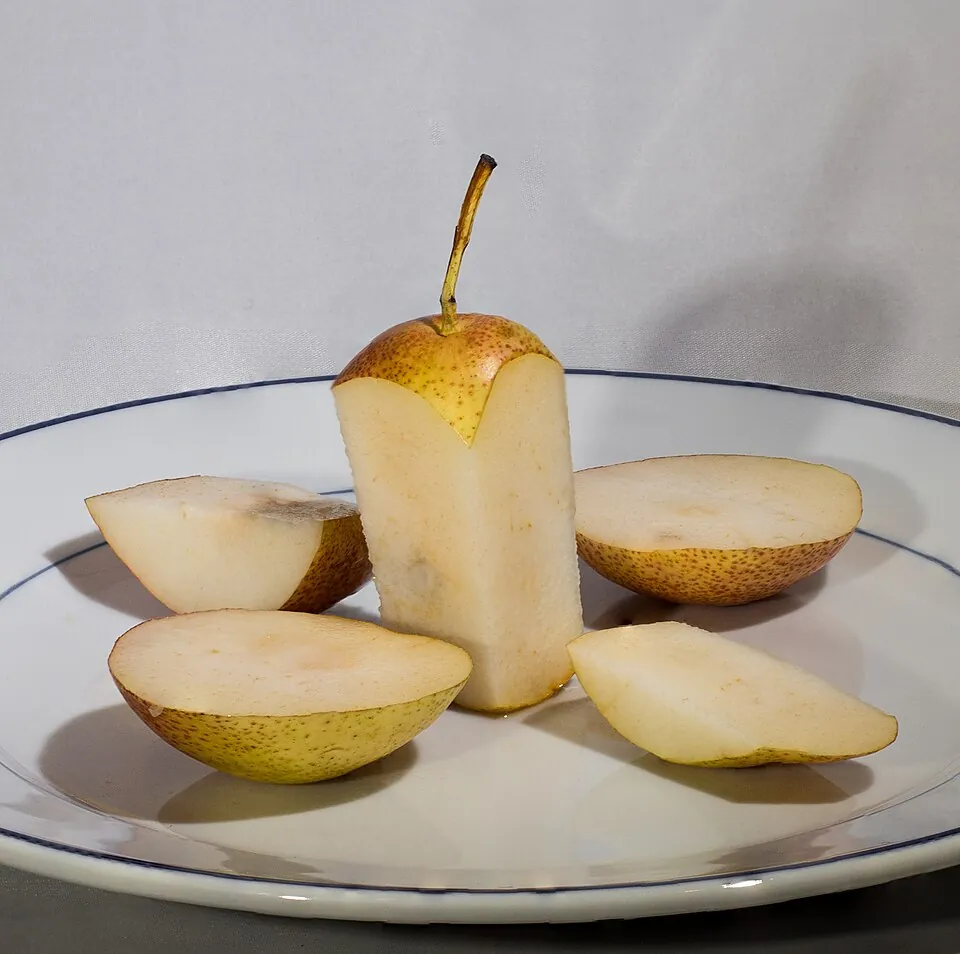
CoreUse the flesh and remove the core. Peel for a tart or jam; fresh pears don't need peeling.
More tips
A useful detail Bartlett turns from green to yellow as it ripens, but Bosc and Concorde show little color change.
Worth knowing
- Ask whether farm-bought pears have already been conditioned. Check the neck as they ripen instead of counting days alone.
- A firm European pear can still ripen well; firmness alone won't tell you whether it was picked at the right stage.
- Use more than a calendar count: check the neck gently and notice the aroma. Not every pear needs to turn buttery soft to be ready.
Detroit, Michigan
When it’s good hereUsual monthsJust arrivedAt their bestLast chanceAll yearWhere it is in its usual monthsToday, Oct 22Grown hereIn season in your stateShips fromIn season where it growsOrderableListed by a seller we checkedThe day a seller was checked
76 growing areas, 24 countriesUsual monthsOur estimated monthsToday, Oct 22

- Aomori
- Araucanía
- Argentina +3
- Baden-Württemberg +5
- Balochistan
- Cáceres
- California
- Coquimbo
- Eastern Cape
- Espírito Santo
- Florida
- Fujian
- Gelderland
- Hawaii
- Huelva
- Ica
- Jeju
- Kent
- Kerman
- Malatya
- New South Wales
- Otago
- Queensland
- South Africa
- Washington +1
- Yunnan
- You
20 of 35 areas · October
Growing areas by country
- United States13
- Spain9
- Australia6
- Chile6
- Argentina5
- Brazil4
- China4
- France3
and 19 more countriesand 16 more countries
In Connecticut, pears reach school kitchens as pear sauce and spiced-pear muffins. Local supply peaks in late summer, and storage extends it beyond harvest.
544 varieties
- Concorde
- Taste
- high
- Scent
- Aromatic.
- Feel
- firm
- Juice
- juicy
- No variety photo yetStarkrimson
- Taste
- high
- Scent
- A light floral scent.
- Juice
- juicy
- Texture
- creamy
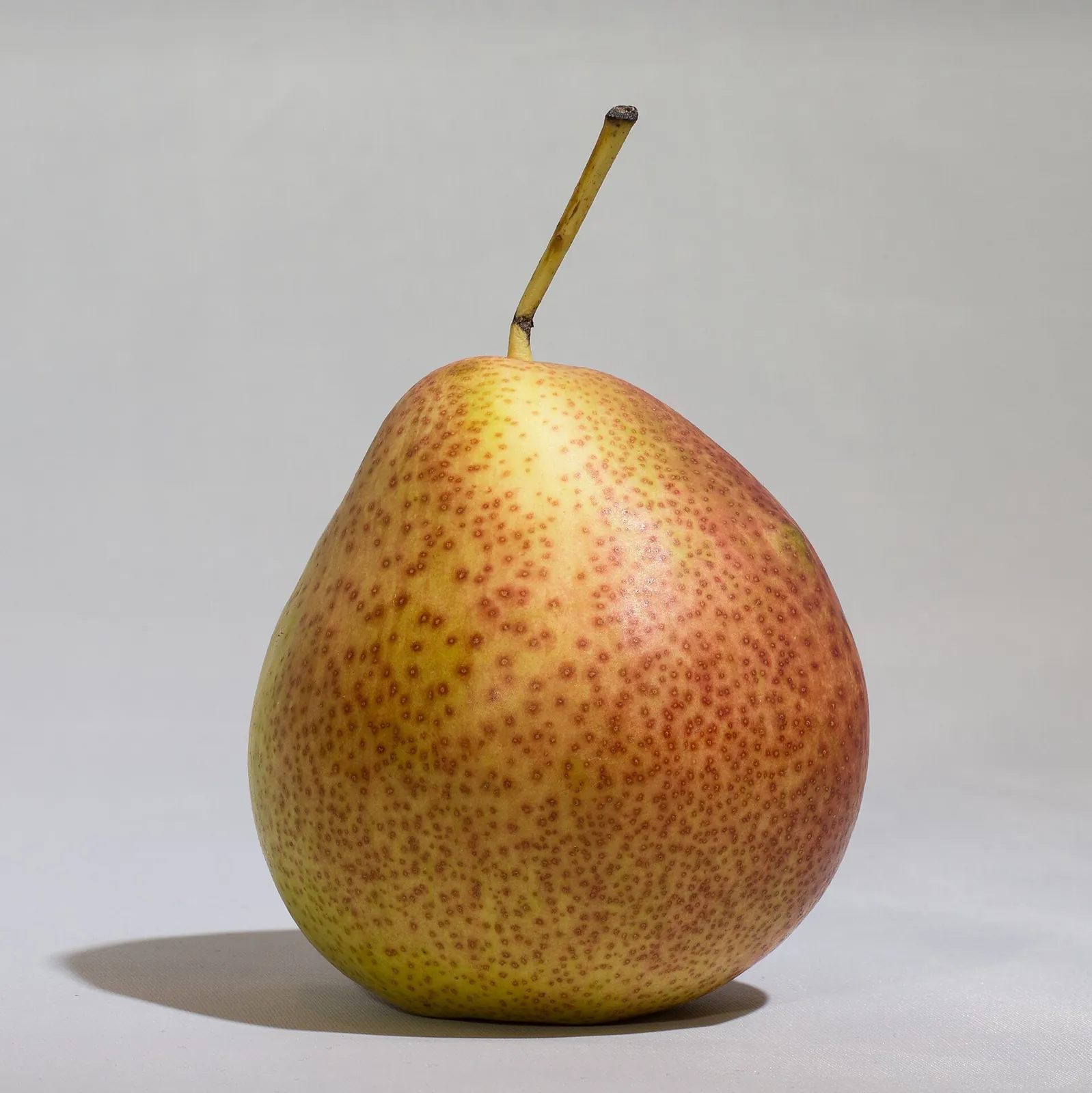 Forelle
- Taste
- very high
- Bite
- crisp
- Skin
- yellow · red
- Flesh
- white United Kingdom
- No variety photo yetPE4UNIBO
- Taste
- sweet
- Scent
- aromatic
- Bite
- crunchy
- Juice
- juicy
- No variety photo yetNoiabriskaia
- Bite
- crunchy
- Feel
- firm
- Juice
- juicy
- No variety photo yetPE1UNIBO
- Taste
- sweet
- Juice
- juicy
- Flesh type
- melting
49 names in 10 languages
Cook it
How to serve it first
Slice a ripe pear over a bowl of thick yogurt, or pair wedges with a few walnuts and a mild blue cheese. For a warm dish, poach firm-ripe pears gently and let the fruit remain the main flavor.
2 pear festivalsUsual monthToday, Oct 22
Strange but trueHistoryScienceNatureWhere the name came fromCustoms and cultureFood and drinkA record
If you like Pear
Tastes alike
Close relatives
Nutrition, sources
Nutrition
Pears, raw, bartlett (Includes foods for USDA's Food Distribution Program) · per 100 g
- Carbohydrate
- 15 g
- Fiber
- 3.1 g
- Sugars
- 9.7 g
- Protein
- 0.4 g
- Fat
- 0.2 g
- Vitamin C
- 4.4 mg
- Potassium
- 101 mg
Photos · 3
Sources
Pear · Fruitopia · checked Sep 21, 2026
What we don't know yet
This ripening advice is for European pears, not crisp Asian pears.