Rambutan
Also called RamboostanNephelium lappaceum · Sapindaceae family
Open the soft-spined shell to find juicy flesh, then explore it in a sweet-spicy cold dish or a small-batch spread.
Find it near DetroitGet to know it
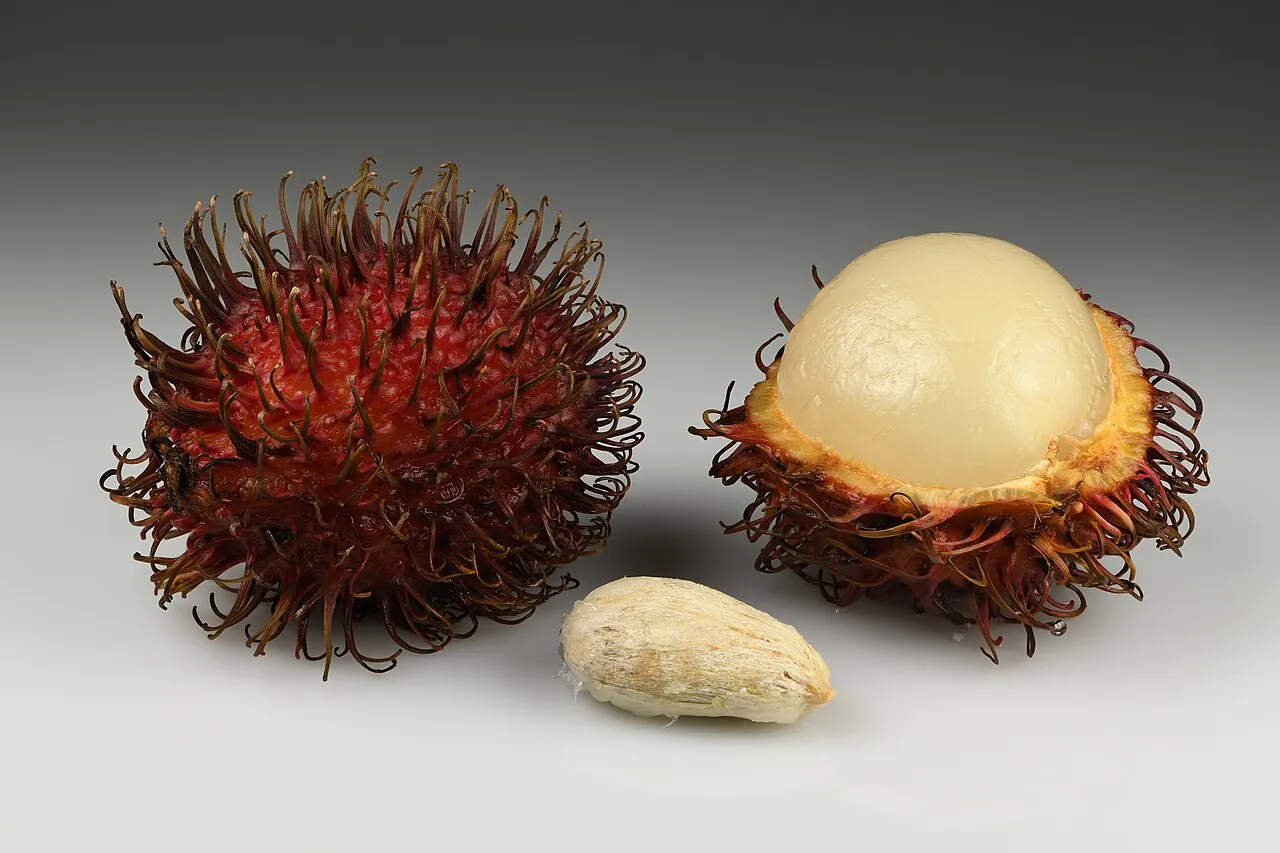
Rambutan hides juicy, translucent flesh inside a coat of soft red or yellow hairs. A relative of lychee and longan, it can taste sweet or tart. Each fruit is about 4.5 cm (1.8 in) long, with one large seed inside.
What it is
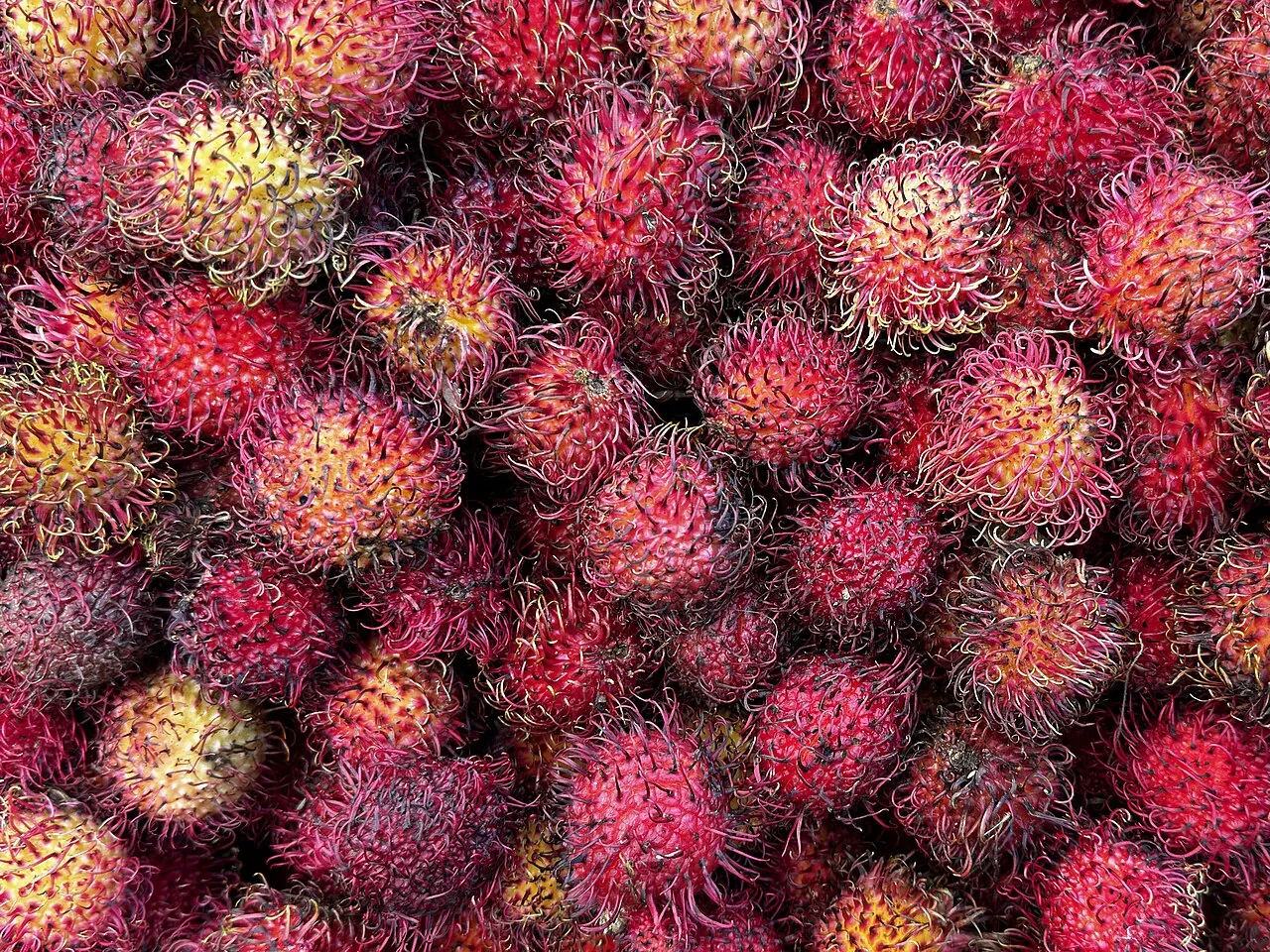
The hairs are soft spines, and the skin beneath them turns red or yellow as the fruit ripens. Inside, the flesh is white or faintly pink and wet with juice. Green-skinned fruit with greenish-red spines are sour.
A shallow cut around the shell helps it open. The flesh is the part to eat; the shell and central seed are discarded.
Where it comes from
Rambutan comes from Malaysia and is grown across Southeast Asia. It travelled from Indonesia to the Philippines in 1912, and there are smaller plantings in India. Today, trees grow in Hawaiʻi too: the collection at Hilo includes Rongrien, Binjai and Gula Batu, three of its many named varieties.
How it's eaten where it grows
In Banjarmasin, Indonesia, asinan rambutan turns the peeled fruit into a cold, sweet and spicy snack. Red chillies, sugar and salt are boiled in water for the dressing. Squeezed kasturi citrus goes in with its peel, along with slices of chilli.
The fruit rests in the dressing overnight in the fridge, so the liquid soaks in, and it is served cold. Banjarmasin's asinan is now popular well beyond the city.
How it's grown
Rambutan grows on a spreading evergreen tree that can reach 15–25 m (50–80 ft). It suits warm, humid places with regular rain, good drainage and shelter from strong winds. Trees started by budding, joining a bud from a chosen tree to a young rootstock, can flower after 2½–3 years in the ground.
Harvesters cut off whole clusters. When picking individual fruits, they leave a short piece of stem attached so the skin does not tear.
When and where you'll find it
In Hawaiʻi, rambutan is usually in markets from October through March. On the US mainland, the Asian grocer Uwajimaya names it among its tropical fruits, next to jackfruit, longan and durian. Fresh fruit travels in 2.25 kg (5 lb) or 4.5 kg (10 lb) cartons, sometimes in small punnets.
In Southeast Asia, it is also sold in bunches still joined to the stem, so a purchase can look much like the cluster that came off the tree.
Get it near Detroit
What it tastes like
As sweet as a banana, as mild as a peach≈
More about the taste
Rambutan's juicy flesh can be sweet or more tart. Varieties differ in aroma and in how readily the flesh separates from the central seed.
Sweet rambutan is eaten fresh; more sour fruit is often stewed. Canning or jam-making can diminish its characteristic flavor.
Overripe fruit has watery flesh. Bright skin and spines are useful signs of freshness, but dehydration or handling damage can darken the shell even when the flesh inside is still fine.
A tasting invitation
Compare juiciness, acidity and how readily the flesh separates from the seed. Exterior browning can come from water loss or chilling rather than spoilage.
Choose, ripen, store, eat
1ChooseBright skin and spines
Look for
- Bright skin and spines
- Ripe red or yellow color
- No injury or decay
Look for sound fruit with bright skin and spines in the variety's ripe color-red or yellow. Drying and handling damage can dull its appearance quickly.
2RipenDoesn’t ripen after picking
Doesn’t ripen after pickingRambutan needs to be harvested ripe; keeping green, sour fruit on the counter is not a reliable way to develop its sweetness.
3StoreProtect the fruit from drying and use it soon - at 20°C and 60% humidity it keeps only about three to five days
Protect the fruit from drying and use it soon - at 20°C and 60% humidity it keeps only about three to five days. Longer storage needs controlled temperature and humidity, not an ordinary kitchen counter.
4EatFlesh · not shell, seed
Eat
FleshNot eaten
ShellSeedOpen the shell and separate the edible flesh from the seed. Both recipes use the flesh; the outer shell and seed are not part of this tasting invitation.
More tips
A useful detail The flesh is an aril around a single large seed; remove the shell and set the seed aside when eating. Rambutan belongs to the same family as lychee and longan, good companions for a comparison tasting.
Worth knowing
- Cooler storage isn't always better for rambutan; peel browning and pulp quality are separate things.
- Yellow-skinned rambutan varieties don't turn red; judge their ripeness by maturity.
Detroit, Michigan
When it’s good hereUsual monthsJust arrivedAt their bestLast chanceAll yearWhere it is in its usual monthsToday, Oct 22Grown hereIn season in your stateShips fromIn season where it growsOrderableListed by a seller we checkedThe day a seller was checked
20 growing areas, 8 countriesUsual monthsOur estimated monthsToday, Oct 22

- California
- Chanthaburi
- Chiang Mai
- East Java
- Florida
- Hawaii
- Johor
- Karnataka +1
- Malaysia
- Northern Territory
- Pará
- Queensland
- You
4 of 11 areas · October
Growing areas by country
- Malaysia4
- Thailand4
- India3
- United States3
- Australia2
- Indonesia2
- Brazil1
- China1
and 3 more countries
In Thailand and Malaysia, rambutan is canned as well as eaten fresh (sweet fruit) or stewed (sour fruit).
79 varieties
- No variety photo yetR134
- Taste
- high
- Juice
- juicy Malaysia
- Shape
- oval Malaysia
- No variety photo yetDeli Baling
- Taste
- high
- Bite
- crisp
- No variety photo yetDeli Cheng
- Taste
- high
- Feel
- firm Malaysia
- No variety photo yetOh Heok
- Feel
- firm Malaysia
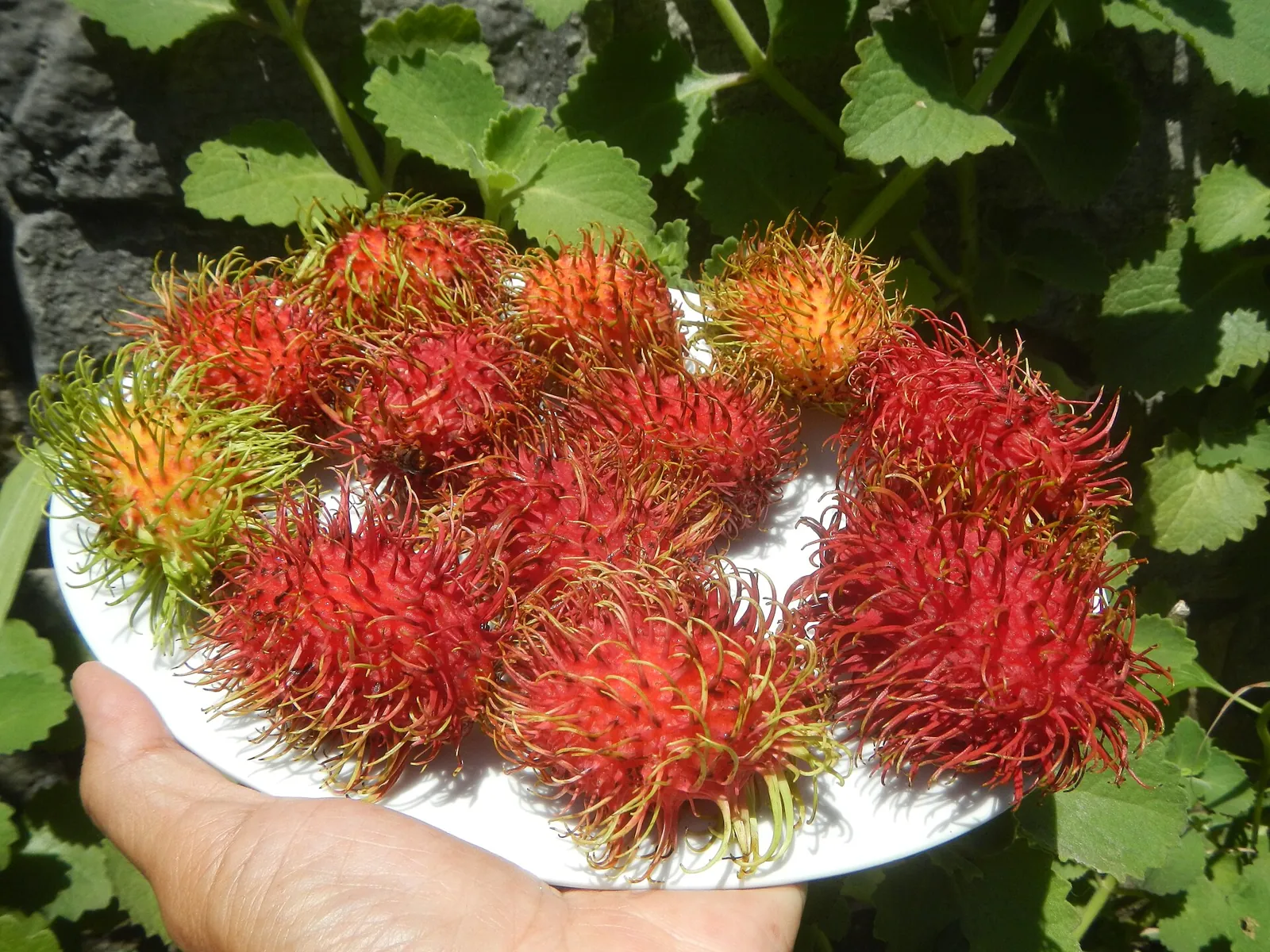 Rong Rien / Anak SekolahAlso R191, Rong Rien · +1Photo: Judgefloro · CC0 1.0 Universal Public Domain Dedication
- No variety photo yetMuar GadingAlso R156
35 names in 19 languages
- RambutãoPortuguese
Cook it
How to serve it first
Open a few fruit and serve the flesh in a small bowl, keeping the seeds separate as you eat. If adding it to a fruit salad, taste the other ingredients first and keep the dressing light enough that rambutan remains easy to notice.
4 rambutan festivalsUsual monthToday, Oct 22
Strange but trueHistoryA myth, and the truthScienceNatureWhere the name came fromFood and drinkPeople
If you like Rambutan
Tastes alike
Close relatives
Same plant family
Sources
Photos · 2
Sources
Rambutan · Fruitopia · checked Sep 21, 2026
What we don't know yet
How readily the flesh releases from the seed depends on the variety, which is often not on the retail label.