Pulasan
Nephelium ramboutan-ake · Sapindaceae family
A rambutan relative with a coarser shell and thick, sweet white flesh around its seed.
Find it near DetroitGet to know it
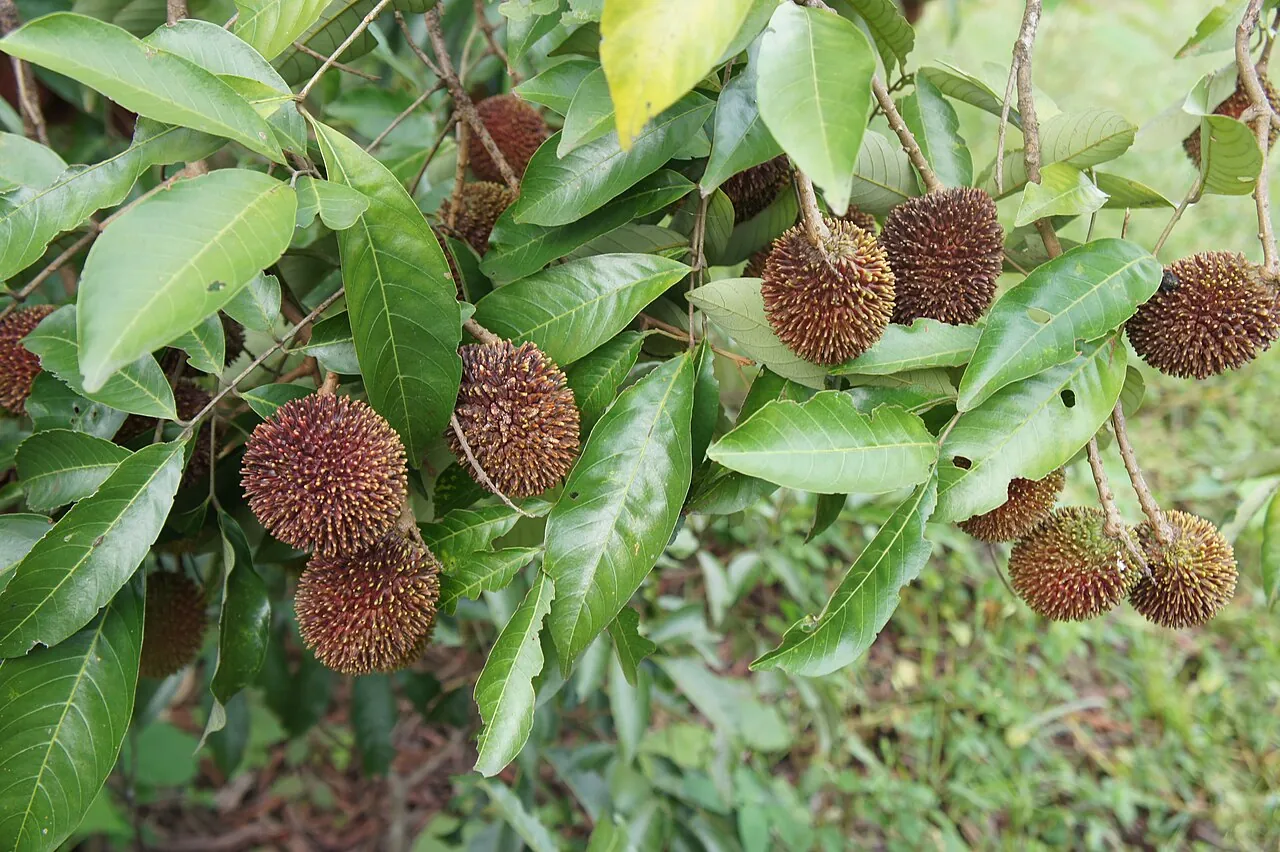
Pulasan is a close relative of rambutan with short, stubby spines and thick, sweet white flesh. Its name comes from the Malay pulas, “to twist”: that is how the rind opens to reveal the juicy flesh around the seed.
What it is
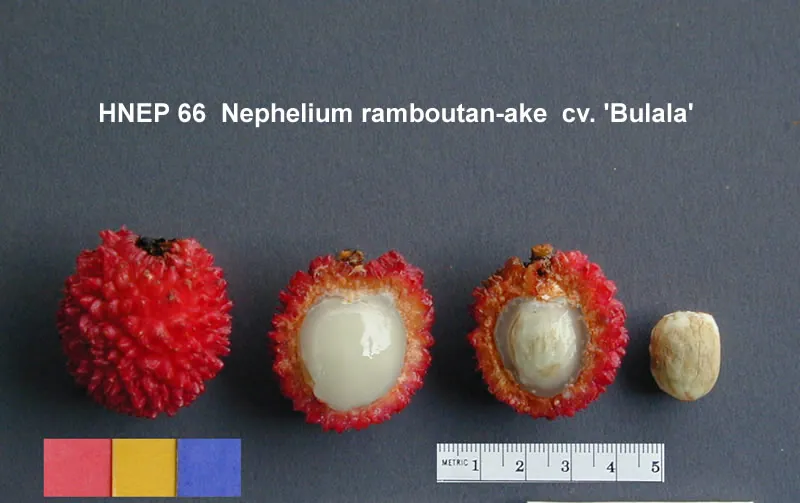
The oval fruit measures 4–6.5 cm (1.6–2.6 in) long and can ripen purple-red. Inside, the sweet flesh surrounds a seed. In Java, some forms come away from the seed easily; in others the flesh clings to it.
Its botanical name is Nephelium ramboutan-ake, also known as Nephelium mutabile. Like rambutan, it belongs to the soapberry family, but the two are separate fruits.
Where it comes from
Pulasan’s native range stretches from Assam and Myanmar into Southeast Asia. It has long been grown in Malaysia and Thailand, and around Bogor on Java. Trees reached Puerto Rico in 1926, followed by plants sent from Java to Honduras in 1927. In the United States, pulasan trees are kept in field plantings in Hilo, Hawaii.
How it's eaten where it grows
In Tronoh, Perak, Salina Jalaludin’s asinan combines pulasan and rambutan with a sweet, salty dressing and sliced chillies. It can be eaten straight away or chilled.
At Penang Tropical Fruit Farm, a potato-and-pulasan cutlet wraps the peeled, seeded fruit in mashed potato and minced beef, then fries it until golden. The pulasan sits in the middle of each cutlet.
How it's grown
Pulasan is an evergreen tropical tree that grows in humid conditions with moist soil. Trees grown from seed may turn out male or female, so seedlings are not favoured; budding works when it's done in the rainy season. The fruit is picked in bunches when most of it has changed from green to red or yellow.
When and where you'll find it
In Johor, Malaysia, pulasan usually ripens from June to August, following flowering after dry weather. Fresh fruit is eaten straight from its shell. It also takes other forms: canned in syrup, frozen or dried, and made into preserves or used to flavour ice cream.
Sources · 6
Get it near Detroit
What it tastes like
Sweeter than a banana, as mild as a peach≈
More about the taste
The thick white, juicy seed covering (sarcotesta) is sweet-tasting.
Pulasan has a thick white, juicy, sweet-tasting flesh (a sarcotesta) around the seed.
How to buy it
1EatFlesh · not rind, seed
Eat
FleshNot eaten
RindSeedTwist the rind open, remove the seed, then season the flesh. Rambutan's flesh looks similar, so keep track of which fruit you bought.
Detroit, Michigan
When it’s good hereUsual monthsJust arrivedAt their bestLast chanceAll yearWhere it is in its usual monthsToday, Oct 22Grown hereIn season in your stateShips fromIn season where it grows
3 growing areas, 2 countriesUsual monthsToday, Oct 22

- Johor
- Pahang
- Queensland
- You
0 of 1 areas · October
Growing areas by country
- Malaysia2
- Australia1
19 names in 7 languages
Cook it
Strange but trueWhere the name came fromFood and drink
If you like Pulasan
Tastes alike
Close relatives
Same plant family