Apricot
Prunus armeniaca · Rosaceae family
A small stone fruit that rewards gentle handling and a quick move from shopping bag to table.
Find it near DetroitGet to know it
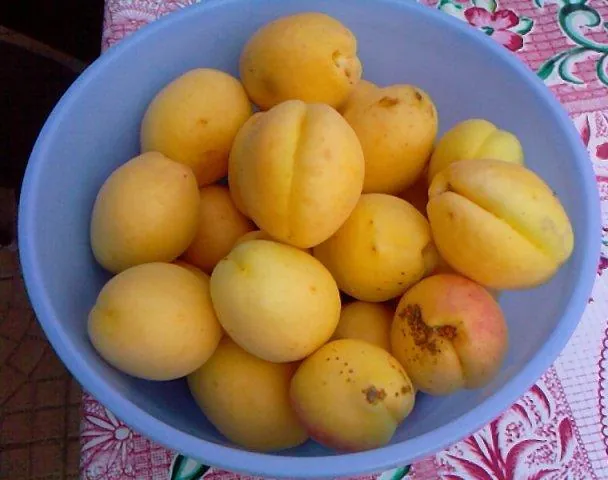
The apricot is a small stone fruit with tender skin and sweet, juicy flesh. Its colour runs from yellow to deep orange, and its smell grows sweeter at room temperature.
What it is
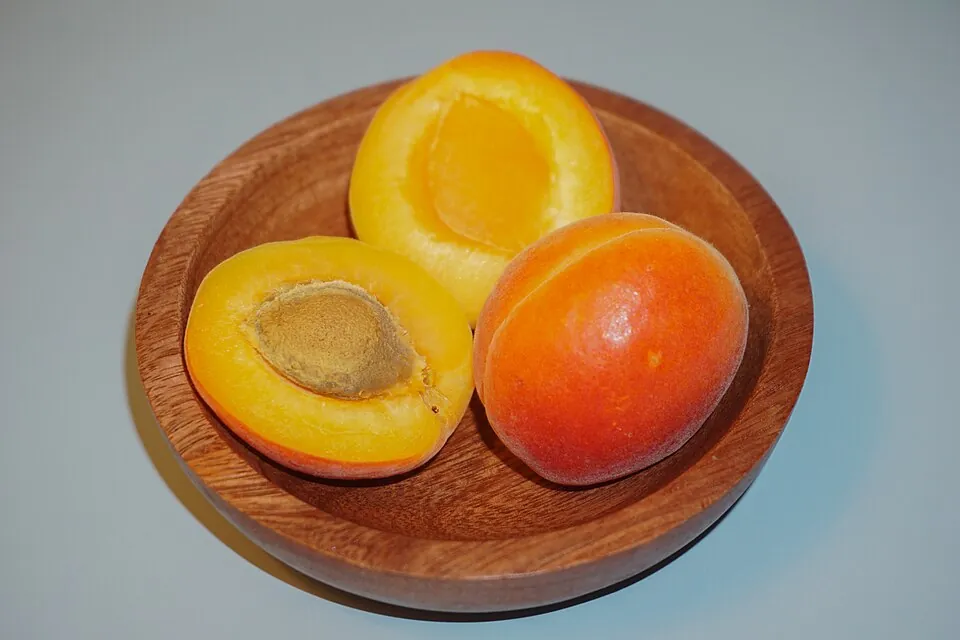
A mature garden apricot measures about 3.8–6.4 cm (1½–2½ in) across. The line down its side marks a useful route for a knife: a cut around the fruit separates two halves, and the stone comes away readily when it is ripe. The skin can stay on.
Apricots are smaller cousins of peaches, nectarines, plums and almonds. Varieties have their own colours: Moorpark, a late-ripening apricot, is golden-orange with a crimson blush.
Where it comes from
The ancestors of today’s apricots grew wild in Central Asia. Chinese and European apricots came from separate groups of those wild trees, brought into cultivation independently.
Apricot orchards now extend across the Mediterranean, the Middle East, the Caucasus, Central Asia and China. In India, Ladakh grows varieties such as Halman and Raktsay Karpo.
How it's eaten where it grows
In Austria’s Wachau region, marillenknödel are dumplings with a whole apricot inside. One version wraps the fruit in dough made with quark, a soft curd cheese, plus egg and flour. A sugar cube takes the place of the stone. The dumplings simmer in water, then roll in sweetened breadcrumbs fried in butter.
In Hyderabad, India, qubani ka meetha uses dried apricots with sugar and almonds. Cream or ice cream accompanies the soft fruit dessert.
How it's grown
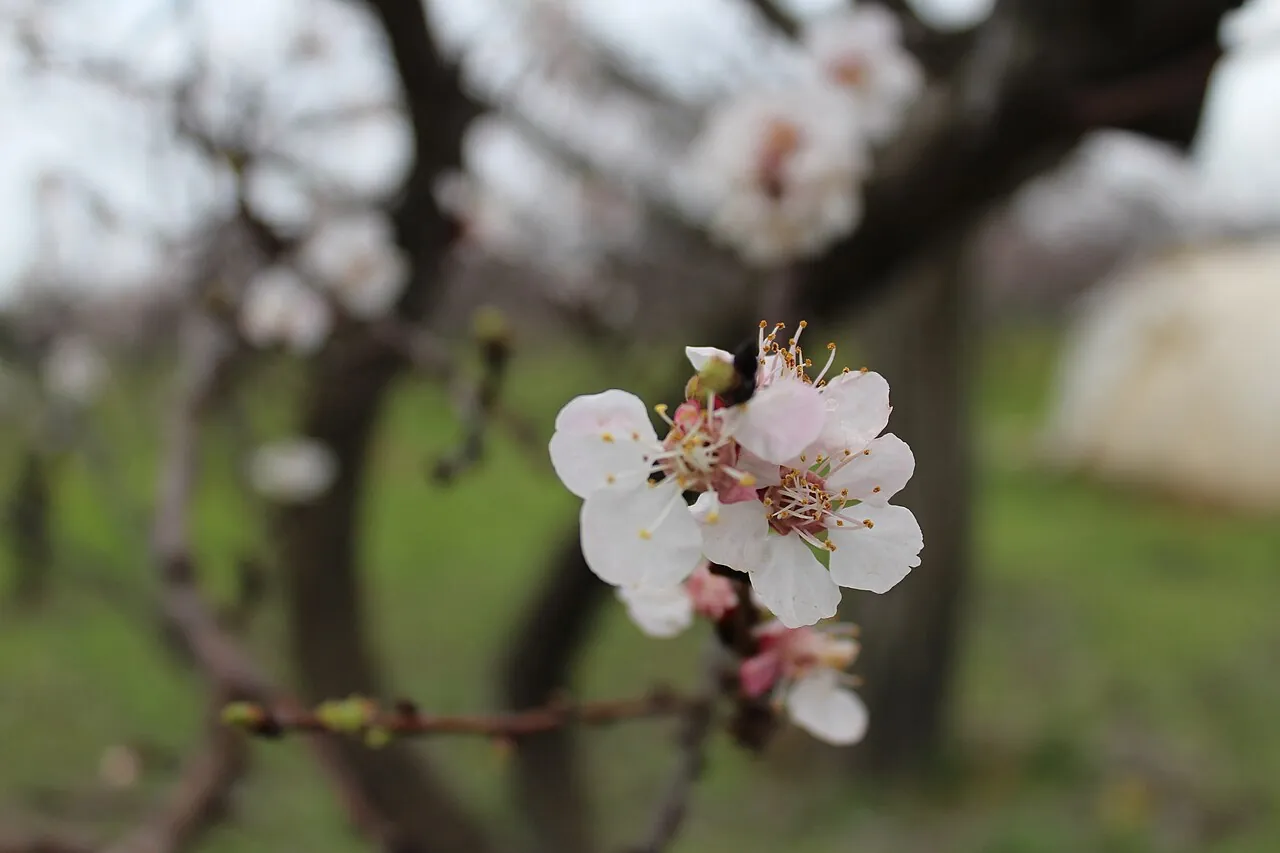
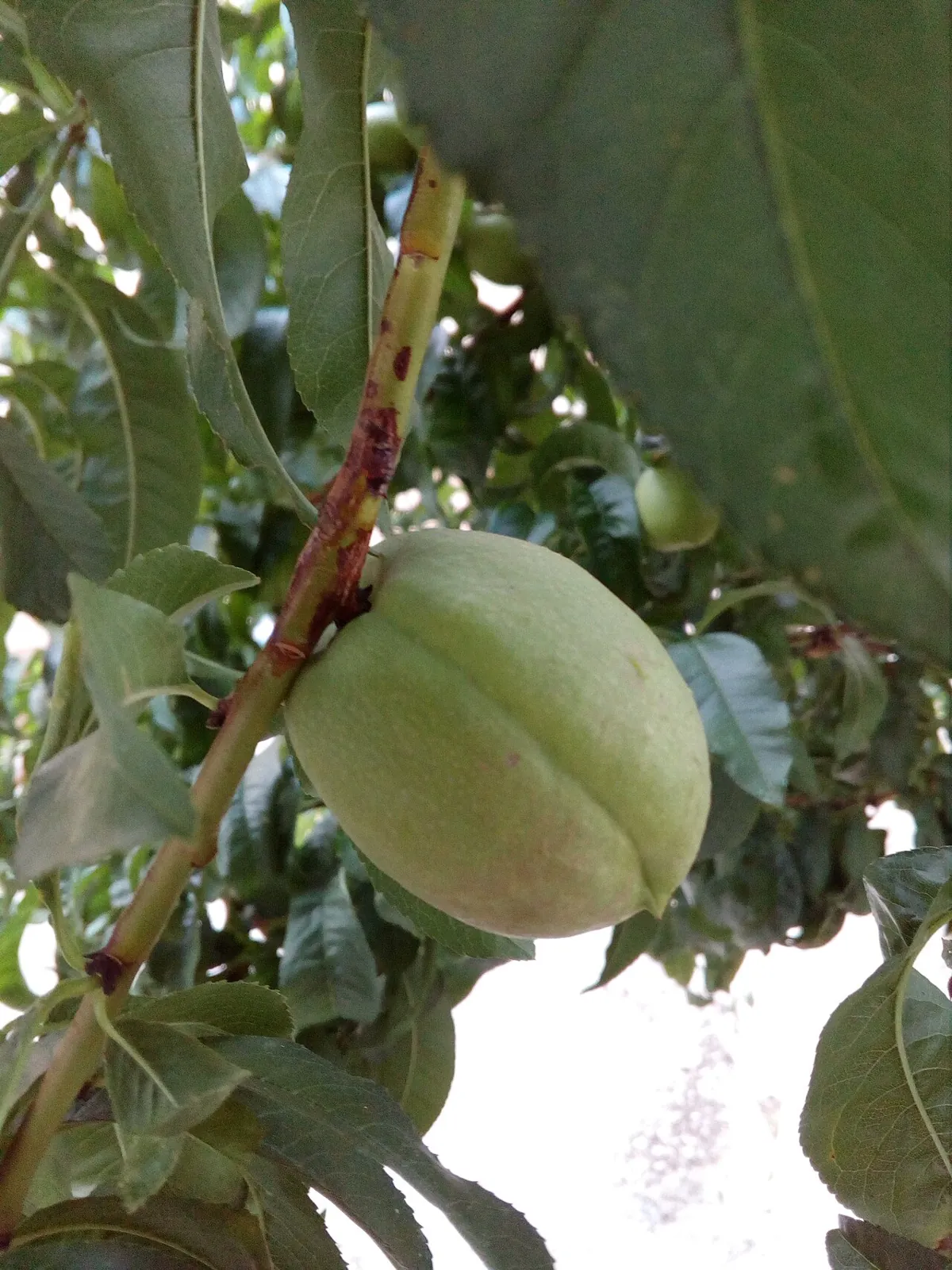
Apricots grow on trees in the rose family that lose their leaves for winter. They need winter cold, followed by a dry spring and a sunny position with soil that drains well. The early blossoms open in late winter or early spring, when frost can damage them.
A young tree takes time to build a crop: its best early harvests come after about 3–5 years.
When and where you'll find it
Fresh California apricots usually reach supermarket produce aisles and farmers’ markets from late May to early July. The UK harvest comes later, usually from late July through August.
Dried apricots carry the fruit beyond that short season. California apricots are usually dried in halves; Turkish dried apricots commonly stay whole, with the stone squeezed out. Canned apricots are another year-round pantry form.
Sources · 10
- Administration of Ladakh — Horticulture Departmentladakh.gov.in
- Apricot Producers of Californiaapricotproducers.com
- Austrian National Tourist Officeaustria.info
- Mississippi State University Extensionextension.msstate.edu
- NASA — Flight Feeding Systems Design and Evaluation (1973)ntrs.nasa.gov
- Nature Communications — Groppi and colleagues (2021)nature.com
- NC State Extension Gardener Plant Toolboxplants.ces.ncsu.edu
- Royal Horticultural Societyrhs.org.uk
- Telangana Tourismtourism.telangana.gov.in
- University of Nebraska–Lincoln Extensionlancaster.unl.edu
Get it near Detroit
What it tastes like
As soft as a grapefruit, less sweet than a kiwifruit≈
More about the taste
Ripe apricots have sweet, juicy flesh with a delicate flavor, and smell sweeter and taste better at room temperature.
Ripe apricots have better aroma and flavor at room temperature than straight from the refrigerator.
A tasting invitation
Compare a fresh half with a gently warmed one. Pay attention to fragrance, texture and the balance between sweet flesh and tart edges — cooking changes the experience, and varieties respond differently.
Choose, ripen, store, eat
1ChooseRichly colored, softened
Look for
- Richly colored, softened
- Flesh yields to gentle pressure
Ignore
- Red patch alone
For eating soon, choose richly colored fruit that has softened. Handle gently: ripe apricots bruise easily.
2RipenOn the counter
Ripens after pickingCounterBrown paper bagUnripe apricots can soften after picking. A brown paper bag at room temperature speeds ripening — check often rather than leaving them forgotten.
3StoreFridge, ripe
- FridgeRipePlastic bag
- FreezerHalved, pits removed
Eat ripe apricots promptly or keep them in a plastic bag in the refrigerator. For freezing, wash, halve and remove the pits before freezing the pieces and packing them.
4EatSkin, Flesh · not pit
Eat
SkinFleshNot eaten
PitWash before eating. The tender skin can stay on; split along the fruit's natural line and remove the pit.
More tips
A useful detail The natural seam is a useful cutting guide — cut around it, and in a ripe fruit the halves release from the stone readily. That makes apricot a convenient fruit for a small, unfussy tasting plate.
Worth knowing
- A firm, mature apricot may soften at home, but an immature one won't develop the same flavor as a well-grown, properly harvested fruit.
Detroit, Michigan
When it’s good hereUsual monthsJust arrivedAt their bestLast chanceAll yearWhere it is in its usual monthsToday, Oct 22Grown hereIn season in your stateShips fromIn season where it grows
59 growing areas, 18 countriesUsual monthsOur estimated monthsToday, Oct 22

- Aomori
- Balochistan
- Bari
- Bay of Plenty
- British Columbia
- Cáceres
- California
- Castellón
- Coquimbo
- Drôme
- Florida
- Georgia
- Kerman
- Lower Saxony
- Mendoza
- New South Wales
- O'Higgins
- Ontario
- Santa Cruz de Tenerife
- Shandong
- South Africa
- Valparaíso
- You
0 of 22 areas · October
Growing areas by country
- United States12
- Spain9
- Australia6
- France6
- Argentina3
- Chile3
- Italy3
- New Zealand3
and 13 more countriesand 10 more countries
212 varieties
- No variety photo yetBoni
- Juice
- juicy
- No variety photo yetCebasred
- Feel
- firm
- No variety photo yetGoshen Gold
- Feel
- firm
- No variety photo yetSuaprieleven
- Tartness
- tart
- Flesh type
- melting
- No variety photo yetSuapril5
- Taste
- sweet
- Feel
- firm
- No variety photo yetSuapritwelve
- Tartness
- tart
- Flesh type
- melting
119 names in 22 languages
- เอพริคอตThai
Cook it
How to serve it first
Open a few ripe apricots and serve the halves alongside thick yogurt. For a warm version, bake the halves until tender and contrast them with something crisp. Taste first — apricots can carry plenty of acidity even when ripe.
4 apricot festivalsUsual monthToday, Oct 22
Strange but trueHistoryA myth, and the truthScienceNatureWhere the name came fromCustoms and cultureFood and drink
If you like Apricot
Close relatives
Nutrition, sources
Nutrition
Apricots, raw · per 100 g
- Carbohydrate
- 11 g
- Fiber
- 2 g
- Sugars
- 9.2 g
- Protein
- 1.4 g
- Fat
- 0.4 g
- Vitamin C
- 10 mg
- Potassium
- 259 mg
Photos · 4
Sources
Apricot · Fruitopia · checked Sep 21, 2026
What we don't know yet
Apricot season is very sensitive to local growing conditions — a UK harvest window doesn't apply to California or imported fruit.