Sloe
Also called Blackthorn · Sloe, blackthornPrunus spinosa · Rosaceae family
The sloe: a small, astringent plum with a long life in hedgerows and preserves.
Find it near DetroitGet to know it
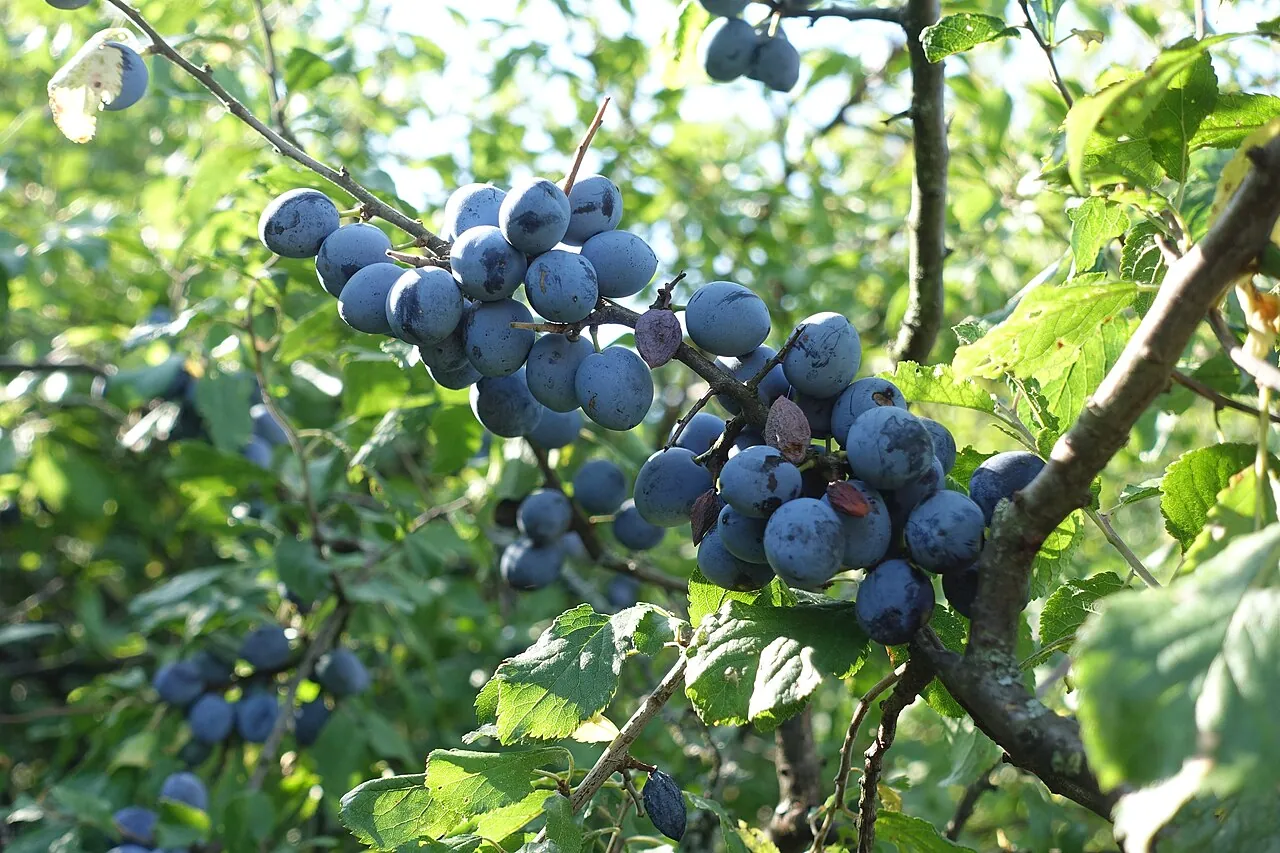
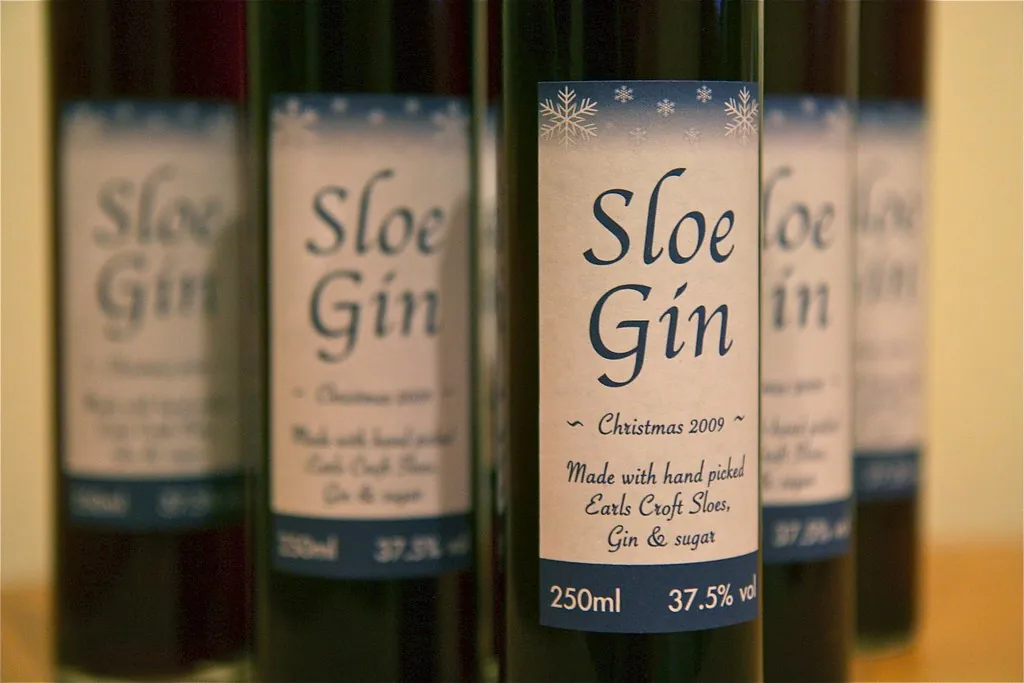
The sloe is a tiny purple stone fruit with a sharp taste that leaves your mouth feeling dry. It grows on blackthorn, and in Britain it is steeped in gin with sugar to make sloe gin.
What it is
A sloe measures about 1 cm (0.4 in) across, with a pale, dusty-looking bloom on its purple skin. Inside, the flesh stays green around one central stone. The small, hard fruit is tart and astringent: that last word means the dry, puckering feeling it leaves in your mouth. It goes into preserves and drinks rather than the fruit bowl.
Where it comes from
Blackthorn comes from Europe and western Asia. It also grows in New Zealand and eastern North America. In Britain it belongs to the hedgerow landscape, growing in scrub and mixed woodland as well as in planted hedges and small woods.
How it's eaten where it grows
In Britain, sloes steep in gin with sugar to make sloe gin. In Navarra, northern Spain, they go into pacharán, a liqueur made with anise-flavoured spirit. There the anise spirit’s sweetness balances the fruit’s mouth-drying bite, and the sloes slowly flavour the drink over months.
They also bring tartness to the breakfast table. Fruits of the Forage makes a marmalade with wild sloes from Cheshire or North Wales and bitter Seville oranges. The orange peel and dark fruit share the same jar.
How it's grown
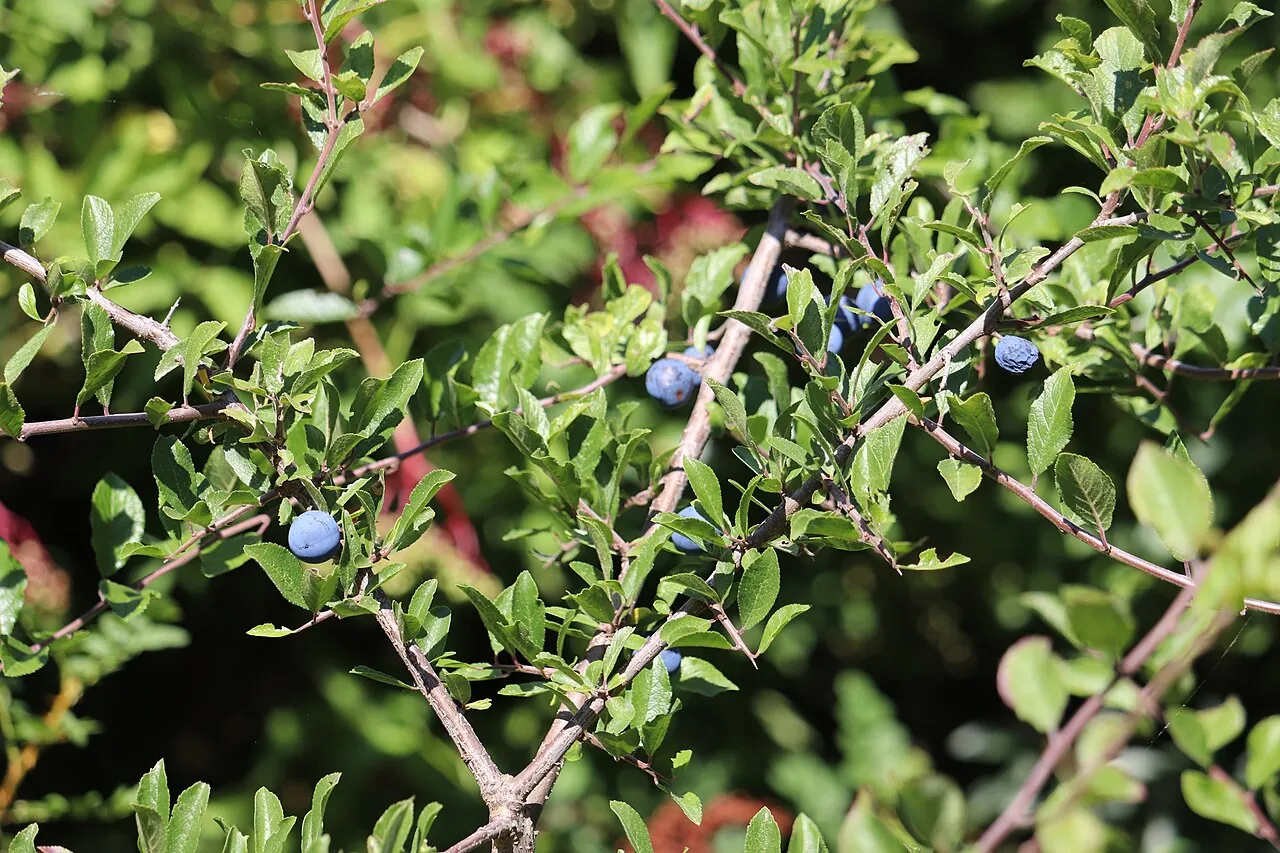
Blackthorn grows as a shrub or small tree, up to 4 m (13 ft) tall. Its twigs are usually very thorny, and it can form dense thickets. In Britain it is planted in hedgerows and small woods, as well as growing wild among other trees.
When and where you'll find it
In the UK, sloes are usually picked from late September through December. Frost softens their skins and helps release the juice; freezing the picked fruit does the same job before it goes into gin. Fresh sloes are a hedgerow harvest; beyond the hedge, the fruit turns up in jars such as Fruits of the Forage’s Seville orange and sloe marmalade.
Sources · 7
- Botanical Society of Britain & Irelandbsbi.org
- Consejo Regulador Pacharán Navarropacharannavarro.org
- Fruits of the Foragefruitsoftheforage.co.uk
- Royal Horticultural Societyrhs.org.uk
- Wikipediaen.wikipedia.org
- Woodland Trustwoodlandtrust.org.ukOther pages23
- World Agroforestry, Agroforestree Databaseapps.worldagroforestry.org
Get it near Detroit
What it tastes like
As tart as a grapefruit, less sweet than a kiwifruit≈
More about the taste
Ripe sloe pulp is sour and astringent — even fully ripe, sloes stay far from the sweetness of a dessert plum.
Ripe sloe pulp is sour and astringent — even fully ripe, sloes stay far from the sweetness of a dessert plum.
Choose, eat
1ChooseBluish-black
Look for
- Bluish-black
- Fully ripe
Ripe sloes turn bluish-black and can remain on the branches through winter.
2EatFully ripe fruit · not seeds
Eat
Fully ripe fruitNot eaten
SeedsUse fully ripe fruit for cooking. Don’t eat the seeds — they contain cyanide compounds.
Detroit, Michigan
When it’s good hereUsual monthsJust arrivedAt their bestLast chanceAll yearWhere it is in its usual monthsToday, Oct 22Grown hereIn season in your stateShips fromIn season where it grows
1 growing area, 1 countryUsual monthsToday, Oct 22

- United Kingdom
- You
1 of 1 areas · October
Sloes go into jams, jellies, preserves, pastries, vinegar and alcoholic drinks.
43 names in 12 languages
- Mận gaiVietnamese
Cook it
Strange but trueHistoryA myth, and the truthScienceNatureCustoms and cultureFood and drink
If you like Sloe
Tastes alike
Close relatives
Sources
Sources
Sloe · Fruitopia · checked Sep 22, 2026