Salak
Also called Salak palm · Snake-fruited palm · Snake-skinned fruitSalacca zalacca · Arecaceae family
Peel away the scales, then compare the flesh fresh, in a chili pickle, and in a gently spiced syrup.
Find it near DetroitGet to know it
Salak wears overlapping scales like a snake, but inside is soft, translucent flesh with the sweetness of ripe apple, pineapple and banana. The fruit grows in tight bunches on a spiny palm whose leaves sprout straight from the ground.
What it is
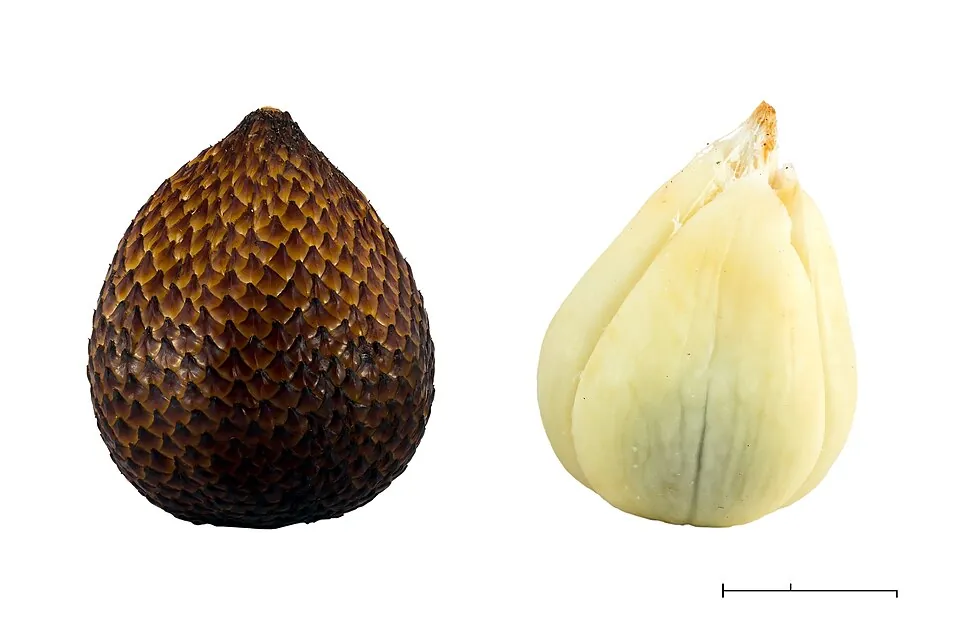
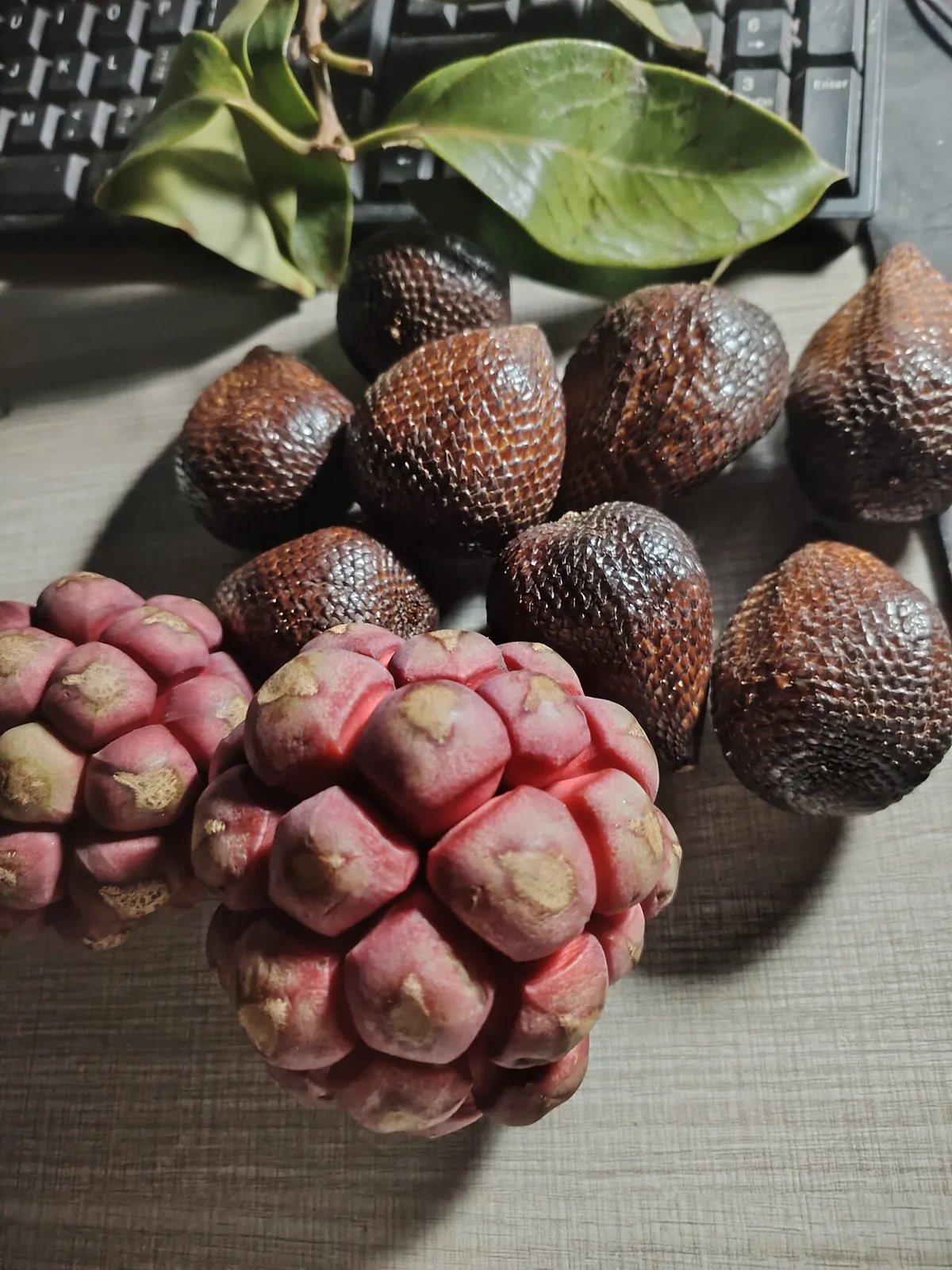
Salak, Salacca zalacca, is the fruit of a densely clustering palm. It's round to oval, about the size of a fig, 2.5–10 cm by 5–8 cm (1–4 by 2–3 in), and tapers to a point at one end. Its regular rows of scales turn reddish brown to nearly red when ripe. Inside is soft, translucent flesh around one to three blackish seeds, each about 1 cm (0.4 in) across.
Ripe fruit is sweet. Less mature salak can be sour and leave a dry, puckering feeling in the mouth.
Where it comes from
Salak comes from Java and Sumatra in Indonesia and has spread to other islands, from Bali to Maluku. Each growing area tends to keep its own favourite variety. Pondoh began around Yogyakarta in Java and became popular further afield in the 1990s; it is one name that also appears on fresh fruit offered overseas.
How it's eaten where it grows
In Indonesia, salak becomes manisan salak, a candied preserve, or asinan salak, a pickle. Unripe fruit also goes into rujak, a spicy fruit salad.
In Sleman, Yogyakarta, one home version of manisan soaks the peeled, seeded flesh in a syrup boiled with sugar and cinnamon, with cloves as an optional addition, then chills it for two to three days. A Bogor version of asinan simmers salak in a mixture of red chillies, vinegar, sugar and salt, then serves it cold.
How it's grown
Salak is a very spiny palm, 1.5–5 m (5–16 ft) high, with short stout stems and leaves that sprout from ground level. Indonesian growers traditionally plant it beneath existing trees, giving the palms shade. They cut away extra shoots and ageing leaves and pollinate flowers by hand. In one variety trial, the first flowers appeared 23–34 months after sowing, and the fruit develops in tight bunches.
When and where you'll find it
In tropical north Queensland, salak is usually available from January through May. Farther away, the fruit travels fresh: one British online fruit shop lists it as Salak Pondoh. To open one, pinch off the pointed tip, pull it away, then peel off the rest of the scaly skin.
Sources · 7
- Anif Agustina, Cookpadcookpad.com
- Australian Tropical Foodsaustraliantropicalfoods.com
- Exotic Fruitsexoticfruits.co.uk
- Lestari, Ebert & Huyskens-Keil, Journal of Food Research (2013)ccsenet.org
- Nisa Almunisa, Cookpadcookpad.com
- S. Ashari, Wageningen Universityresearch.wur.nl
- Singapore National Parks Boardnparks.gov.sg
Get it near Detroit
What it tastes like
Softer than an apple, as sweet as a banana≈
More about the taste
Fully ripe salak is sweet, with a flavor reminiscent of apple, pineapple and banana. Unripe fruit can be sour and astringent, so one tart fruit doesn't speak for every variety or stage.
Ripe fruit is sweet; more sour, astringent immature fruit has the same apple-pineapple-banana character in a sharper form. Variety and preparation both change the experience.
Choose, ripen, eat
1ChooseReddish-brown to nearly red scales
Look for
- Reddish-brown to nearly red scales
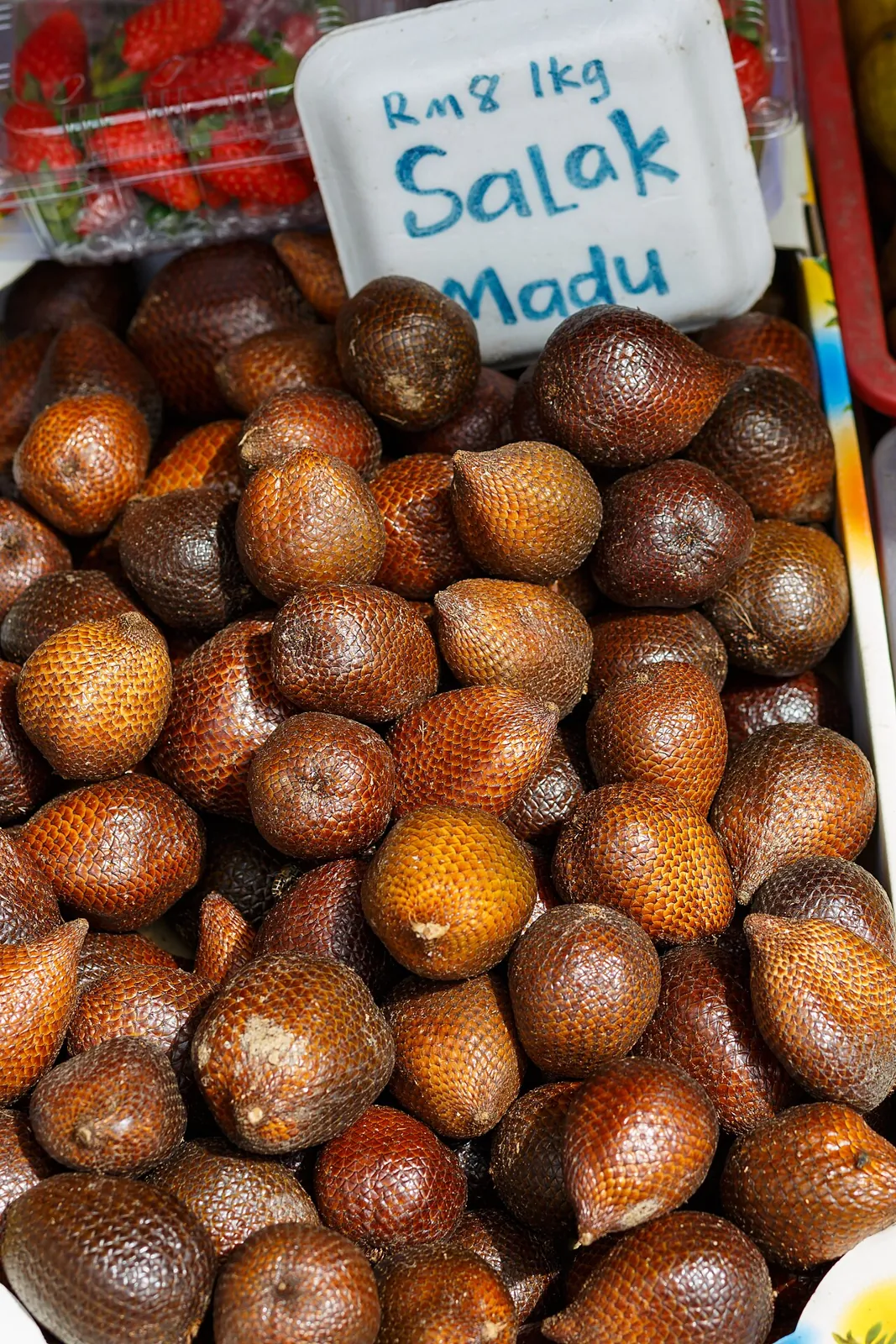
Ripe salak develops reddish-brown to nearly red scales. Ask which type is being sold and whether it's ready for fresh eating.
2RipenFor a fresh tasting, choose fruit sold as ready to eat rather than assuming green or astringent fruit will improve on the counter
For a fresh tasting, choose fruit sold as ready to eat rather than assuming green or astringent fruit will improve on the counter.
3EatFlesh · not skin, seeds
Eat
FleshNot eaten
SkinSeedsPeel away the skin and remove the seeds; use just the flesh.
Detroit, Michigan
When it’s good hereUsual monthsJust arrivedAt their bestLast chanceAll yearWhere it is in its usual monthsToday, Oct 22Grown hereIn season in your stateShips fromIn season where it grows
5 growing areas, 3 countriesUsual monthsOur estimated monthsToday, Oct 22

- East Java
- Johor
- Pahang
- Queensland
- Yogyakarta
- You
0 of 1 areas · October
Growing areas by country
- Indonesia2
- Malaysia2
- Australia1
Candied salak is called manisan salak, pickled salak is asinan salak, and unripe fruit goes into spicy rujak salad. Each use calls for a different stage of ripeness.
13 varieties
- No variety photo yetBali
- Taste
- very high
- Scent
- Agak tajam
- Bite
- crisp
- Flesh
- cream
- No variety photo yetGula Pasir
- Taste
- very high
- Scent
- Kurang tajam
- Bite
- crisp
- Flesh
- white
- No variety photo yetSari Intan 48
- Taste
- very high ID-KR
- Scent
- Sangat harum ID-KR
- Feel
- soft ID-KR
- Flesh
- white · yellow ID-KR
- No variety photo yetSalak Bali
- Taste
- medium
- Flesh
- white · yellow
- Shape
- round
- No variety photo yetSalak Kelubi
- Flavour
- rasa manis kelat dan berwarna putih merah.
- Flesh
- white · red
- Shape
- oval
- No variety photo yetSalak Kesumba
- Scent
- beraroma
- Flavour
- berwarna putih merah; rasa manis kelat; keberjusan rendah dan beraroma.
- Flesh
- white · red
30 names in 14 languages
- സലാക്കാ സലാക്കാMalayalam
- سالاكة مألوفةArabic
Cook it
1 Salak festivalUsual monthToday, Oct 22
Strange but trueScienceWhere the name came fromCustoms and culture
If you like Salak
Tastes alike
Sources
Sources
Salak · Fruitopia · checked Sep 21, 2026