Jocote
Also called Purple mombin · Ciruela · Red mombinSpondias purpurea · Anacardiaceae family
A fruit tree whose living fences also preserve a history of human selection.
Find it near DetroitGet to know it
Jocote is a small tropical fruit with yellow flesh wrapped around a large stone. A ripe one can taste like plum and mango, sweet with a tart edge. Unripe, tart ones are eaten with salt, chilli and lime; riper fruit goes into drinks and syrupy desserts.
What it is
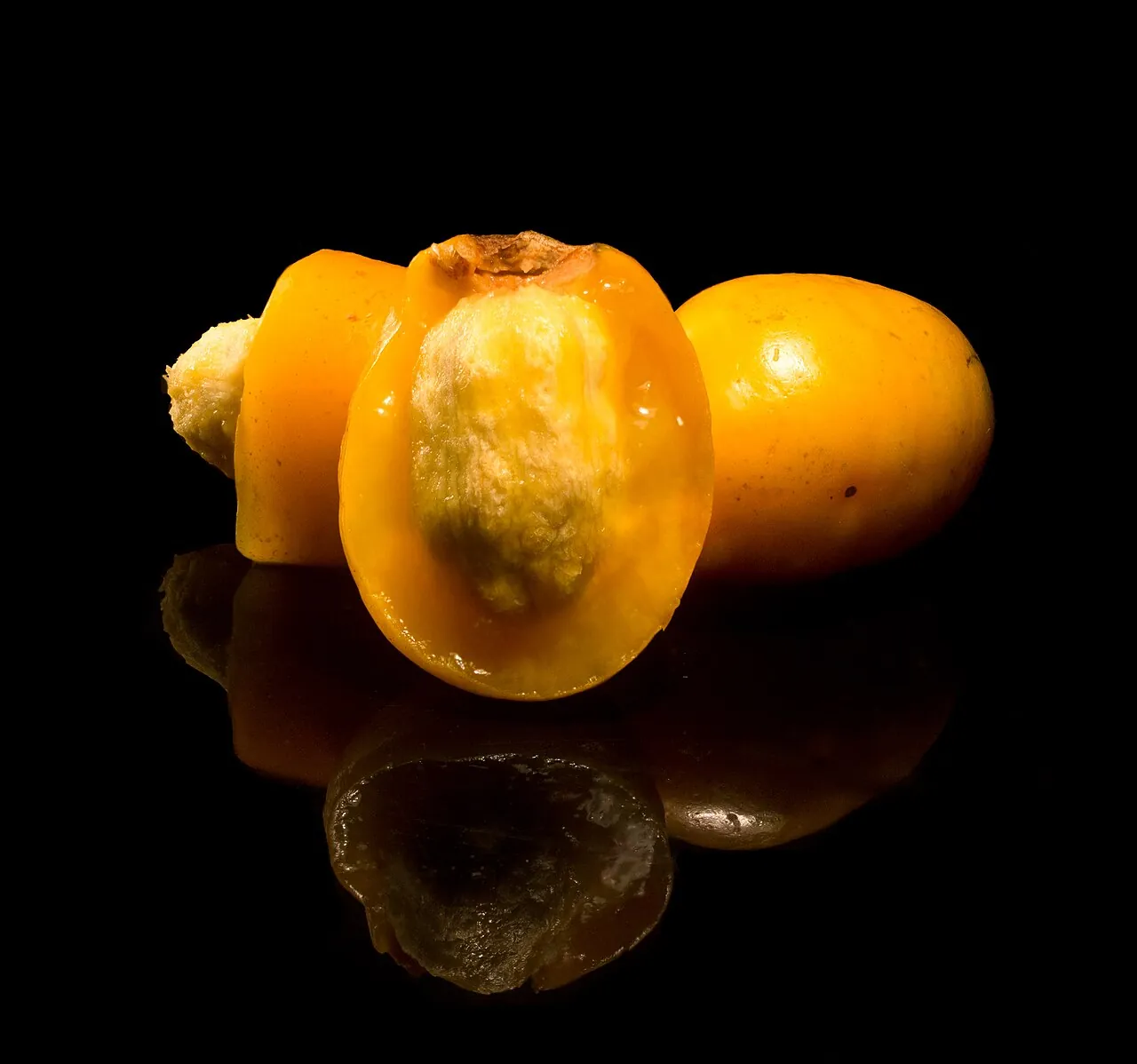
Jocote is Spondias purpurea, a relative of mango and cashew. The fruit is about 2.5–5 cm (1–2 in) long, often oval or pear-shaped, sometimes with a little knob at the tip. Yellow flesh clings to a large, rough stone; the skin is eaten too.
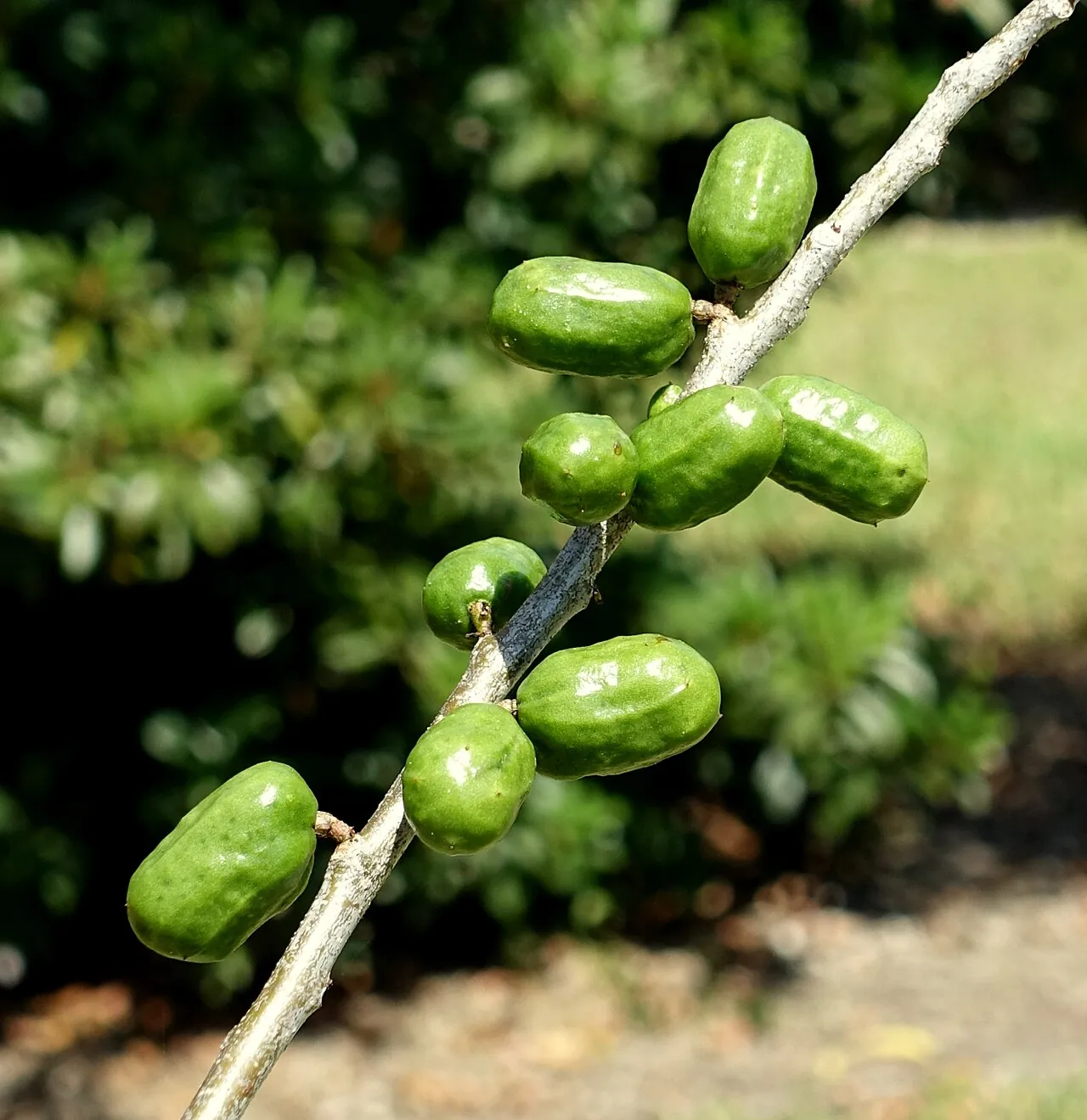
Varieties differ sharply. Even mature fruit can be green, yellow, orange, red or violet. Flesh ranges from chalky to juicy, and from sweet to sharply acidic.
Where it comes from
Jocote comes from the tropical dry forests of Mexico and Central America. People were already growing it from Mexico to northern South America when Europeans arrived. Spanish explorers carried it across the Pacific to the Philippines.
It is widely planted in the Caribbean and Bahamas, with occasional trees in southern Florida. In its Mesoamerican homeland, backyard gardens and living fences remain familiar places to grow it.
How it's eaten where it grows
In Guatemala, jocotes en miel are whole fruits simmered in a dark syrup of panela, unrefined cane sugar, with cinnamon and cloves. They are part of the November 1 All Saints Day table. Here, miel means syrup; the dessert contains no honey.
Mexico puts tart, unripe jocotes into green sauces or pickles them in vinegar with salt and chilli. Ripe fruit makes agua de ciruela: pulp strained away from the stones, mixed with water and sugar, and served over ice.
How it's grown
The small tree has thick, brittle branches and sheds its leaves. Tiny red or purple flowers appear along the branches before the new leaves emerge. It grows in soils ranging from sand to heavy clay, but cold damages it.
Growers reproduce a tree from large branch cuttings. Set upright in the ground, those pieces take root and become new fruit trees.
When and where you'll find it
In Mexico, jocote is usually in season from May into early July. In the US, Latin groceries are a route to whole frozen fruit, often labelled jocote or ciruela. CremiMex, a Hispanic-food supplier, lists Frusecha’s Jocote Corona, grown in Central America and frozen whole. For agua fresca, frozen fruit thaws for 30–45 minutes first.
Get it near Detroit
What it tastes like
Sweeter than a banana, softer than a pear≈
More about the taste
Cultivated jocotes range from green and yellow to orange, red, and violet, with sweet or acidic flavor and chalky or juicy texture. Wild fruit tends to be smaller, more acidic, and less fleshy.
Cultivated jocotes range from green and yellow to orange, red, and violet, with sweet or acidic flavor and chalky or juicy texture. Wild fruit tends to be smaller, more acidic, and less fleshy.
Choose, eat
1ChooseRed color
Ignore
- Red color
Mature jocotes can be green or several other colors, not only red. Ask for the local variety name and its usual use.
2EatPulp · not hard inner stone
Eat
PulpNot eaten
Hard inner stoneJocotes are eaten fresh and made into jams and drinks. The hard inner stone is not part of the edible pulp.
Detroit, Michigan
When it’s good hereUsual monthsJust arrivedAt their bestLast chanceAll yearWhere it is in its usual monthsToday, Oct 22Grown hereIn season in your stateShips fromIn season where it grows
45 names in 11 languages
- ജൊക്കോട്ട്Malayalam
- 侯購諜Chinese
Cook it
1 Jocote festivalUsual monthToday, Oct 22
Strange but trueWhere the name came from
If you like Jocote
Tastes alike
Close relatives
Used the same way
Sources
Photos · 2
Sources
Jocote · Fruitopia · checked Sep 22, 2026