Umbu
Also called ImbuSpondias tuberosa · Anacardiaceae family
A Brazilian semiarid fruit whose harvest stage involves a real tradeoff between flavor development and durability.
Find it near DetroitGet to know it
Umbu is a small green-to-yellow fruit from Brazil's dry northeast, with juicy flesh that is sweet, tart and fragrant when ripe. Its tree keeps a water reserve underground: swollen roots store water through the dry season.
What it is
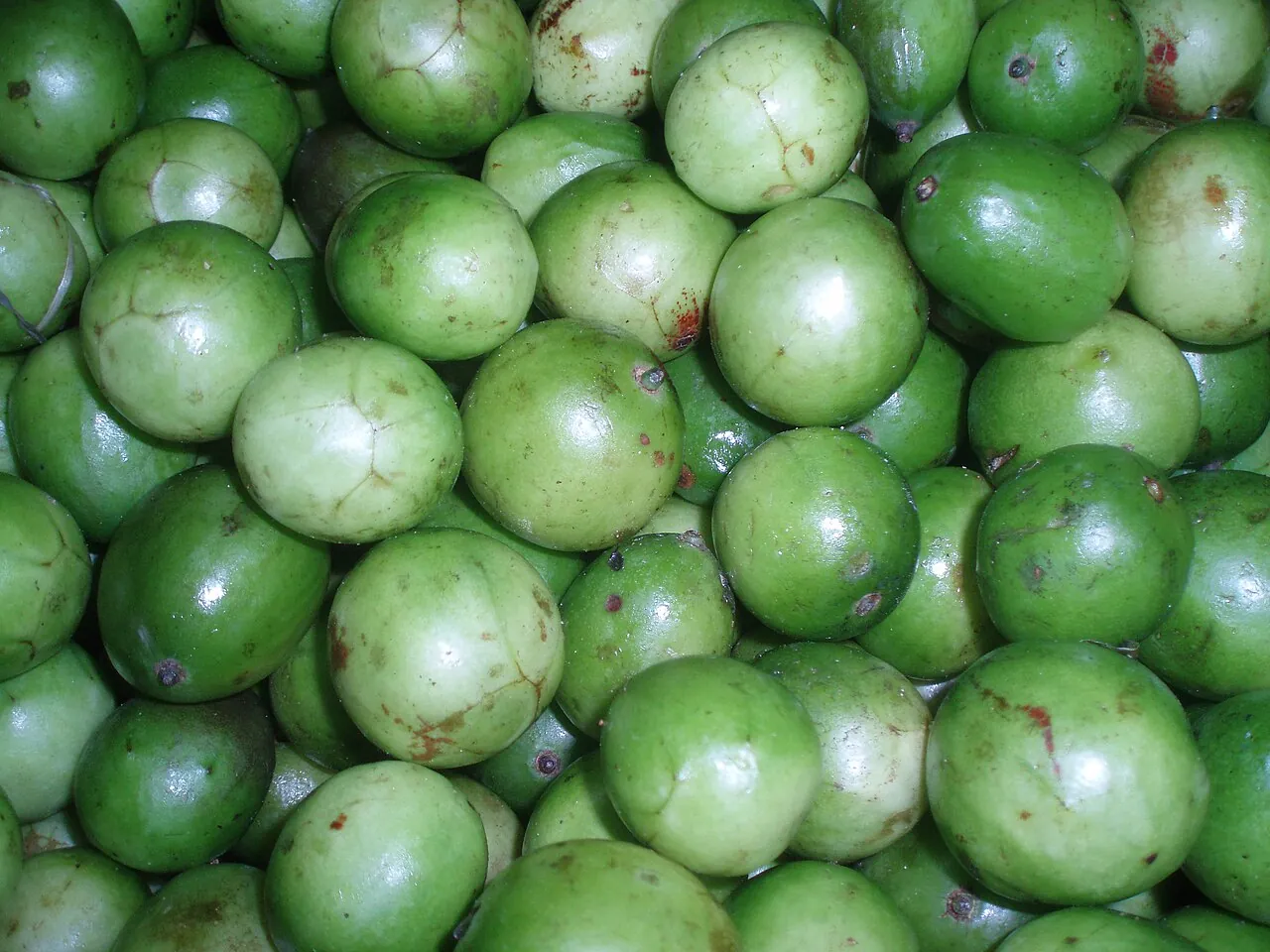
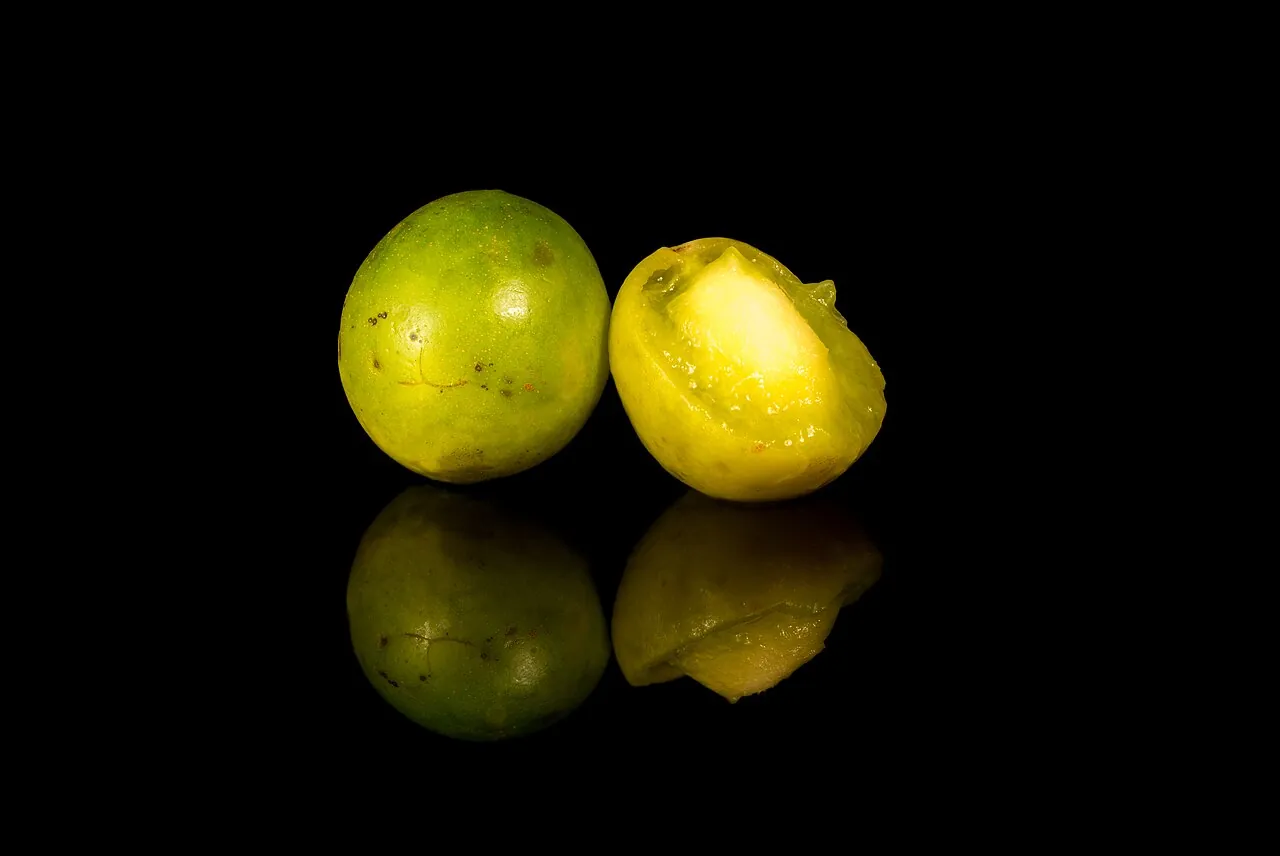
Umbu, Spondias tuberosa, belongs to the cashew family. Its rounded or oval fruit measures 2–5 cm (0.8–2 in) across, with smooth skin and soft flesh around a large dark stone.
Fruit for market can be picked at the inchado stage: still green, but just starting to change colour. It continues to ripen after picking, becoming yellow and soft.
Where it comes from
Umbu belongs to the Caatinga, the dry scrub country of northeastern Brazil's Sertão. Much of the crop is gathered from wild trees, providing income for small farmers and cooperatives.
In Bahia, families from Canudos, Uauá and Curaçá supply native fruit to the Coopercuc cooperative in Uauá. There, Caatinga fruit such as umbu becomes sweets, jam, compote and beer, giving the harvest several forms beyond fresh fruit.
How it's eaten where it grows
In Bahia's Sertão, umbuzada is milk soured by umbu: goat's or cow's milk, curdled by the acidity of the pulp and sweetened with rapadura sugar. It is eaten with farinha.
Mousse de umbu makes a cool, creamy dessert. Whole fruit is cooked with its skin, then strained to remove the stones. The pulp is blended with condensed milk and cream and chilled; the finished mousse is pale green. Both preparations put the tart fruit alongside milk.
How it's grown
The umbu tree sheds its leaves during the dry season and stores water in swollen roots. A wild tree takes about ten years to start producing fruit, then bears once a year.
Gatherers pick the fruit gently by hand and put it in baskets or bags, because it bruises easily. The mostly green inchado stage gives fruit time to finish ripening after harvest.
When and where you'll find it
In Sergipe's dry interior, umbu is usually harvested from January through March and reaches open-air markets and supermarkets as fresh fruit. Fresh sales are concentrated near where the trees grow; prepared products travel to other parts of Brazil.
Brazil's Central do Cerrado cooperative shop lists umbu jam and fruit bars online. The bars come as plain umbu or blended with guava or banana.
Sources · 8
- Bahia Secretariat of Rural Developmentba.gov.br
- Central do Cerradocentraldocerrado.org.br
- Embrapa Semiárido, Colheita e pós-colheita de umbu (2021)infoteca.cnptia.embrapa.br
- Embrapa Semiárido, Mousse de Umbu (2007)infoteca.cnptia.embrapa.br
- Federal University of Sergipeufs.br
- Neide Rigo, Slow Food Brasilslowfoodbrasil.org.br
- Saraiva and colleagues, Technology in Horticulture (2025)maxapress.com
- Slow Food Foundation for Biodiversityfondazioneslowfood.com
Get it near Detroit
What it tastes like
As tart as a grapefruit, crisper than a blueberry≈
More about the taste
Ripe umbu pulp is soft, succulent and sweet. Harvesting too early limits sugar and aroma development, while a later harvest shortens how long the fruit keeps.
Ripe umbu pulp is soft, succulent and sweet. Harvesting too early limits sugar and aroma development, while a later harvest shortens how long the fruit keeps.
Umbu varies substantially in size, color and chemistry from tree to tree.
Choose, ripen, store, eat
1ChooseFor the market, umbu is often picked at the inchado stage: mostly green, just starting to change color
For the market, umbu is often picked at the inchado stage: mostly green, just starting to change color. This suits shipping more than peak eating quality.
2RipenRipens after picking
Ripens after pickingUmbu continues ripening after harvest: fruit picked at the inchado stage will progress to yellow and become fully edible.
3StoreCool, umbu
- CoolUmbuAround 12°C
Store umbu around 12°C; below about 11°C it can suffer chilling injury.
4EatPulp · not skin, stone
Eat
PulpNot eaten
SkinStoneFor umbuzada, remove the skin and stone from ripe umbu, then mix the pulp with milk and sugar.
More tips
Worth knowing
- Colder storage isn't always better for umbu.
- For umbu, harvest readiness and being ready to eat are different stages. Ask about picking maturity and intended use rather than judging all green fruit alike.
Detroit, Michigan
When it’s good hereUsual monthsJust arrivedAt their bestLast chanceAll yearWhere it is in its usual monthsToday, Oct 22Grown hereIn season in your stateShips fromIn season where it grows
2 growing areas, 1 countryUsual monthsOur estimated monthsToday, Oct 22

- Bahia
- Pernambuco
- You
0 of 1 areas · October
In one Pernambuco community, people choose which umbu to gather first by sweet-sour taste, then by size and pulp quantity. Useful trees are kept standing on managed land.
11 names in 6 languages
- Imburoot
Cook it
2 umbu festivalsUsual monthToday, Oct 22
Strange but trueHistoryNatureCustoms and cultureFood and drink
If you like Umbu
Tastes alike
Close relatives
Same plant family
Sources
Sources
Umbu · Fruitopia · checked Oct 2, 2026