Acerola
Also called Barbados cherry · West Indian cherry · Acerola, nancerolMalpighia emarginata · Malpighiaceae family
Meet acerola as a tart cooking fruit, not only as the name on a powder or vitamin label.
Find it near DetroitGet to know it
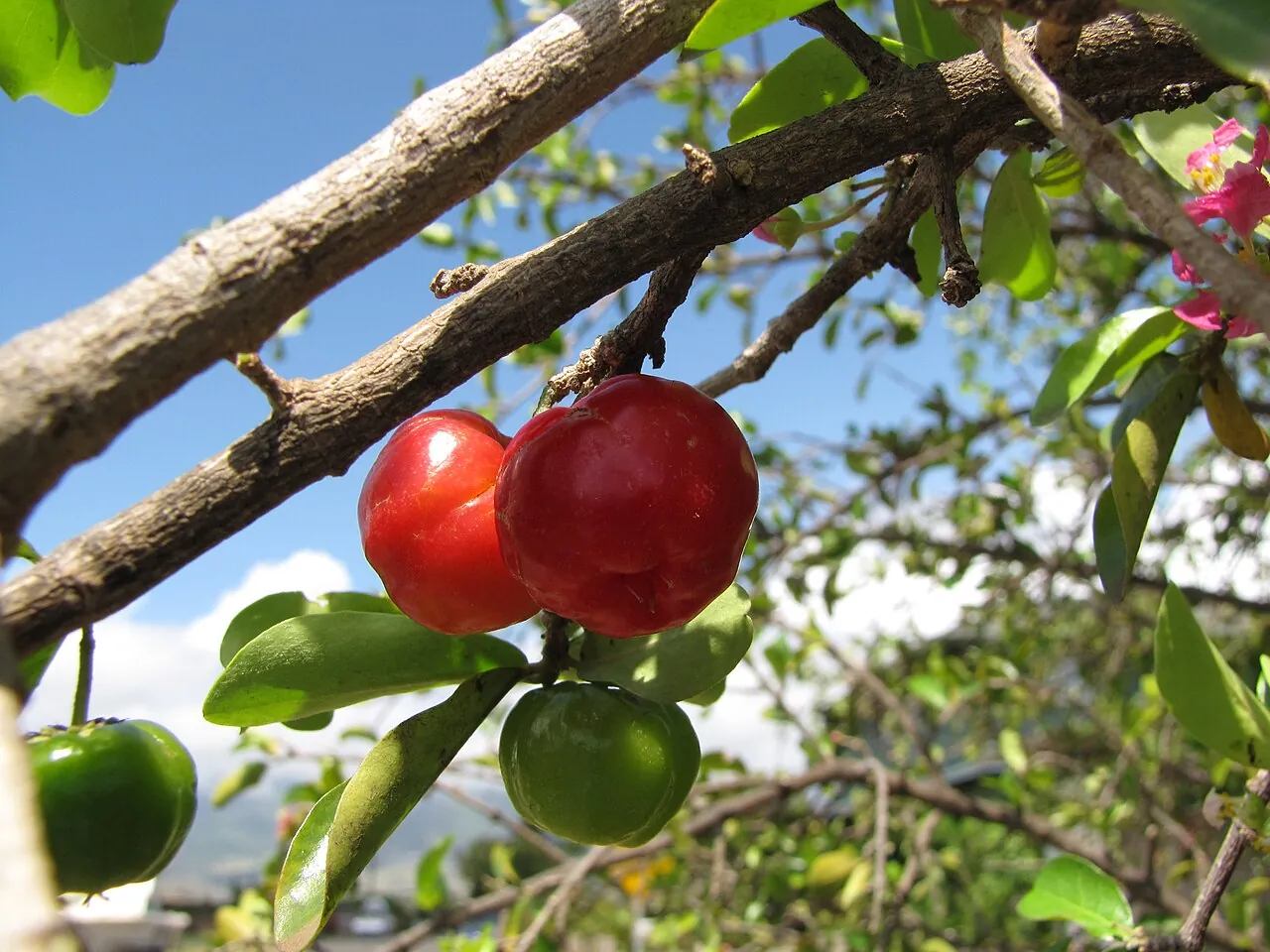
Acerola is a small, bright red fruit with thin skin, juicy orange flesh and a taste that ranges from sweet to sour. Thoroughly ripe, it can recall a tart strawberry. Cooked, it tastes more like tart apple, and in the Dominican Republic it simmers into a spiced dessert, dulce de cereza.
What it is
Also called Barbados cherry, acerola is Malpighia emarginata, a tropical shrub in the Malpighiaceae family. Its fruit measures about 1.25–2.5 cm (½–1 in) across. The glossy red skin covers juicy orange flesh, and three faint lobes give the fruit a slightly ridged shape.
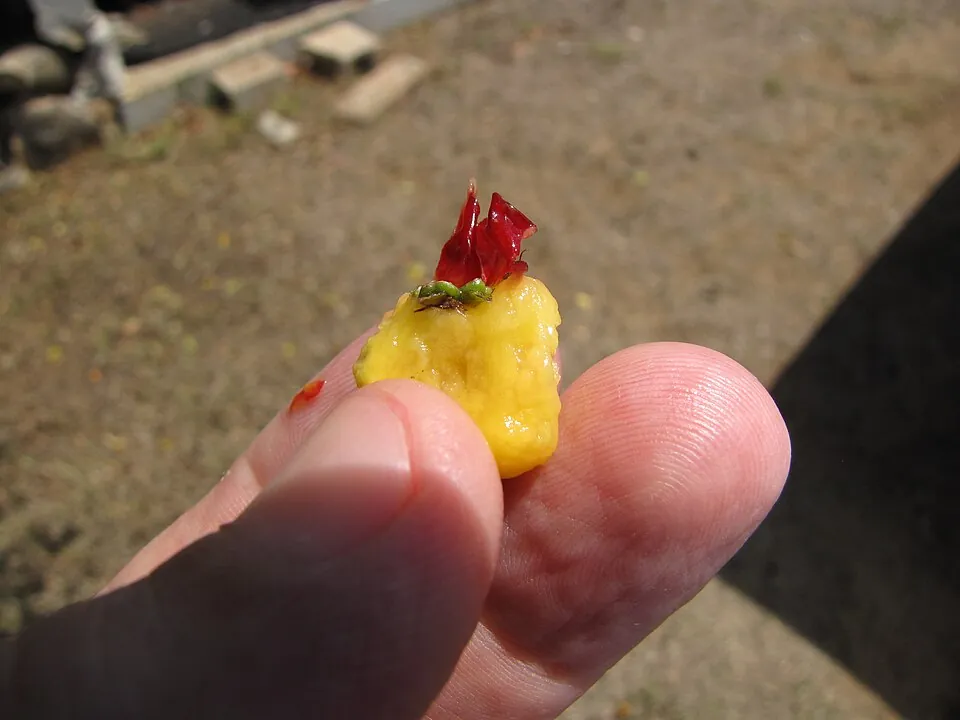
Inside are three stones, each able to hold a seed. They look large next to the flesh, but they are light and pithy, only about 20 percent of the fruit's weight.
Where it comes from
Acerola comes from tropical America. Its native range includes the Lesser Antilles, from St Croix to Trinidad, and parts of northern South America extending into Brazil. It is also cultivated beyond that home range, including southern Florida, India and Australia.
How it's eaten where it grows
In the Dominican Republic, dulce de cereza en almíbar turns acerolas into a chilled dessert. The fruit boils with cinnamon, cloves and brown sugar until the cherries are soft and the syrup begins to thicken, then it's chilled before serving.
In Hawaii, a home recipe called Banola slices bananas into acerola juice mixed with sugar. It's chilled and served with grated coconut, if you like.
How it's grown
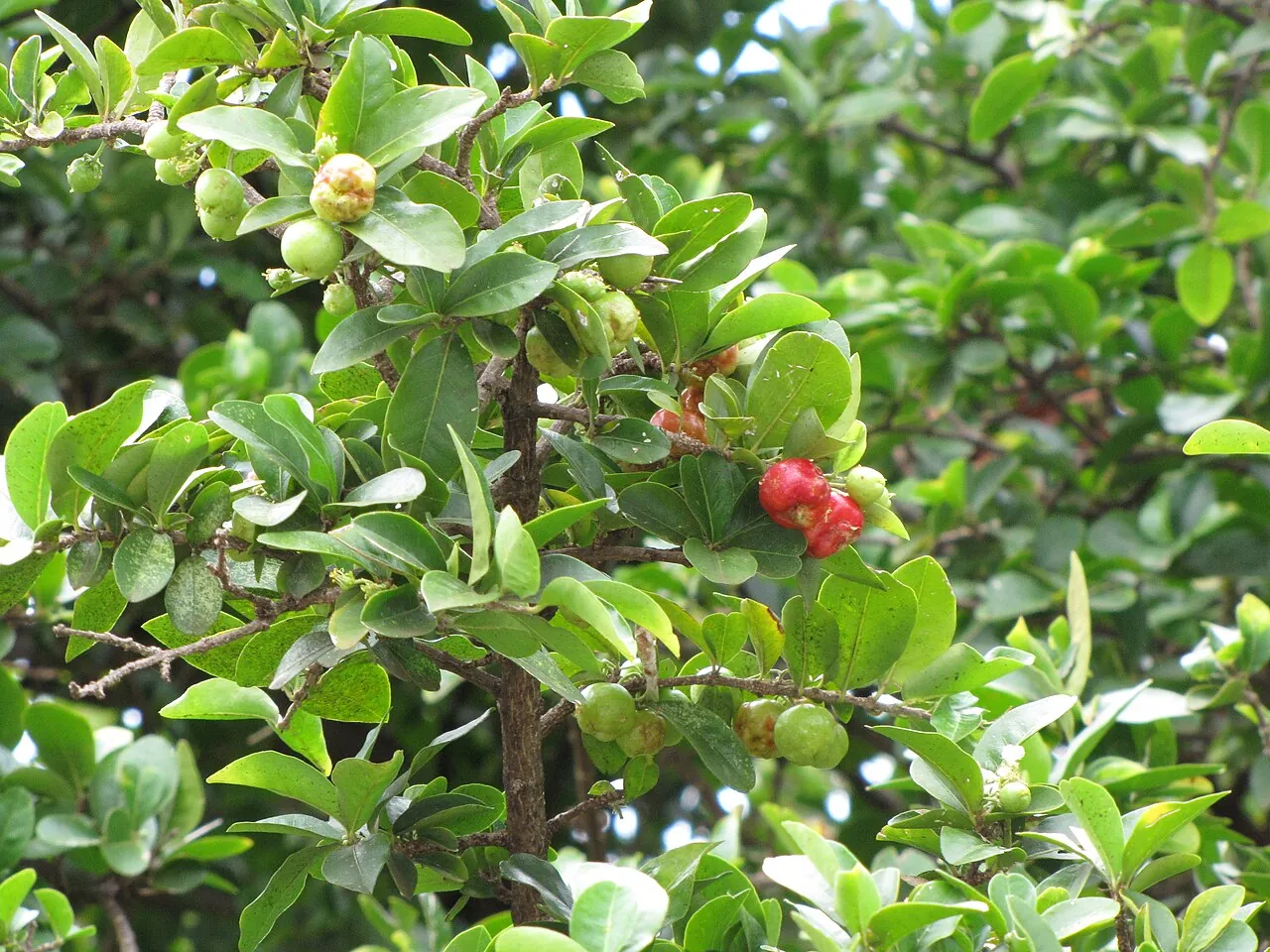
Acerola grows as a bushy shrub, though pruning can shape it into a small tree with one trunk. Growers start new plants from cuttings. In Hawaii, it flowers in cycles about a month apart from April into November, and each fruit ripens about three weeks after its flower opens.
Ripe acerolas bruise easily and spoil fast: processors keep them no more than 3 days at 7 °C (45 °F).
When and where you'll find it
In Hawaii, the best crop usually runs from May through November. Fresh acerola is delicate and short-lived; frozen, it's good for juice, sauce and purée, though the thawed fruit turns too soft for a fruit salad.
Frozen pulp is the usual form away from the trees. Weee, a US online Asian grocer, lists Icefruit acerola pulp in 400 g packs. In Brazil, Sítio do Bello packs plain pulp in four 100 g sachets, with no added water or sugar.
Sources · 7
- Clara Gonzalez, Dominican Cookingdominicancooking.com
- Morton, Fruits of Warm Climates (1987)hort.purdue.edu
- Sítio do Bellolojasitiodobello.lojavirtualnuvem.com.br
- University of Hawaii, Acerola: Nutritive Value and Home Use (1961)ctahr.hawaii.edu
- University of Hawaii, Selection, Evaluation, and Naming of Acerola (1968)ctahr.hawaii.edu
- Weee!sayweee.com
- Wikipediaen.wikipedia.org
Get it near Detroit
What it tastes like
As tart as a grapefruit, crisper than a blueberry≈
More about the taste
Acerola ranges from sweet to quite acidic between trees. Thoroughly ripe fruit is compared to tart strawberries, and cooked acerola to tart apples rather than ordinary cherries.
Fruit ranges from sweet to sour depending on the plant, with a thin skin and relatively large, light seeds. Fresh juice tastes different from the more apple-like flavor of cooked acerola.
Choose, store, eat
1ChooseRipe or nearly ripe fruit
Look for
- Ripe or nearly ripe fruit
For home use, choose ripe or nearly ripe fruit; color and flavor improve with ripening. Sort out any spoiled or decayed fruit before juicing.
2StoreFreezer, after picking
- FreezerAfter picking
If you can't use the fruit soon after picking, freeze it. Thawed fruit turns soft, so it's better for cooked or blended preparations than a fruit salad.
3EatFor a smooth spread, blend the fruit and strain the mixture before cooking to remove seeds and coarse solids
For a smooth spread, blend the fruit and strain the mixture before cooking to remove seeds and coarse solids.
Detroit, Michigan
When it’s good hereUsual monthsJust arrivedAt their bestLast chanceAll yearWhere it is in its usual monthsToday, Oct 22Grown hereIn season in your stateShips fromIn season where it grows
4 growing areas, 4 countriesUsual monthsOur estimated monthsToday, Oct 22

- Florida
- Penang
- Pernambuco
- Queensland
- You
2 of 3 areas · October
Growing areas by country
- Australia1
- Brazil1
- Malaysia1
- United States1
In Hawaii, acerola is used in juice blends, sauces, jellies and frozen desserts.
27 names in 10 languages
Cook it
2 acerola festivalsUsual monthToday, Oct 22
Strange but trueScienceNatureWhere the name came fromFood and drink
If you like Acerola
Tastes alike
Nutrition, sources
Nutrition
Acerola, (west indian cherry), raw · per 100 g
- Carbohydrate
- 7.7 g
- Fiber
- 1.1 g
- Protein
- 0.4 g
- Fat
- 0.3 g
- Vitamin C
- 1678 mg
- Potassium
- 146 mg
Photos · 3
Sources
Acerola · Fruitopia · checked Sep 21, 2026