Bignay
Also called Chinese-laurelAntidesma bunius · Phyllanthaceae family
Clusters that change color berry by berry, offering different roles for tart and fully ripe fruit.
Find it near DetroitGet to know it
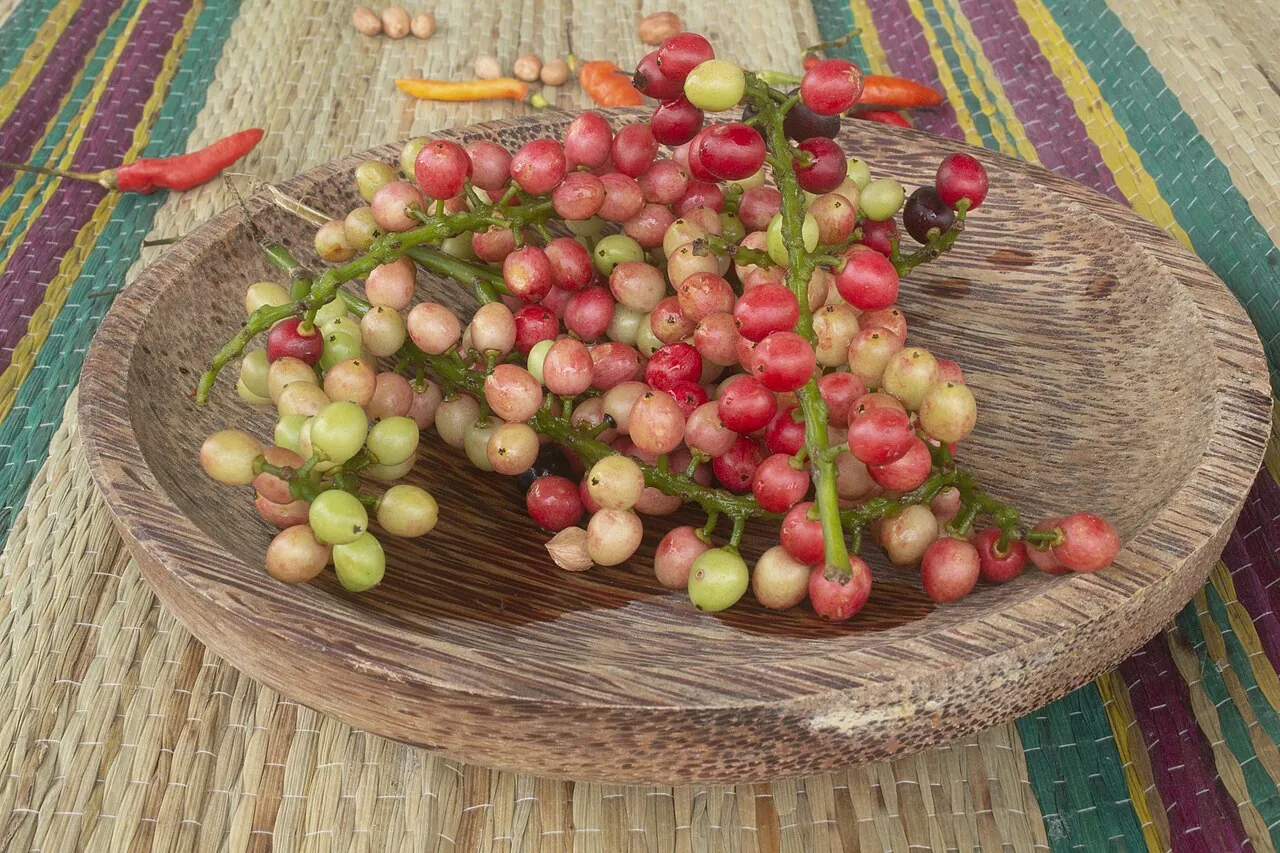
Bignay hangs in long bunches of tiny berries, with red and black fruit sharing the same stem. The black ones are sweet-tart, with a flavour like blueberries. A single bunch ripens berry by berry over several weeks.
What it is
Each berry measures just under 1 cm (about ⅜ in) across and holds one pale seed. The juicy flesh sits inside a thin but tough skin. Fully ripe fruit turns black and tastes sweet-tart; red berries also go into cooked or processed foods. A bunch can carry green, white, red and black berries together.
Where it comes from
Bignay comes from Southeast Asia, the Philippines and northern Australia. Wild trees also grow in the wetter parts of the Himalayas and in Sri Lanka.
David Fairchild brought it from the Philippines to Florida on one of his expeditions, more than a century ago. He wanted a berry that would grow in South Florida for newcomers from the northern US. Today the tree remains largely an ornamental there.
How it's eaten where it grows
In Indonesia, rujak buni pairs the berries with a sauce of chillies, palm sugar, fried peanuts and shrimp paste. The berries go into the stone mortar with the sauce and are pressed just a little, then stirred. In Java, bignay also goes into syrups and brandy.
In Negros in the Philippines, Altertrade makes bignay into a locally crafted wine.
How it's grown
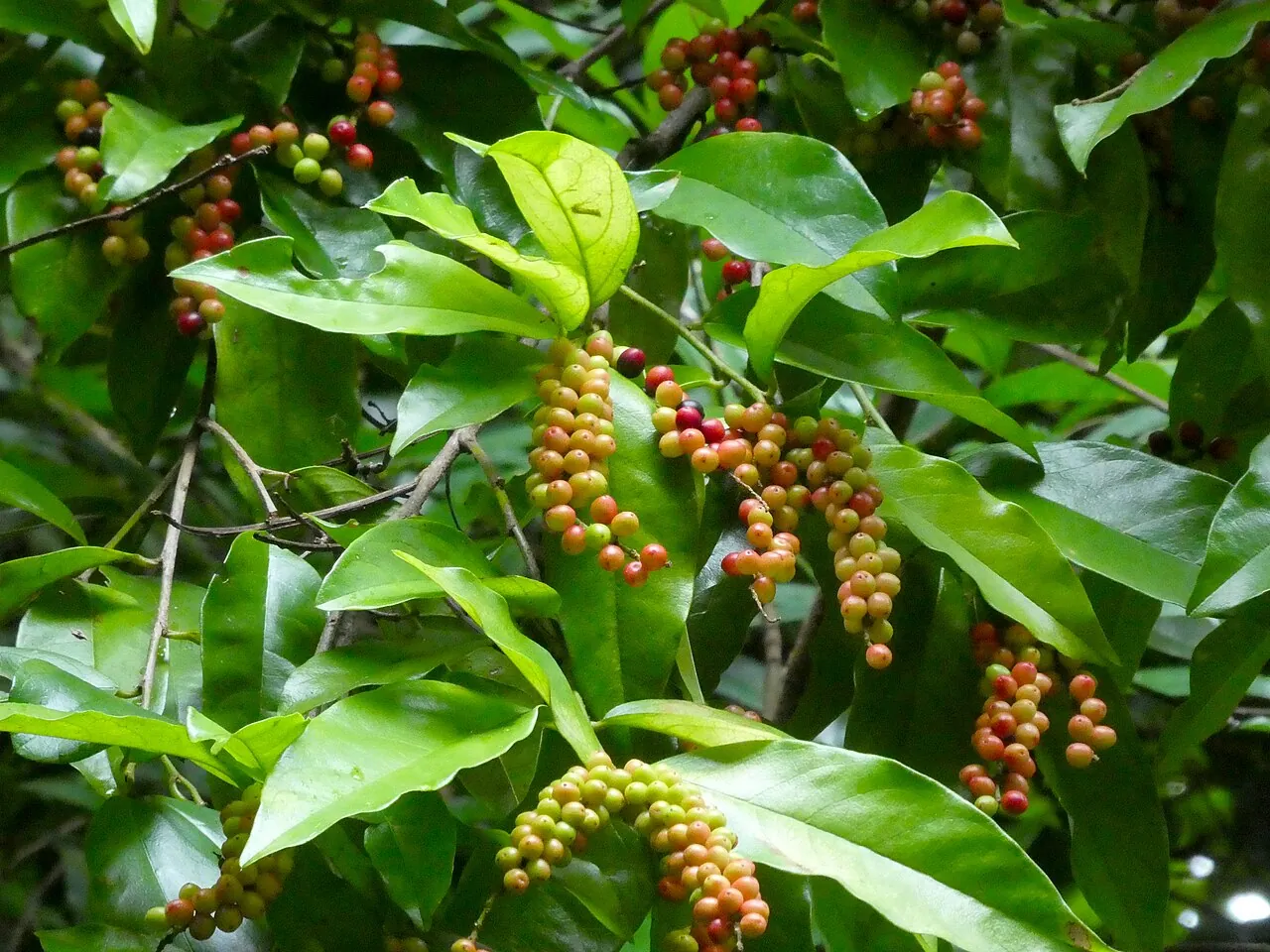
Bignay grows on a tree with glossy green leaves. Male and female flowers usually grow on separate trees, though most female trees can bear fruit without a male nearby. Growers use cuttings, grafts or air layering, rooting a branch while it is still attached. With ample light and moisture, trees can begin fruiting in four to five years. They also grow in large containers.
When and where you'll find it
In South Florida, bignay usually fruits from summer into fall, with some trees continuing into winter. Bunches ripen over several weeks, and a tree is usually picked several times a year. Fresh ripe fruit has a short shelf life, so its juice is best frozen and made into jam, jelly or wine later.
Get it near Detroit
Sell fruit online? Add your business
What it tastes like
As tart as a grapefruit, crisper than a blueberry≈
More about the taste
Ripe bignay berries are sweet-tart, with a flavor sometimes compared to blueberries.
Ripe bignay berries are sweet-tart, with a flavor sometimes compared to blueberries.
Unripe fruit is sour; ripe fruit is juicy. The skin is thin but tough.
Choose, store, eat
1ChooseTurned black for fresh eating
Look for
- Turned black for fresh eating
Ignore
- Whole bunch
Wait until bignay turns black for fresh eating, when it's sweet-tart; red fruit can be used for processing. Since a cluster ripens unevenly, judge individual berries rather than the whole bunch.
2StoreFreezer, for later processing
- FreezerFor later processing
Fresh bignay is short-lived; it can be frozen for later processing. The dark juice stains, so handle it carefully.
3EatFruit
Eat
FruitThe fruit is eaten fresh or made into juice, jelly, jam and wine.
More tips
Worth knowing
- Choose a bignay harvest stage for its intended use. A colorful cluster can hold berries at several stages, so compare individual black berries when tasting fresh.
Detroit, Michigan
When it’s good here
Season not documented for Michigan.
13 names in 11 languages
- มะเม่าดงThai
- അരിയാപൊരിയൻMalayalam
Cook it
Strange but trueScienceNaturePeople
If you like Bignay
Tastes alike