Cacao fruit
Also called Cocoa · Cacao · Cacao speciesTheobroma cacao · Malvaceae family
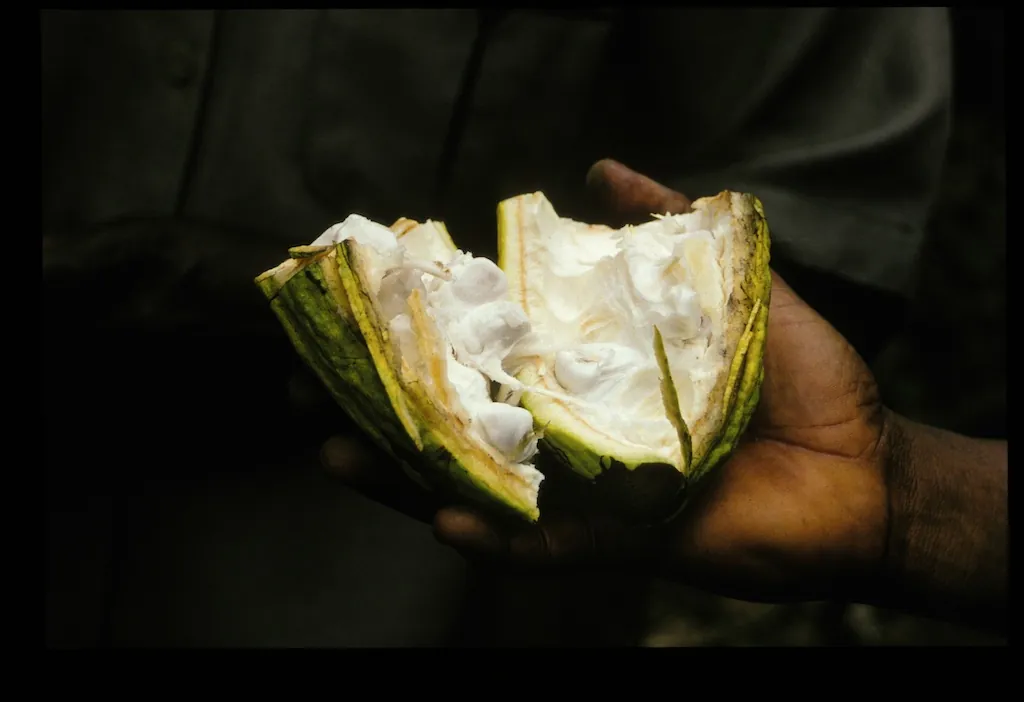
Before chocolate, cacao offers a fruit: pale, sweet–acid pulp wrapped around the seeds inside a striking pod.
Find it near DetroitGet to know it
Before it becomes chocolate, cacao is a fruit with soft, juicy pulp that tastes sweet and a little tart. Inside its thick pod, the pulp coats each seed; you suck it off and set the seed aside. Those seeds are the part that becomes chocolate.
What it is
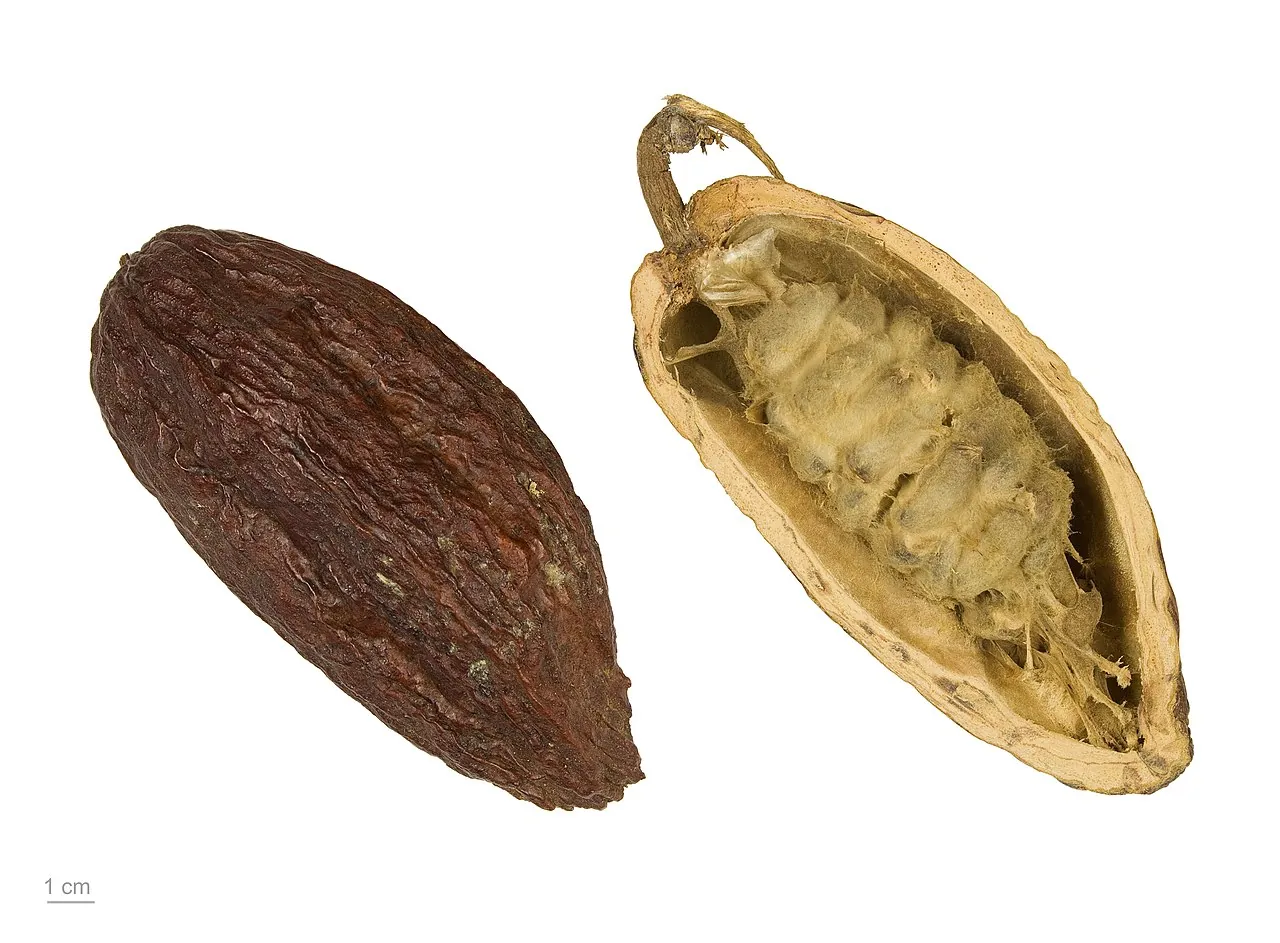
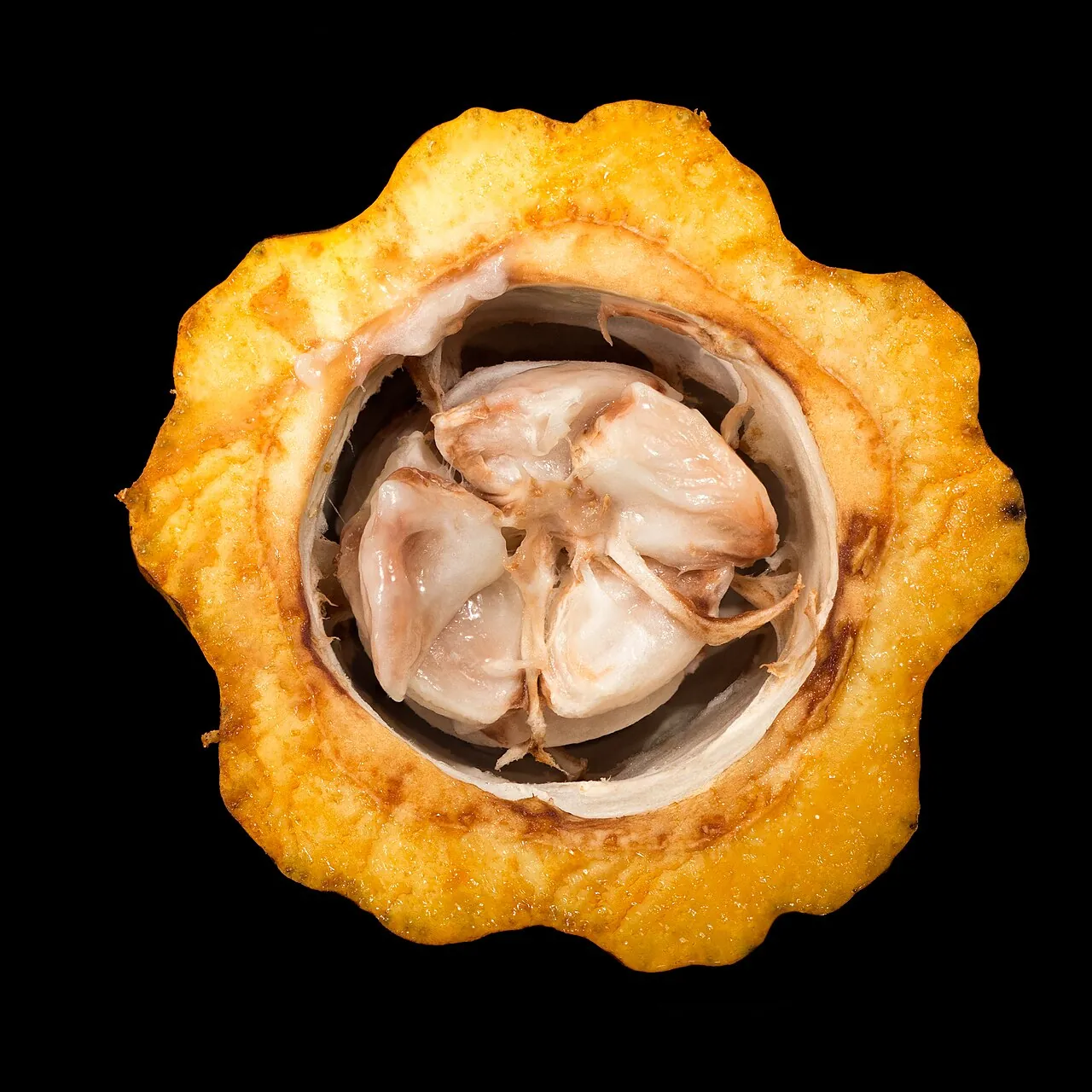
Cacao is the fruit of Theobroma cacao, an evergreen tree in the mallow family. Its thick pod is cylindrical to round and can have ribs running from end to end; it ripens yellow, or red with some yellow. Pods measure 10–33 cm (4–13 in) long and hold 20–60 seeds.
Fermented and dried, the seeds are called cocoa beans. Around them lies the soft fruit coating, which can be white, pinkish or brownish. Its sweetness comes with a little acidity. The seeds become cocoa powder, cocoa butter and chocolate.
Where it comes from
Cacao comes from tropical South America. The upper Amazon near Colombia and Ecuador holds a wide range of cacao trees, and people in the southern Ecuadorian Amazon were using and growing it at least 5,300 years ago.
Today its biggest grower is far from that home: in 2023, Côte d’Ivoire grew 42.5% of the world’s 5.6 million tonnes of cocoa beans, followed by Ghana and Indonesia. In southern India, cacao grows in the shade between coconut and arecanut palms.
How it's eaten where it grows
Fresh cacao is a fruit you eat one seed at a time, taking the juicy coating and leaving the seed. The chocolate flavour develops later, through fermenting the beans on the farm and roasting them during processing.
In Tabasco, Mexico, pozol con cacao puts roasted cacao into a cold maize drink. Cooks toast the cacao, boil maize in limewater for about an hour, grind the two together and work them into a dough. Blended or beaten by hand into a thick drink, it is served with ice or cold water.
How it's grown
Cacao’s natural home is the lower storey of the evergreen rainforest, beneath taller trees. Farms in southern India give it a similar place under taller palms. A young tree usually takes three to five years to bear.
Its flowers grow straight from the trunk and older branches. So the pods hang straight from the trunk and older branches too.
When and where you'll find it
The main cacao harvest in Côte d’Ivoire usually runs from October to March; in Ecuador it usually falls from March to June. In the US, whole fresh pods come mostly from specialist online fruit sellers, and a whole pod is how you taste the soft pulp around the seeds.
The pulp can also be pasteurised, or heated briefly to a higher temperature, so it keeps longer.
Sources · 8
- Bickel Haase and colleagues, Current Research in Food Science (2023)pmc.ncbi.nlm.nih.gov
- International Cocoa Organizationicco.org
- Lanaud and colleagues, Scientific Reports (2024)nature.com
- Mexico’s Secretariat of Agriculture, Tabascogob.mx
- Tamil Nadu Agricultural Universityagritech.tnau.ac.in
- Tropical Fruit Boxtropicalfruitbox.com
- University of Florida IFASask.ifas.ufl.edu
- Wikipediaen.wikipedia.org
Get it near Detroit
What it tastes like
Sweeter than a banana, softer than a pear≈
More about the taste
The mucilage around the seeds is sweet and subacid, and can be pale white, pinkish or brownish. Its aroma has been described as green-banana-peel-like, apple/pear-like or tropical-fruit-like; heating shifts that aroma.
The mucilage is sweet and subacid, and can be pale white, pinkish or brownish.
Its aroma has been described as green-banana-peel-like, apple/pear-like or tropical-fruit-like; heating shifts that profile.
Choose, store, eat
1ChooseRipe yellow or red-and-yellow pod
Look for
- Ripe yellow or red-and-yellow pod
Harvest after the pod develops its ripe yellow or red-and-yellow color; starting colors vary by variety.
2StoreFresh pulp spoils quickly
Fresh pulp spoils quickly.
3EatMucilage around the seeds
Eat
Mucilage around the seedsThe sweet, subacid mucilage around the seeds is the edible fruit part, separate from processing the seeds into chocolate.
Detroit, Michigan
When it’s good hereUsual monthsJust arrivedAt their bestLast chanceAll yearWhere it is in its usual monthsToday, Oct 22Grown hereIn season in your stateShips fromIn season where it growsOrderableListed by a seller we checkedThe day a seller was checked
11 growing areas, 6 countriesUsual monthsOur estimated monthsToday, Oct 22

- Bahia
- Chiapas
- El Oro
- Espírito Santo
- Guayas
- Hawaii
- Penang
- You
0 of 1 areas · October
Growing areas by country
- Brazil3
- Peru3
- Ecuador2
- Mexico1
- Malaysia1
- United States1
and 1 more country
Cacao’s flowers and fruit grow directly on the trunk. Harvesters clip pods carefully to avoid damaging the flowering cushions, which flower repeatedly.
108 varieties
- No variety photo yetICS 95Also ICS-95 T1, EET-111
- No variety photo yetAM 1/57
- No variety photo yetAM 1/8
- No variety photo yetB 9/10-25
- No variety photo yetB 9/10-32
- No variety photo yetCL 10/27
48 names in 20 languages
Cook it
1 Cacao fruit festivalUsual monthToday, Oct 22
Strange but trueHistoryA myth, and the truthScienceNatureWhere the name came fromCustoms and cultureFood and drink
If you like Cacao fruit
Tastes alike
Close relatives
Used the same way
Sources
Photos · 4
Sources
Cacao fruit · Fruitopia · checked Sep 22, 2026