Bush mango
Irvingia gabonensis · Irvingiaceae family
A forest fruit with two very different culinary products: juicy pulp and sauce-thickening kernels.
Find it near DetroitGet to know it
Bush mango gives you two foods in one: sweet, juicy flesh to eat fresh, and a kernel that turns soup thick and stretchy. This African forest fruit looks like a mango but isn’t related to it. Ground into ogbono, its seed has a place in Nigerian cooking.
What it is
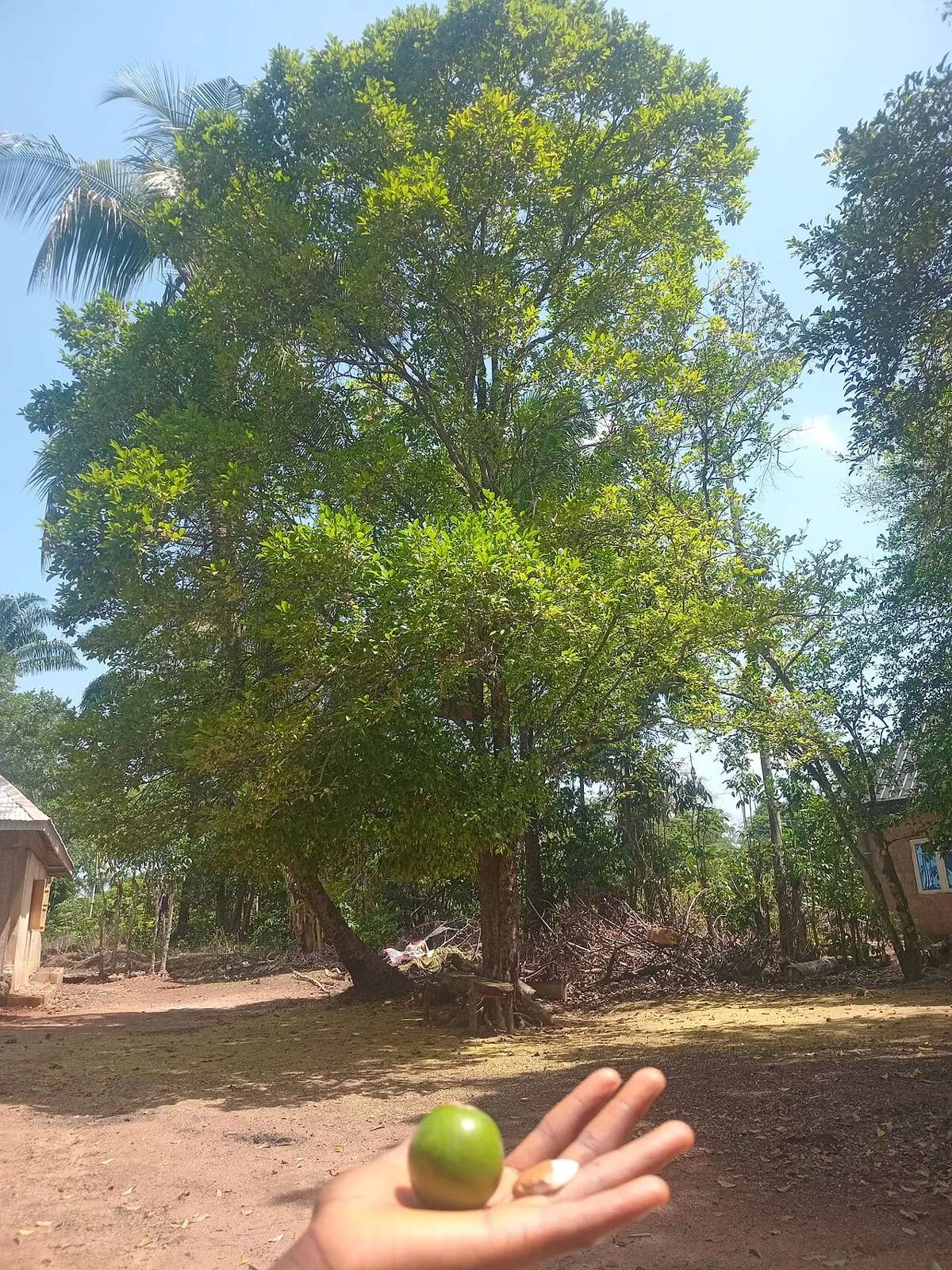
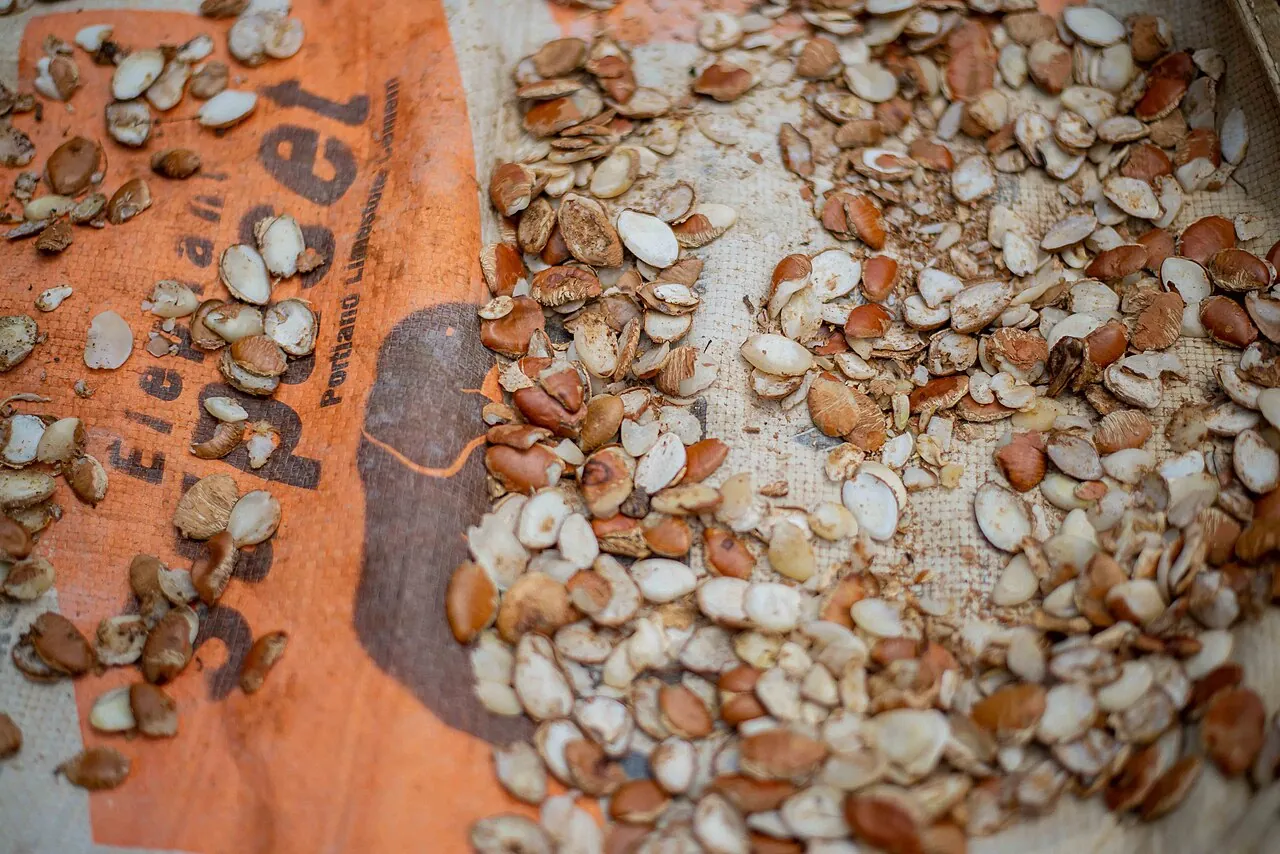
Bush mango is Irvingia gabonensis. The broadly oval fruit is about 5–7.5 cm (2–3 in) with fibrous flesh around a large seed. The pulp is eaten fresh or made into a fruit drink or jam; the kernel inside the seed is dried and ground for sauces.
Another tree, Irvingia wombolu, shares the bush-mango name. Its pulp is bitter and inedible. The sweet flesh belongs to I. gabonensis; both trees supply kernels used to thicken soups and stews.
Where it comes from
Its home is the humid forest belt of West and Central Africa, from western Nigeria east to the Central African Republic, and south to Cabinda in Angola and western DR Congo. People plant it in southwestern Nigeria and southern Cameroon, as well as Côte d’Ivoire, Ghana, Togo and Benin.
How it's eaten where it grows
In Nigeria, ground kernels go into ogbono soup, a thick soup with meat and fish. Its stretchy texture makes it a draw soup: it clings to the piece of pounded yam or fufu used to scoop it up.
Dika bread keeps the kernels for the whole year: they are dried, roasted and ground, and the paste is set in a tin until it cools into a solid cake. Well dried, it keeps for more than a year, and in Gabon it is sold in cakes of 100 g to 5 kg. The fresh fruit has a separate life, eaten as it is or made into juice, jelly, jam and wine.
How it's grown
The tree reaches 15–40 m (49–131 ft) in dense, moist lowland forest, usually at 200–500 m (660–1,640 ft) where the mean temperature is 25–32 °C (77–90 °F). It grows well in freely draining, acidic soil. Farmers also keep it above cocoa and coffee as a shade tree.
Wild trees start fruiting at 10–15 years old, but planted trees can begin after four. Most of the harvest is gathered from the ground beneath the tree.
When and where you'll find it
In Nigeria, fruiting usually runs from April to July, with another season in September and October. Fresh fruit is traded only locally. Dried kernels travel farther, between West and Central African countries and to Europe.
In African groceries, ground ogbono can also be labelled agbono, apon, etima, dika or odika.
Get it near Detroit
What it tastes like
Sweeter than a banana, as mild as a peach≈
More about the taste
Ripe Irvingia gabonensis fruit is yellowish, with palatable, fibrous yellow pulp — a different food from the seed kernel.
The pulp is palatable and fibrous, suited to a fruit drink or jam. The sweet-pulp I. gabonensis is a separate species from the bitter-pulp I. wombolu, though their market names sometimes overlap.
Choose, eat
1ChooseYellowish skin
Look for
- Yellowish skin
Ripe skin turns yellowish. Ask the grower about variety, since some markets use the same nickname for two different Irvingia species.
2EatFresh pulp, Dried, ground kernels
Eat
Fresh pulpDried, ground kernelsFresh pulp is one food; kernels extracted, dried and ground for sauces are another, with their own preparation and storage.
Detroit, Michigan
When it’s good hereUsual monthsJust arrivedAt their bestLast chanceAll yearWhere it is in its usual monthsToday, Oct 22Grown hereIn season in your stateShips fromIn season where it grows
5 names in 4 languages
Cook it
Strange but trueHistoryNatureWhere the name came fromFood and drink
If you like Bush mango
Tastes alike
Sources
Sources
Bush mango · Fruitopia · checked Sep 22, 2026