Bael
Also called Bengal quince · Indian bael fruit · Wood appleAegle marmelos · Rutaceae family
A hard shell encloses an aromatic pulp suited to drinks and preserves; don't expect the shell itself to soften like other fruit.
Find it near DetroitGet to know it
Bael hides sweet, fragrant orange pulp inside a hard shell. In Bengal, it becomes bel’er shorbot: a cool drink of strained pulp, milk and sugar, with a little salt. The shell can stay hard even when the flesh is ready to eat.
What it is
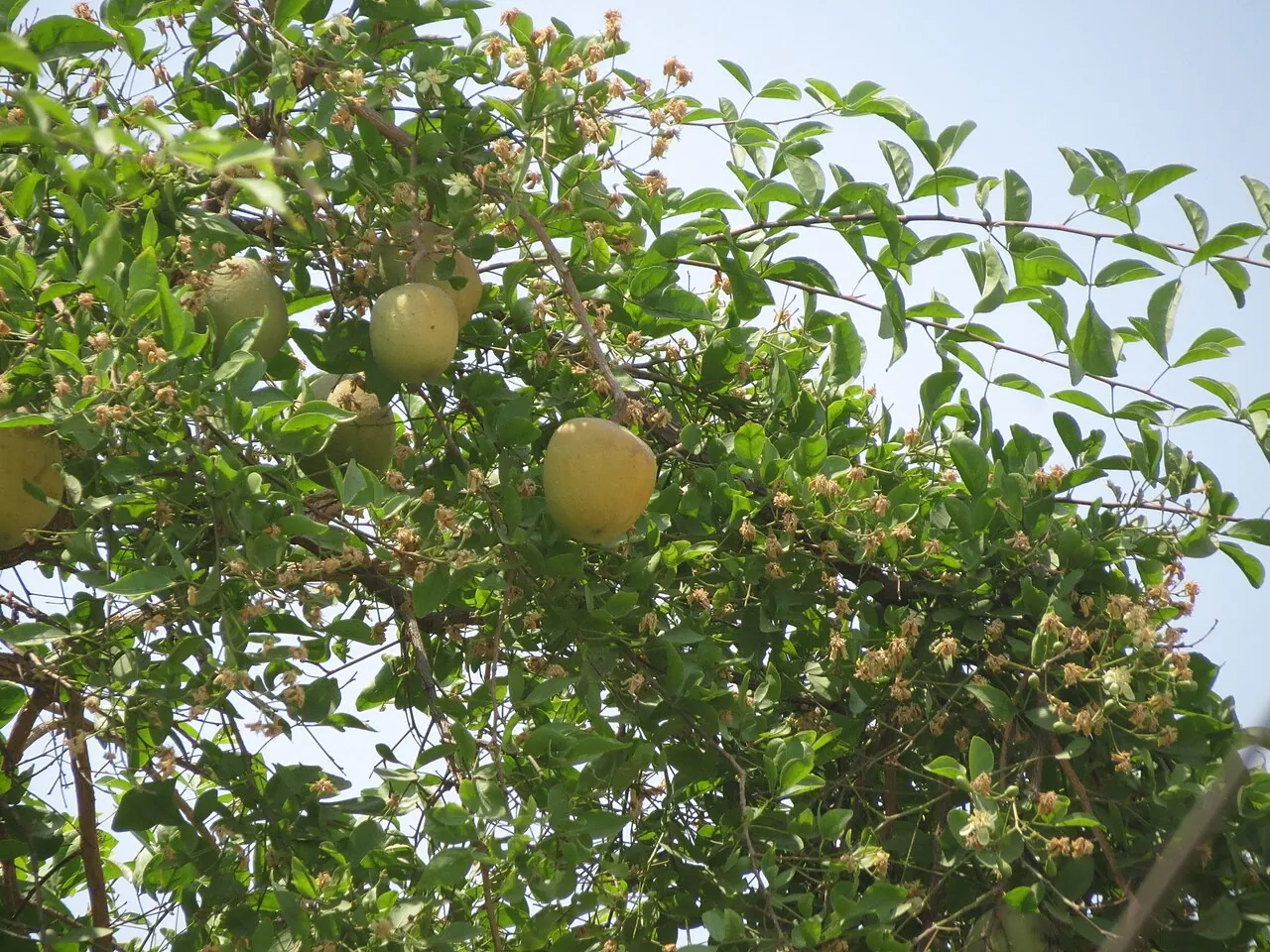
Bael’s botanical name is Aegle marmelos. Cultivated fruit can measure 12.5–17.5 cm (5–7 in) across, with a yellow-green shell around orange or reddish flesh. Opening it reveals seed-filled compartments.
The seeds sit in a sticky, clear gel. It clings to them and hardens as it dries. For a smooth drink, the seeds are picked out, then the flesh is mashed with a little water and strained to remove the coarse fibres.
Where it comes from
Bael grows wild in dry forests in India, Myanmar, Pakistan and Bangladesh. It is grown throughout India, mainly in temple gardens, because the tree is sacred. Cultivation also extends to Sri Lanka, northern Malaysia and the drier parts of Java. It has reached California too: a tree grown from seed received in 1956 stands in the citrus collection at Riverside.
How it's eaten where it grows
In Bengal, bel’er shorbot starts with a cracked fruit and a spoon to scoop out the flesh. The seeds are picked out, then a little water helps turn the pulp into a mixture that will pass through a mesh strainer. Milk, sugar and a pinch of salt go into the jug.
The finished drink is served cold, sometimes over ice. A second version skips the milk: bael pulp at the bottom of the glass, topped with ice or cold water.
How it's grown
Bael is a tree that sheds its leaves, with thorny stems and leaves usually divided into three leaflets. Its yellowish-white flowers have a strong sweet scent. New trees grow from seed, while budding joins part of a chosen tree to another plant. Root shoots and air-layered branches also produce new trees.
When and where you'll find it
In India, bael usually ripens from March through June; April is when Bengal’s bazaars fill with ripe fruit. The fruit is picked rather than left to drop, and it can finish ripening after harvest.
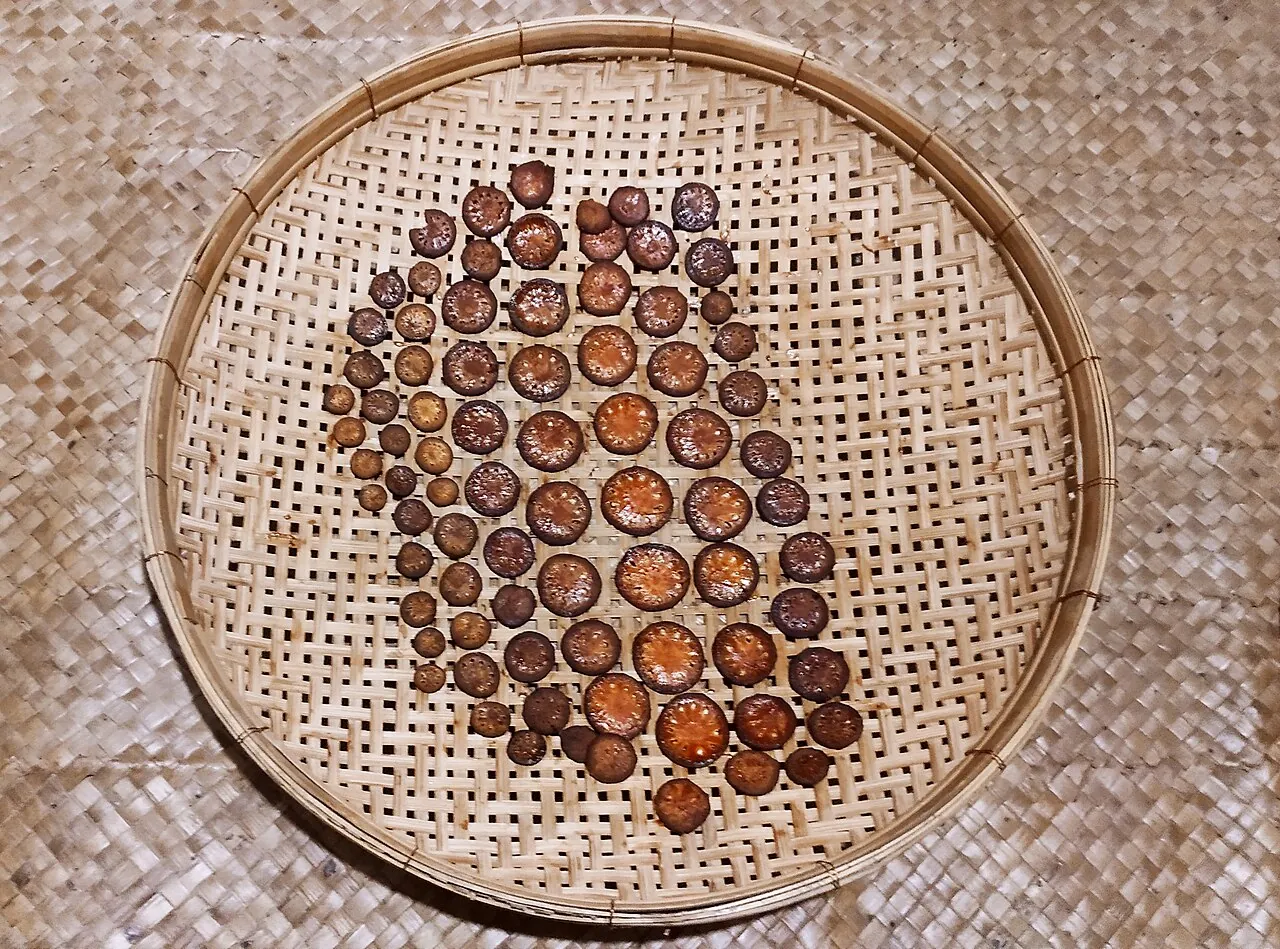
Bael also travels as dried slices. Kalustyan’s sells them under Aegle marmelos for tea: the slices are simmered in water, strained and sweetened if you like.
Get it near Detroit
What it tastes like
As sweet as a banana, as mild as a peach≈
More about the taste
Ripe bael is sweetish and fragrant, with a tenacious mucilage around the seeds that affects how the pulp is worked into a drink.
Ripe bael is sweetish and fragrant, with a tenacious mucilage around the seeds that affects how the pulp is worked into a drink.
Choose, ripen, eat
1ChooseHard, yellow-green shell
Look for
- Hard, yellow-green shell
Ignore
- Shell softening
Bael keeps a hard, yellow-green shell even when ripe, and is best picked rather than left to fall; don't wait for the shell to soften like a peach.
2RipenRipens after picking
Ripens after pickingBael can ripen off the tree, though there's no fixed countertop timetable.
3EatPulp · not seed-filled compartments, hard shell
Eat
PulpNot eaten
Seed-filled compartmentsHard shellThe edible part is the pulp; the seed-filled compartments and hard shell are removed before eating.
Detroit, Michigan
When it’s good hereUsual monthsJust arrivedAt their bestLast chanceAll yearWhere it is in its usual monthsToday, Oct 22Grown hereIn season in your stateShips fromIn season where it grows
1 growing area, 1 countryUsual monthsToday, Oct 22

- Penang
- You
0 of 1 areas · October
Bael is used in drinks, dried slices, marmalade, pickles, jams and jellies.
69 names in 19 languages
Cook it
Strange but trueHistoryNatureWhere the name came fromCustoms and cultureFood and drink
If you like Bael
Tastes alike
Used the same way
Sources
Photos · 2
Sources
Bael · Fruitopia · checked Oct 2, 2026