Ice cream bean
Also called IcecreambeanInga edulis · Fabaceae family
Long pods conceal sweet white pulp, while the tree also shades coffee and cacao.
Find it near DetroitGet to know it
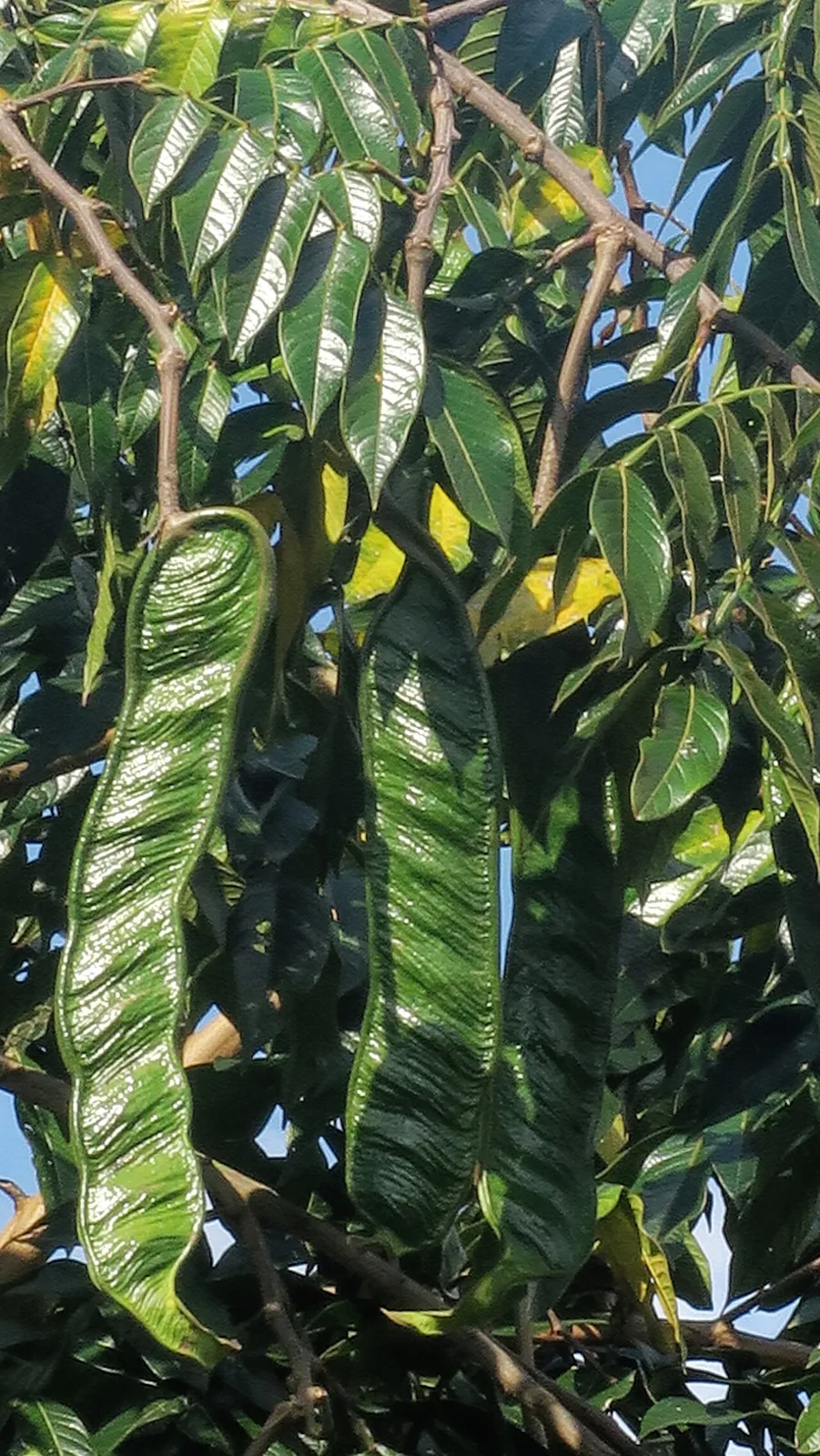
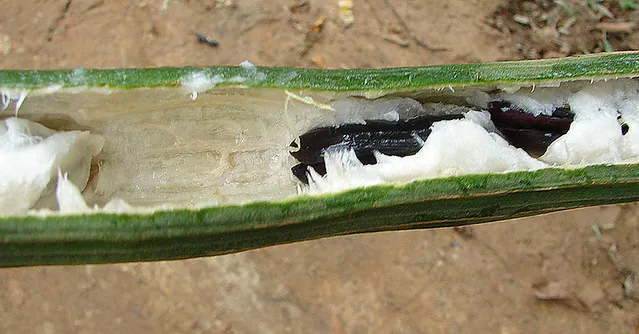
Ice-cream bean comes in a long pod filled with white, cottony pulp. The flesh has a gentle sweetness and a vanilla-ice-cream flavour, wrapped around each seed like a little cushion. A single pod can stretch to a metre (39 in).
What it is
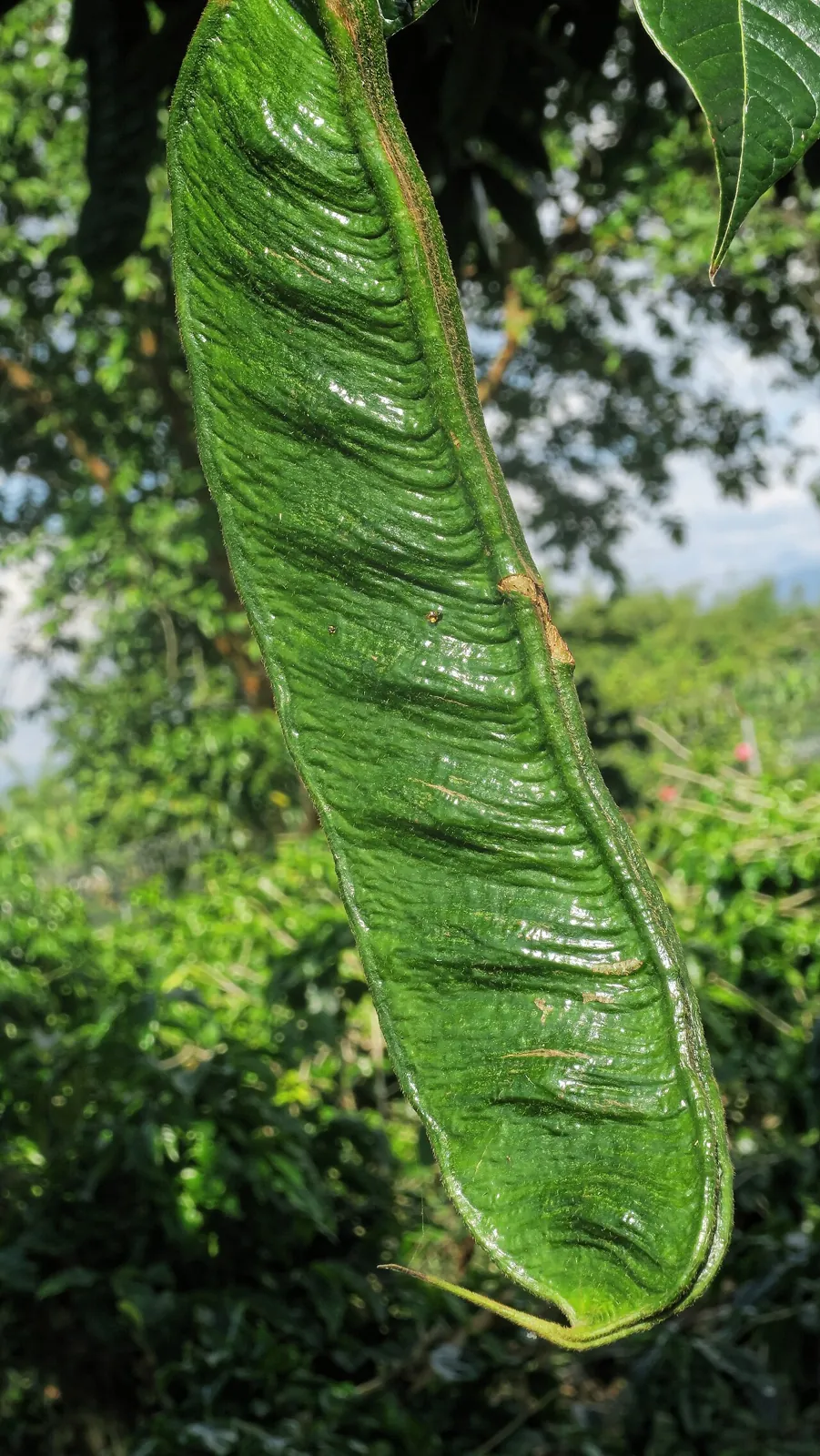
Inga edulis belongs to the bean family. Its ribbed pods are cylindrical and may hang straight or twist into spirals. Inside, the white flesh surrounds dark seeds, each green beneath its outer skin.
The texture is spongy and cottony, with a mild sweetness. The fresh snack is the soft white wrapping, which comes away from the seed; it is ready to eat when the pod is picked.
Where it comes from
Ice-cream bean comes from tropical America. In South America, its fruit reaches local markets in Bolivia, Brazil and Ecuador, and it is also a market fruit in Costa Rica. Beyond the Americas, people grow the trees in Hawaii and East Africa; they are grown in the West Indies too.
The tree earns its place beside other crops as well as for its fruit. Its spreading crown gives shade to coffee, cacao and tea.
How it's eaten where it grows
In Colombia, Indigenous communities ferment the sweet pulp into cachiri, an alcoholic drink served at a festival of the same name. It is made from the soft white wrapping around the seeds.
Across Central and South America, the pods are almost always eaten raw. You split the pod, nibble a hole in the end of one cottony piece, strip it off the seed and suck the sweet flesh. Monkeys and birds do much the same in the wet season, scattering the seeds as they feast.
How it's grown
An Inga tree spreads a broad, umbrella-shaped crown. On its roots, small nodules house bacteria that turn nitrogen from the air into a form plants can use.
In rows of Inga trees, farmers cut back the branches and spread the leaves over the ground. Crops grow through this leafy layer, which protects the soil and holds weeds down. The larger branches become firewood for cooking.
When and where you'll find it
In the western Amazon, the main fruiting season usually begins in October. Local markets in Bolivia, Brazil, Costa Rica and Ecuador sell the pods. In the US, Miami Fruit grows it on a small farm in South Florida. Freshly picked pods are ready to eat.
Sources · 6
Get it near Detroit
Sell fruit online? Add your business
What it tastes like
As sweet as a banana, as mild as a peach≈
More about the taste
The pulp is sweet and cottony.
The pulp is sweet and cottony.
How to buy it
1EatAril
Eat
ArilThe white aril is eaten fresh; the seeds are separate and, in one recipe, washed, roasted and milled into cake flour.
Detroit, Michigan
When it’s good here
Season not documented for Michigan.
20 names in 6 languages
- 旋莢冰淇淋豆Chinese
Cook it
Strange but trueHistoryNatureCustoms and cultureA record
If you like Ice cream bean
Tastes alike
Same plant family
Sources
Sources
Ice cream bean · Fruitopia · checked Sep 22, 2026
- apps.worldagroforestry.org /treedb2/AFTPDFS/Inga_edulis.PDF
- bibliotecautpl.utpl.edu.ec /cgi-bin/abnetclwo?METS=94841584747
- bibliotecautpl.utpl.edu.ec /cgi-bin/abnetclwo?METS=99951050707
- dspace.espoch.edu.ec /server/api/core/bitstreams/0bf06f7f-7697-400a-a408-52e8244727b5/content
- fao.org /4/x5029s/X5029S00.htm
- fao.org /4/x5029s/X5029S05.htm
- fao.org /4/x5029s/X5029S06.htm
- fao.org /4/x5029s/X5029S08.htm
- flickr.com /photos/92252798@N07/10108387745
- miamifruit.org /products/ice-cream-bean
- oestemais.com /opiniao/2020/09/03/plantas-alimenticias-nao-convencionais-inga-de-metro/