Feijoa
Also called Pineapple guava · GuavasteenAcca sellowiana · Myrtaceae family
A green-skinned fruit with a perfumed, sweet-tart center that is easiest to meet with a spoon.
Find it near DetroitGet to know it
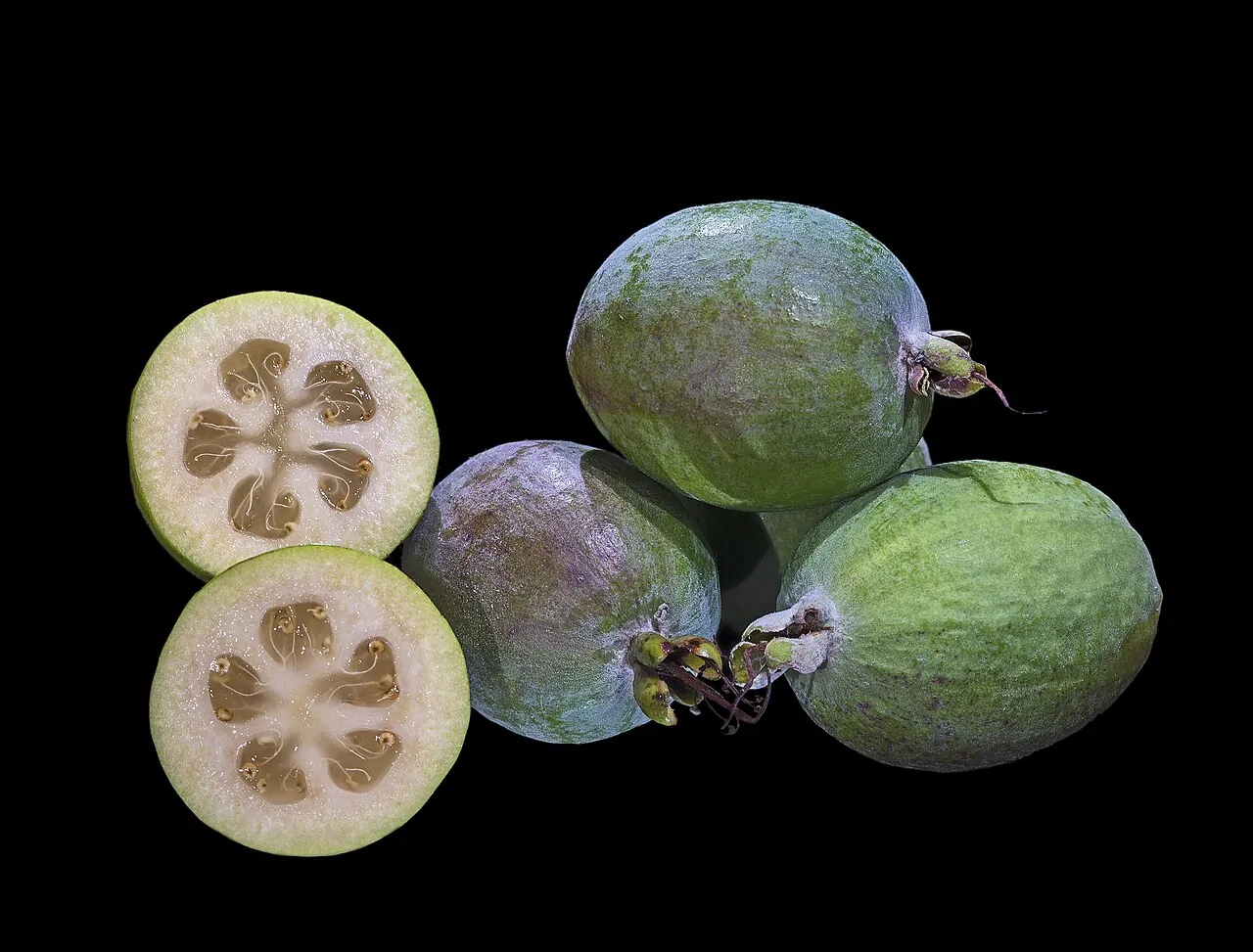
Feijoa is a small green fruit with a pineapple-like perfume and a sweet-tart center. Under the skin, grainy white flesh surrounds a soft, translucent pocket of tiny seeds. Also called pineapple guava, it is a fruit to open and eat with a spoon.
What it is
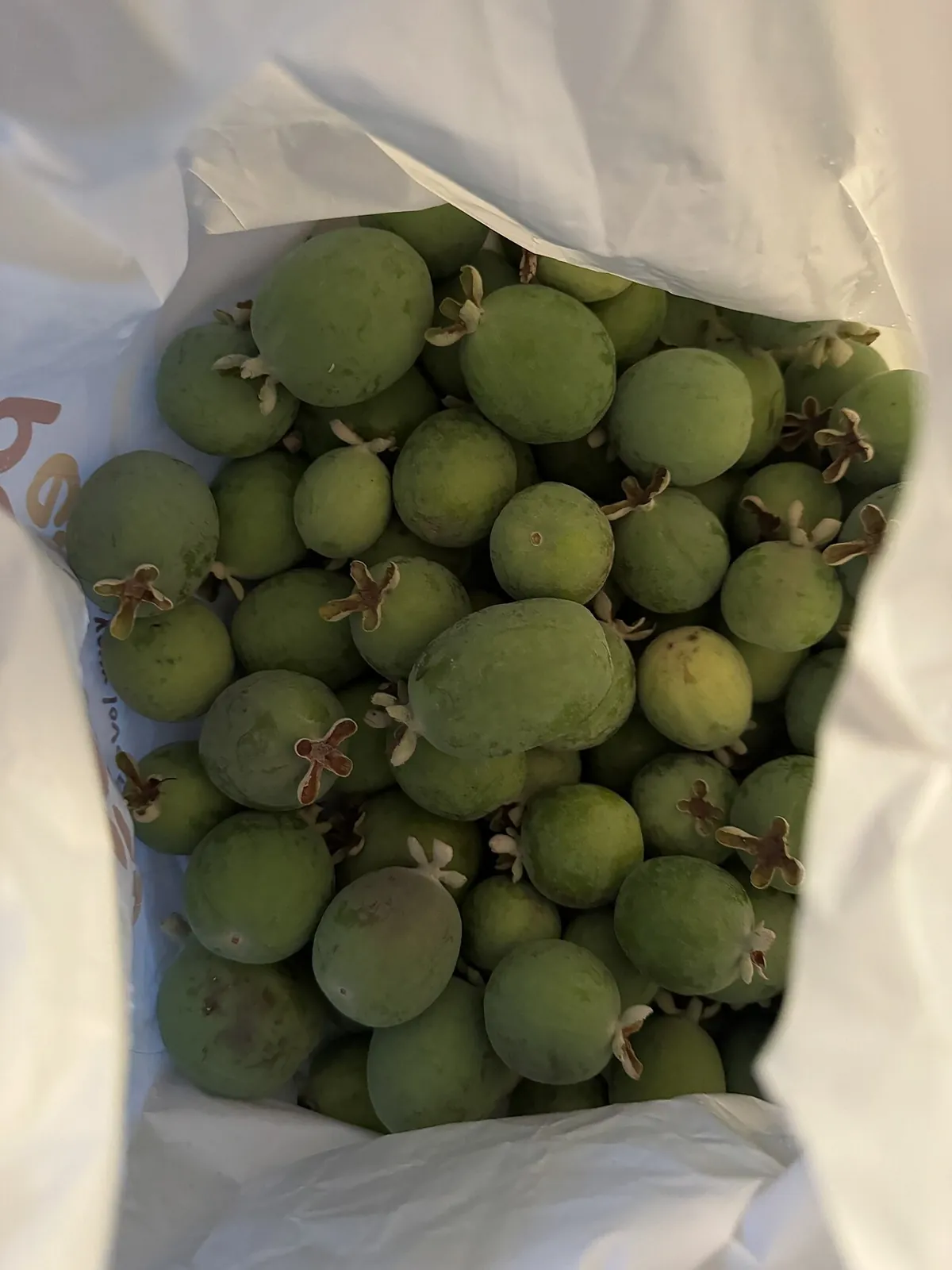
An oval or slightly pear-shaped feijoa is often 4–6 cm (1½–2½ in) long. It stays green as it matures, sometimes turning a lighter shade, so ripeness brings a small change in color rather than a bright new skin. The fruit softens and bruises easily.
The white flesh has a grainy bite, while the center is translucent and softer. The seeds are so small that they barely interrupt a spoonful. Its strong scent carries pineapple notes, with sweetness and tang together in the flesh.
Where it comes from
Feijoa comes from southern Brazil, northern Argentina, western Paraguay and Uruguay. Around 1908, three named varieties reached Auckland from Australia: Coolidge, Choiceana and Superba. New Zealand now grows most of the commercial crop.
The fruit also grows in Uruguay, Japan and Italy, and near the Black Sea in western Georgia and Azerbaijan. In the United States, commercial growing is limited to a few small operations in California.
How it's eaten where it grows
In New Zealand, feijoa loaf puts chopped, peeled fruit into a cake for morning tea. The fruit simmers with butter, sugar and water before the egg and flour go in. The loaf can also include chopped crystallised ginger.
Near Omaha, Quinta Feijoas makes chutney with feijoas, dried fruit, onions, spices and vinegar. Its feijoa jam pairs the fruit with lemon and ginger. Fresh fruit takes less preparation: the flesh is scooped straight from the skin.
How it's grown
Feijoa grows on an evergreen shrub in the myrtle family. It can form a hedge as well as a fruiting garden plant. Sun, regular water and soil that drains well help it bear good fruit. In Florida, the first crop comes about 2–4 years after planting.
Mature fruit comes away from the branch with little force. Growers can also shake it onto tarps, catching the easily bruised fruit as it falls.
When and where you'll find it
In New Zealand shops, the usual fresh-fruit season runs from mid-March to early June. Farm shops, roadside kiosks and farmers markets are other routes: Quinta Feijoas has an orchard near Omaha and a stall at Matakana Village Farmers Market. It also makes frozen fruit and preserves.
In California, San Francisco’s farmers markets usually have their feijoa season in November and December. Pineapple guava is another name for the same fruit.
Sources · 8
- California Rare Fruit Growerscrfg.org
- Chelsea Sugar, New Zealandchelsea.co.nz
- Foodwise, San Francisco farmers marketsfoodwise.org
- Morton, Fruits of Warm Climates (1987)hort.purdue.edu
- NC State Extension Gardener Plant Toolboxplants.ces.ncsu.edu
- New Zealand Feijoa Growers Associationfeijoa.org.nz
- Quinta Feijoasquintafeijoas.co.nz
- University of Florida IFASask.ifas.ufl.edu
Get it near Detroit
What it tastes like
Softer than a pear, sweeter than a grapefruit≈
More about the taste
Feijoa has a strong pineapple-like aroma with other fruity, sweet-sour notes. The center becomes jelly-like as it ripens.
Feijoa has a strong pineapple-like aroma with other sweet-sour notes. Varieties differ in grit, astringency and juiciness: Apollo lacks the fruit's characteristic grit, while Robert is juicy with a mild flavor.
A tasting invitation
Pineapple, floral and sweet-sour notes come through in the aroma, before and after cutting. The soft center contrasts with the surrounding flesh.
Choose, ripen, store, eat
1ChooseGives slightly when squeezed
Look for
- Gives slightly when squeezed
- Soft, translucent center
A ready-to-eat feijoa gives slightly when gently squeezed. A cut fruit should have a soft, translucent center; firmness means it needs more ripening.
2RipenRipens after picking
Ripens after pickingAllow firm fruit time to soften before eating. On the tree, easy detachment or the first fruit falling naturally are good harvest cues.
3StoreFridge, ripe
- FridgeRipeLoose
Store ripe fruit loose in the refrigerator. Handle it gently, since feijoas bruise easily.
4EatFlesh, Seeds
Eat
FleshSeedsCut in half and scoop out the interior, including the small seeds, as you would a kiwifruit. The selected recipes use peeled flesh.
More tips
A useful detail The edible fruit is only one reason growers plant feijoa — its flowers are flavorful and its foliage striking. Named varieties differ in size, flavor and texture, and a seedling grown from seed won't necessarily match its parent.
Worth knowing
- Don't hold feijoas warm for weeks to sweeten them; flavor, condition and safety matter more than a higher sugar reading.
Detroit, Michigan
When it’s good hereUsual monthsJust arrivedAt their bestLast chanceAll yearWhere it is in its usual monthsToday, Oct 22Grown hereIn season in your stateShips fromIn season where it grows
8 growing areas, 5 countriesUsual monthsOur estimated monthsToday, Oct 22

- Bay of Plenty
- California
- Cundinamarca
- South Australia
- Valparaíso
- You
0 of 4 areas · October
Growing areas by country
- New Zealand4
- Australia1
- Chile1
- Colombia1
- United States1
In Brazil, feijoa is eaten fresh as a dessert fruit and used in canned or jellied preparations. New Zealand is now a major commercial producer of this South American fruit.
18 varieties
- No variety photo yetAnatoki
- Scent
- aromatic NZ-NSN
- Flavour
- Flesh flavor.— Considered acidic and sweet. NZ-NSN
- Feel
- soft NZ-NSN
- Skin
- green NZ-NSN
- No variety photo yetKaiteri
- Scent
- aromatic NZ-NSN
- Flavour
- Flesh flavor.— Sweet with some hint of acid. NZ-NSN
- Feel
- soft NZ-NSN
- Texture
- creamy NZ-NSN
- No variety photo yetKakariki
- Scent
- aromatic NZ-NSN
- Flavour
- Fruit flesh flavor.— Sweet with some acid. NZ-NSN
- Feel
- soft NZ-NSN
- Texture
- creamy NZ-NSN
- No variety photo yetOpal Star
- Scent
- strong aromatic flavour NZ-AUK
- Texture
- creamy NZ-AUK
- Flesh
- white NZ-AUK
- No variety photo yetPierri
- Juice
- juicy BR-SC
- Shape
- round
- No variety photo yetNonante
- Flavour
- sensação de equilíbrio entre doçura e acidez BR-SC
- Skin
- green BR-SC
- Shape
- oblong BR-SC
39 names in 12 languages
- 凤梨番石榴root
Cook it
How to serve it first
Halve a washed, ripe fruit and explore the interior with a spoon. Start with plain pulp, then try a little in yogurt or a dessert that welcomes an aromatic fruit. Keep the first preparation simple enough to learn what this batch contributes.
1 Feijoa festivalUsual monthToday, Oct 22
Strange but trueHistoryNatureWhere the name came fromCustoms and cultureFood and drink
If you like Feijoa
Tastes alike
Used the same way
Nutrition, sources
Nutrition
Feijoa, raw · per 100 g
- Carbohydrate
- 15 g
- Fiber
- 6.4 g
- Sugars
- 8.2 g
- Protein
- 0.7 g
- Fat
- 0.4 g
- Vitamin C
- 33 mg
- Potassium
- 172 mg
Sources
Feijoa · Fruitopia · checked Sep 21, 2026