Guava
Also called Yellow guava · Common guava · Lemon guavaPsidium guajava · Myrtaceae family
Choose between a crisp white-fleshed guava experience and the perfumed softness of ripe pink or red types.
Find it near DetroitGet to know it
Guava can be a crisp, pale-fleshed snack or a ripe pink fruit with a sweet, musky perfume. Its flavour mixes sweetness with a tart edge, and its juicy centre holds hard little seeds. White types eaten green and crunchy offer a different bite from ripe pink and red guavas.
What it is
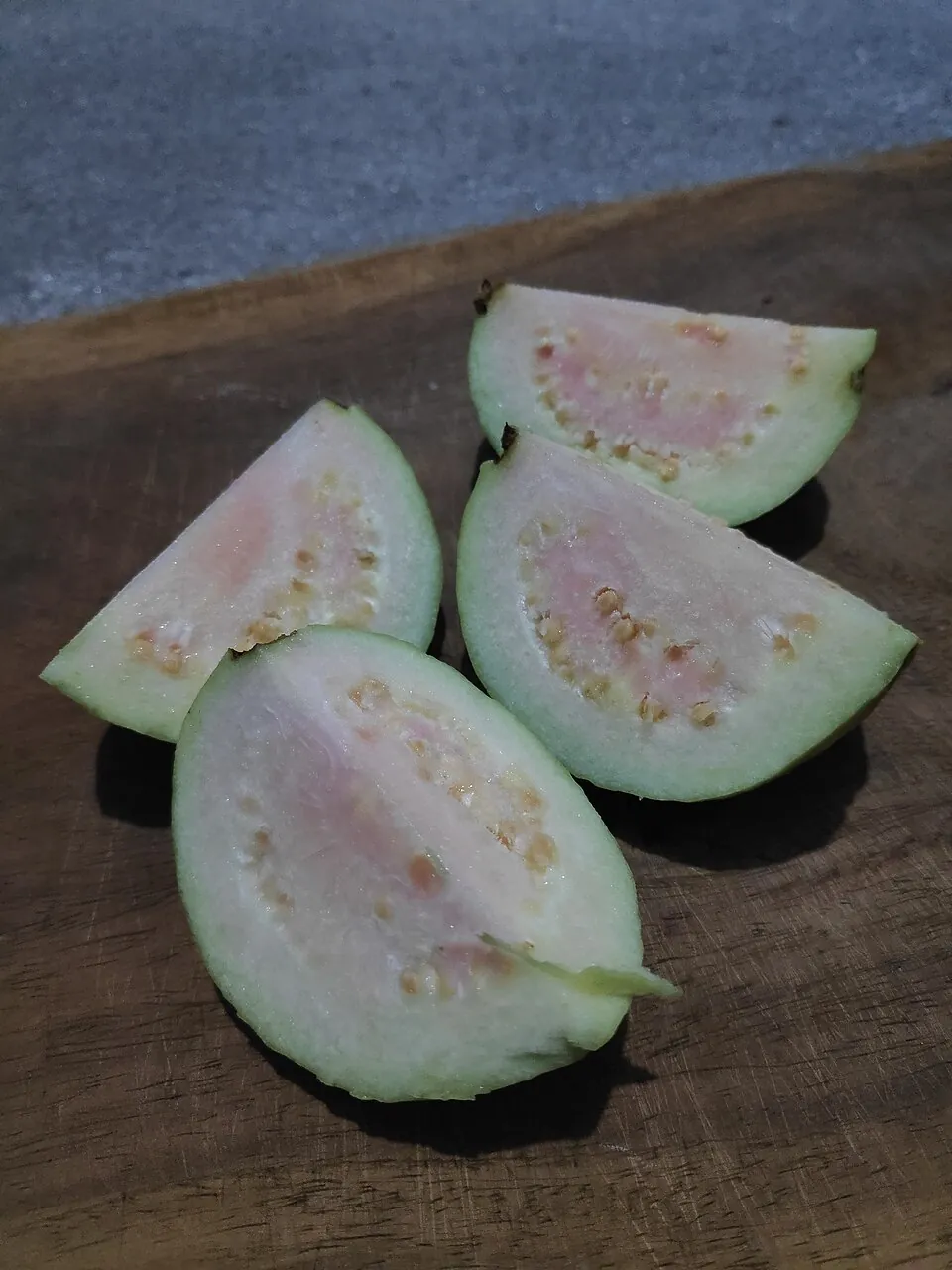
Common guava, Psidium guajava, is round, oval or pear-shaped, usually about 5–10 cm (2–4 in) long. Cut it open and the flesh can be cream-coloured or pink, with a firmer, grainy outer layer around a juicier centre. The yellowish seeds are hard.
In Florida, white guavas for crisp eating are picked full-sized and green. Pink and red types are eaten ripe; their musky perfume comes with ripeness.
Where it comes from
Guava comes from tropical America and reached India in the 1600s. In North India it now has a winter crop, while in Hawaiʻi guavas are grown commercially for juice, jam and jelly. The common guava is a different species from the purple and yellow strawberry guavas, despite the shared name.
How it's eaten where it grows
In Mexico, agua de guayaba blends ripe guavas with water and sugar. The mixture goes through a strainer to remove the seeds, then gets more water and is poured over ice.
In the Dominican Republic, casquitos de guayaba are peeled guava halves with the centres scooped out, simmered in a dark spiced syrup. White cheese can accompany them. Cubans and Puerto Ricans eat them too.
How it's grown
Guava grows on a low evergreen tree or shrub with spreading branches. Nurseries multiply a chosen tree with cuttings, or join its buds or shoots to another plant by budding or grafting. A seedling can differ from its parent in flavour, flesh colour and how much fruit it bears.
When and where you'll find it
In Florida, the main crop comes in summer with a smaller one in early spring, and pruned trees can fruit nearly year-round. In North India, the winter crop usually peaks in November and December. Fresh guavas reach grocery stores and farmers’ markets in warm growing regions; shops that specialise in tropical fruit carry them in colder places.
Frozen pulp is another way to bring guava home. Goya’s pink guava pulp has no added sugar, sits in the frozen food section and goes into juices, shakes and frozen desserts.
Sources · 9
- Dominican Cooking — Clara Gonzalezdominicancooking.com
- Goya Foodsgoya.com
- Maricruz Avalos Kitchen Blogmaricruzavalos.com
- Morton, Fruits of Warm Climates (1987)hort.purdue.edu
- National Horticulture Board, Indianhb.gov.in
- Specialty Producespecialtyproduce.com
- University of Florida IFASask.ifas.ufl.edu
- University of Hawaiʻi CTAHRcms.ctahr.hawaii.edu
- USDA Agricultural Research Servicears.usda.gov
Get it near Detroit
What it tastes like
As sweet as a banana, softer than a pear≈
More about the taste
Guava can be mild or strongly perfumed, sweet or sharply acidic. Pink and red types are usually eaten soft-ripe; white types are often eaten full-sized, green and crunchy.
White varieties such as Crystal and Lotus are mildly sweet and crunchy.
Ripe guava has a characteristic musky aroma that persists in well-made jelly.
A tasting invitation
Taste for crispness, graininess, acidity and perfume, not sweetness alone.
Choose, ripen, store, eat
1ChoosePeel lightening toward yellow
Look for
- Peel lightening toward yellow
Ignore
- Green skin
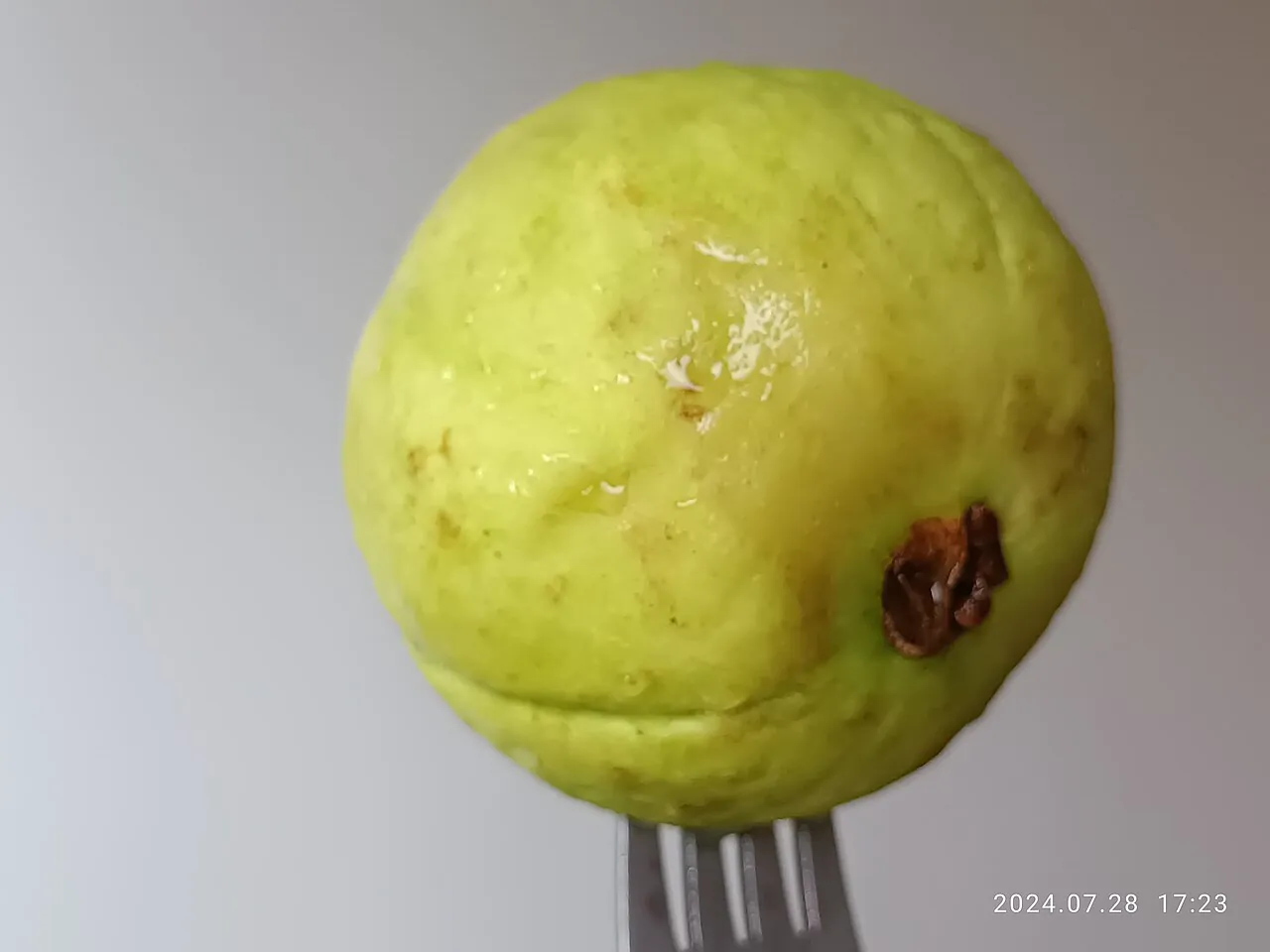
Ask which kind you are buying. A crisp white guava can be ready for its intended use; pink or red types for soft eating are usually selected as the peel lightens toward yellow.
2RipenOn the counter
Ripens after pickingCounterLet appropriately mature pink or red guavas soften at room temperature. White guavas intended for crisp eating need not be taken to the same soft stage.
3StoreFridge, green or ripe7 days
- FridgeGreen or ripeUp to 7 days
Guava keeps five to seven days in the refrigerator, whether green or ripe; condition at purchase affects how long it lasts.
4EatFlesh
Eat
FleshGuava flesh is eaten fresh or cooked; seeds can be strained out for a smooth drink or preserve. A casquitos recipe shapes and cooks the outer flesh after removing the seed-filled center.
More tips
A useful detail Guava flesh ranges from white to pink or red, and varieties differ in the size and seed content of the center. It works both crisp and sliced or soft and ripe.
Worth knowing
- Harvest development matters before a guava reaches the shop — an immature picked fruit won't develop the same composition later on the counter.
- Guava quality has many sides: sweetness, tartness and crunch.
Detroit, Michigan
When it’s good hereUsual monthsJust arrivedAt their bestLast chanceAll yearWhere it is in its usual monthsToday, Oct 22Grown hereIn season in your stateShips fromIn season where it growsOrderableListed by a seller we checkedThe day a seller was checked
42 growing areas, 14 countriesUsual monthsOur estimated monthsToday, Oct 22

- Analanjirofo
- Andhra Pradesh
- Bahia
- Balochistan
- California
- East Java
- Espírito Santo
- Florida
- Gujarat
- Hawaii
- Himachal Pradesh
- Huelva
- Ica
- Jeju
- Jizan
- Johor
- Karnataka
- La Libertad
- Madeira
- Málaga
- Northern Territory
- Pernambuco
- Rio Grande do Sul
- South Africa
- You
4 of 9 areas · October
Growing areas by country
- India9
- Brazil7
- Spain4
- United States4
- Australia3
- Malaysia3
- Pakistan3
- Indonesia2
and 9 more countriesand 6 more countries
Guava paste, also called guava cheese in the West Indies, is pulp concentrated with sugar into a sweetmeat. Southeast Asian fresh-fruit markets favor large, sweet varieties, often pale-fleshed.
38 varieties
- No variety photo yetCalvillo siglo XXIAlso Calvillo S-XXI, CALVILLO SIGLO XXI
- No variety photo yetCaxcanaAlso CAXCANA
- No variety photo yetHidrozacAlso HIDROZAC
- No variety photo yetHuejucarAlso HUEJUCAR
- No variety photo yetMeritaAlso MERITA
- Arka Kiran
- Feel
- firm India
- Shape
- round India
92 names in 21 languages
- ổi xanhVietnamese
Cook it
How to serve it first
Taste a slice before deciding whether to serve the fruit firm, remove the seed-rich center, or use prepared ripe pulp in a sauce or drink. Keep a lightly seasoned portion separate so the fruit's own aroma and texture remain easy to identify.
1 Guava festivalUsual monthToday, Oct 22
Strange but trueHistoryScienceNatureWhere the name came fromCustoms and culture
If you like Guava
Tastes alike
Close relatives
Used the same way
Nutrition, sources
Nutrition
Guavas, common, raw · per 100 g
- Carbohydrate
- 14 g
- Fiber
- 5.4 g
- Sugars
- 8.9 g
- Protein
- 2.6 g
- Fat
- 1 g
- Vitamin C
- 228 mg
- Potassium
- 417 mg
Sources
Guava · Fruitopia · checked Sep 21, 2026
What we don't know yet
Variety names are often missing at retail, which makes seediness, sweetness and aroma hard to predict.