Kiwiberry
Also called Hardy kiwi · Cocktail kiwiActinidia arguta · Actinidiaceae family
A small smooth-skinned kiwi with different harvest stages for eating nearby and shipping farther.
Find it near DetroitGet to know it
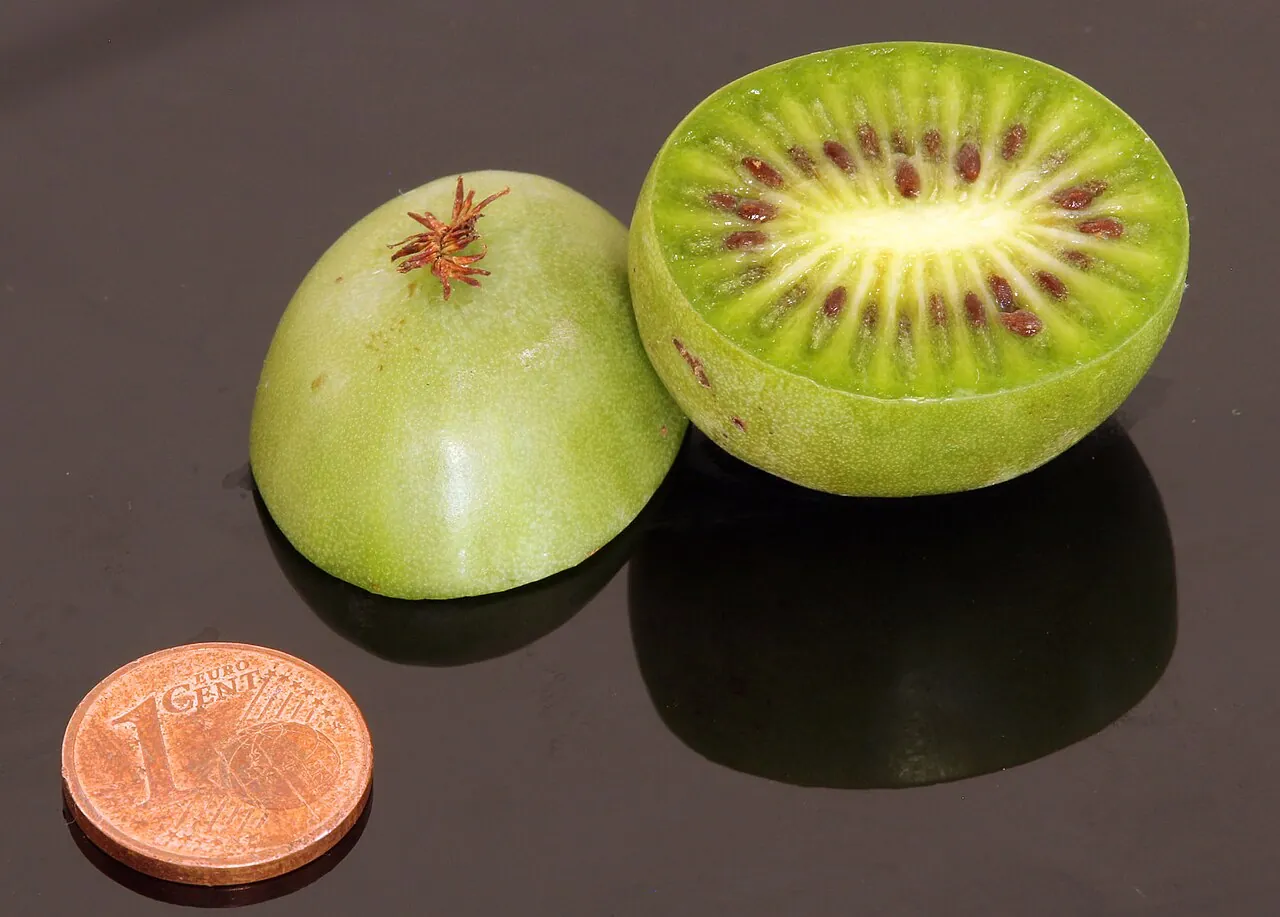
Kiwiberry puts a kiwi-like, sweet-tart bite into a fruit the size of a grape. Its skin is smooth and edible, so the whole berry goes into your mouth without peeling. Ripe fruit gives slightly under gentle pressure.
What it is
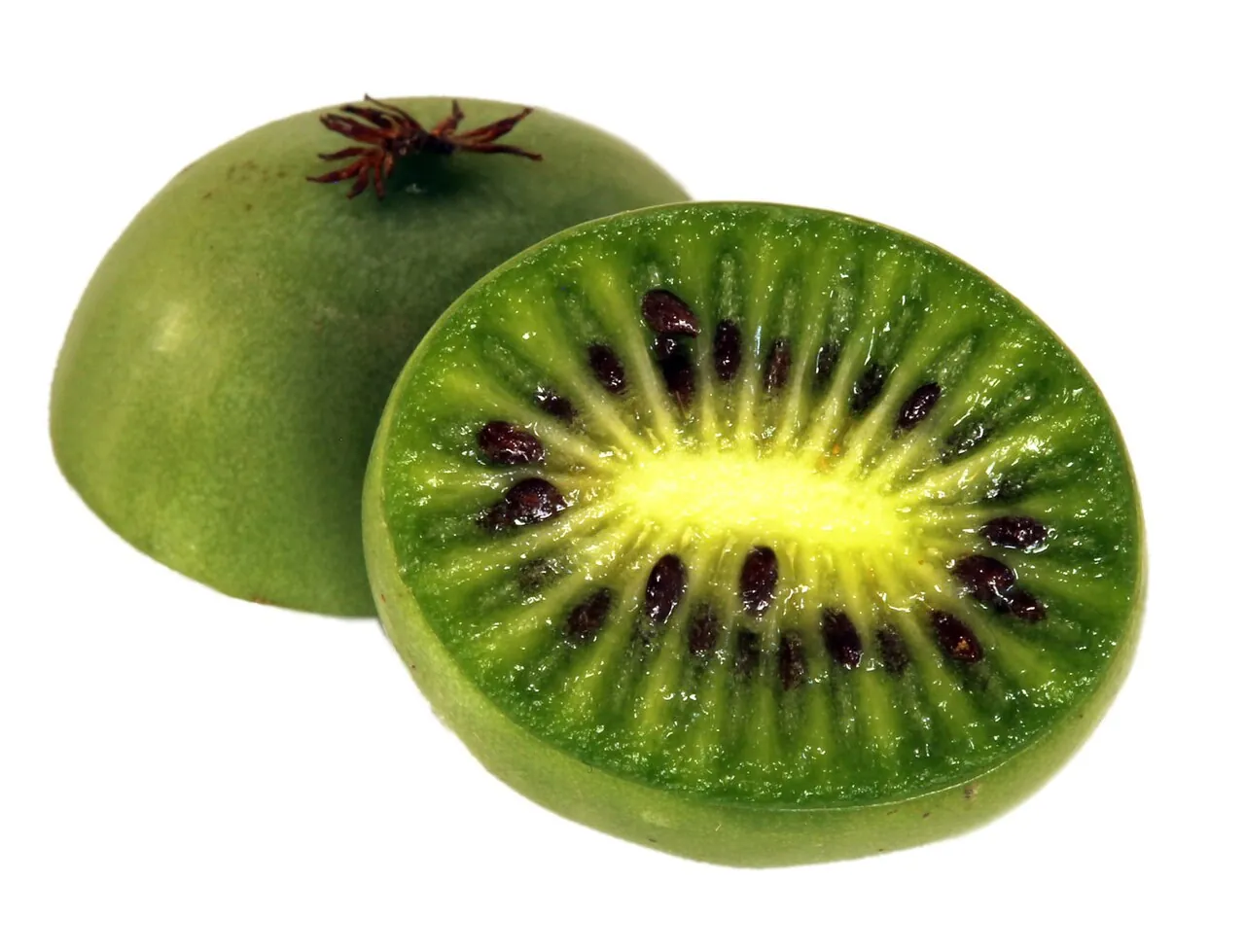
Kiwiberry is Actinidia arguta, also called hardy kiwi. Its fruit can be green, brownish or purple, with flesh ranging from green and yellow to red or purple. New Zealand fruit weighs about 5–20 g apiece and ranges from round to elongated.
As green kiwiberries ripen, their colour deepens and the skin becomes more translucent. Dark seeds are one sign that the fruit is nearing ripeness; white or pale tan seeds belong to underdeveloped fruit.
Where it comes from
The vine is native to Japan, Korea, China and Russia. It reached the northeastern United States in the 1870s and has been grown there as a backyard and garden plant for nearly 150 years.
In New Zealand, most plantings are in the Bay of Plenty on the North Island, with smaller plantings in Canterbury, Nelson and Auckland. Takaka Green and Hortgem Tahi are two varieties grown there.
How it's eaten where it grows
In Karumai, in Japan’s Iwate prefecture, the fruit is called sarunashi. It grows in the surrounding mountains and goes into soft-serve ice cream and sarunashi roll cakes.
In New Zealand, kiwiberry salsa combines halved berries and cherry tomatoes with coriander, chilli and lime or lemon juice. It is served alongside fish or chicken, giving the sweet-tart fruit a place on the dinner plate.
How it's grown
The woody vine needs a strong support. In New Zealand orchards it spreads over overhead frames called pergolas, with separate male and female vines for pollination. Sheltered ground, free-draining soil and protection from spring frost suit it.
In the Pacific Northwest, kiwi vineyards take three or more years after planting to produce a commercial crop, and up to five to reach full production. In New Zealand the small fruits are picked by hand.
When and where you'll find it
In the US Pacific Northwest, local fruit usually reaches stores in September and October. In Victoria, Minnesota, Chang Bai Mountain, Tatyana and Natasha usually ripen in September.
New Zealand’s harvest usually runs from late February into early or mid-April. Fruit travels by air and comes in small clear packs; supermarkets are one place to find it there. Berries meant to travel are picked firm because soft ones bruise easily. Once mature enough, they finish ripening after harvest.
Sources · 7
- Iwate Tourism Associationiwatetabi.jp
- Karumai Industrial Developmentkarumaisan.jp
- NC State Extension Gardener Plant Toolboxplants.ces.ncsu.edu
- New Zealand KiwiBerry Growersnzkiwiberry.comOther pages23
- Oregon State University Extensionextension.oregonstate.edu
- University of Minnesota, Minnesota Fruit Researchfruit.umn.edu
- University of New Hampshirecolsa.unh.edu
Get it near Detroit
What it tastes like
As sweet as a banana, softer than a pear≈
More about the taste
Ripe kiwiberries are sweet-tart, with a soft feel that yields slightly under gentle pressure without collapsing.
Ripe kiwiberries are sweet-tart, with a soft feel that yields slightly under gentle pressure without collapsing.
Choose, ripen, store, eat
1ChooseSoftened fruit
Look for
- Softened fruit
- Deeper, translucent green
- Dark seeds
For eating right away, look for softened fruit with a deeper, more translucent green color. Firmer fruit is picked for shipping and needs more time to ripen.
2RipenRipens after picking
Ripens after pickingKiwiberries continue to ripen after harvest once sufficiently developed. Dark seeds are one sign of maturity; pale seeds mean the fruit is underdeveloped.
3StoreFruit picked for storage and shipping keeps better than already-soft fruit, which bruises easily
Fruit picked for storage and shipping keeps better than already-soft fruit, which bruises easily.
4EatSkin
Eat
SkinKiwiberry skin is smooth and edible, so it doesn't need peeling like a fuzzy kiwi.
Detroit, Michigan
When it’s good hereUsual monthsJust arrivedAt their bestLast chanceAll yearWhere it is in its usual monthsToday, Oct 22Grown hereIn season in your stateShips fromIn season where it grows
2 growing areas, 2 countriesUsual monthsOur estimated monthsToday, Oct 22

- O'Higgins
- Washington
- You
1 of 1 areas · October
Growing areas by country
- Chile1
- United States1
In Victoria, Minnesota, the kiwiberry selections Chang Bai Mountain, Tatyana, and Natasha tended to ripen in September; other selections failed to fruit after winter damage.
11 varieties
- No variety photo yetHortgem Tahi
- Taste
- sweet
- Scent
- aromatic
- No variety photo yetHortgem Wha
- Taste
- sweet
- Scent
- aromatic
- No variety photo yetHortgem Rua
- Taste
- sweet
- Scent
- aromatic
- No variety photo yet金香红
- Taste
- high CN-HB
- Flavour
- 风味香甜可口
- Shape
- elongated
- No variety photo yetHortgem Toru
- Taste
- sweet
- Scent
- aromatic
- No variety photo yetTakaka Green
- Taste
- sweet
- Scent
- aromatic
28 names in 8 languages
- KiwaïFrench
Cook it
Recipes 1
Strange but trueHistoryA myth, and the truthScienceCustoms and cultureFood and drinkPeople
If you like Kiwiberry
Tastes alike
Close relatives
Used the same way
Sources
Sources
Kiwiberry · Fruitopia · checked Sep 21, 2026