Dull-leaved monkey orange
Strychnos innocua · Loganiaceae family
A hard shell encloses sweet-sour pulp; several different fruits share the name monkey orange.
Find it near DetroitGet to know it
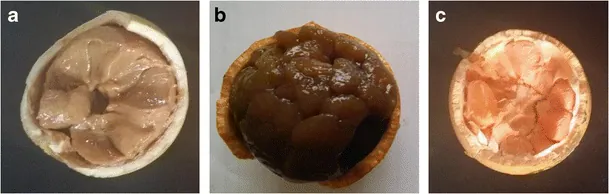
Dull-leaved monkey orange hides sweet yellow pulp inside a thick, woody shell. The flesh surrounds many hard seeds, which are discarded. In Bikita, Zimbabwe, this fruit becomes a smoky dried food, built up in layers on a woven rack.
What it is
This monkey orange is Strychnos innocua. In Tanzania, its round fruits are about 5–7 cm (2–3 in) across, blue-green when young and yellow-orange when ripe. The shell is cracked open to reach the pulp around the seeds.
Its tough leaves are a dull blue-green, set in widely spaced opposite pairs. Inside the woody case, many stony seeds sit in a yellowish pulp.
Where it comes from
The tree grows across tropical Africa in open woodland and on rocky hills. Its range reaches from West Africa through East Africa and south to Zambia and Angola. In Tanzania it is widespread, including Zanzibar, growing in coastal lowlands and woodlands dominated by Brachystegia trees.
How it's eaten where it grows
In Tanzania, the sweet pulp is a snack for children and hunters. In Bikita, Zimbabwe, households dry Strychnos innocua and the related S. madagascariensis. Salt, sugar or both are added before the flesh is pressed onto racks woven from reeds and palm strips.
Sun and fire take turns drying it. Fresh flesh is added in layers, and the process usually lasts five to seven days. The finished food has a smoky flavour that local eaters value.
How it's grown
The straight-stemmed tree reaches 3–14 m (10–46 ft), with smooth, powdery bark. Flowers and fruit can appear together, and a fruit takes about a year to ripen after its flower is fertilised. In Tanzania, people gather it from wild trees. Fresh seed can also produce new plants.
When and where you'll find it
In Tanzania, the usual collecting season is August through December, during the dry season, and the fruit is sold in local markets. Fresh pulp and the dried food made in Bikita offer two distinct encounters with the same species: one straight from the shell, the other shaped by sun and wood smoke.
Get it near Detroit
Sell fruit online? Add your business
What it tastes like
Softer than a pear, as sweet as a kiwifruit≈
More about the taste
The pulp is sweet-sour and yellowish, around many hard seeds within a thick woody shell.
The pulp is sweet-sour and yellowish, around many hard seeds within a thick woody shell.
The shell changes from bluish-green in young fruit to yellowish or orange at ripeness.
Choose, ripen, eat
1ChooseShell color alone
Ignore
- Shell color alone
Use an identified, established fruit; shell color alone does not distinguish all monkey oranges.
2RipenIt takes about a year from fertilization to ripe fruit on the tree
It takes about a year from fertilization to ripe fruit on the tree.
3EatSweet yellow pulp · not seeds, hard fruit case
Eat
Sweet yellow pulpNot eaten
SeedsHard fruit caseCrack the hard fruit case, eat the sweet yellow pulp around the seeds, and discard the seeds.
Detroit, Michigan
When it’s good here
Season not documented for Michigan.
Cook it
Strange but trueNatureWhere the name came from
If you like Dull-leaved monkey orange
Tastes alike
Close relatives
Sources
Photos · 1
Sources
Dull-leaved monkey orange · Fruitopia · checked Sep 22, 2026