Binjai
Also called White mangoMangifera caesia · Anacardiaceae family
A mango relative whose pale pulp ranges from sharply resinous to mild and almost fiberless.
Find it near DetroitGet to know it
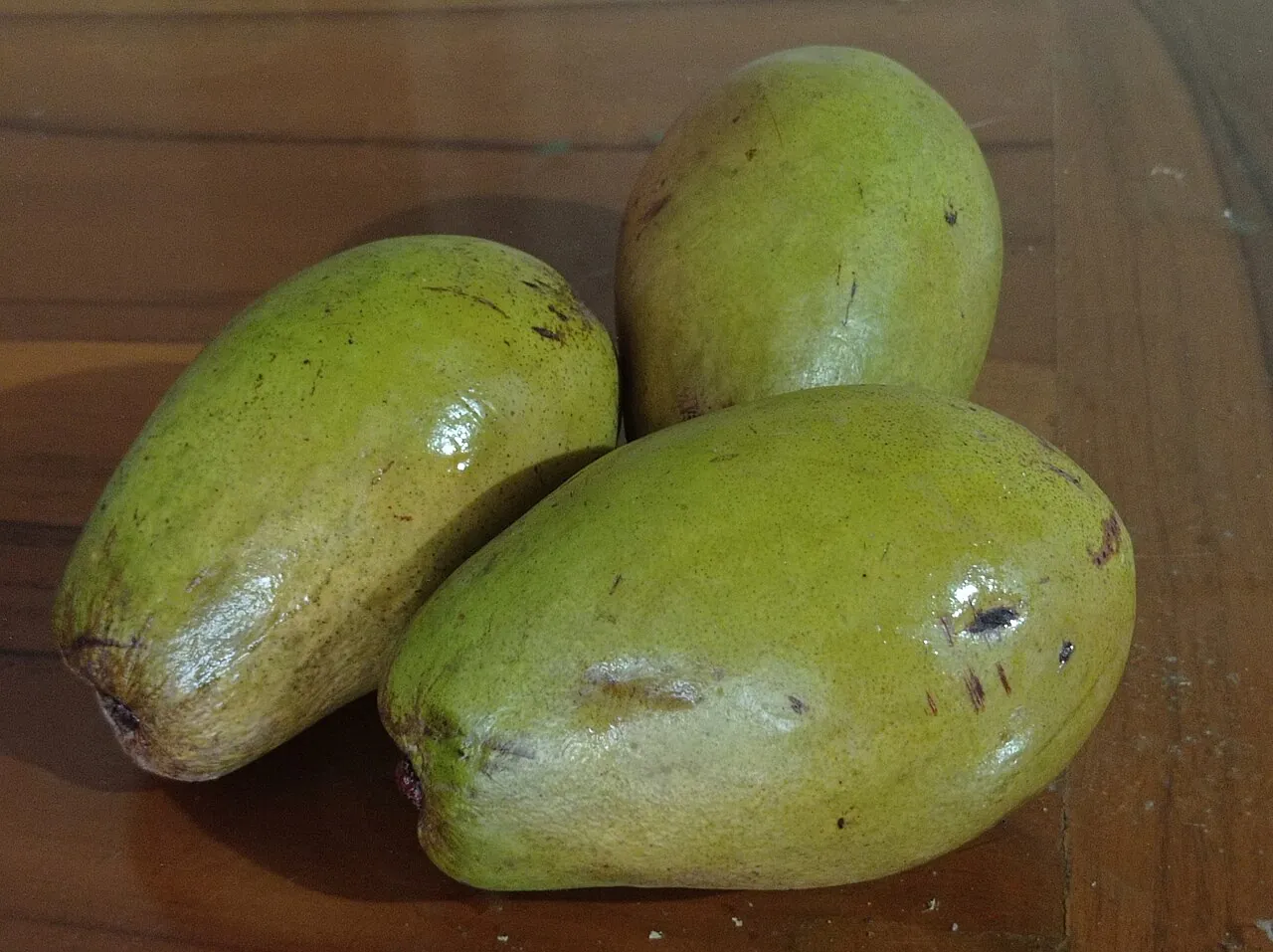
Binjai is a white-fleshed mango relative with soft, juicy pulp and a strong scent. Some fruit is fibrous and sour; sweeter forms called wani have almost no fibres and make a creamy drink.
What it is
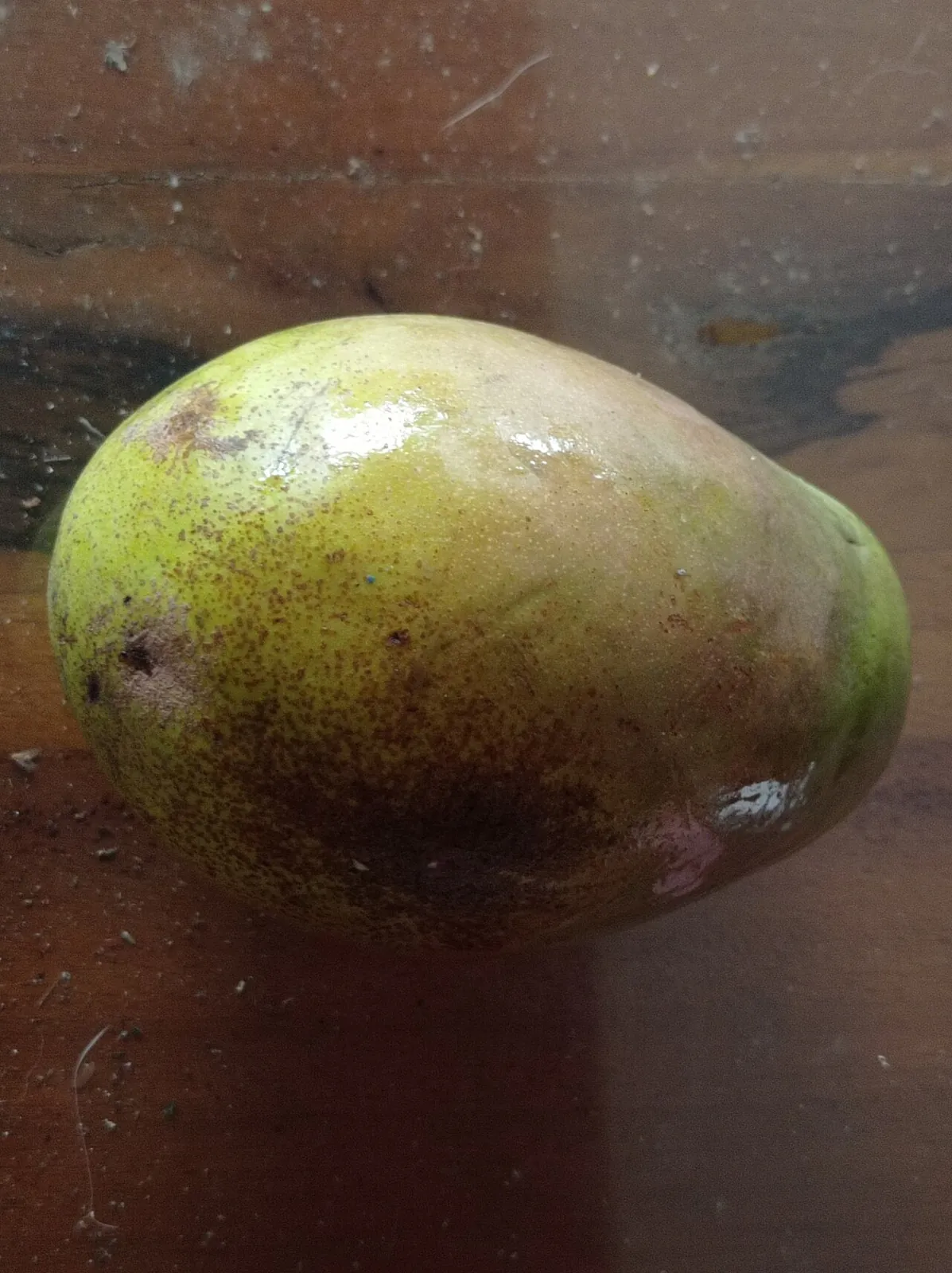
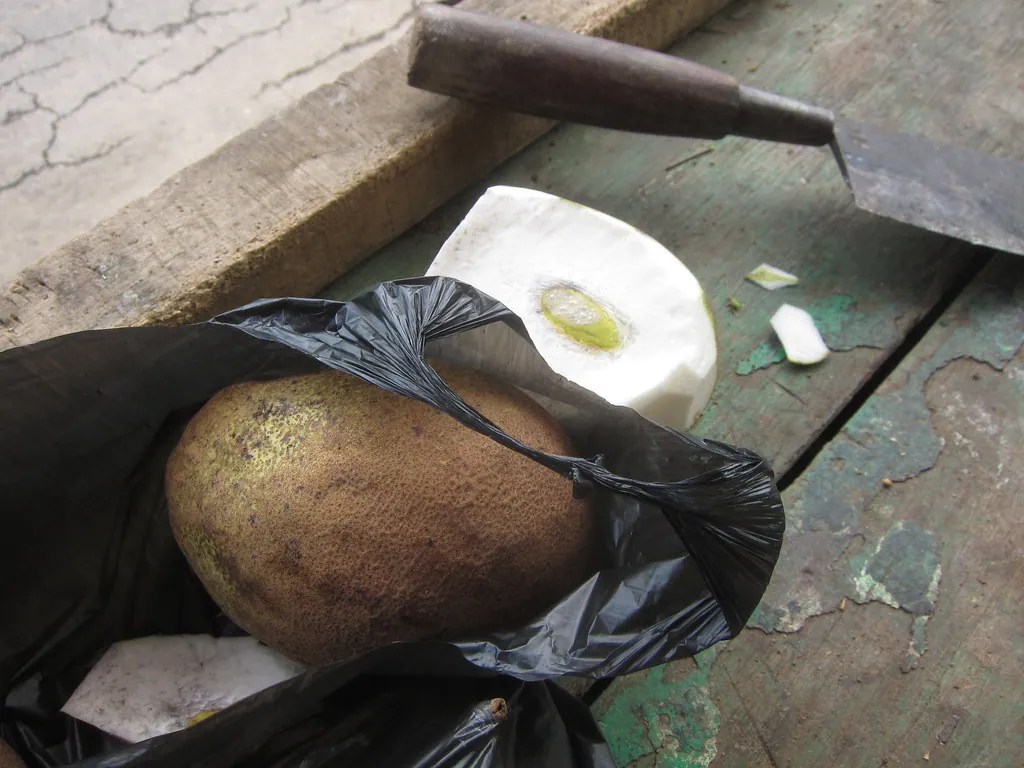
The fruit is pear-shaped, about 10–19 cm (4–7½ in) long, usually with a single seed. Its skin turns pale yellow-brown, while some wani forms stay glossy pale green when ripe. Inside, the flesh is milky white. The ripe pulp is eaten; the milky juice of unripe fruit is irritating to skin and when swallowed.
Where it comes from
Binjai is native to Sumatra, Peninsular Malaysia and Borneo. It belongs to the wet tropical forests of this region, including swamp forests and riverbanks. The sweeter wani forms are especially associated with Bali, where the fruit reaches local markets, and also grow in East Kalimantan on Borneo.
How it's eaten where it grows
For the Dayak Maanyan people, sambal binjai combines ripe fruit with hot chillies and terasi, a fermented shrimp paste. The fruit supplies the sourness. Binjai sambal accompanies river fish; ripe flesh is also preserved with salt in jars so the sauce can be made outside the fresh season.
In Bali, sweet wani is eaten fresh or blended into creamy drinks. In Buleleng, many people buy wani even before it is ripe, to make Balinese rujak or to eat as it is. Binjai also goes into rojak, a fruit-and-vegetable salad.
How it's grown
A binjai tree can reach 45 m (148 ft). In Bali, owners of tall wani trees hire skilled climbers called tukang penek to bring in the harvest. The tree suits wet conditions: in East Kalimantan it is grown on riverbanks that flood from time to time.
When and where you'll find it
Bali's wani usually ripens from September through March and reaches local fruit markets. In East Kalimantan, binjai usually matures in the rainy season from November through March; in Sabah, the usual window is August through October. Wani can continue ripening after it has been picked.
Get it near Detroit
What it tastes like
Crisper than a blueberry, as sweet as a kiwifruit≈
More about the taste
Binjai includes strongly scented, fibrous, sour forms as well as sweeter, almost fiberless forms known as wani in Bali and East Kalimantan.
Binjai includes strongly scented, fibrous, sour forms as well as sweeter, almost fiberless forms known as wani in Bali and East Kalimantan.
The flesh is whitish, not the orange-yellow of many supermarket mangoes; the mature skin is pale yellow-brown.
Choose, ripen, eat
1ChooseColor alone
Ignore
- Color alone
A local form name and a knowledgeable supplier are more useful than judging ripeness by color alone.
2RipenRipens after picking
Ripens after pickingWani can continue ripening after picking, though there's no set timetable for it.
3EatRipe pulp
Eat
Ripe pulpThe white juice of immature fruit is extremely irritating to skin and if ingested; only the ripe pulp is eaten.
Detroit, Michigan
When it’s good hereUsual monthsJust arrivedAt their bestLast chanceAll yearWhere it is in its usual monthsToday, Oct 22Grown hereIn season in your stateShips fromIn season where it grows
4 growing areas, 2 countriesUsual monthsOur estimated monthsToday, Oct 22

- Bali
- Pahang
- Sabah
- You
2 of 3 areas · October
Growing areas by country
- Indonesia2
- Malaysia2
Ripe pulp is eaten fresh or made into a creamy drink; sour fruit is used in sambal with river fish, and flesh is traditionally salt-preserved.
10 names in 6 languages
- ลำยาThai
- 繽再果Chinese
Cook it
Strange but trueCustoms and culture
If you like Binjai
Tastes alike
Close relatives
Same plant family
Sources
Sources
Binjai · Fruitopia · checked Sep 22, 2026