Saba fruit
Also called Senegal sabaSaba senegalensis · Apocynaceae family
A sweet-sour climbing fruit tied to seasonal markets and a growing processing trade.
Find it near DetroitGet to know it
Saba fruit, called madd in Senegal, has sweet-sour yellow pulp wrapped around its seeds. It grows on a woody climbing vine. In Senegal, people eat the pulp with salt and chili, or turn it into a sweet drink with water and sugar.
What it is
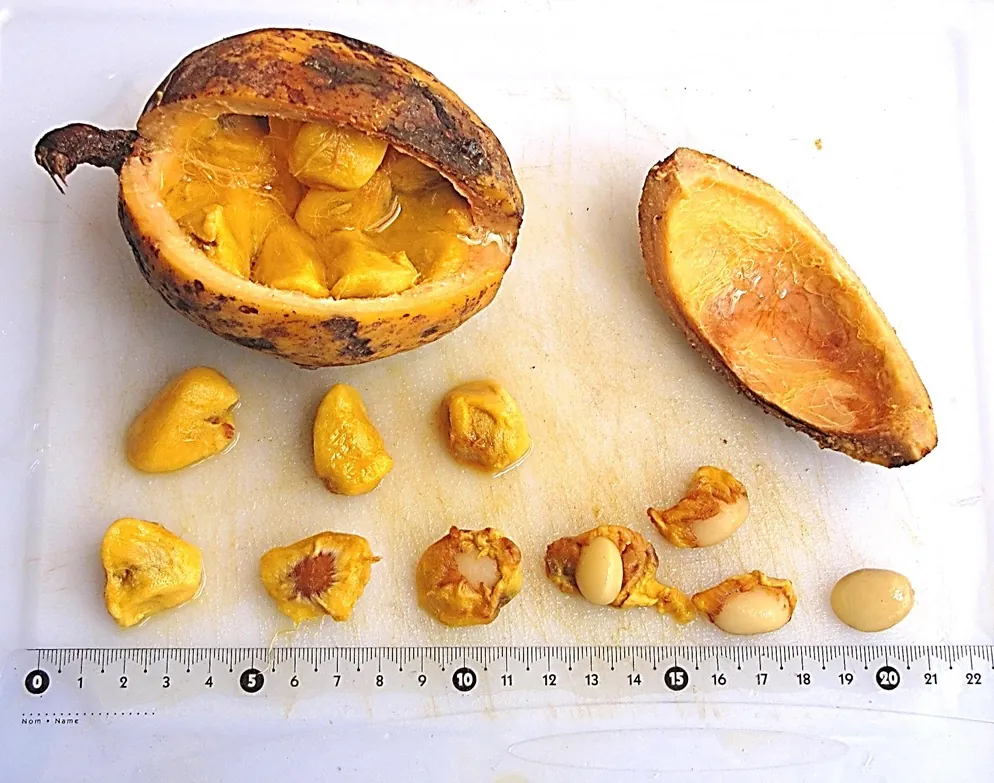
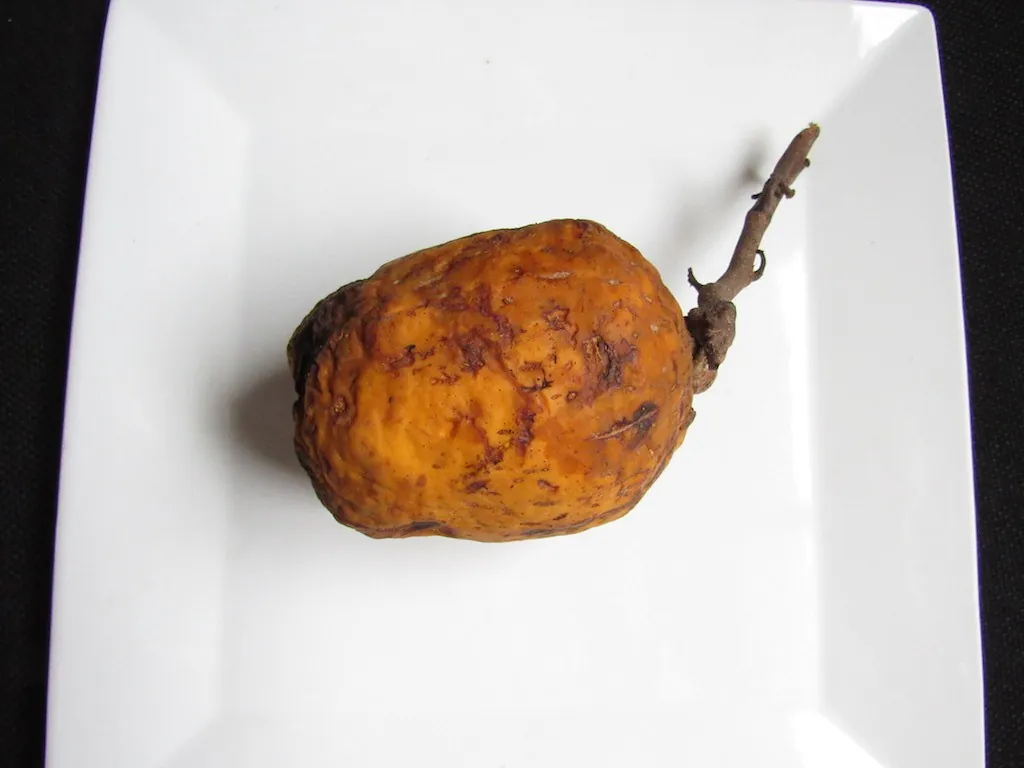
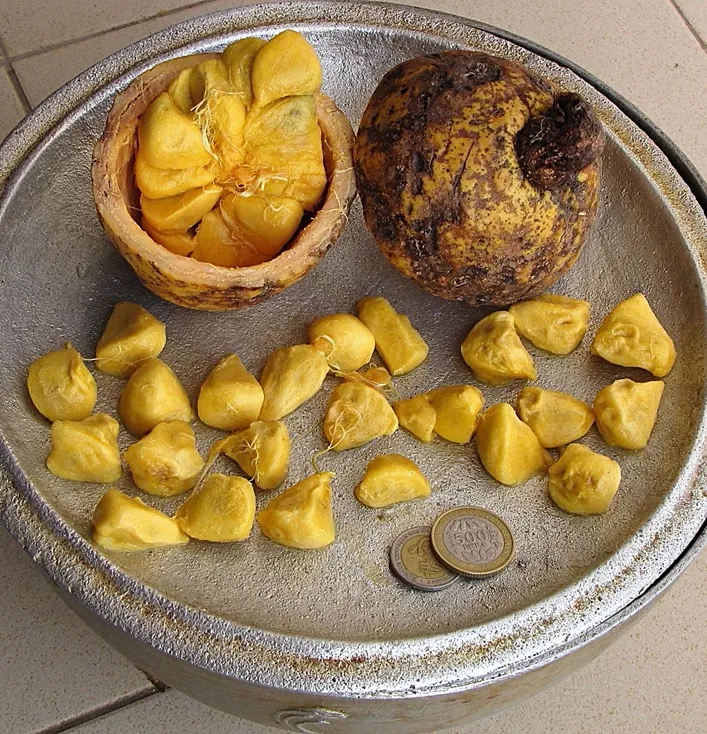
The egg-shaped fruit measures 5–15 cm (2–6 in) long and 4–10 cm (1½–4 in) across. Inside are several seeds, each covered in fragrant yellow pulp. That pulp is the part used for juice: soaking and whisking loosen it from the seeds, which are removed before the liquid is strained.
Where it comes from
Saba is native to West African countries including Senegal, The Gambia, Guinea, Mali, Côte d’Ivoire, Ghana and Burkina Faso. In Senegal it grows mainly in Casamance. Its familiar names include madd in Wolof and saba in Mandinka. In Korhogo, northern Côte d’Ivoire, locally grown fruit supplies the juice trade.
How it's eaten where it grows
In Senegal, a fresh serving can be as simple as pulp seasoned with salt and chili. Jus de madd turns the pulp into a drink with water and sugar. A Senegalese version adds ripe mango and orange: the madd is pressed with a fork to release its juice, then the three fruit juices are mixed.
In Korhogo, women making saba juice often sweeten it with sugar and vanilla sugar. Some blend in pineapple or orange juice, giving the tart pulp a different fruit partner.
How it's grown
Saba grows as a woody climbing vine that can reach 40 m (130 ft) long, though some plants take a shrubby shape. Its bark is rough or scaly. The vine grows along rivers and in open woodland, and can carry flowers throughout the year.
When and where you'll find it
In Senegal, madd usually appears from May to August, displayed in baskets beside the roads. Prepared fruit also comes in jars: the brand Seneafood packs madd with sugar, water and salt in 240 g jars, for eating from a bowl with a spoon. The prepared fruit still contains its seeds; strained jus de madd leaves them behind.
Get it near Detroit
What it tastes like
Softer than a pear, as sweet as a kiwifruit≈
More about the taste
The pulp is yellow, with a sweet-sour character that varies from tree to tree.
The pulp is yellow, with a sweet-sour character that varies from tree to tree.
How to buy it
1EatPulp · not seeds
Eat
PulpNot eaten
SeedsMadd juice is made by pressing the pulp clinging to the seeds into liquid, then removing the seeds before serving. A jar of prepared madd may still contain seeds, unlike a strained drink.
Detroit, Michigan
When it’s good hereUsual monthsJust arrivedAt their bestLast chanceAll yearWhere it is in its usual monthsToday, Oct 22Grown hereIn season in your stateShips fromIn season where it grows
Cook it
Strange but trueHistoryWhere the name came fromFood and drink
If you like Saba fruit
Tastes alike
Close relatives
Same plant family
Sources
Sources
Saba fruit · Fruitopia · checked Sep 22, 2026