Natal plum
Also called AmatunguluCarissa macrocarpa · Apocynaceae family
A red-fruited Carissa with a berry-like flavor comparison and a clear distinction between ripe fruit and latex.
Find it near DetroitGet to know it
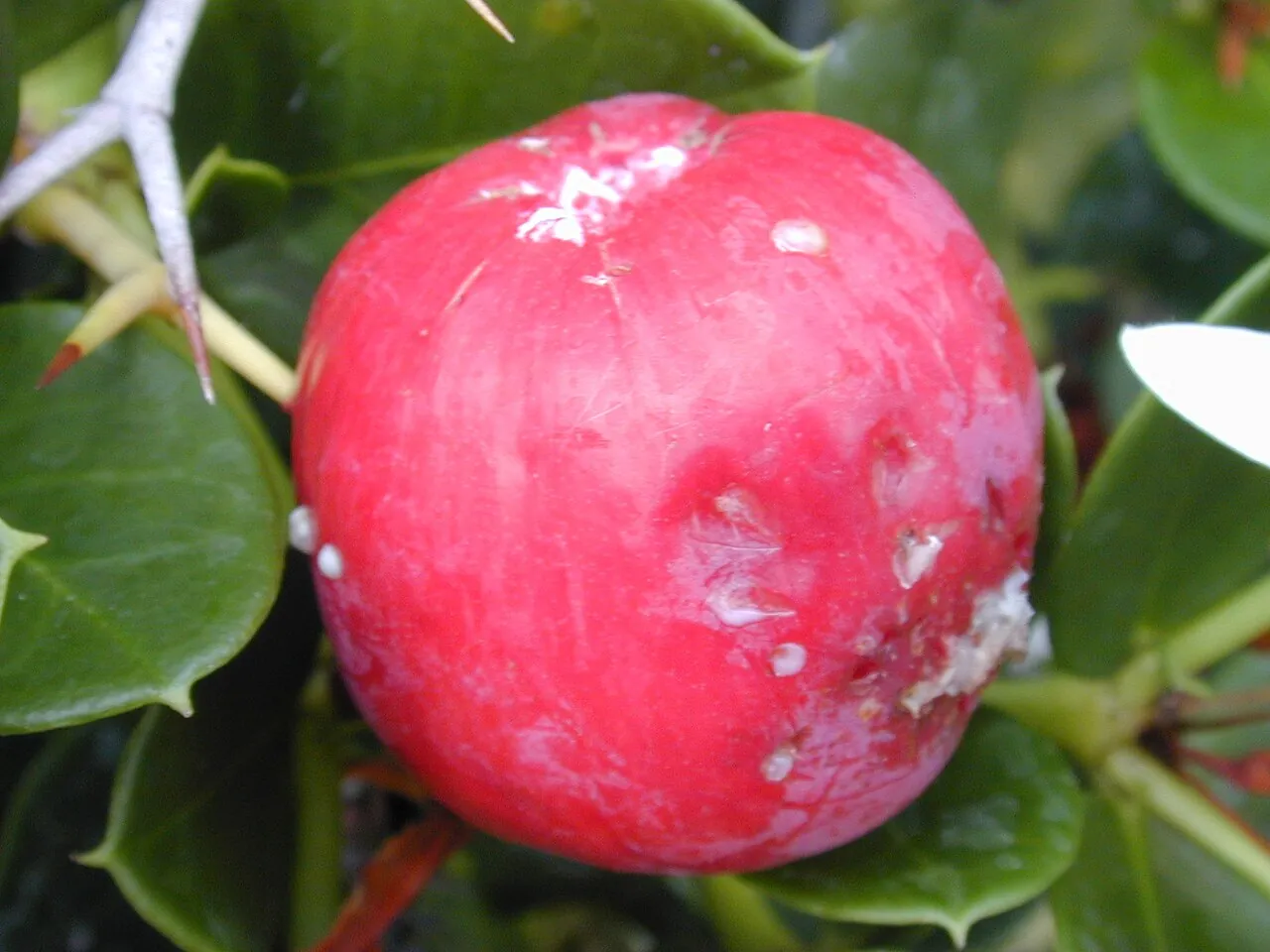
Natal plum is a red fruit with a raspberry-cranberry flavour, growing among glossy leaves and sharp forked thorns. Inside, the flesh is tender and juicy. In Hawaiʻi, the same shrub planted as a hedge supplies fruit for relish and toasted-coconut ice cream.
What it is
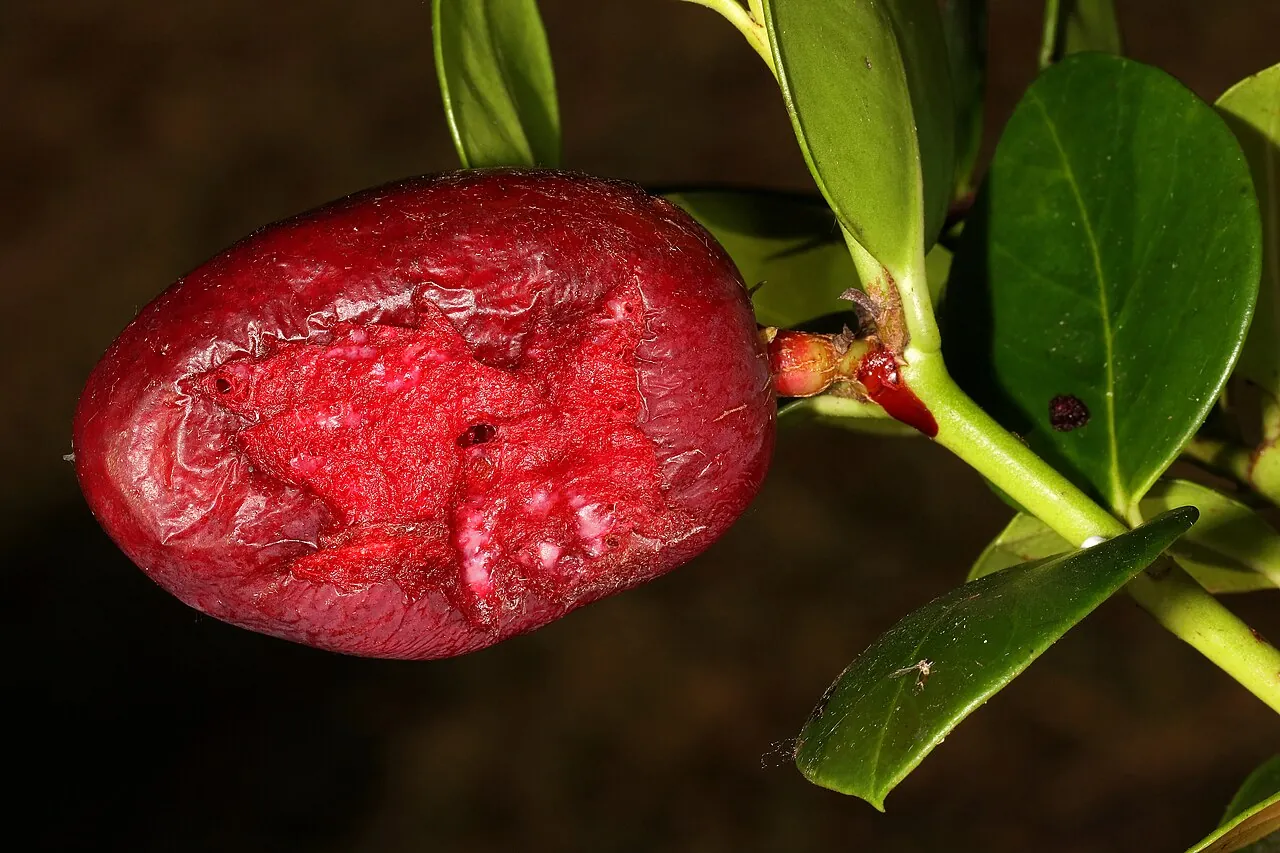
The round or oval fruit reaches about 6 cm (2½ in) long. Its smooth skin changes from green through magenta-red to dark crimson. Inside is strawberry-coloured flesh, flecked with milky sap, around six to sixteen small, flat brown seeds.
For eating raw, the fruit is fully ripe, dark red and slightly soft. It can be eaten whole, including the skin and seeds. Green fruit and the rest of the shrub are not food.
Where it comes from
Natal plum comes from the coast of KwaZulu-Natal in South Africa. It arrived in the United States in 1886 and in Hawaiʻi in 1905, where it spread as a hedge plant. It also grows on a smaller scale in India and East Africa.
How it's eaten where it grows
On Maui, Sunny Savage makes a holiday relish with seeded, sliced Natal plums, diced pineapple and grated orange peel. The ingredients are simply mixed together. Her other uses include Natal plum and toasted-coconut ice cream, chutneys and fruit-infused vinegar.
The fruit also cooks into sauce, pies and tarts. For jam, the skin can stay on or be peeled away.
How it's grown
Natal plum grows best in full sun and tolerates salty soil and sea spray. Its roots need drainage: waterlogged ground does not suit it. A plant grown from seed can start fruiting in two years; one grown from a cutting can fruit earlier. Small beetles and night-flying insects pollinate the flowers in its South African home.
When and where you'll find it
In Hawaiʻi, Natal plum usually fruits several times through the year. It is often a fruit of gardens and hedges, with the crop a bonus from a plant grown as a protective hedge. Beyond fresh eating, whole fruits can be preserved in jars of sugar syrup.
Get it near Detroit
What it tastes like
Choose, eat
1ChooseRed or purple when ripe
Look for
- Red or purple when ripe
Ignore
- Color alone
Immature fruit is green and turns red or purple as it ripens; only ripe fruit is eaten. Color alone isn't a safe way to identify an unfamiliar plant.
2EatFully ripe red fruit · not green fruit, other shrub parts
Eat
Fully ripe red fruitNot eaten
Green fruitOther shrub partsA relish made from Natal plum uses fully ripe red fruit, seeded and sliced. Green fruit and other parts of the shrub aren't treated as edible.
Detroit, Michigan
When it’s good hereUsual monthsJust arrivedAt their bestLast chanceAll yearWhere it is in its usual monthsToday, Oct 22Grown hereIn season in your stateShips fromIn season where it grows
7 names in 5 languages
- كاريس كبير الثمارArabic
- 大花假虎刺Chinese
Cook it
Strange but trueScienceNatureFood and drink
If you like Natal plum
Tastes alike
Same plant family
Used the same way
Nutrition, sources
Nutrition
Carissa, (natal-plum), raw · per 100 g
- Carbohydrate
- 14 g
- Protein
- 0.5 g
- Fat
- 1.3 g
- Vitamin C
- 38 mg
- Potassium
- 260 mg
Sources
Natal plum · Fruitopia · checked Sep 22, 2026
What we don't know yet
The garden listing is a living collection, not permission to harvest or a sign the fruit is sold there.