Cranberry
Also called Large cranberry · American cranberry · BearberryVaccinium macrocarpon · Ericaceae family
The floating red harvest is only one moment in cranberry farming; the fruit spends its growing season on a drained bed.
Find it near DetroitGet to know it
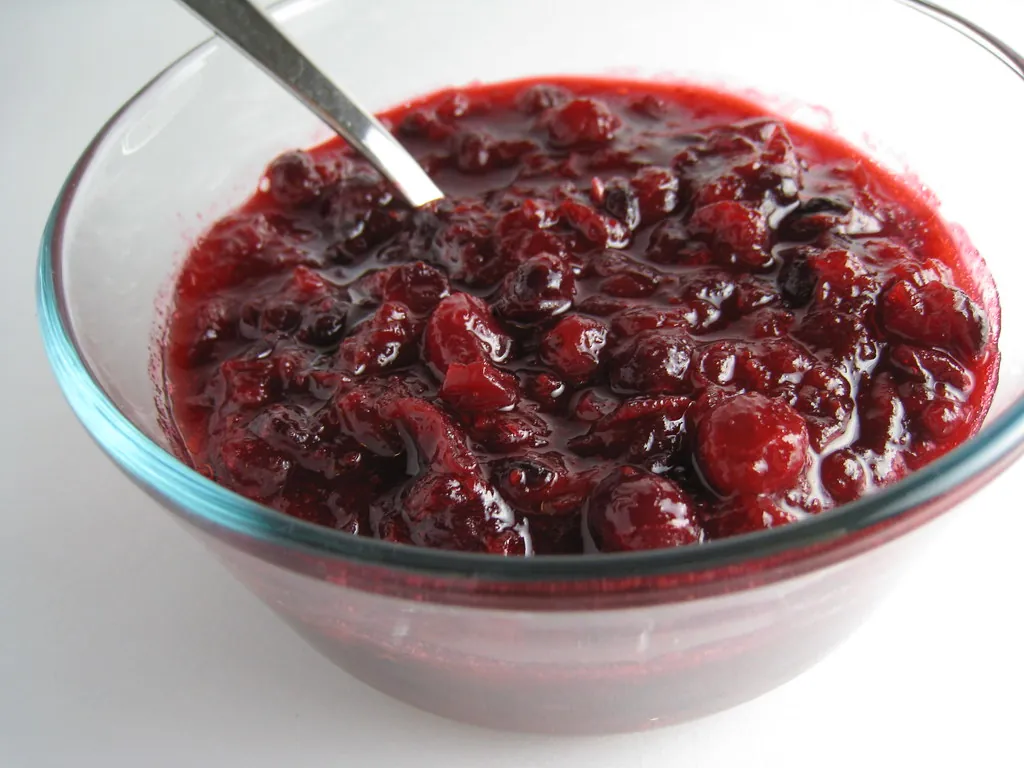
Cranberries are firm red berries with a sharp, tart bite. Cook them with sugar and water and their skins split into sauce; chop them raw with orange and they make relish. Four pockets of air inside each berry let the harvest float.
What it is
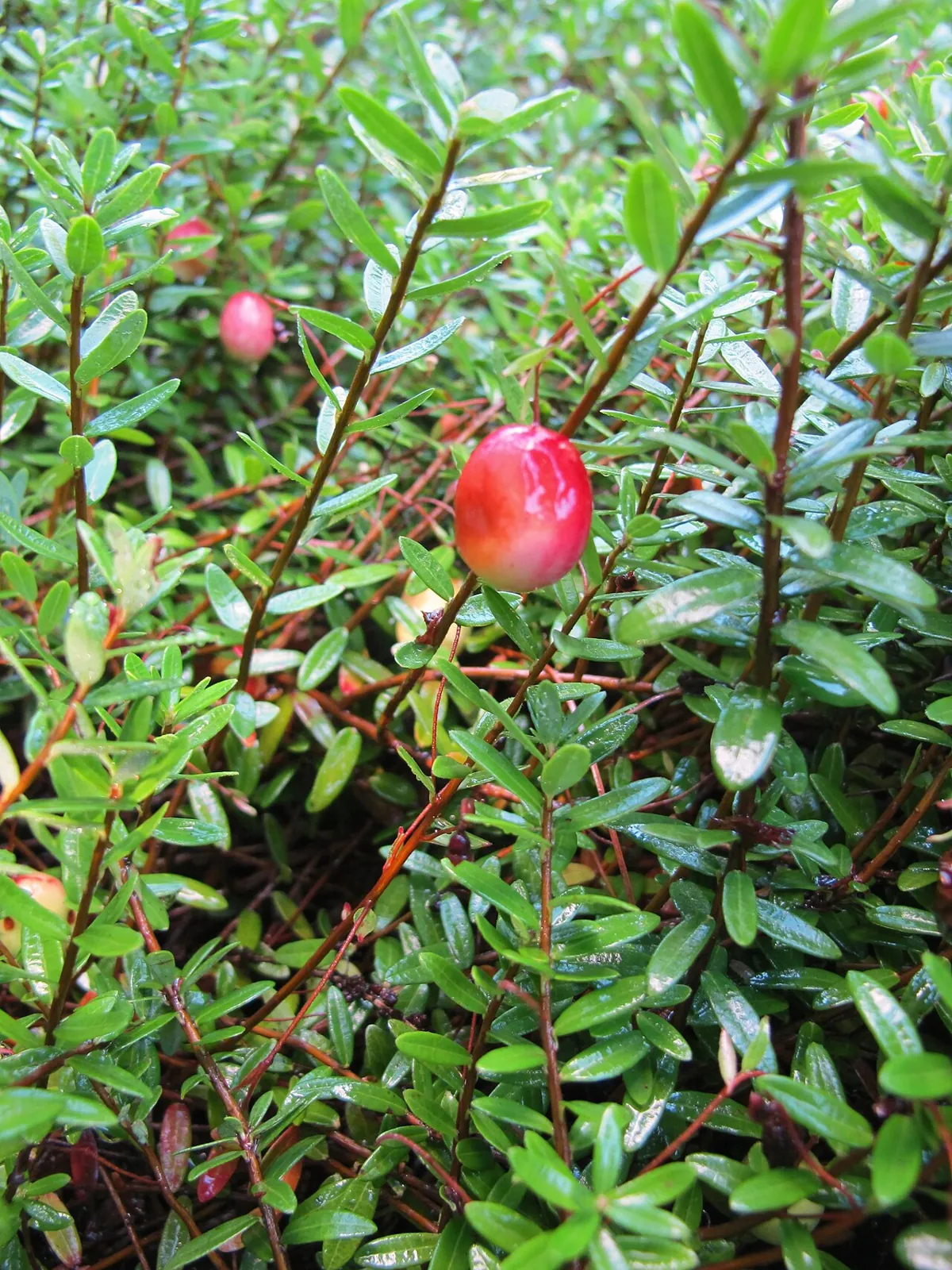
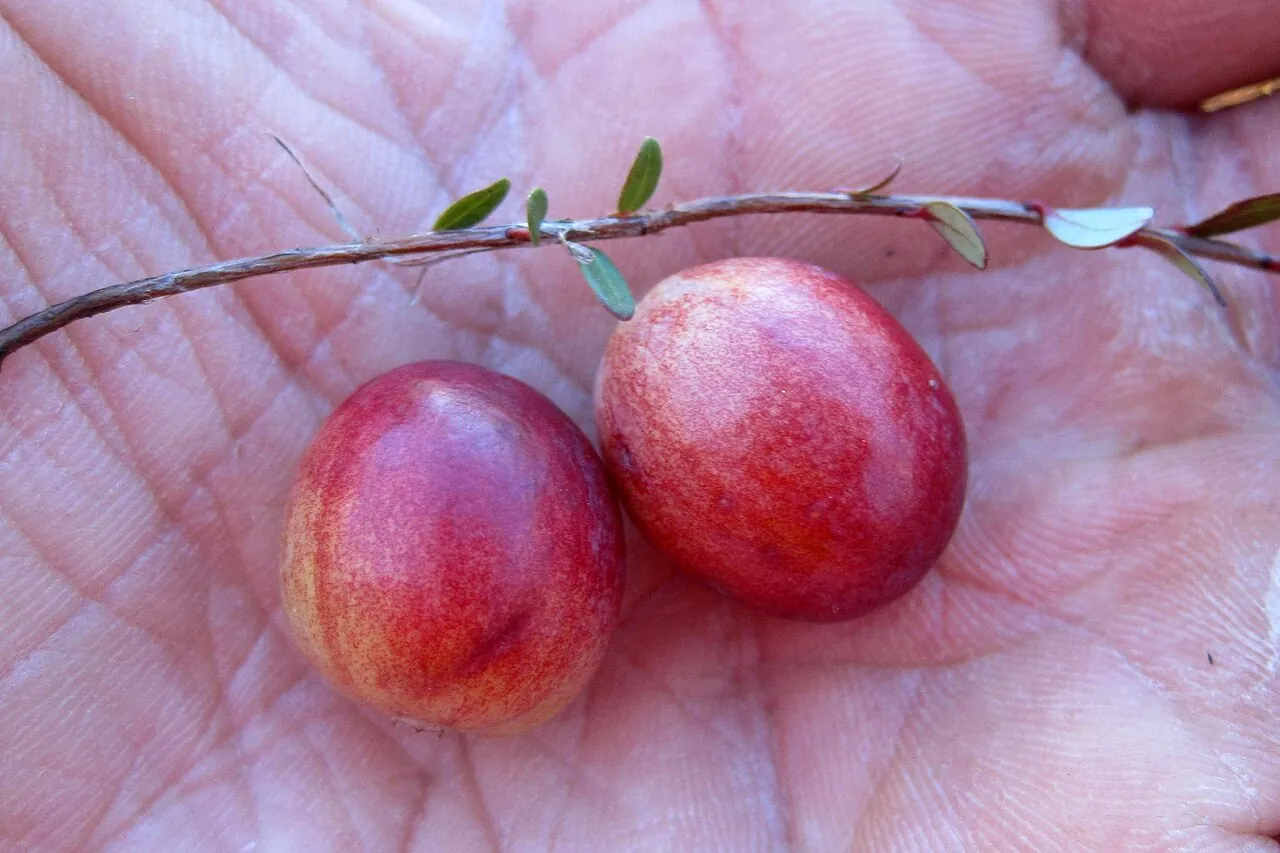
The American cranberry, Vaccinium macrocarpon, grows on low evergreen vines. A berry is round, red and about 1.3 cm (½ in) across. Fresh berries feel firm rather than soft. Their tartness carries through into cooking, which is why cranberry sauces and relishes often include sugar or sweeter fruit such as orange.
Where it comes from
American cranberries come from eastern and central North America, with a native range stretching from southern Canada to the Appalachian Mountains. Commercial crops also grow in British Columbia, Quebec, Canada’s Maritime provinces and Chile. Wisconsin is the largest growing state in the US: it harvested 4,605,000 barrels in 2025, about 209,000 tonnes.
Wisconsin is the largest US grower. Its 2025 harvest weighed about 209,000 tonnes. The crop is still counted in barrels, each weighing 100 pounds.
How it's eaten where it grows
In Maine, a raw relish combines chopped cranberries with a whole orange, peel included, and sugar. Cooked sauce takes a different route: berries simmer with sugar and water until the skins crack.
In Massachusetts, where Wampanoag cooks call the berry sasumuneash, Gail Melix of Santuit makes a raw relish with horseradish, onion and sour cream, frozen and taken out two hours before serving.
On Cape Cod, Mashpee Wampanoag cook Joan Tavares-Avant makes banana cranberry biscuits with chopped berries, mashed banana and a little cornmeal. Nearby in Santuit, Gail Melix’s raw cranberry relish pairs the berries with horseradish, onion and sour cream. Cranberry cooking can be sharp and savory as well as sweet.
How it's grown
Cranberry vines grow in acidic soil and usually begin bearing after two to three years. Bees pollinate the flowers. During active growth, growers keep the beds drained; a winter flood can freeze into a protective layer of ice. In Massachusetts about 95% of the crop is picked wet, from flooded beds where the berries float, and becomes juice, sauce and dried cranberries.
At wet harvest, water lifts the loosened berries to the surface for collection. These berries become juice, sauce and dried fruit. For the fresh-fruit trade, mechanical pickers comb berries from dry vines.
When and where you'll find it
Wisconsin’s fresh season usually falls in September and October. Fresh US cranberries are harvested only in the autumn and usually stay in supermarkets into January; some keep frozen cranberries all year. Fresh, dry-picked fruit also reaches farmers’ markets and roadside stands.
Frozen berries go straight into cooking without thawing. Juice, sauce and dried cranberries offer other ways to use the crop beyond the fresh harvest.
Sources · 9
- Cranberry Marketing Committeeuscranberries.comOther pages2
- Mashpee Wampanoag Tribe, Aunt Joan’s cranberry recipesmashpeewampanoagtribe-nsn.gov
- Massachusetts Cranberriescranberries.org
- NC State Extension Gardener Plant Toolboxplants.ces.ncsu.edu
- University of Maine Cooperative Extensionextension.umaine.edu
- University of Massachusetts Amherst Cranberry Stationumass.edu
- University of Wisconsin–Madison Extensionhealth.extension.wisc.edu
- USDA NASS, Crop Production (August 2026)nass.usda.gov
- Wampanoag Tribe of Gay Head (Aquinnah)wampanoagtribe-nsn.gov
Get it near Detroit
What it tastes like
No sweeter than a lemon, tarter than a grapefruit≈
More about the taste
Cranberries are tangy and tart; pairing them with naturally sweeter fruit is one way to balance that. A sweetened dried cranberry, a juice drink and a raw berry all taste quite different from one another.
Cranberries are tangy and tart; pairing them with naturally sweeter fruit is one way to balance that. A sweetened dried cranberry, a juice drink and a raw berry all taste quite different from one another.
Choose, ripen, store, eat
1ChooseNo soft or discolored berries
Look for
- No soft or discolored berries
Inspect fresh berries and discard any that are soft or discolored before using them. Fresh cranberries are typically a seasonal supermarket item.
2RipenDoesn’t ripen after picking
Doesn’t ripen after pickingCranberries ripen on the vine, turning red as the crop matures; picked-too-early berries won't improve at home.
3StoreFridge, fresh
- FridgeFresh
- FreezerSorted, washed, drainedMoisture-resistant packaging
Refrigerate fresh cranberries. For a surplus, sort, wash and drain them well, then freeze in moisture-resistant packaging — frozen berries don't need thawing before use.
4EatWhole berries
Eat
Whole berriesWhole cranberries go into relish, sauces, breads and desserts. A strained juice keeps different parts of the fruit than a whole-berry preparation, so pick the one that matches what you're after.
Detroit, Michigan
When it’s good hereUsual monthsJust arrivedAt their bestLast chanceAll yearWhere it is in its usual monthsToday, Oct 22Grown hereIn season in your stateShips fromIn season where it grows
10 growing areas, 3 countriesUsual monthsOur estimated monthsToday, Oct 22

- Araucanía
- Maine +1
- Michigan +2
- Oregon
- Washington
- You
5 of 5 areas · October
Growing areas by country
- United States8
- Canada1
- Chile1
Cranberry beds need good drainage during active growth; flooding is used only for winter protection and at harvest, not year-round. Growers periodically add sand to encourage productive shoots.
15 varieties
- No variety photo yetCNJ99-9-96
- Feel
- firm
- No variety photo yetHyRed
- Tartness
- tart
- No variety photo yetBE4
- No variety photo yetCNJ99-52-15
- Feel
- firm
- No variety photo yetCNJ99-9-25
- Feel
- firm
- No variety photo yetCNJ97-105-4Also Mullica Queen
22 names in 7 languages
Cook it
4 cranberry festivalsUsual monthToday, Oct 22
Strange but trueHistoryA myth, and the truthScienceNatureWhere the name came fromCustoms and cultureFood and drinkPeopleA record
If you like Cranberry
Tastes alike
Close relatives
Nutrition, sources
Nutrition
Cranberries, raw · per 100 g
- Carbohydrate
- 12 g
- Fiber
- 3.6 g
- Sugars
- 4.3 g
- Protein
- 0.5 g
- Fat
- 0.1 g
- Vitamin C
- 14 mg
- Potassium
- 80 mg
Photos · 3
Sources
Cranberry · Fruitopia · checked Sep 22, 2026