Sudachi
Citrus sudachi · Rutaceae family
A small Japanese acid citrus prized at the green stage, with juice and zest playing different culinary roles.
Find it near DetroitGet to know it
Sudachi is a small Japanese citrus with sharp juice and a strong fragrance. It is picked dark green and used as a seasoning: a squeeze over fish, a little peel over noodles. Its home is Tokushima, on Japan’s island of Shikoku.
What it is
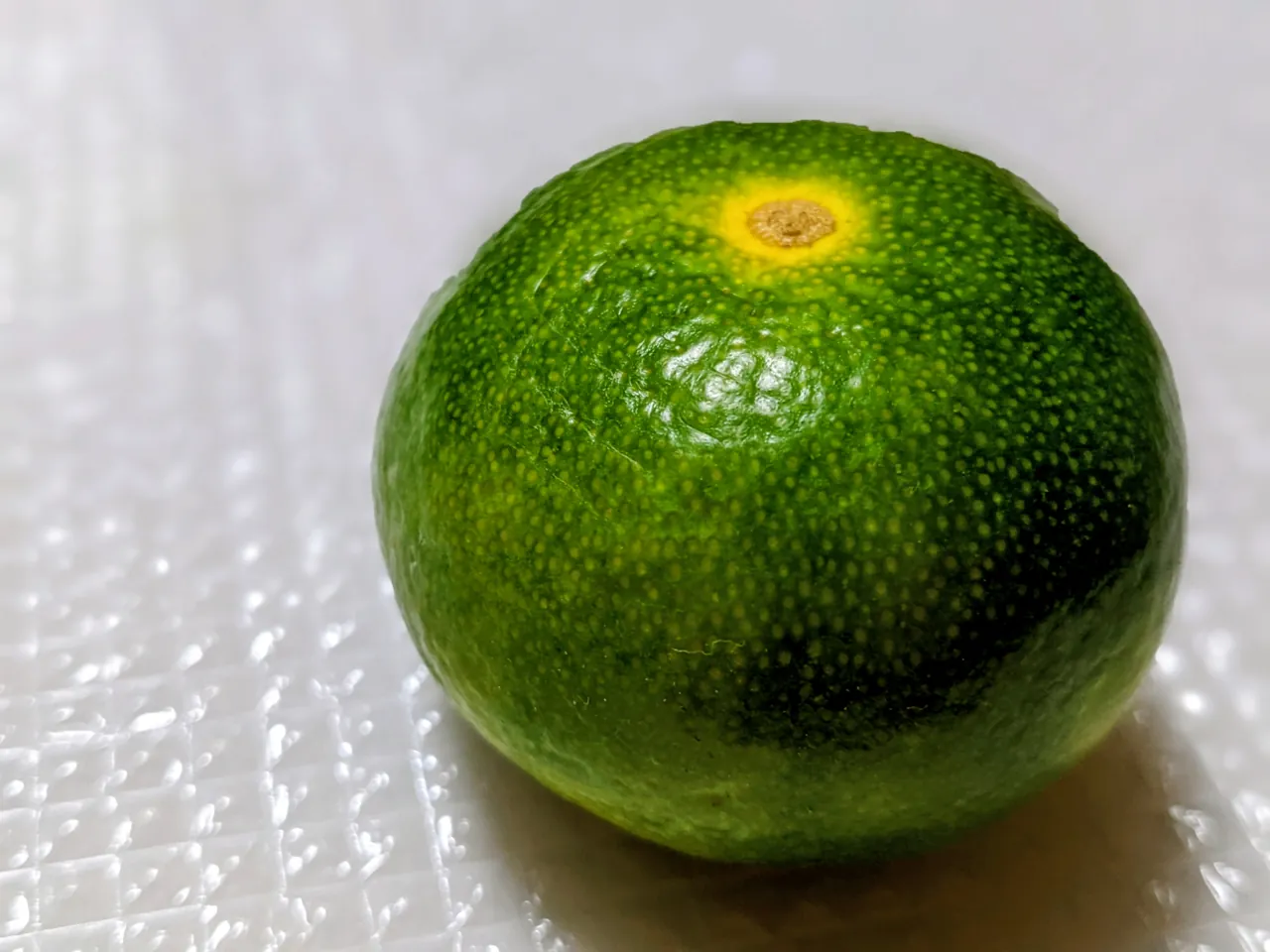
About the size of a golf ball, roughly 4 cm (1.6 in) across, sudachi has a thin, leathery skin with a lightly pebbled surface. Inside are a few seeds and pale green to greenish-yellow flesh.
It's usually picked green and immature, the stage prized for flavour. Left to mature, the skin turns yellow and the flesh becomes yellower too. The juice supplies the sourness; the grated skin is sprinkled on too.
Where it comes from
Sudachi has long been grown in Tokushima, where it began as a fruit for household use. Commercial growing expanded from around 1965. Tokushima now accounts for 98% of Japan’s sudachi shipments, so this little citrus remains closely tied to one part of the country.
How it's eaten where it grows
In Tokushima, sudachi juice goes over sashimi, grilled fish and tofu, and even into miso soup. Grated peel seasons the dipping sauce for tempura or a serving of somen noodles.
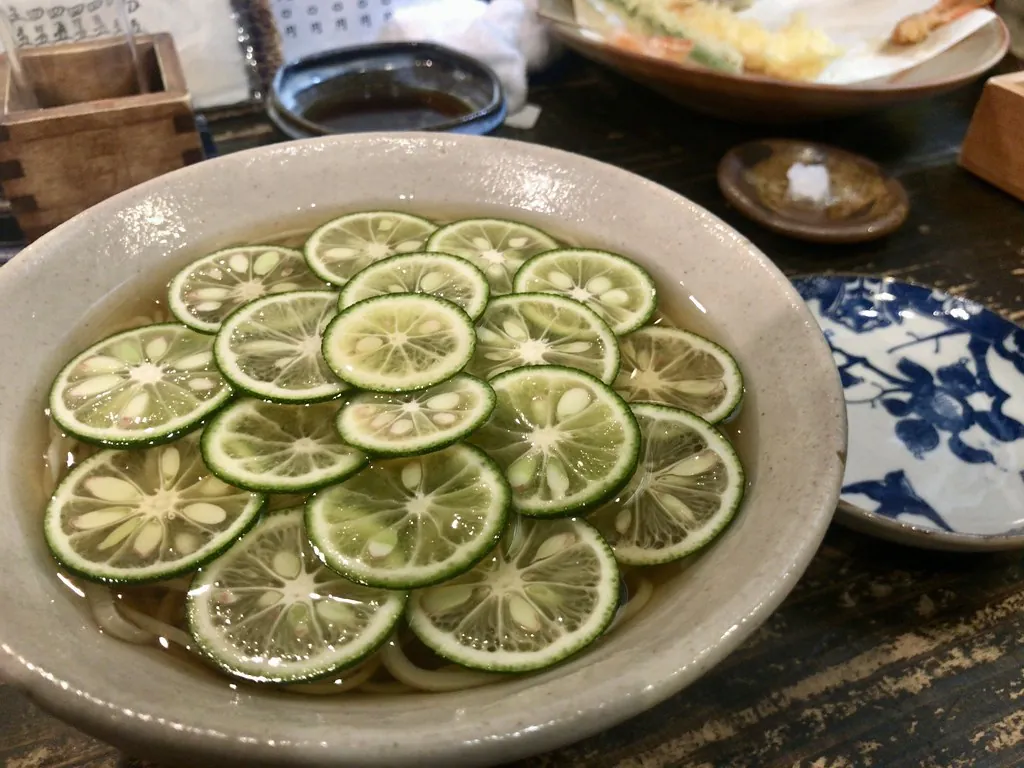
Sudachi udon puts the whole fruit’s shape on display. Thin citrus rounds cover chilled noodles in a cold, diluted mentsuyu, a soy-based noodle broth. A sprig of flowering shiso finishes the bowl.
How it's grown
Sudachi grows on a slow-growing, long-lived citrus tree, usually 1.5–6 m (5–20 ft) tall. Its spreading crown has dense branches and small thorns. Growers pick the fruit while it is still green. Tokushima uses both greenhouses and open fields, extending the fresh-fruit season beyond the outdoor crop.
When and where you'll find it
In Tokushima, greenhouse fruit usually runs from March to August, open-field fruit from August to October, and refrigerated fruit from October to March. In Riverside, California, green cooking fruit is usually picked in September and October.
Outside Japan, bottled sudachi juice is the easier form to meet: several online retailers sell it, bringing the sour juice to the kitchen without the whole fruit.
Get it near Detroit
What it tastes like
Softer than a pear, sweeter than a grapefruit≈
More about the taste
Harvested young, sudachi has a distinctive fragrance and a sharply acid juice used in cooking.
Harvested young, sudachi has a distinctive fragrance and a sharply acid juice used in cooking.
Its aroma and acidity are refreshing, useful both as squeezed juice and as grated peel seasoning.
Choose, store, eat
1ChooseDark-green skin
Look for
- Dark-green skin
Sudachi is picked with dark-green skin for its aroma and acidity. Green is the intended stage to buy and use, not a sign of unripe fruit.
2StoreFridge, several fruits
- FridgeSeveral fruitsPlastic bag, air pressed out
Put several fruits in a plastic bag, press out the air and refrigerate; this keeps sudachi's green color and flavor.
3EatJuice, Peel
Eat
JuicePeelSqueeze the juice over grilled fish, sashimi or tofu, add slices to clear soups and drinks, or grate the peel into noodle or tempura seasonings. Sudachi is used for its acidity and aroma, not eaten out of hand like a sweet orange.
Detroit, Michigan
When it’s good hereUsual monthsJust arrivedAt their bestLast chanceAll yearWhere it is in its usual monthsToday, Oct 22Grown hereIn season in your stateShips fromIn season where it grows
2 growing areas, 2 countriesUsual monthsOur estimated monthsToday, Oct 22

- California
- Ehime
- You
1 of 1 areas · October
Growing areas by country
- Japan1
- United States1
In Tokushima, greenhouse sudachi is available March–August, open-field fruit is harvested August–October, and refrigerated stock fills October–March. The refrigerated months are stored fruit, not a second harvest.
12 names in 10 languages
- ซูดาจิThai
Cook it
Strange but trueScienceWhere the name came fromFood and drink
If you like Sudachi
Close relatives
Sources
Photos · 2
Sources
Sudachi · Fruitopia · checked Sep 22, 2026