Makrut lime
Also called Thai lime · Mauritius papeda · Porcupine orangeCitrus hystrix · Rutaceae family
A bumpy citrus whose best-known culinary role is its aromatic leaves rather than the fruit itself.
Find it near DetroitGet to know it
Makrut lime is a knobbly citrus used for its fragrant peel as well as its leaves. Its juice is sharply sour and slightly bitter; in Thai cooking, the green zest perfumes curry pastes, while a fruit half can scent a whole pot of gaeng tae po.
What it is
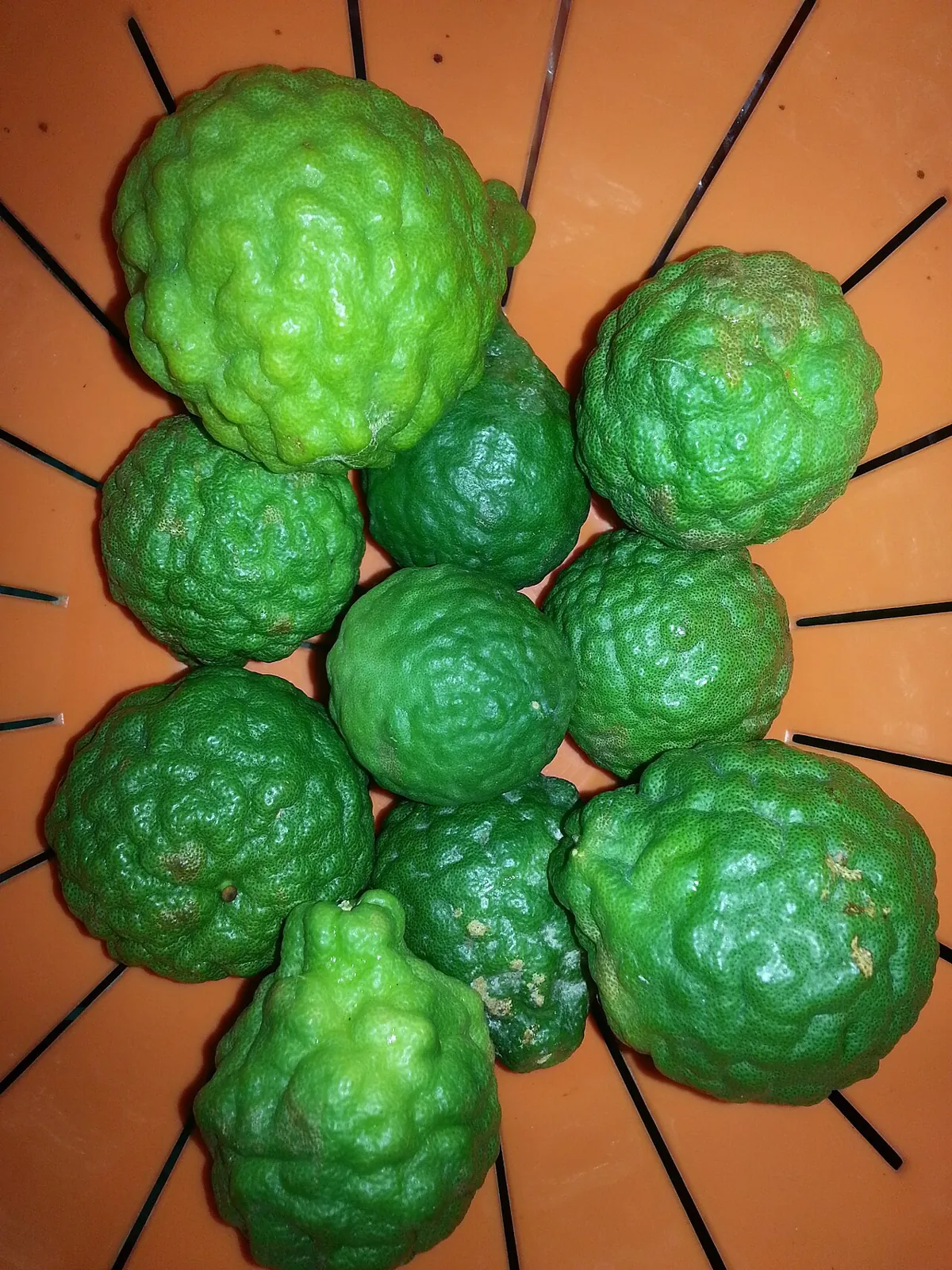
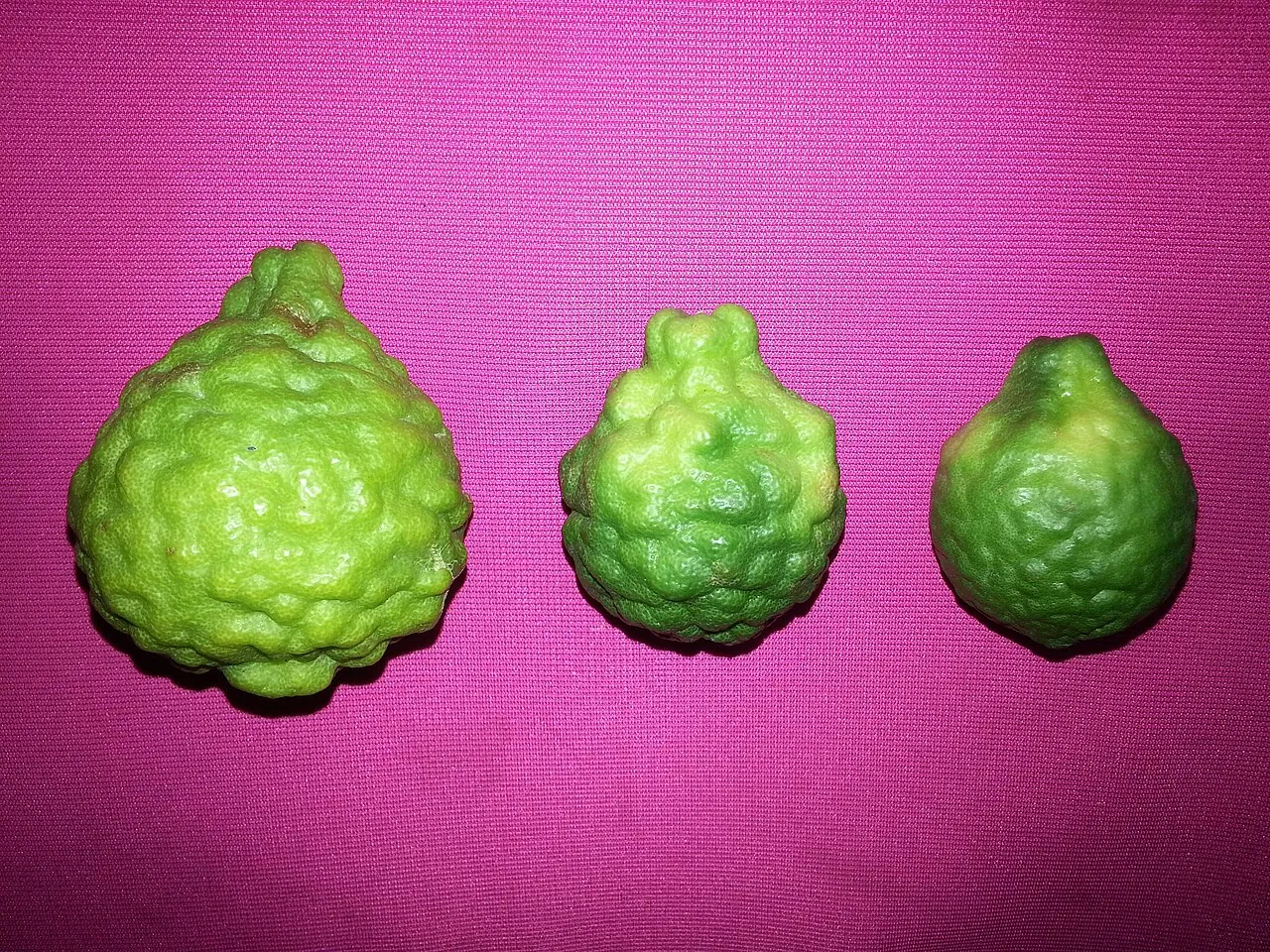
The fruit measures about 5–7 cm (2–2.8 in) across, with deep wrinkles and bumps in its green rind. It turns yellow before falling from the tree. Inside is relatively little juice, sharply sour and a little bitter. The green outer peel supplies the aromatic zest used in curry paste.
Where it comes from
Makrut lime is grown throughout Southeast Asia. A fruit grown on Ambon, in Indonesia, was drawn for the naturalist Rumphius. Its travels also took it across the Indian Ocean: fruit from Mauritius, where it was grown, led to a plant at the botanical garden in Montpellier, France, in 1808. By 1816, a nursery near Tarascon was growing it for sale.
How it's eaten where it grows
In Thailand, the zest is pounded into panang curry paste with lemongrass, galangal and coriander roots. Roasted peanuts give that paste its nutty character. The leaves have another familiar role in tom yum soup.
Gaeng tae po gives the fruit itself a larger part. This sweet-and-sour curry combines pork belly, water spinach and coconut milk with a makrut-lime half. The fruit infuses the sauce as the curry rests, then comes out before serving.
How it's grown
Makrut grows as a small, spreading evergreen tree or shrub, reaching about 4 m (13 ft). Its leaves are glossy green and its white flowers are fragrant. Flowers can appear throughout the year. In Britain, it is grown under glass in a greenhouse or conservatory, then moved outside for summer.
When and where you'll find it
In the US, Pearson Ranch lists whole green makrut limes by the pound, about 9–12 fruit, from a neighbouring specialty citrus grower; they usually become available in late July. At Riverside, California, the fruit reaches full maturity in late winter to early spring, when the rind turns yellow and the fruit falls from the tree.
Sources · 7
- D. J. Mabberley, Gardens’ Bulletin Singapore (2002)nparks.gov.sg
- Immm Rice & Beyond, with Leela Punyaratabandhuimmmchicago.com
- Pailin Chongchitnant, Hot Thai Kitchenhot-thai-kitchen.com
- Pearson Ranchpearsonranch.com
- Royal Horticultural Societyrhs.org.uk
- Singapore National Parks Boardnparks.gov.sg
- University of California, Riverside Citrus Variety Collectioncitrusvariety.ucr.edu
Get it near Detroit
Sell fruit online? Add your business
What it tastes like
As mild as a peach, no sweeter than a grapefruit≈
More about the taste
Makrut lime rind is strongly aromatic, while the juice is sharply sour and bitter. A little peel can perfume a paste, but the whole fruit needs a dish built around its intensity.
The leaves are pungent, and the fruit is small and irregularly bumpy, with a sharp flavor from oils in the pulp.
How to buy it
1EatRind, Juice
Eat
RindJuiceThe fruit offers several distinct ingredients: aromatic rind for a paste, and sharp juice or deseeded fruit halves for a curry such as gaeng tae po, which also uses the finely cut leaves.
Detroit, Michigan
When it’s good here
Season not documented for Michigan.
34 names in 17 languages
- Chanh TháiVietnamese
Cook it
Strange but trueHistoryScienceWhere the name came fromCustoms and culture
If you like Makrut lime
Close relatives
Sources
Sources
Makrut lime · Fruitopia · checked Sep 22, 2026
- citrusvariety.ucr.edu /crc2454
- commons.wikimedia.org /wiki/File:Kaffir_lime.jpg
- hot-thai-kitchen.com /panang-curry-paste
- pearsonranch.com /products/kaffir-limes-1-pound
- theguardian.com /food/2020/mar/01/makrut-lime-the-weird-and-wonderful-citrus-at-the-heart-of-thai-flavours
- thephotowali.wordpress.com /2021/11/03/kaffir-lime-syrup-makrut-lime-syrup/