Coconut
Also called Coconut palm · CocoanutCocos nucifera · Arecaceae family
Taste coconut through its different forms: young flesh, mature meat and the rich milk used in rice and custard.
Find it near DetroitGet to know it
A young coconut is a drink and a spoonable snack in one: sweet water inside a shell lined with jelly-soft flesh. Left longer on the palm, it develops firm white meat. Grate that meat and squeeze it, and you have coconut milk.
What it is
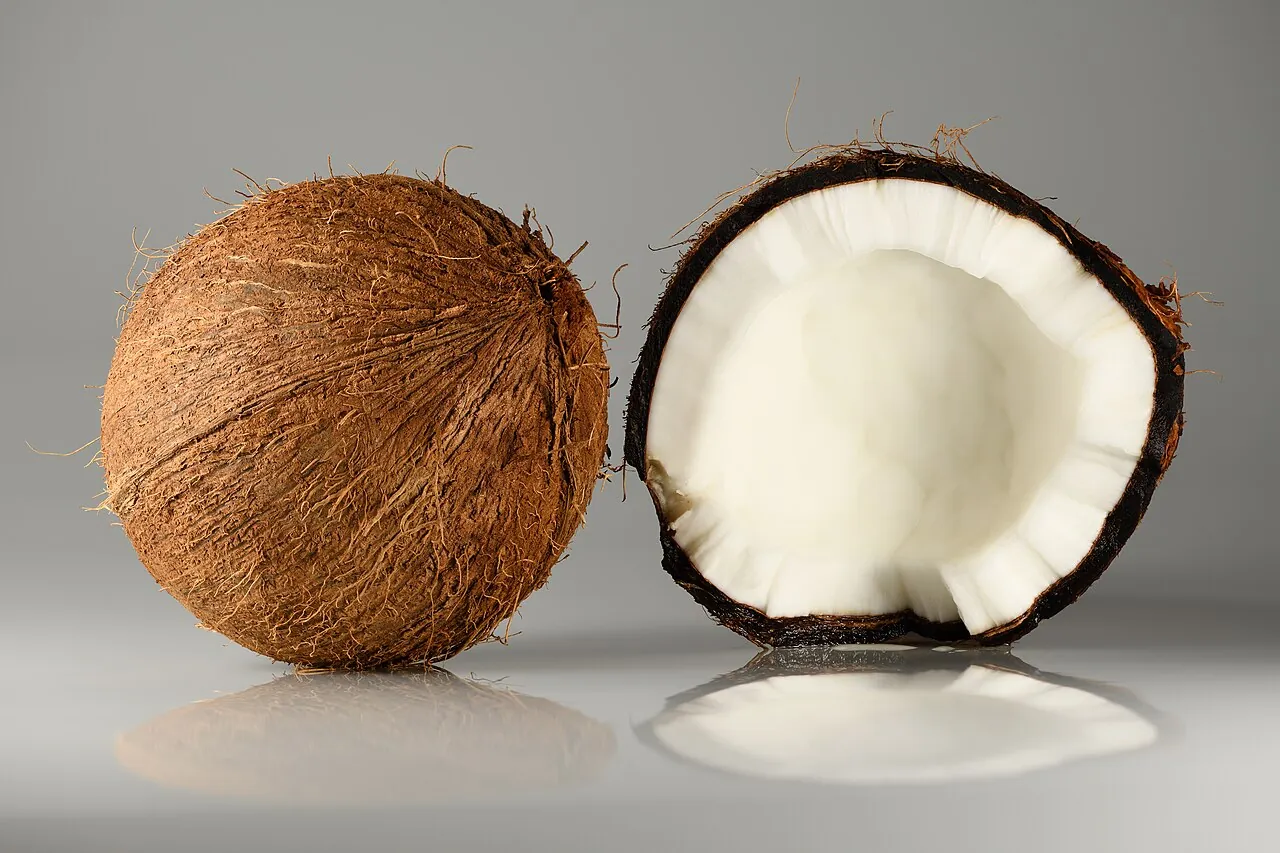
Coconut is the fruit of Cocos nucifera, a palm. A thick, stringy husk surrounds a brown, hairy shell, whose end has three soft spots called eyes. A young coconut with its husk removed measures about 10 cm (4 in) across.
Young drinking coconuts are picked six to nine months after flowering. At 11–13 months, the flesh is hard and white, with less liquid inside. Coconut water is the liquid already in the fruit; coconut milk is squeezed from the grated flesh.
Where it comes from
Coconuts have two broad family lines, one associated with the Pacific and another with the Indian and Atlantic oceans. People carried them on sea voyages as food and drinking water. Later, Europeans took coconuts from India to the Atlantic coasts of Africa and South America and to the Caribbean.
India’s 2024/25 coconut crop totals about 14 million tonnes. Kerala has the country’s largest area of coconut palms, while Tamil Nadu produces the most coconuts.
How it's eaten where it grows
In Kerala, puttu combines rice flour and grated coconut in a steamed dish, often eaten with kadala curry, a chickpea curry. In Sri Lanka, pol sambol mixes coconut with chilli and onion alongside string hoppers, little steamed nests of rice-flour strands.
Coconut milk gives Sri Lankan watalappan its rich base. Eggs, kithul jaggery and spices turn it into a sweet dessert, especially popular among the island’s Muslim community.
How it's grown
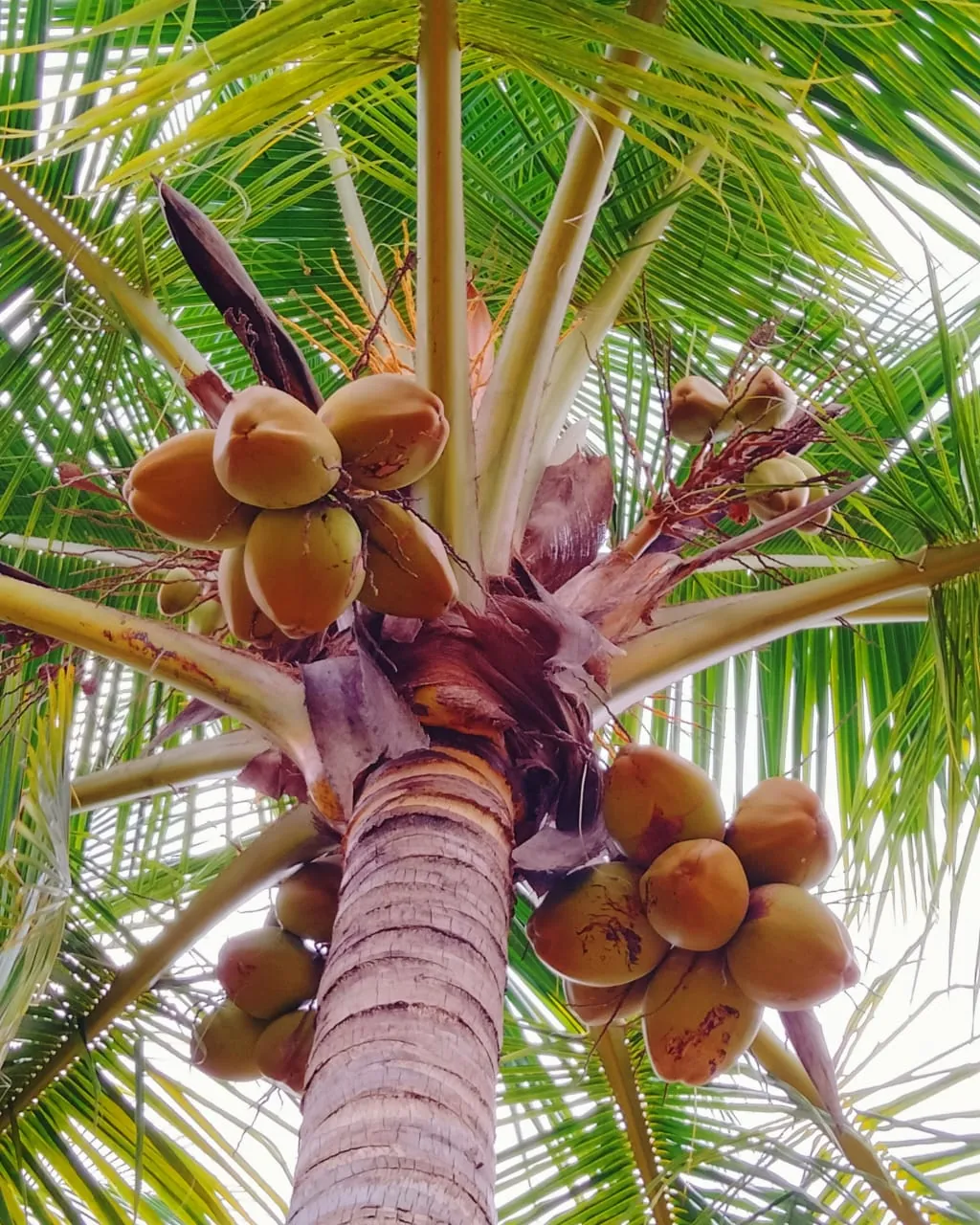
Coconut palms grow in tropical warmth, full sun and sandy soil. Tall palms can reach 24–30 m (80–100 ft), with flowers beginning after four to six years.
Harvesters cut fruit with a saw on a long pole or climb the palm. A climber lowers bunches of young coconuts on a rope to a second worker on the ground, keeping the tender nuts from falling hard.
When and where you'll find it
Young and mature coconuts usually reach markets throughout the year from tropical growing countries. In Southeast Asia and now in the US, a young coconut is often sold with most of its husk trimmed away, leaving a rounded body with a flat base and pointed top. Mature coconuts also travel with the bulky husk removed, exposing the brown shell.
In Southeast Asian markets and roadside stalls, young flesh and its water also come in small bags kept on ice.
Sources · 6
- Government of India, Press Information Bureau (19 April 2026)static.pib.gov.in
- Gunn, Baudouin and Olsen, PLOS ONE (2011)journals.plos.org
- Kerala Tourismkeralatourism.org
- Sri Lanka Tourism Promotion Bureausrilanka.travel
- University of Florida IFASgardeningsolutions.ifas.ufl.edu
- University of Hawaiʻi at Mānoa CTAHRwww3.ctahr.hawaii.edu
Get it near Detroit
What it tastes like
As soft as a banana, as mild as a pear≈
More about the taste
Young coconut has translucent, jelly-like flesh and abundant liquid. As the fruit matures, its white flesh becomes firmer and thicker while the amount and eating quality of the liquid change.
Young coconuts have translucent, jelly-like flesh; mature coconuts have firmer white flesh. The internal liquid also changes in amount and character as the fruit develops.
Choose, ripen, store, eat
1ChooseNo cracks
Look for
- No cracks
- No wet or moldy eyes
Ignore
- Sloshing sound
Decide whether you want tender young flesh or firm mature meat. For husked whole nuts, avoid cracks and wet or moldy eyes; a sloshing sound only indicates liquid inside, not a complete freshness test.
2RipenDoesn’t ripen after picking
Doesn’t ripen after pickingChoose the maturity stage for your dish at purchase — a young coconut won't become a mature cooking coconut afterward.
3StoreStorage depends on whether the nut is young, mature, husked, trimmed or already opened — follow the instructions for the exact form you buy
Storage depends on whether the nut is young, mature, husked, trimmed or already opened — follow the instructions for the exact form you buy.
4EatCoconut water, Flesh
Eat
Coconut waterFleshThe edible interior includes coconut water and flesh. Coconut milk, made from the flesh, is a separate cooking ingredient from plain coconut water.
Detroit, Michigan
When it’s good hereUsual monthsJust arrivedAt their bestLast chanceAll yearWhere it is in its usual monthsToday, Oct 22Grown hereIn season in your stateShips fromIn season where it growsOrderableListed by a seller we checkedThe day a seller was checked
11 growing areas, 4 countriesUsual monthsOur estimated monthsToday, Oct 22

- Bahia
- Balochistan
- Espírito Santo
- Lambayeque
- Northern Territory +1
- Pará
- Pernambuco
- Piura
- Sindh
- You
4 of 4 areas · October
Growing areas by country
- Brazil5
- Australia2
- Peru2
- Pakistan2
Makapuno is a coconut type whose flesh stays soft and jelly-like even at maturity, valued rather than considered spoiled. It's known by related names in Indonesia, India and Thailand.
37 varieties
- No variety photo yetGenjah Pandan Wangi
- Scent
- air dan daging buah muda berwangi pandan Indonesia
- No variety photo yetBRS 001Also Híbrido Praia do Forte
- No variety photo yetBRS 002Also Híbrido Miranda Junior
- No variety photo yetBRS 003Also Híbrido Sementeira
- No variety photo yetGenjah Entog Kebumen
- No variety photo yetKalpasree
55 names in 26 languages
Cook it
11 coconut festivalsUsual monthToday, Oct 22
Strange but trueHistoryA myth, and the truthScienceNatureWhere the name came fromCustoms and culturePeople
If you like Coconut
Tastes alike
Same plant family
Sources
Sources
Coconut · Fruitopia · checked Sep 21, 2026