Peach palm fruit
Also called Peach palmBactris gasipaes · Arecaceae family
Peach palm shifts the meaning of fruit toward a substantial cooked food. Its floury pulp can serve roles more familiar from grain or root crops, while the same plant also supplies a very different product: heart of palm.
Find it near DetroitGet to know it
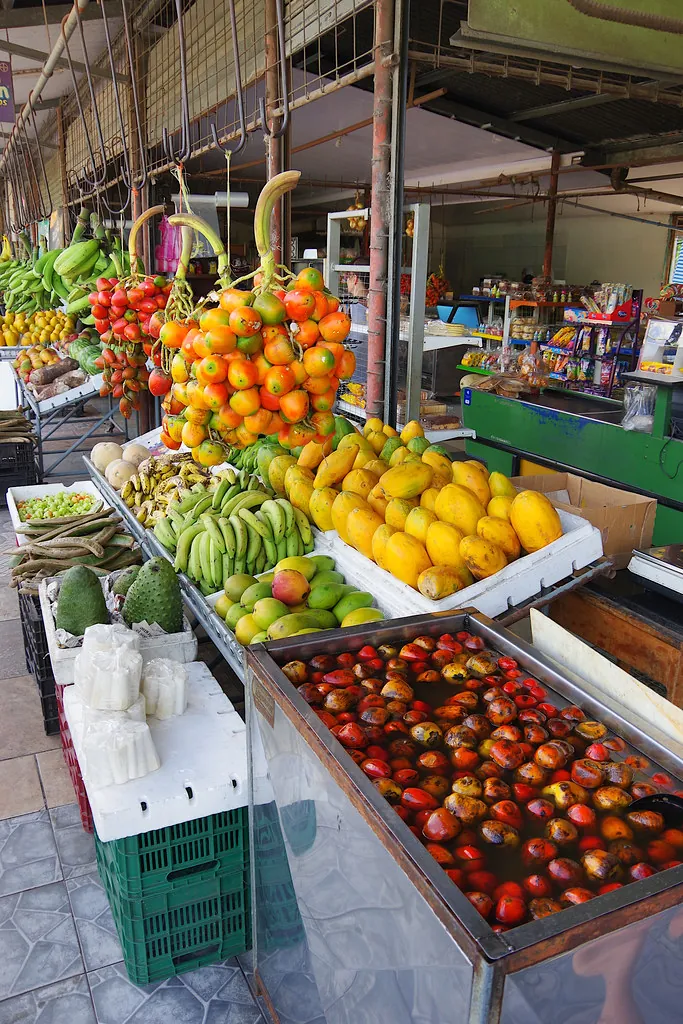
Peach palm is a fruit that eats like a staple: its yellow to light-orange flesh is sweet, dry and floury. It is cooked before eating. In Cali, Colombia, it is sold on the street as chontaduro, with salt, honey and lemon.
What it is
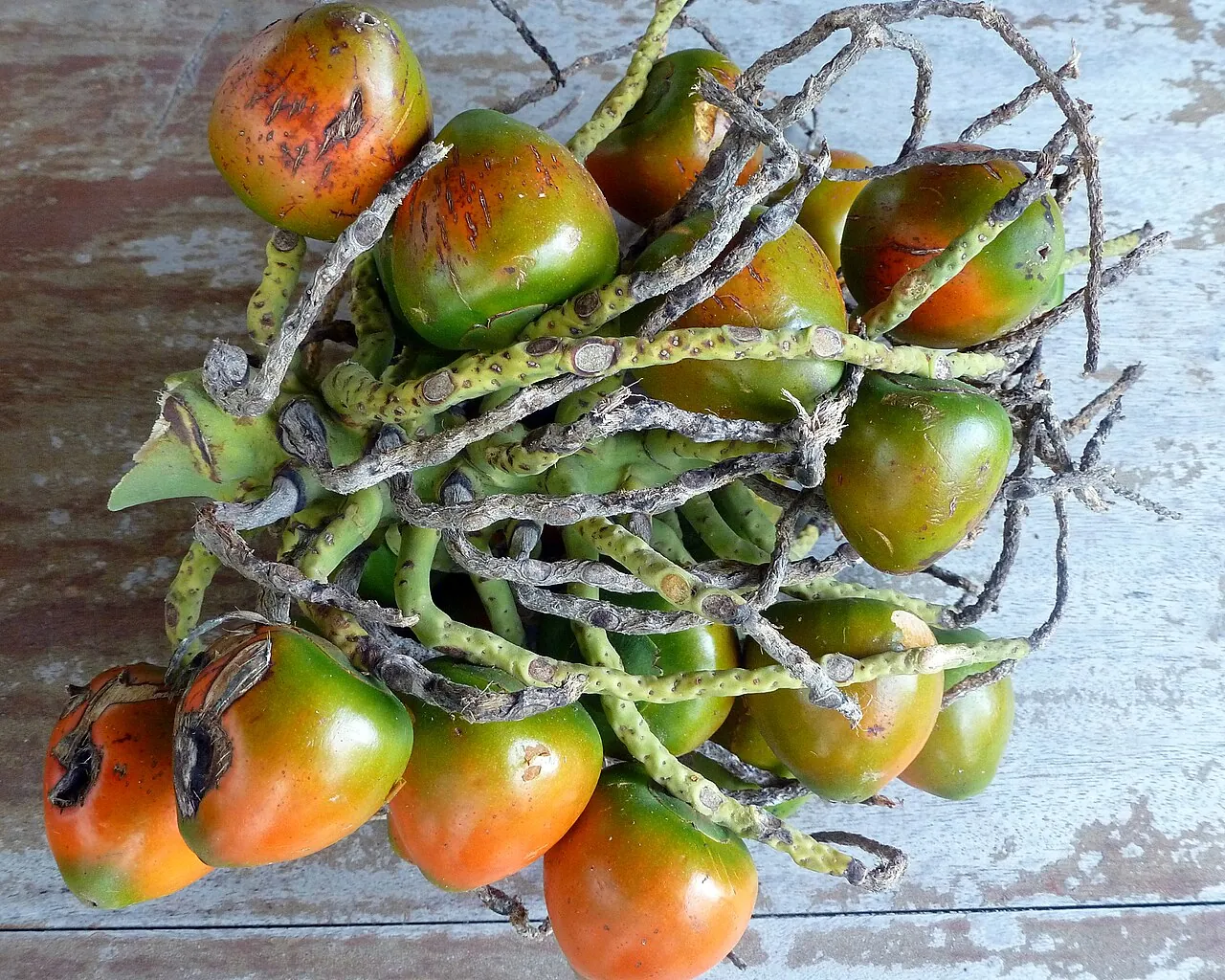
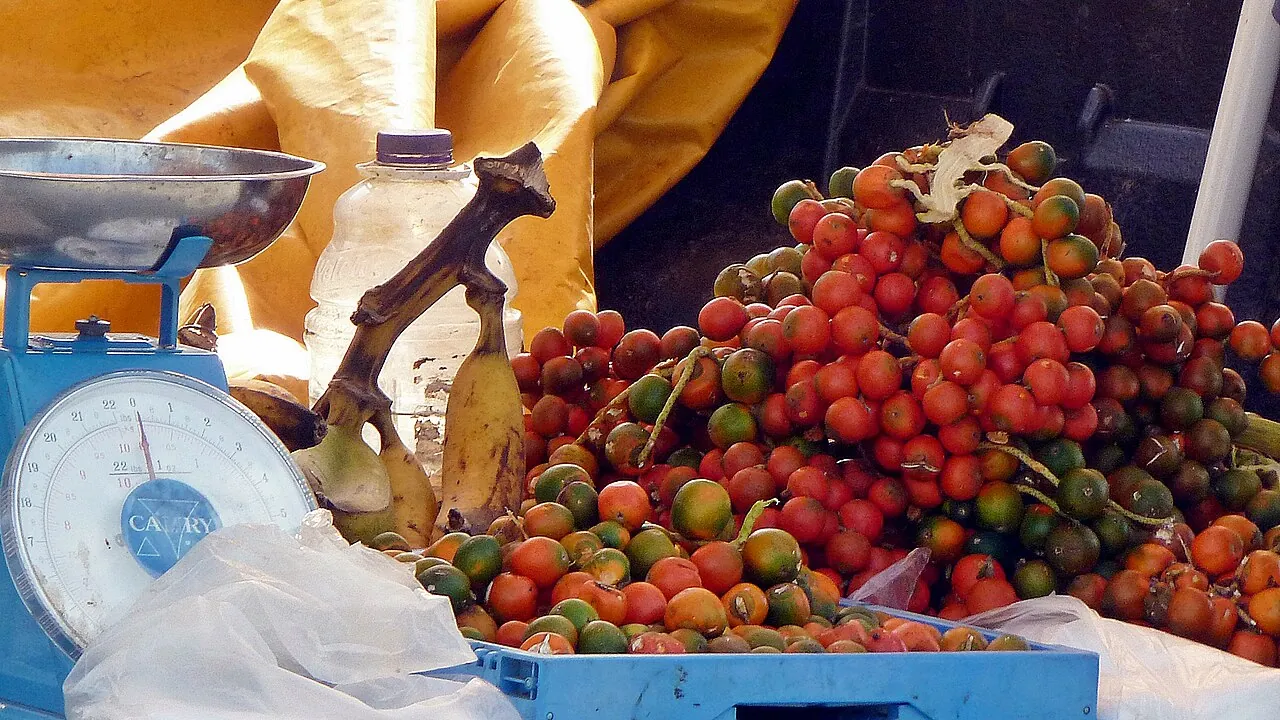
The thin-skinned fruit is about 2.5–5 cm (1–2 in) long, yellow, orange or scarlet, and normally holds one hard-shelled seed. Shapes range from oval to cone-like, and the flesh is dry and mealy rather than juicy.
The same plant also supplies heart of palm. That soft, delicate-tasting food comes from the growing top of the trunk and its young leaves; it is a different part of the plant.
Where it comes from
Indigenous peoples cultivated peach palm long before Europeans arrived in the Americas. It was an important food across lower Central America and the tropical river basins of South America, including the Amazon and Orinoco. Its names change with the country: pejibaye in Costa Rica, pijuayo in Peru and pupunha in Brazil.
How it's eaten where it grows
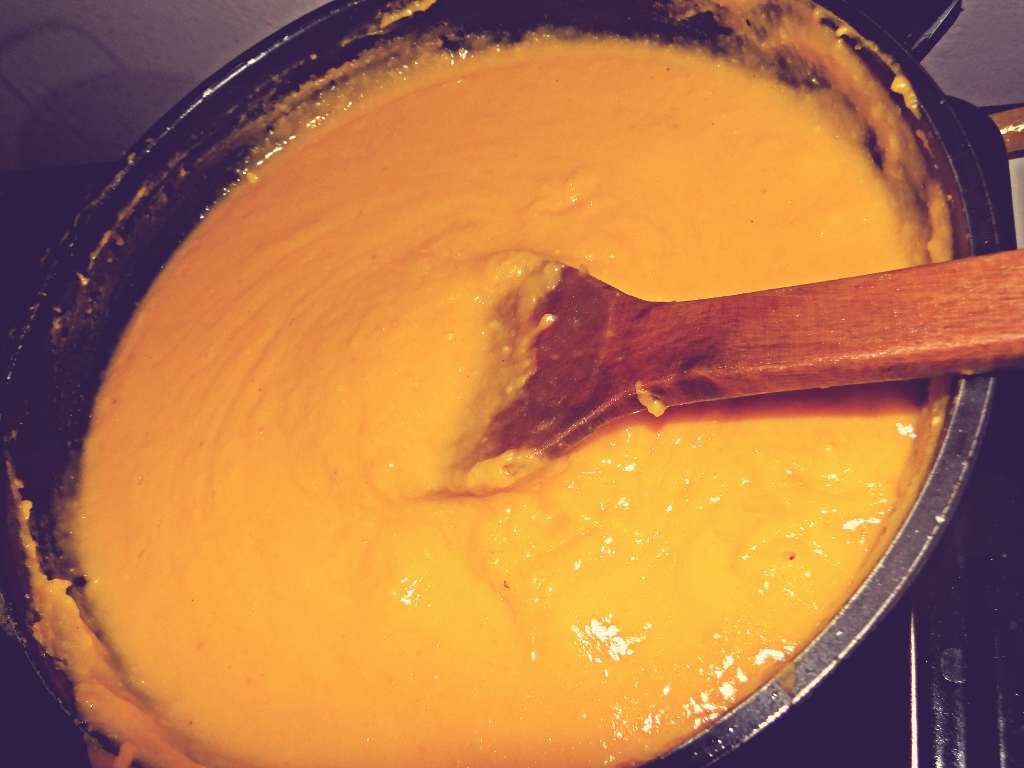
In Costa Rica, boiled pejibaye is eaten with mayonnaise. Its substantial pulp also goes into sweets. Delicia de pejibaye, a baked dessert from a cook in San José de la Montaña, Heredia, combines cooked fruit with eggs, evaporated milk, sugar, spices and raisins.
In Colombia, chontaduro is a street snack in Cali, eaten with salt, honey and lemon. Dried fruit can also be ground into flour.
How it's grown
Peach palm often grows as a clump of stems ringed with stiff black spines. It needs a tropical climate and grows best on fertile, well-drained ground. Farmers raise it from seeds or from shoots growing beside the main stem.
The spines make harvesting awkward. Pickers knock the fruit down or cut it with long poles fitted with cutters; with a ladder, a whole bunch can be cut and lowered by rope.
When and where you'll find it
In Costa Rica, the fruit usually matures from September through April. In Archidona, Ecuador, April brings the Festival de la Chonta.
Fresh fruit is very perishable, so it travels best preserved. Peeled, seeded halves canned in brine have been exported to the United States, and La Fe sells ready-to-eat chontaduro in glass jars. On the label, chontaduro means the fruit, not heart of palm.
Sources · 7
- Asociación de Municipalidades Ecuatorianasrepositorio.ame.gob.ec
- Cocina Tradicional Costarricense: Heredia y Limón, via Costa Rica Tourism Boardvisitcostarica.com
- Colombia Travel, ProColombiacolombia.travel
- FAO, Neglected Crops (1994), J. Mora-Urpíhort.purdue.edu
- La Fe Foodslafe.com
- Morton, Fruits of Warm Climates (1987)hort.purdue.edu
- Museo Nacional de Costa Ricadiquis.go.cr
Get it near Detroit
What it tastes like
As mild as a peach, no sweeter than a grapefruit≈
More about the taste
Peach palm is a starchy, substantial fruit usually eaten cooked. Its pulp is floury; in Acre, Brazil, yellow-orange flesh is fibrous and oily, and cooked mashed fruit is used in cake. Texture varies by fruit type and preparation.
The flesh (mesocarp) is farinaceous, or floury, and varies in orange coloration.
Fruit can have red, orange or yellow exterior colors and considerable variation in size.
Choose, store, eat
1ChooseAsk which fruit type and preparation are being sold
Ask which fruit type and preparation are being sold. Material selected for fruit and plantings managed for heart of palm can reflect different agricultural objectives.
2StoreFresh peach palm fruit is perishable
Fresh peach palm fruit is perishable. Drying is a traditional preservation method, though not a tested modern home-storage protocol.
3EatCooked fruit
Eat
Cooked fruitPeach palm fruit is cooked before eating, not eaten raw.
Detroit, Michigan
When it’s good hereUsual monthsJust arrivedAt their bestLast chanceAll yearWhere it is in its usual monthsToday, Oct 22Grown hereIn season in your stateShips fromIn season where it grows
1 growing area, 1 countryUsual monthsToday, Oct 22

- Pará
- You
Peach palm is important in many Indigenous food systems across humid tropical America, cooked as fruit, made into flour-like products, and fermented into drinks.
37 names in 9 languages
- pijuayoroot
- CachipayVietnamese
Cook it
2 peach palm fruit festivalsUsual monthToday, Oct 22
Strange but trueHistoryA myth, and the truthNatureWhere the name came fromCustoms and cultureFood and drinkPeople
If you like Peach palm fruit
Tastes alike
Same plant family
Sources
Photos · 4
Sources
Peach palm fruit · Fruitopia · checked Sep 22, 2026