Black sapote
Diospyros digyna · Ebenaceae family
A green-skinned persimmon relative whose ripe interior becomes dark, soft and pudding-like.
Find it near DetroitGet to know it
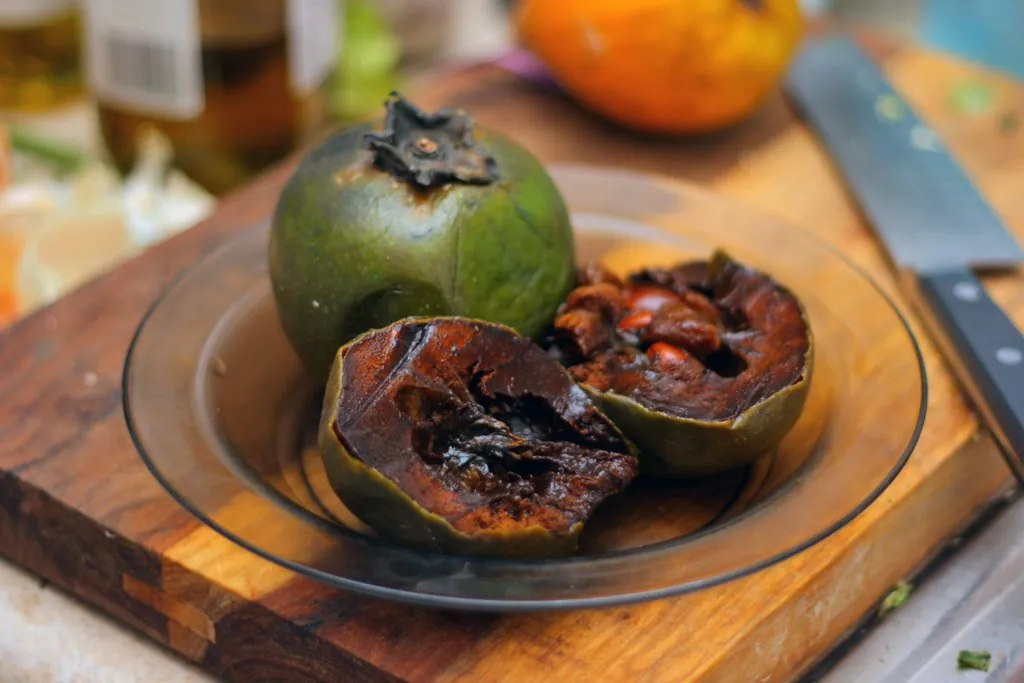
Black sapote hides soft, almost black pulp inside a green skin. This persimmon relative tastes mild and sweet, with a jelly-soft texture. Its dark, custard-like flesh gives it the name chocolate pudding fruit.
What it is
The fruit is round or slightly flattened, 5–15 cm (2–6 in) across, with a green cap that stays on. Inside an unripe fruit, the flesh is hard and yellowish-orange. As it ripens, it turns brown to black and becomes very soft.
Some fruits have no seeds; others hold up to twelve flat brown ones. You cut a ripe fruit in half, lift out any seeds and scoop the pulp from the skin. Unripe pulp is bitter and irritating, so black sapote is eaten only when fully soft.
Where it comes from
Black sapote comes from Mexico, Central America and western South America. Indigenous people in Mexico and Central America ate it before the Spanish carried it to the Caribbean and Asia. It now grows in the Philippines, the Moluccas and Sulawesi as well as the Americas. Australia also grows it as a small fruit crop.
How it's eaten where it grows
In Mexico, pastel de zapote negro puts black-sapote pulp into a cake batter with butter, sugar, eggs and flour. One version bakes in two round pans, then sandwiches the layers with frosting made from more fruit puree, Kahlúa and vanilla.
In Darwin, Australia, the ripe pulp is eaten as it is or with a squeeze of lime, passionfruit or cream. Rum, vanilla or coffee liqueur bring out its flavour, and it goes into ice cream and mousses.
How it's grown
Black sapote grows on an evergreen tree in tropical and warm subtropical climates. Full sun and well-drained soil suit it. A seedling can take up to five or six years to flower, and it doesn't copy its parent exactly. Some trees produce only male flowers and never fruit, so growers keep chosen varieties going by budding or grafting.
When and where you'll find it
In Florida, the harvest may fall from December through February or from June through August. Miami Fruit, a Florida seller, packs whole fruit from a single piece up to 34–40 pound (15–18 kg) bulk boxes.
A picked fruit takes 3–14 days to soften enough to eat. Once soft, it keeps for several days in the refrigerator.
Get it near Detroit
What it tastes like
As soft as a banana, as mild as a pear≈
More about the taste
The ripe interior is soft, dark-brown to black, with a sweet, mild flavor, which gives it the nickname "chocolate pudding."
The ripe interior is soft, dark-brown to black, with a sweet, mild flavor, which gives it the nickname "chocolate pudding."
Choose, ripen, store, eat
1ChooseDull green skin
Look for
- Dull green skin
- Sepals lifting away
Ignore
- Green skin
Look for skin that has turned from shiny to dull green, with the sepals lifting away from the fruit; the skin stays green even when the flesh inside is ripe.
2RipenRipens after picking
Ripens after pickingMature fruit softens after picking; unripe fruit is bitter, astringent and irritating, so wait until it's fully soft.
3StoreFridge, ripe
- FridgeRipe
Refrigerate black sapote once ripe; it keeps only briefly.
4EatSoft ripe pulp · not skin, seeds
Eat
Soft ripe pulpNot eaten
SkinSeedsScoop out the soft ripe pulp; the skin and seeds are not eaten.
Detroit, Michigan
When it’s good hereUsual monthsJust arrivedAt their bestLast chanceAll yearWhere it is in its usual monthsToday, Oct 22Grown hereIn season in your stateShips fromIn season where it grows
5 growing areas, 3 countriesUsual monthsOur estimated monthsToday, Oct 22

- Florida
- New South Wales
- Northern Territory +1
- Penang
- You
3 of 4 areas · October
Growing areas by country
- Australia3
- Malaysia1
- United States1
It's eaten fresh and used in drinks, cakes, milkshakes and frozen desserts.
Cook it
Strange but trueHistoryA myth, and the truthScienceNatureWhere the name came fromFood and drink
If you like Black sapote
Tastes alike
Close relatives
Sources
Photos · 2
Critical MiamiCC BY-SA 2.0 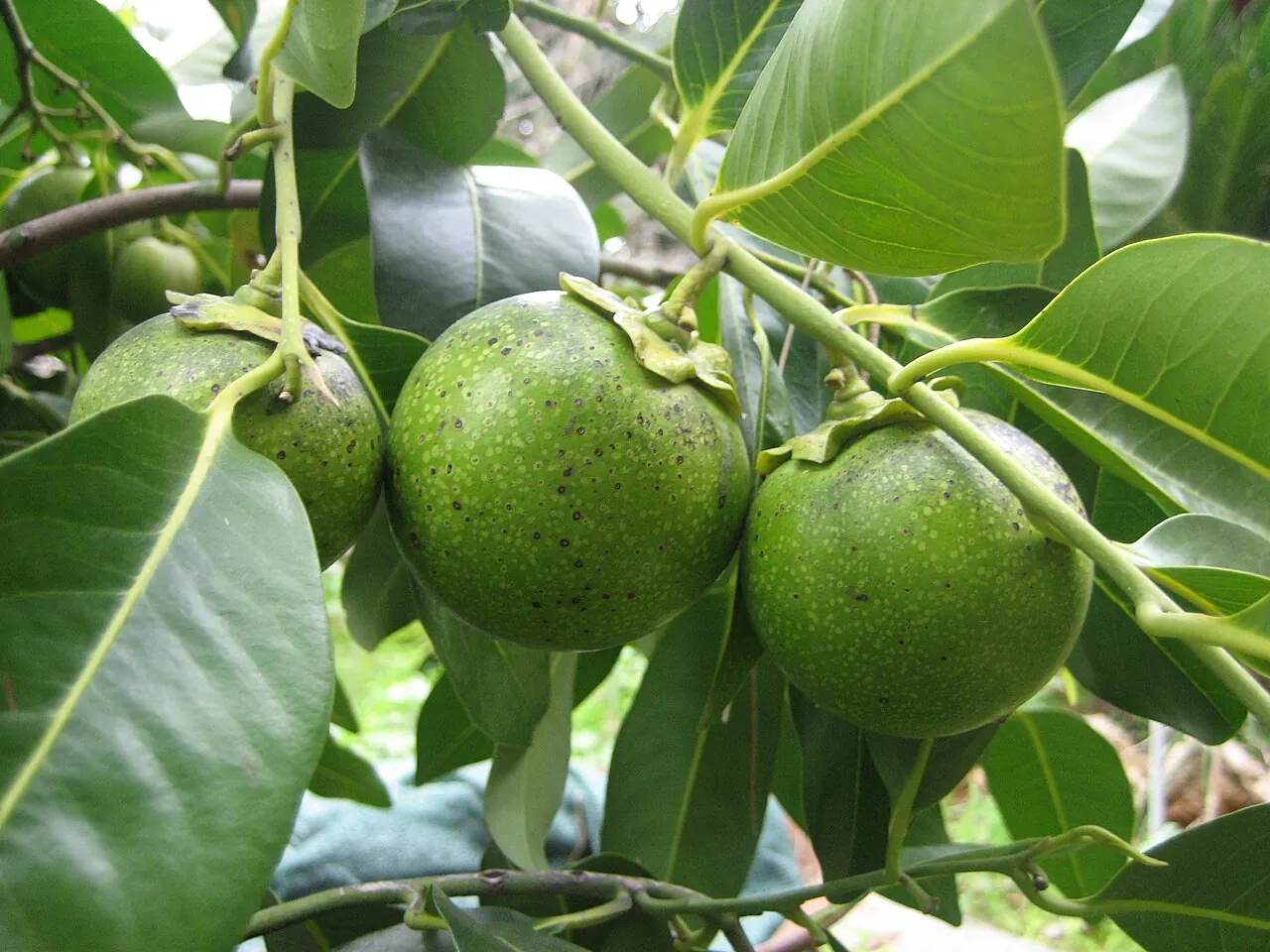
Yonathan GallerPublic domain
Sources
Black sapote · Fruitopia · checked Oct 2, 2026