Prickly pear
Also called Barbary fig · Indian Fig · Tuna CactusOpuntia ficus-indica · Cactaceae family
A cactus-fruit group with juicy flesh, variable colors and tiny barbed hairs that require deliberate preparation.
Find it near DetroitGet to know it
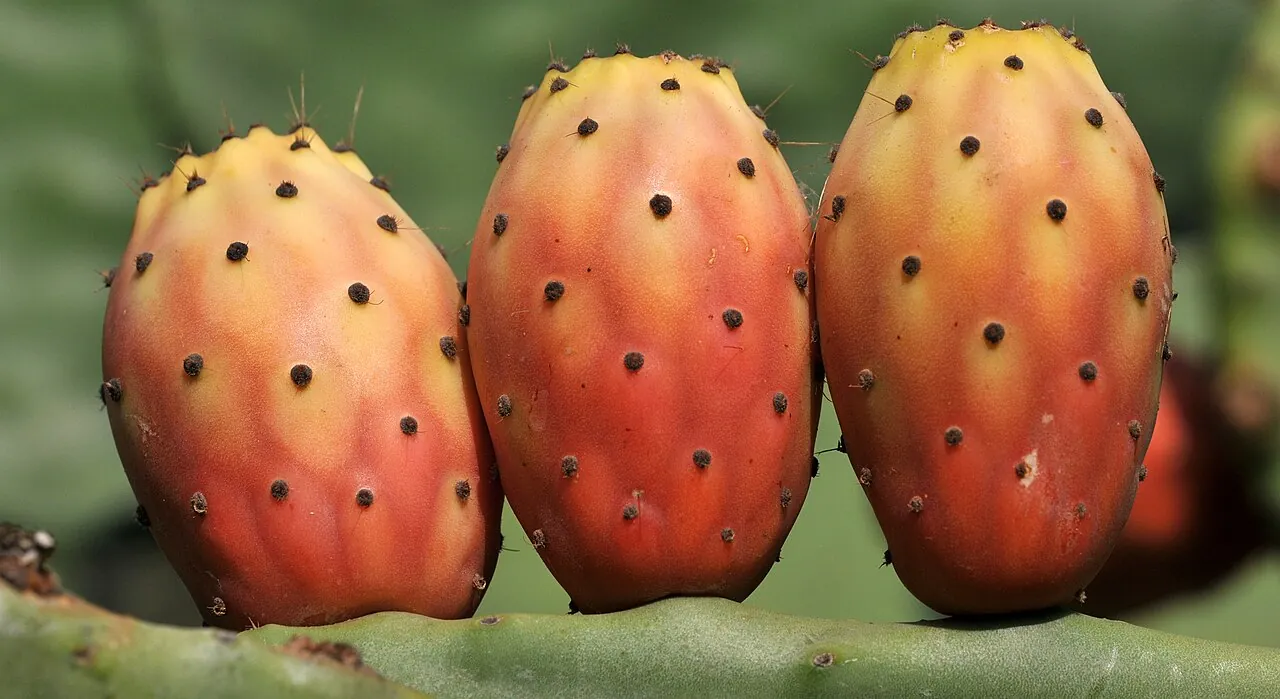
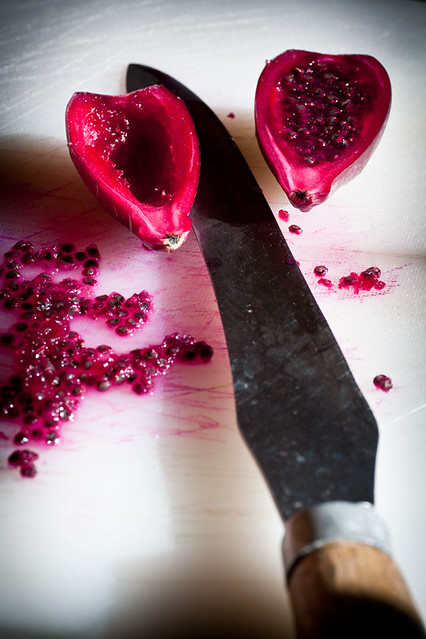
Prickly pear is a cactus fruit with juicy, lightly sweet flesh often compared to watermelon. Its oval skin hides a mouthful of small seeds and carries tiny barbed hairs. In Mexican Spanish the fruit is a tuna; nopales are the cactus pads.
What it is
A typical prickly pear is about 5–8 cm (2–3 in) long. Ripe skin can be green, yellow-orange, red or purple. The watery flesh holds many small edible seeds.
The tiny barbed hairs are called glochids. Even market fruit can retain some after cleaning. Tongs keep hands away from them; all glochids need removing before the fruit is peeled and sliced for eating raw.
Where it comes from
The cultivated fruit cactus, Opuntia ficus-indica, comes from Mexico, where people began growing it at least 9,000 years ago. It now grows in hot, dry regions around the world, including Sicily, where orchards near Catania produce Ficodindia dell’Etna. In the desert Southwest of North America, Tohono O’odham and Cahuilla food traditions use both the fruit and the pads.
How it's eaten where it grows
In Mexico, peeled prickly pears are eaten fresh as a snack. In Sicily, the fruit goes into Rosolio di Ficodindia, a liqueur, as well as jam, ice cream and candied fruit. Around Tucson, the juice goes into prickly pear punch with sugar, sparkling water and, if you like, a squeeze of lemon or lime.
How it's grown
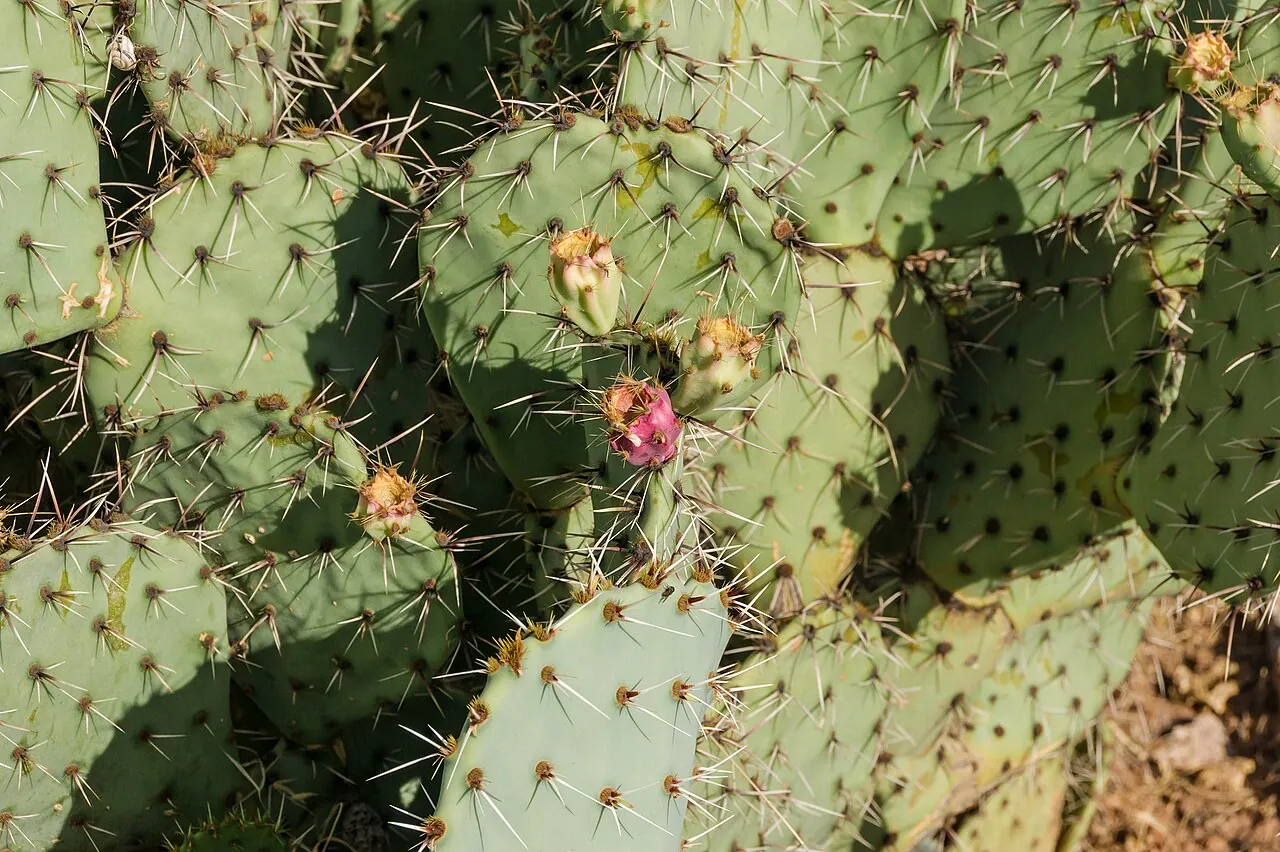
This cactus grows in full sun and freely draining soil, and tolerates drought once established. Growers can start a new plant from a rooted pad; it begins bearing in 1–2 years, compared with 3–4 years from seed. Ripe fruit is twisted from the pad rather than pulled.
On Etna, removing the first flowers encourages a second bloom and a crop of larger fruits.
When and where you'll find it
Around Tucson, fresh prickly pears usually ripen from August through early September. On Etna, the first crop usually arrives in August and the second from September to December. Fresh market fruit is generally cleaned of most spines. Whole ripe fruit can also be frozen for later juicing, and the juice freezes into cubes for drinks.
Get it near Detroit
What it tastes like
As sweet as a banana, as mild as a peach≈
More about the taste
The flesh is juicy, with flavor varying among kinds, often compared with watermelon.
The flesh is juicy, with flavor varying among kinds, often compared with watermelon.
Choose, ripen, store, eat
1ChooseMature
Look for
- Mature
- Firm, yields to gentle pressure
- Dark-red or purple
Prickly pear doesn't continue ripening after harvest, so choose mature fruit that's firm but yields to gentle pressure - dark-red and purple fruit are common. It may be labeled prickly-pear fruit, cactus pear, cactus fruit or tuna. 'Nopal' or 'nopalitos' are the flat cactus pads, a different plant part sold for different dishes.
2RipenDoesn’t ripen after picking
Doesn’t ripen after pickingSelect fruit already at the stage you want to eat it - it won't improve much on the counter.
3StoreFreezer, whole fruit
- FreezerWhole fruitFor later juice
- FreezerJuiceIn portions
Whole fruit can be frozen for later juice processing, and juice can be frozen in portions.
4EatFruit · not glochids
Eat
FruitNot eaten
GlochidsRemove the glochids (tiny barbed hairs) before peeling and slicing the fruit for raw use. Market fruit may have most spines removed but not all; tongs and gloves help avoid contact.
Detroit, Michigan
When it’s good hereUsual monthsJust arrivedAt their bestLast chanceAll yearWhere it is in its usual monthsToday, Oct 22Grown hereIn season in your stateShips fromIn season where it growsOrderableListed by a seller we checkedThe day a seller was checked
13 growing areas, 5 countriesUsual monthsOur estimated monthsToday, Oct 22

- Arizona
- Catania
- Coquimbo
- Granada
- Huelva
- Ica
- La Libertad
- Lambayeque
- Málaga
- O'Higgins
- Valparaíso
- You
0 of 1 areas · October
Growing areas by country
- Spain5
- Chile3
- Peru3
- Italy1
- United States1
Indigenous peoples of the desert Southwest have long used both the pads and fruit of prickly pear, each in its own way.
16 varieties
- No variety photo yetChapeada
- Taste
- high Mexico
- Juice
- juicy Mexico
- Skin
- green · pink Mexico
- Flesh
- green Mexico
- No variety photo yetCristalina
- Juice
- juicy Mexico
- Skin
- green Mexico
- Flesh
- green Mexico
- Shape
- oval Mexico
- No variety photo yetFafayuca
- Taste
- high Mexico
- Juice
- juicy Mexico
- Skin
- yellow Mexico
- Flesh
- green Mexico
- No variety photo yetBlanca San José
- Juice
- juicy Mexico
- Skin
- green Mexico
- Flesh
- green Mexico
- No variety photo yetLa Gavia
- Taste
- high Mexico
- Juice
- juicy Mexico
- Skin
- green Mexico
- Flesh
- green Mexico
- No variety photo yetAmarilla Montesa
- Taste
- high Mexico
- Juice
- juicy Mexico
- Skin
- orange Mexico
- Flesh
- orange Mexico
41 names in 13 languages
Cook it
1 Prickly pear festivalUsual monthToday, Oct 22
Strange but trueHistoryA myth, and the truthNatureWhere the name came fromCustoms and cultureFood and drink
If you like Prickly pear
Tastes alike
Same plant family
Nutrition, sources
Nutrition
Prickly pears, raw · per 100 g
- Carbohydrate
- 9.6 g
- Fiber
- 3.6 g
- Protein
- 0.7 g
- Fat
- 0.5 g
- Vitamin C
- 14 mg
- Potassium
- 220 mg
Sources
Prickly pear · Fruitopia · checked Sep 23, 2026